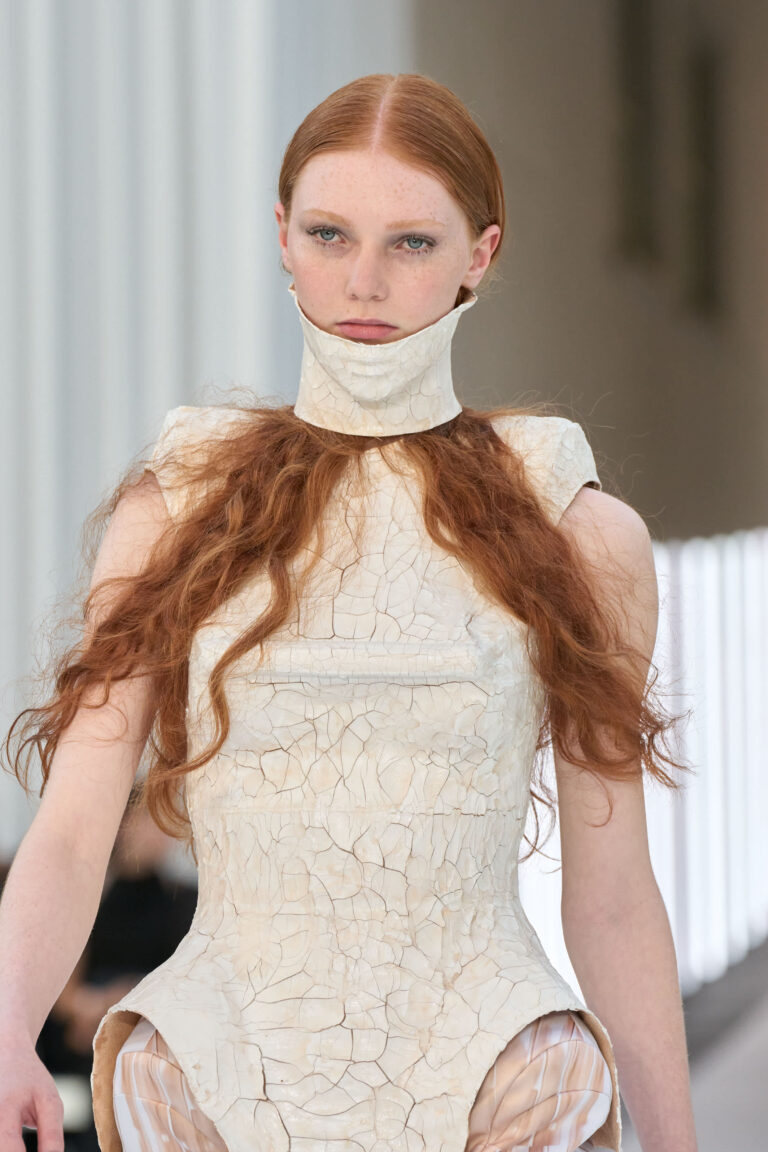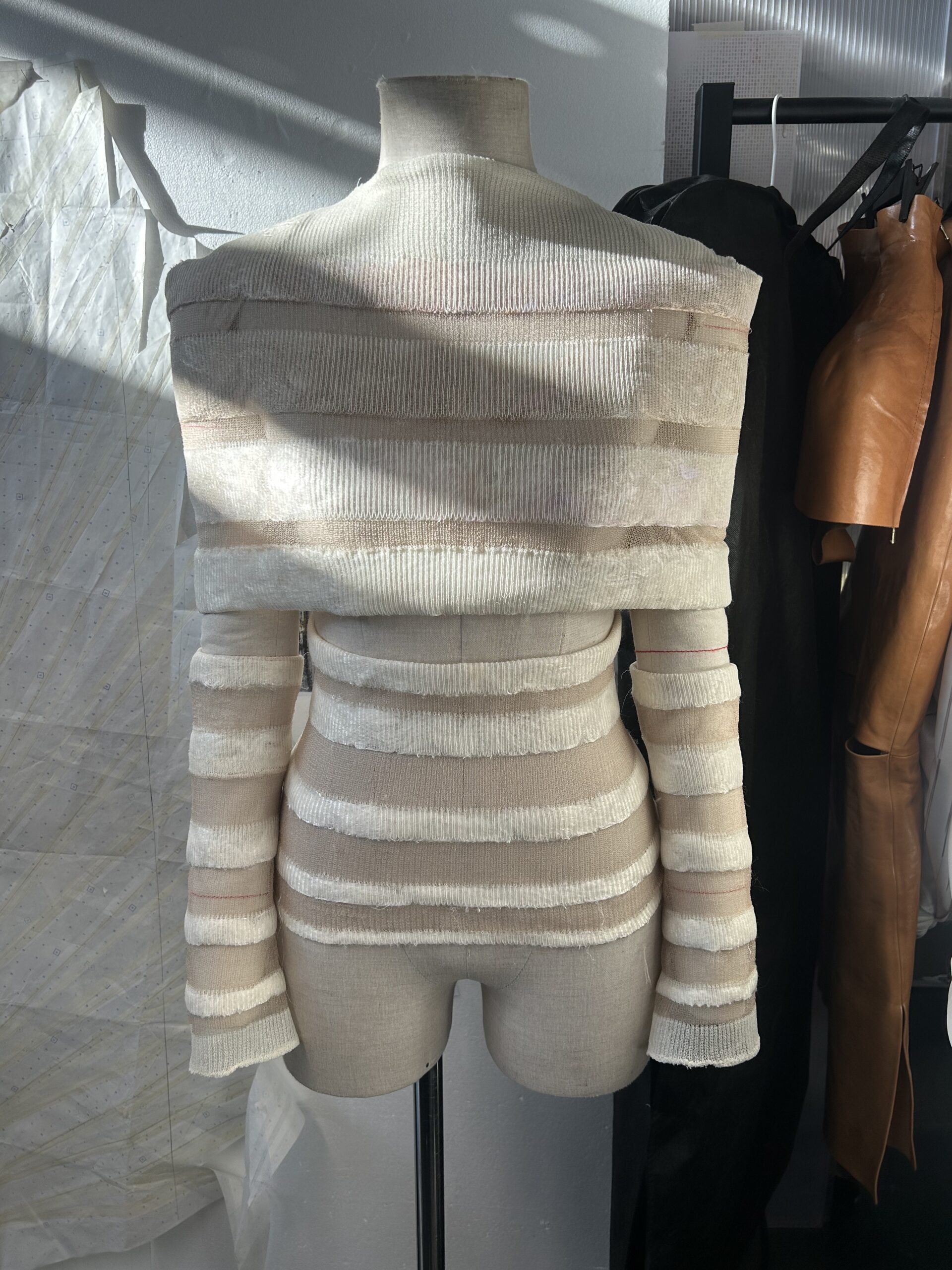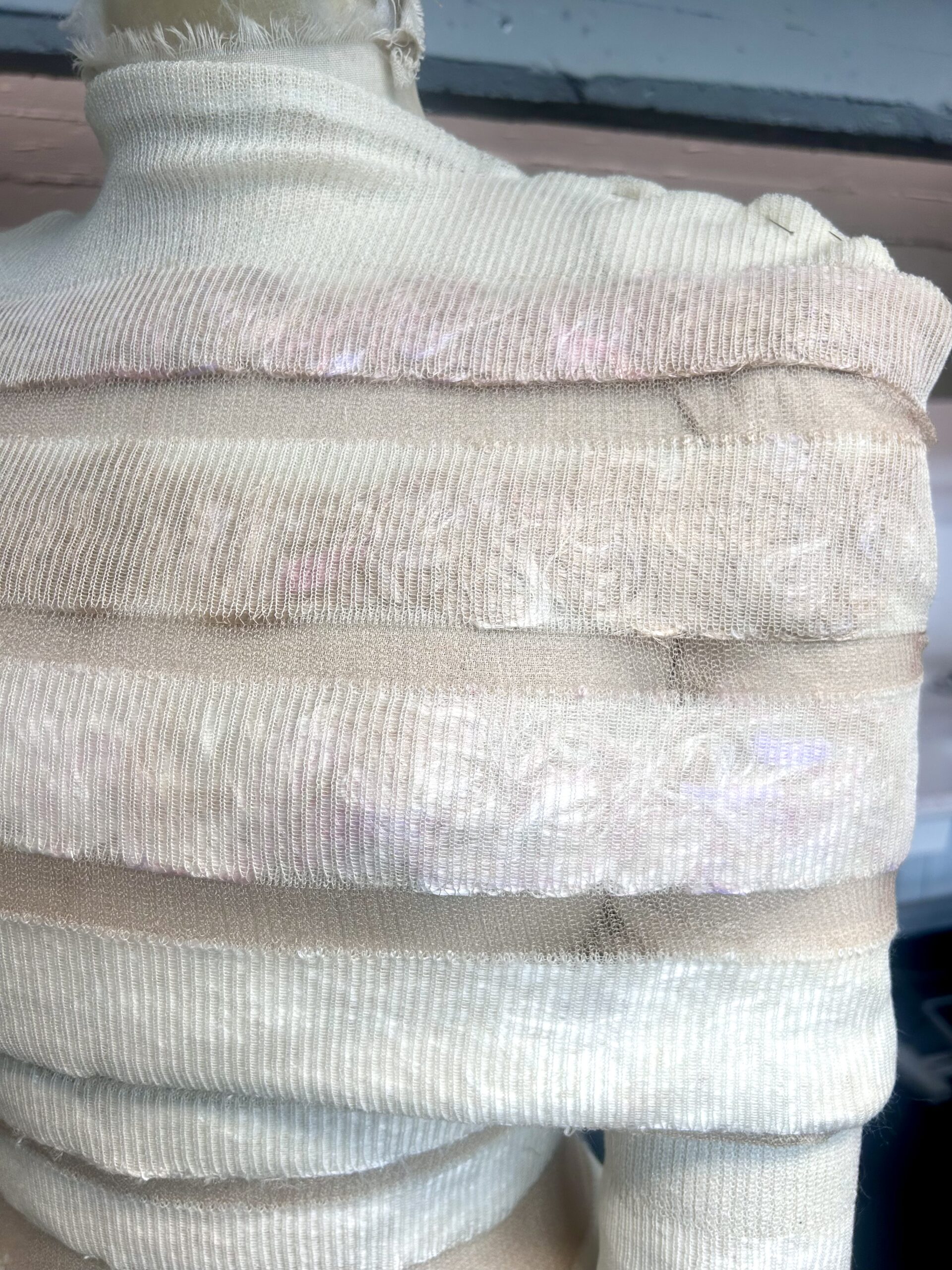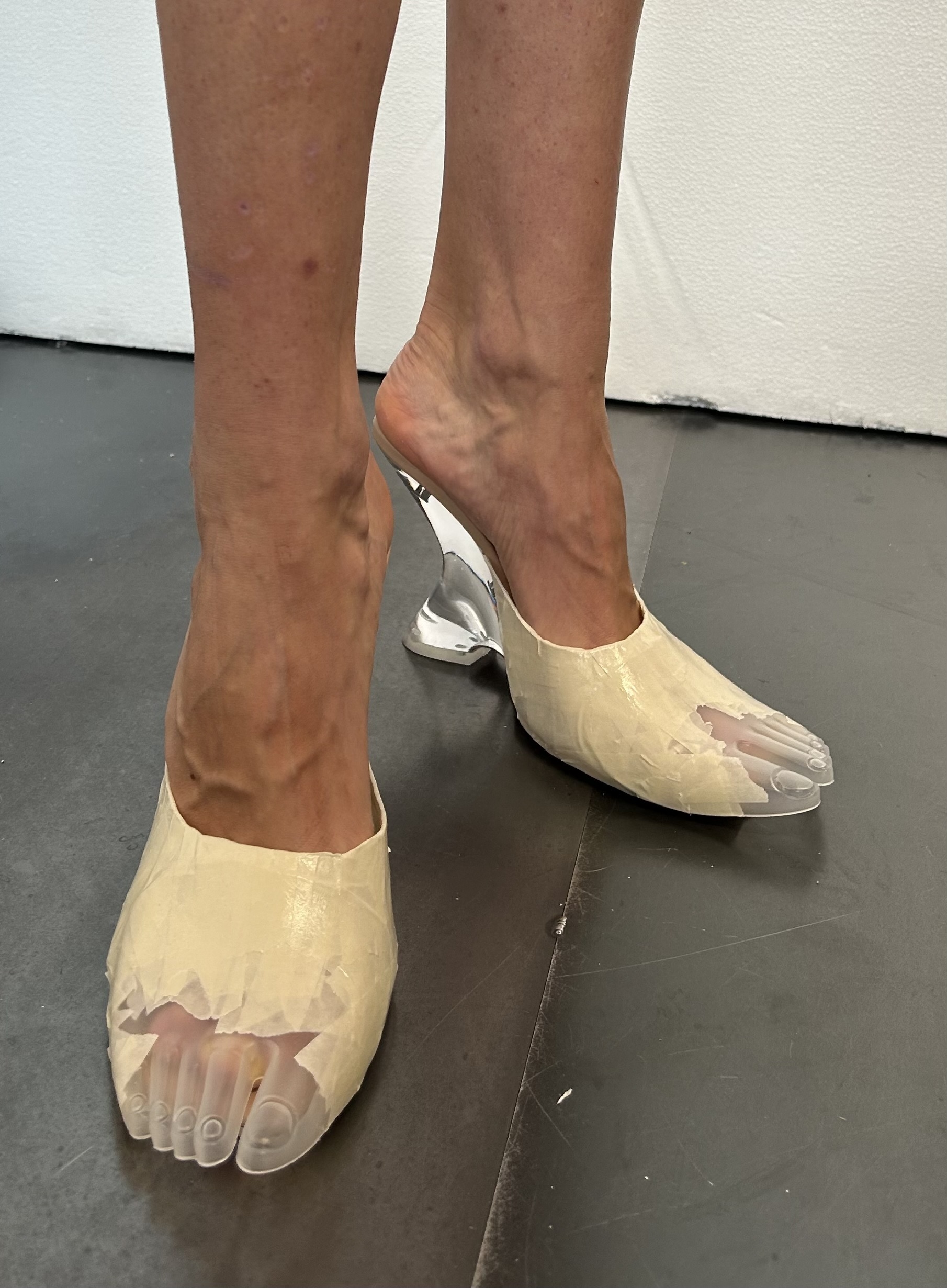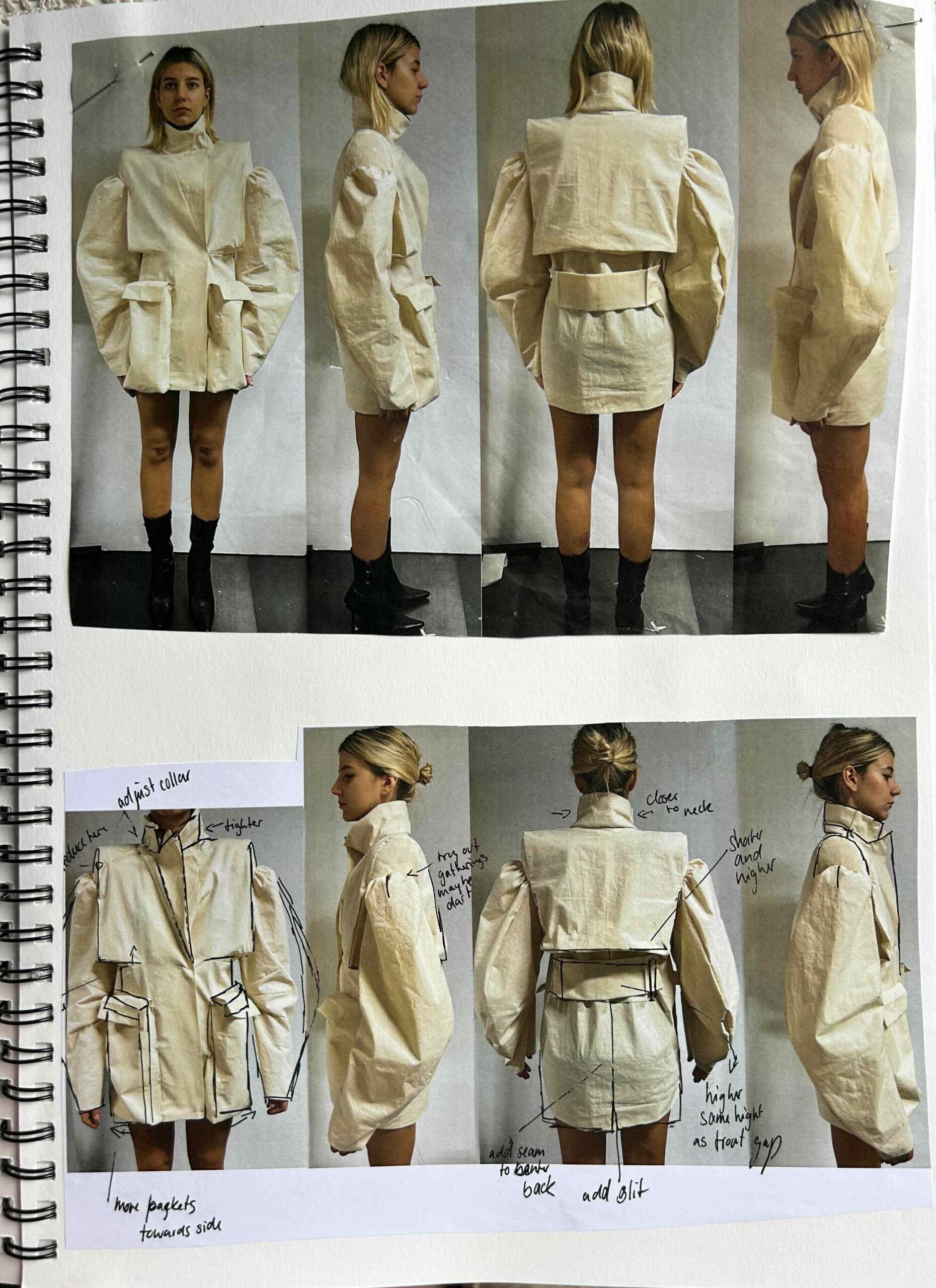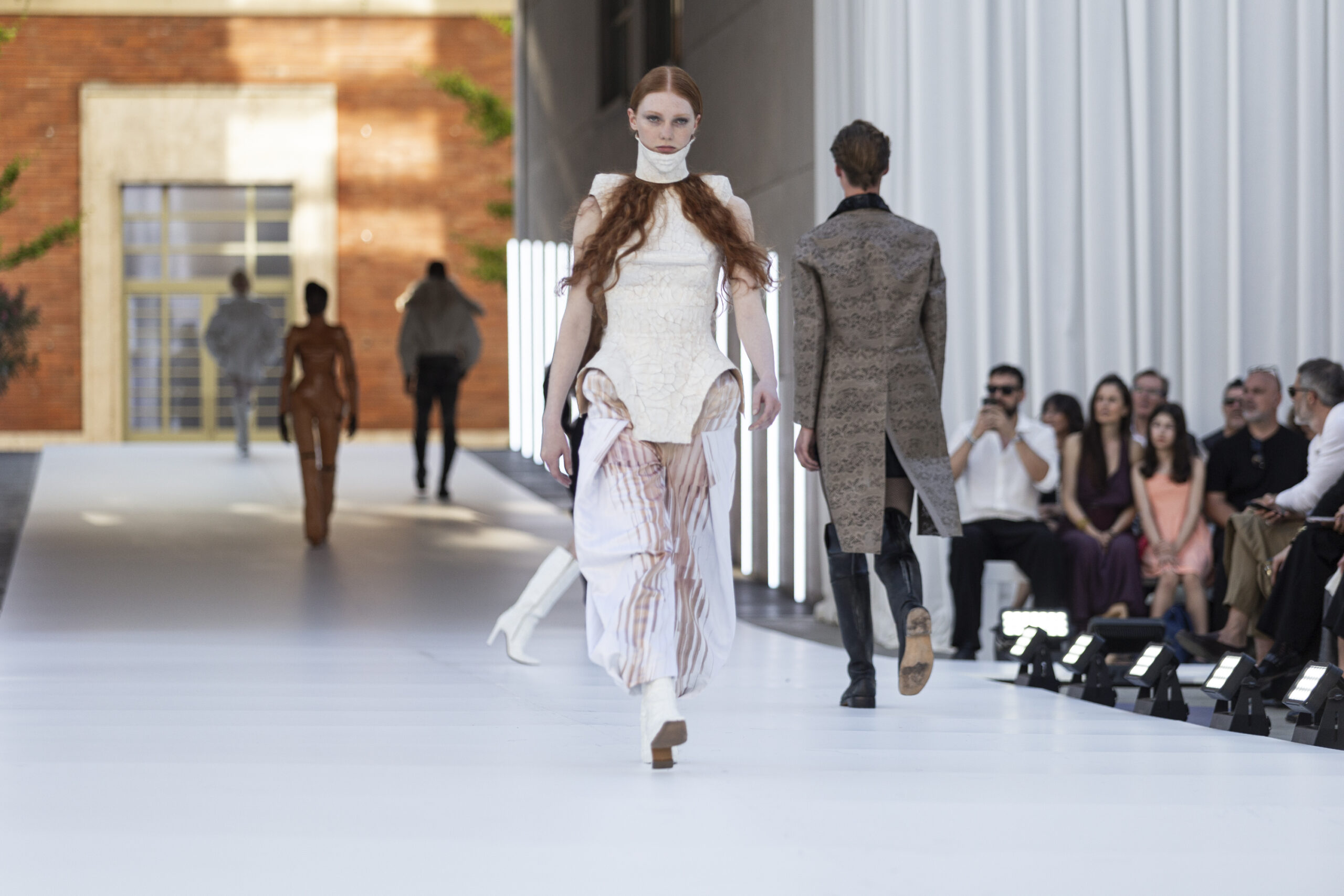
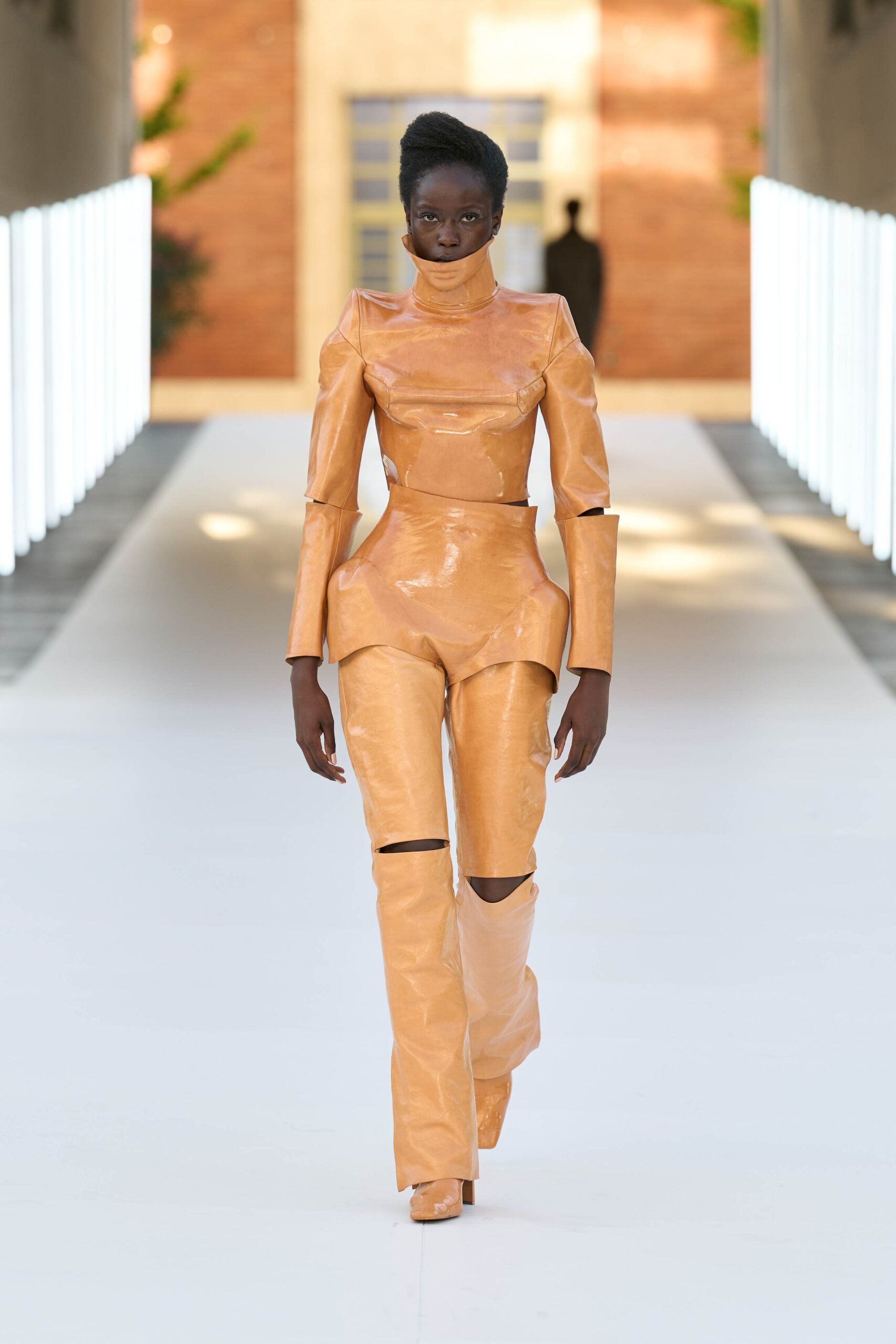
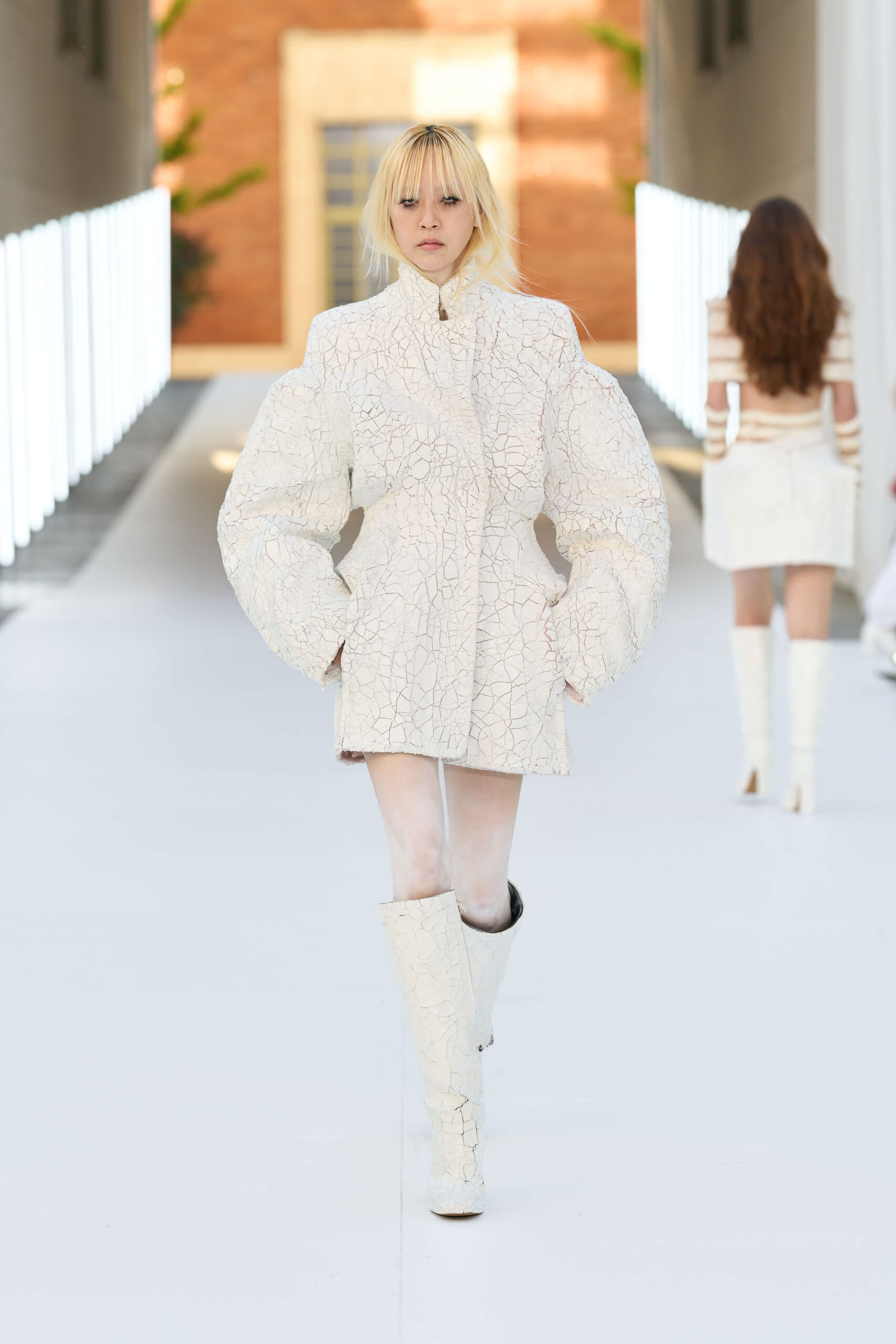
Citing her mixed German and Spanish roots as the reason for her innate ability to combine emotion with rationality, “No Longer Human” by Emilie Wenckstern is a sensitive and relevant response to today’s discourse around perfection, the human body, and technology. It attempts to answer questions like, what defines our relationship to artificial intelligence? How do we embody this? And what does the future hold?
Emilie speaks to Phoebe Owston, Editor of the Journal, about her winning final year collection, as voted by an esteemed jury, after its debut at Polimoda’s Graduate Show.
Phoebe: How was your journey at Polimoda? How did you decide you wanted to study fashion and what did it teach you?
Emilie: Before studying here I was working at an artist’s studio for a long time, so I have an art background, let’s say. After a while I found out that I preferred to express my art through fashion, and that’s why I decided to study it. I was looking around for where I could apply, and then I found Polimoda, everything sounded so amazing, and I was a bit afraid to apply, I thought they’d never take me, but I tried anyway.
Overall I had a very good experience and learned a lot, but maybe what was unique was that after two years I decided to take a break. I think the good thing about Polimoda is that it constantly pushes you out of your comfort zone, and you grow so much as a person, but I felt like I needed to reconnect with why I really wanted to do this. If you decide to go this way, you have to be 100% in it, and especially in the last two years I felt like I grabbed all the energy, power, and motivation I had and became certain I wanted it.
I think Polimoda doesn’t only teach you draping, pattern-making, and technical things, it shapes you as a human and makes you stronger and more confident. It helps you shape your own creative vision and push boundaries, and that’s something that will stay with me for my whole life.
P: That’s really interesting that you took a break, I didn’t know that.
E: In that moment it felt like I was so disappointed in myself, but I took so much strength from it. I’m grateful I did it, sometimes the downs lead you to the ups, and for me it was the best thing I could have done.
P: What are your main references, even outside fashion? What do you like to explore, read, what inspires you?
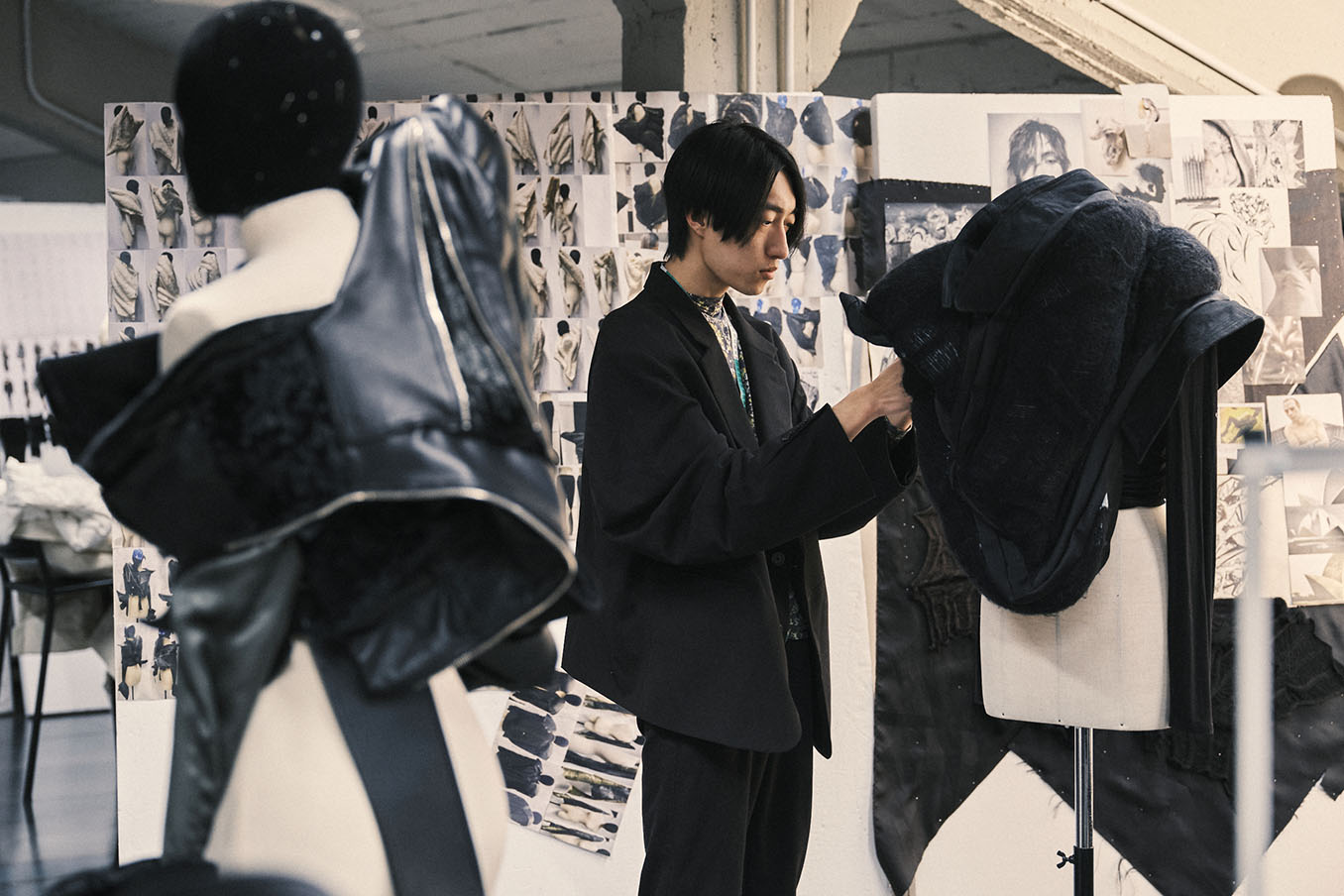
E: Mainly art, I love going to exhibitions, historical or contemporary, it doesn’t matter. I feel I have a sculptural vision in my head, and that’s always the starting point for every project, art, photography, or otherwise. I also love to read, mostly psychology and self-development, and that influences my work too.
P: Do you have any artists or photographers that you particularly like?
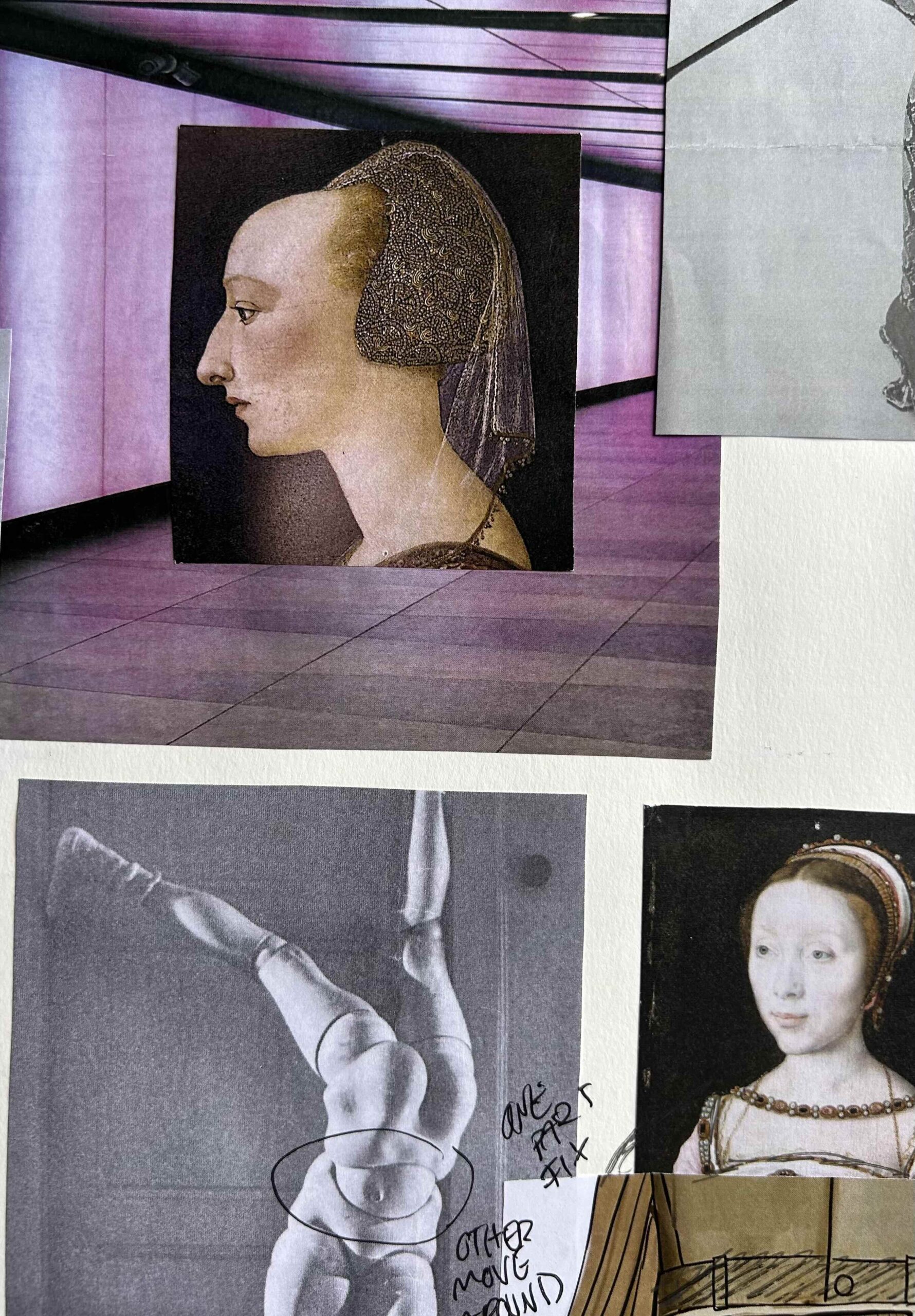
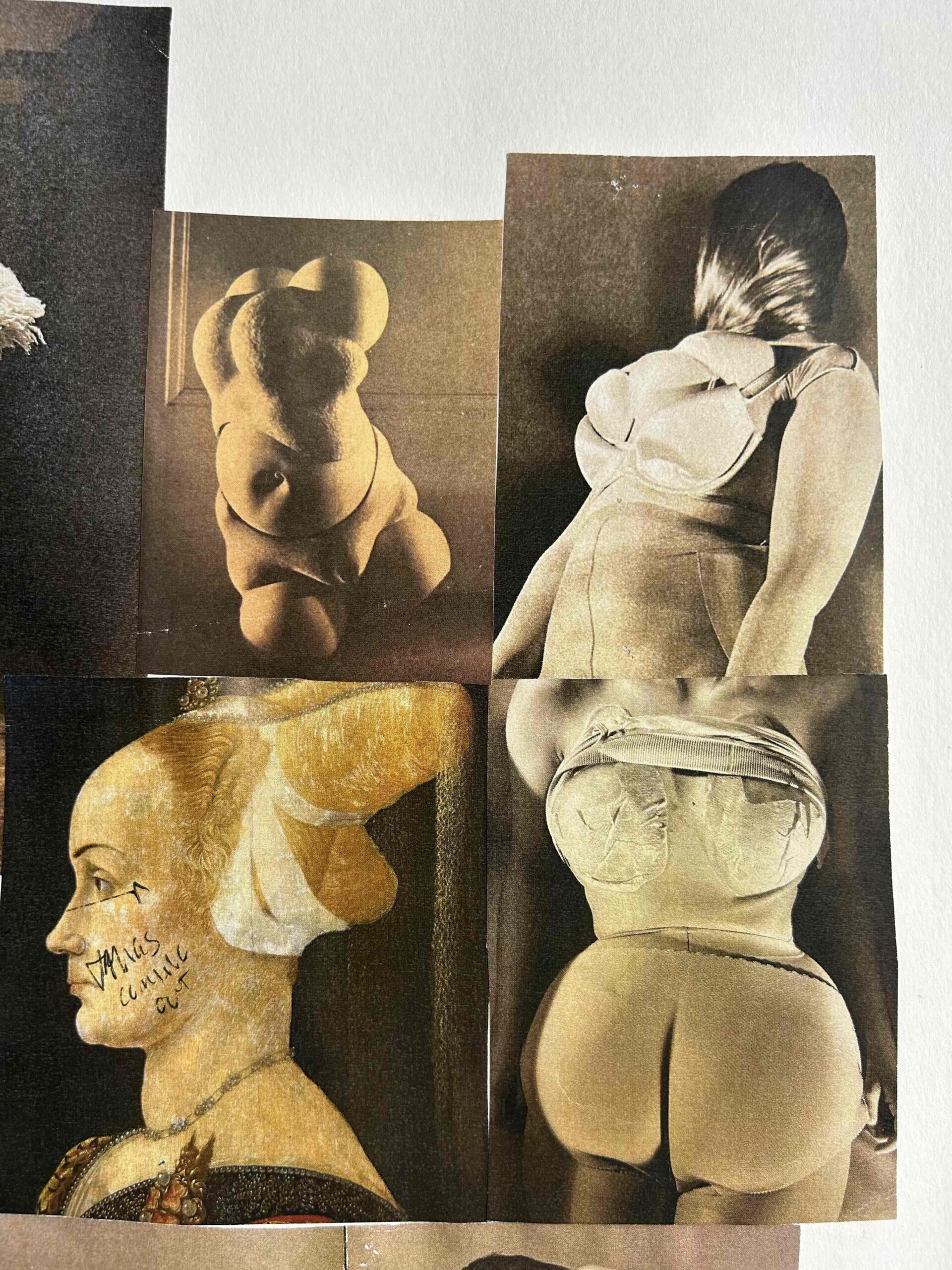
E: For this collection, the main inspirations were Hans Bellmer and the photographer Paul Kooiker.
P: What about in fashion, which designers really inspire you?
E: There are so many, but the three I always come back to are: Alaïa, especially for the precision and how they work with the body and sculptural silhouettes; Margiela, for the conceptual approach and materials; and Schiaparelli, for the way fashion can become art. Those three are always my main inspirations.
P: What does the concept of your collection mean to you personally? It’s a strong, and very relevant concept, what’s your personal relationship to it?
E: It came to me slowly. Like a lot of people, I started using ChatGPT more and more, asking it questions constantly. At one point I remember asking, “If you had a body, what would it look like, would it still be human?” I think that was the starting point for the collection, because I wanted to find out how AI would look if it had a body. I also found it interesting that we always want to make sense of technology by humanizing it, wanting to see a face. That’s the personal connection, it came from everyday life, curiosity, and asking questions.
P: What were your collections in previous years at school like?
E: In third year my collection was about dreams and nightmares, it was also personal, because I was having a lot of nightmares and dreams at the time. I was curious: if bad dreams are called nightmares, what are good dreams called? All my collections start with something personal.
P: There seems to be a real interest in psychology and how our inner world can be externalized, is that fair?
E: Yes, that’s very insightful.
P: How has your vision or perception of the human body changed since you started developing your collection?
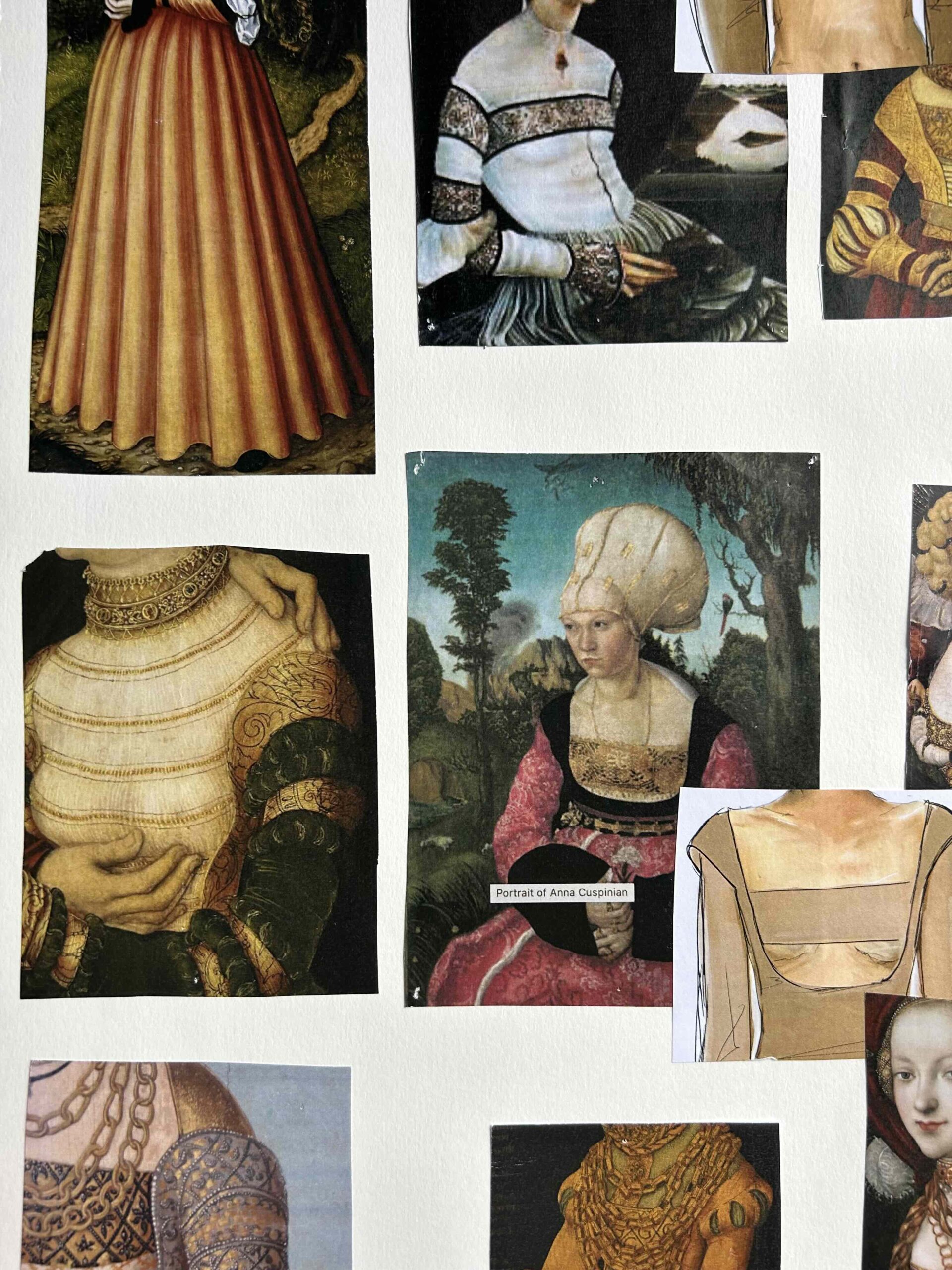
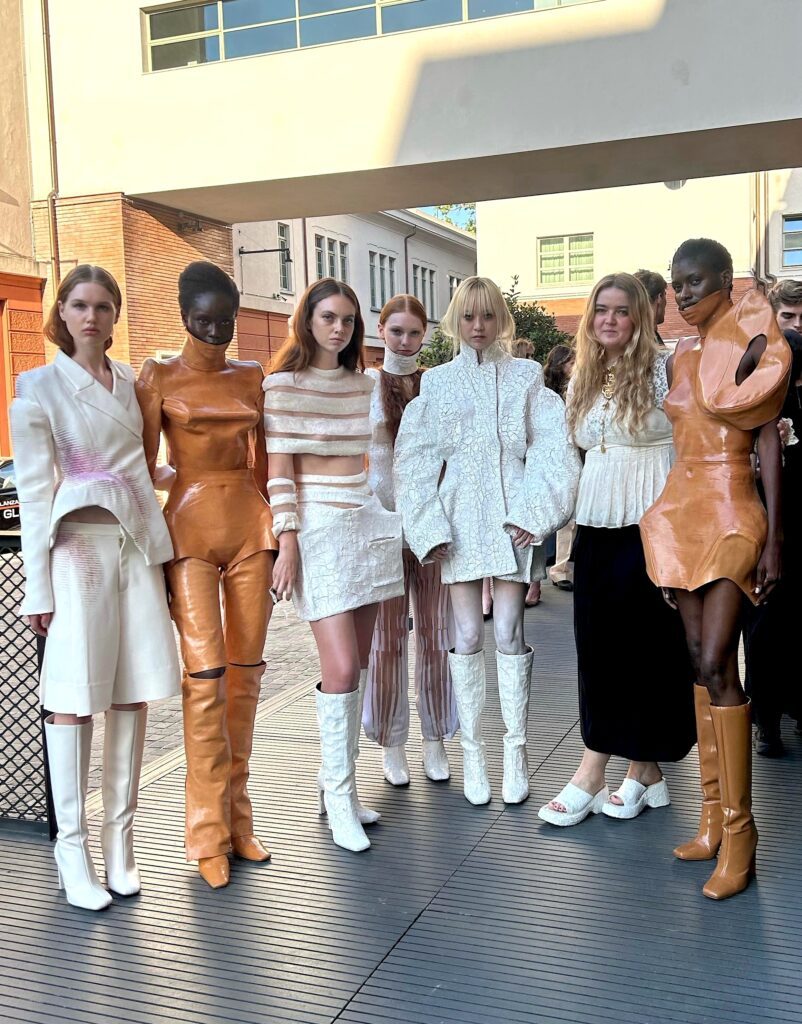
E: When I started asking ChatGPT these questions, I realized that all the faces and bodies it generates are made of lots of fragmented pieces coming together to create something new. AI takes everything human and creates something that ends up not human at all, that shifted my perspective. I started seeing the body as something constructed, and realized that even outside technology, everyone constructs their body through the way they dress and present themselves. I also researched Renaissance women who plucked their hairlines to look less human. It’s interesting that even without technology, we’ve always tried to reconstruct and reshape ourselves.
P: What have you realized you’re trying to achieve when you create a collection? Is it an exploration of an idea, or something else?
E: It’s really about exploration. I have a topic, and with my collection I try to answer the questions I have, this collection is my answer to “how does the body appear today,” shown without words.
P: What do you think will be some of the next questions you’ll want to explore?
E: Nothing too specific yet, though I keep a list of questions on my phone. Lately I’ve been interested in things like going to the moon or living on other planets, not sure if I’ll explore that, but that’s where my head has been a little.
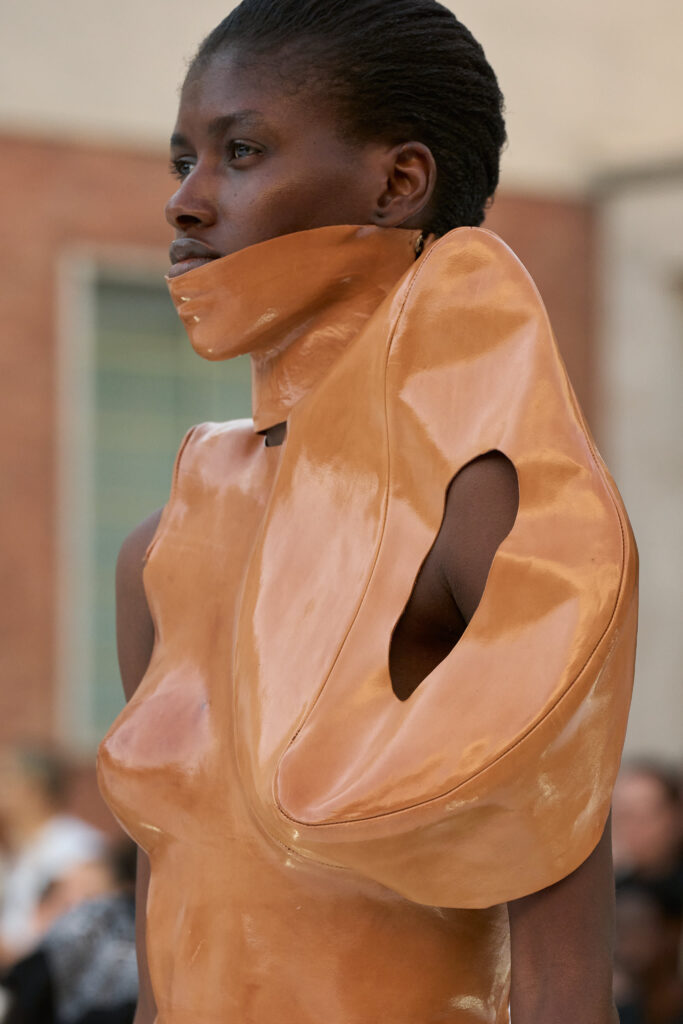
P: Your garments have amazing shapes and forms, where did they come from?
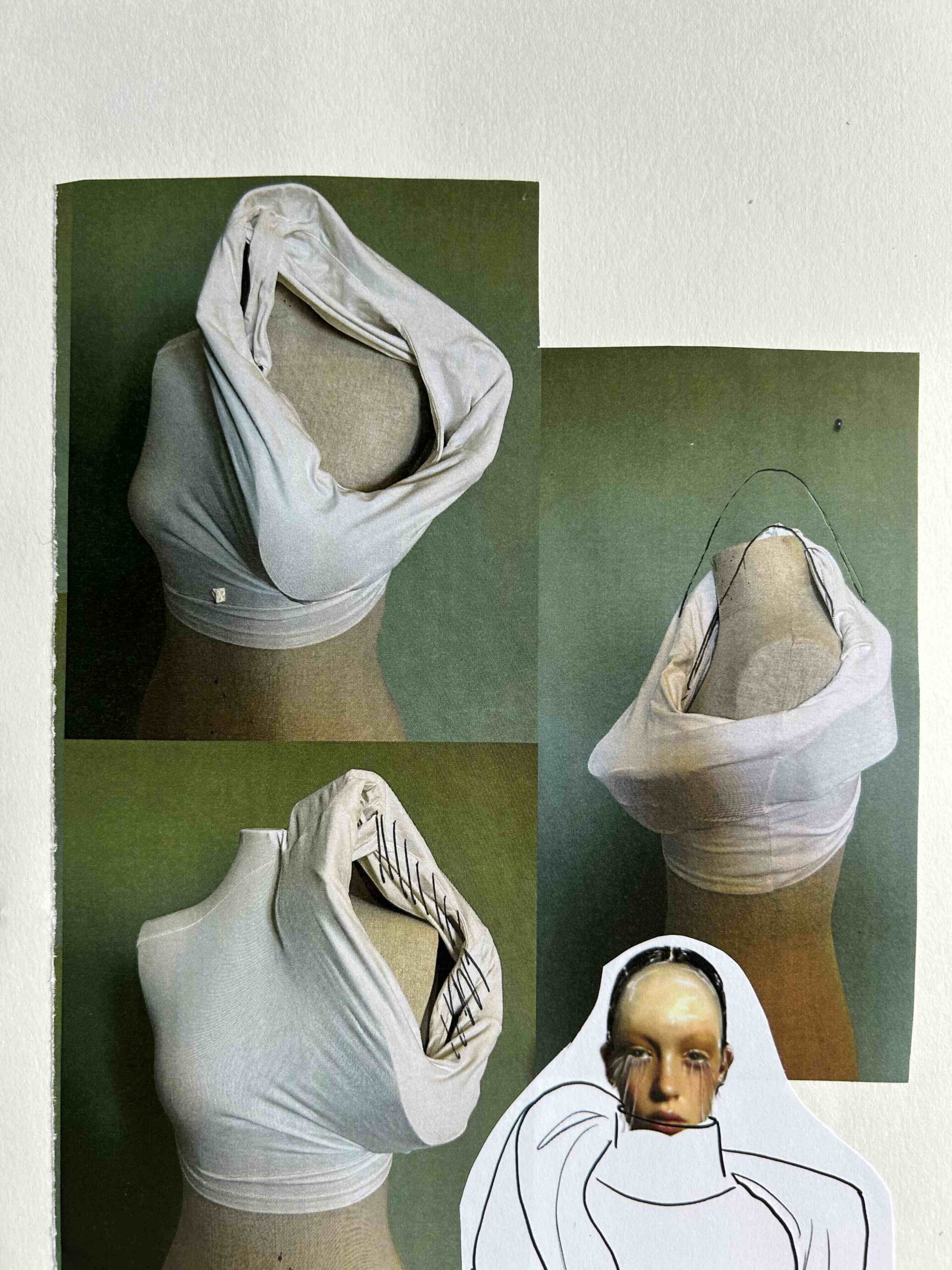
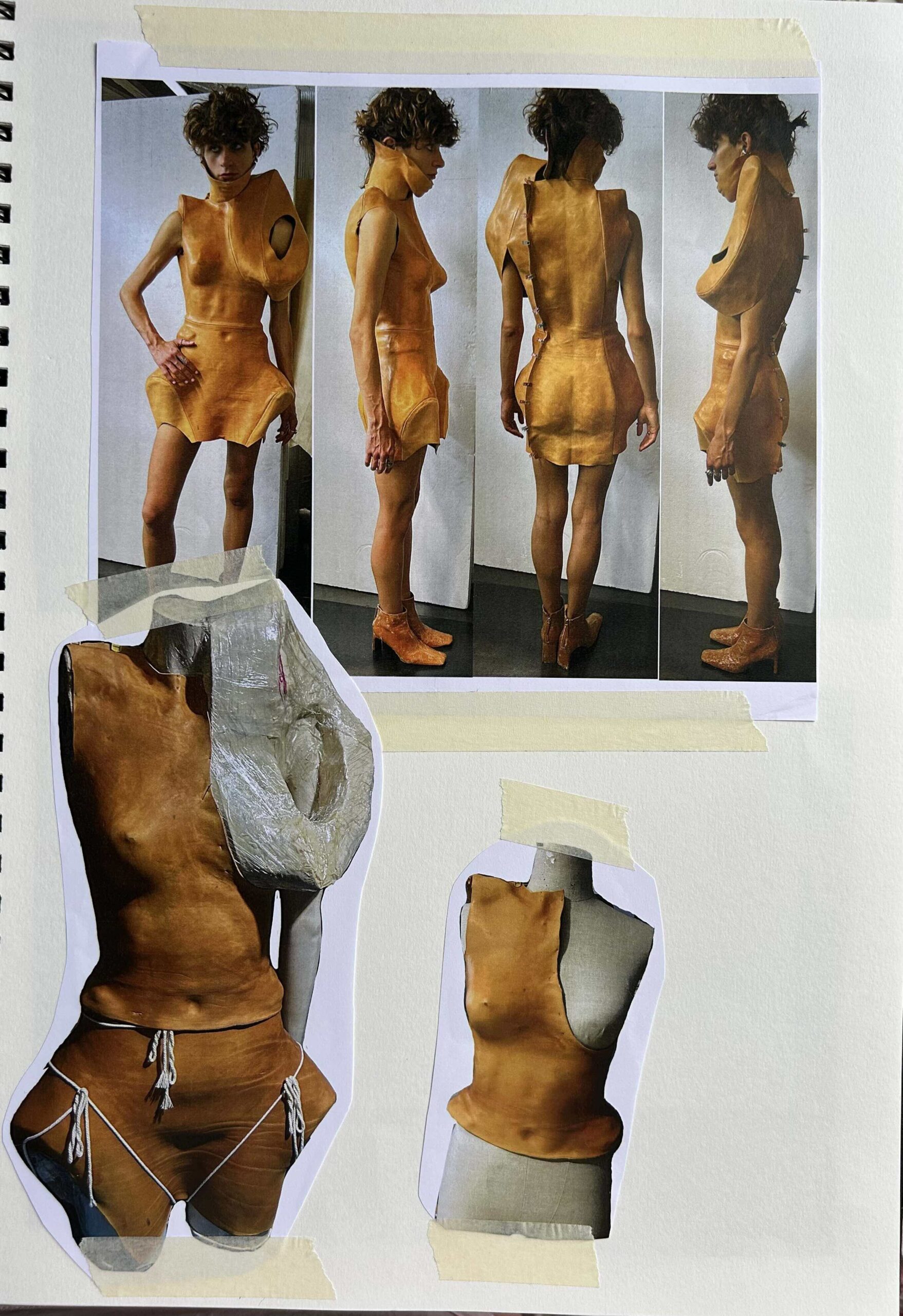
E: Mainly from Hans Bellmer, who deconstructed dolls and reassembled them in different ways. It was unsettling but inspiring, a doll with four legs, or multiple copies of the same body part. I also looked at his photography and how he presented the body in unsettling ways. Alongside that, I looked at the flaws of AI, when it fails to recreate humans correctly and produces strange shapes. That’s how I started building my own shapes and forms.
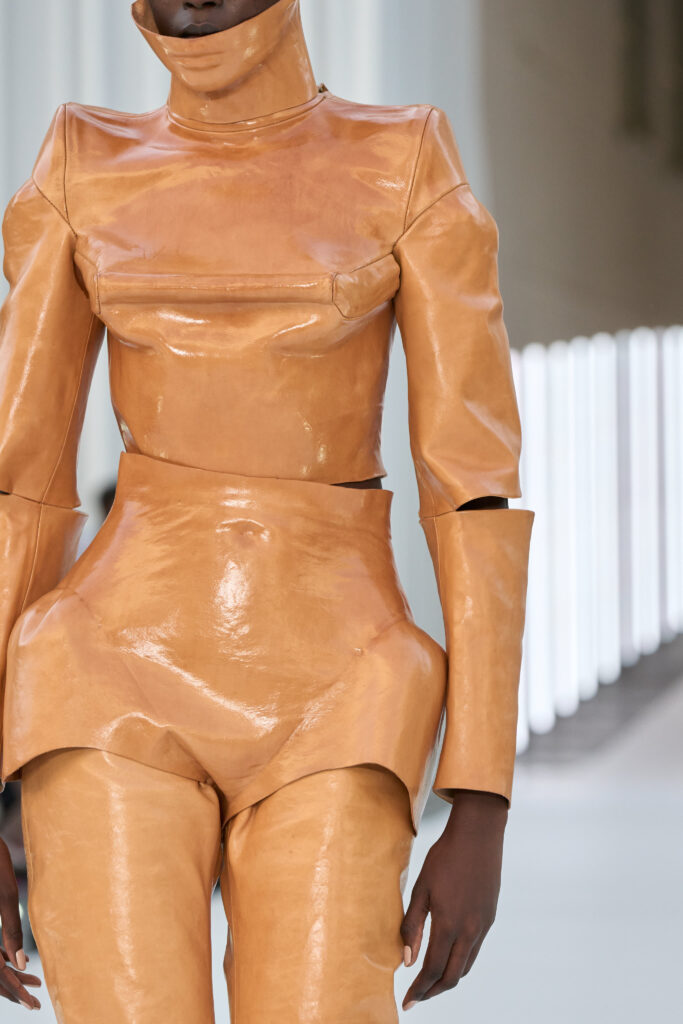
P: Why did you choose to work with leather, and how did you learn to manipulate it?
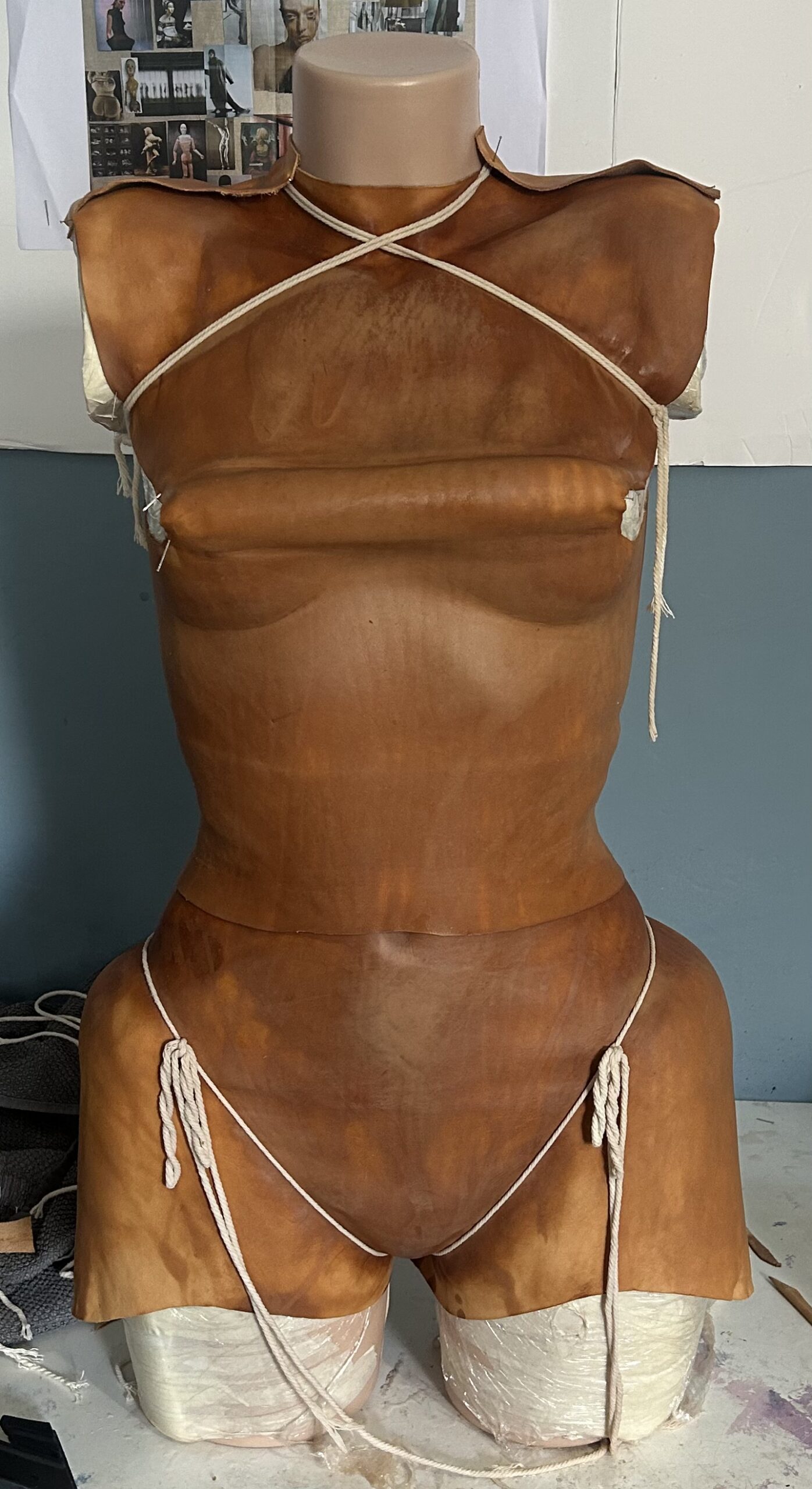
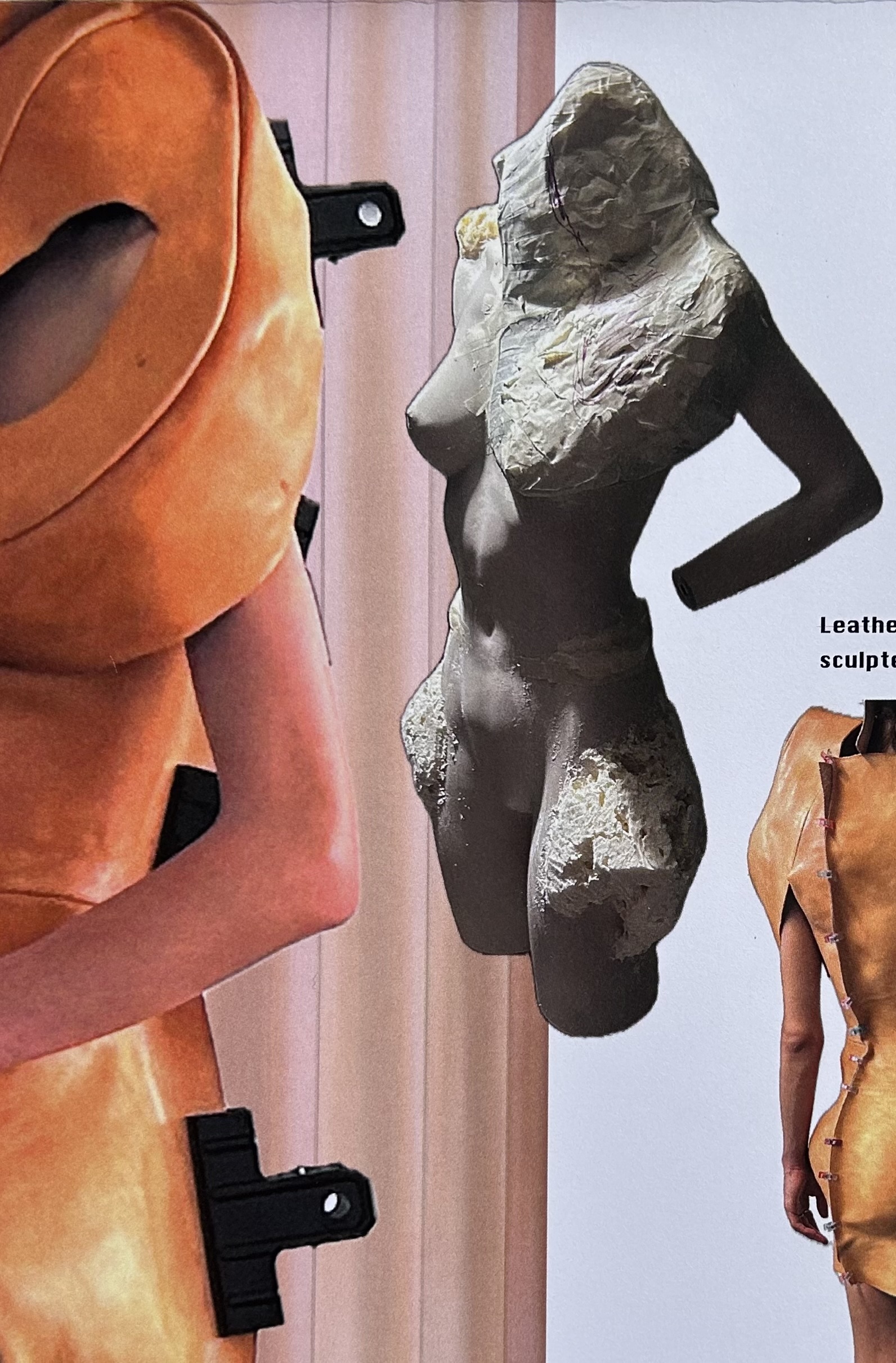
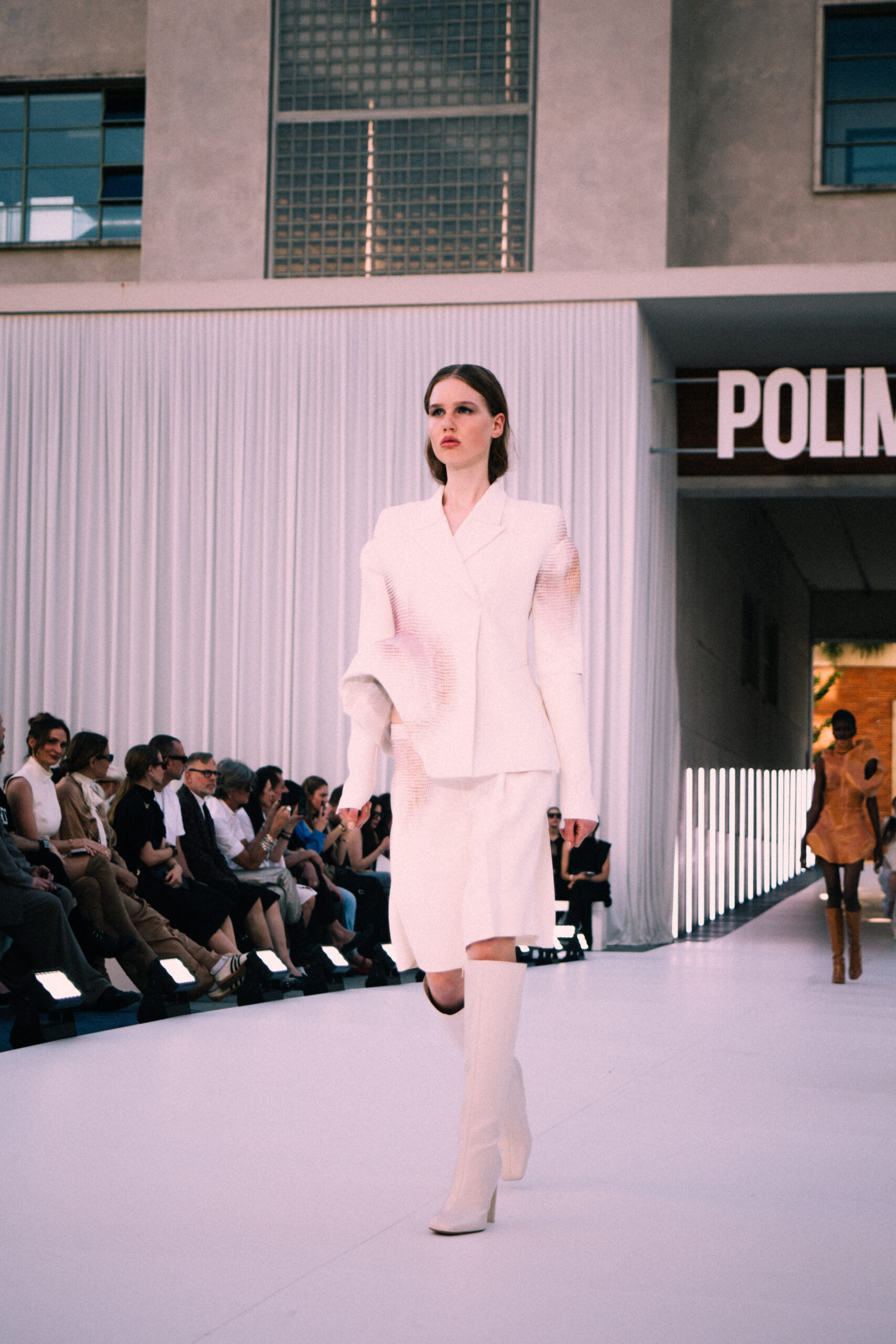
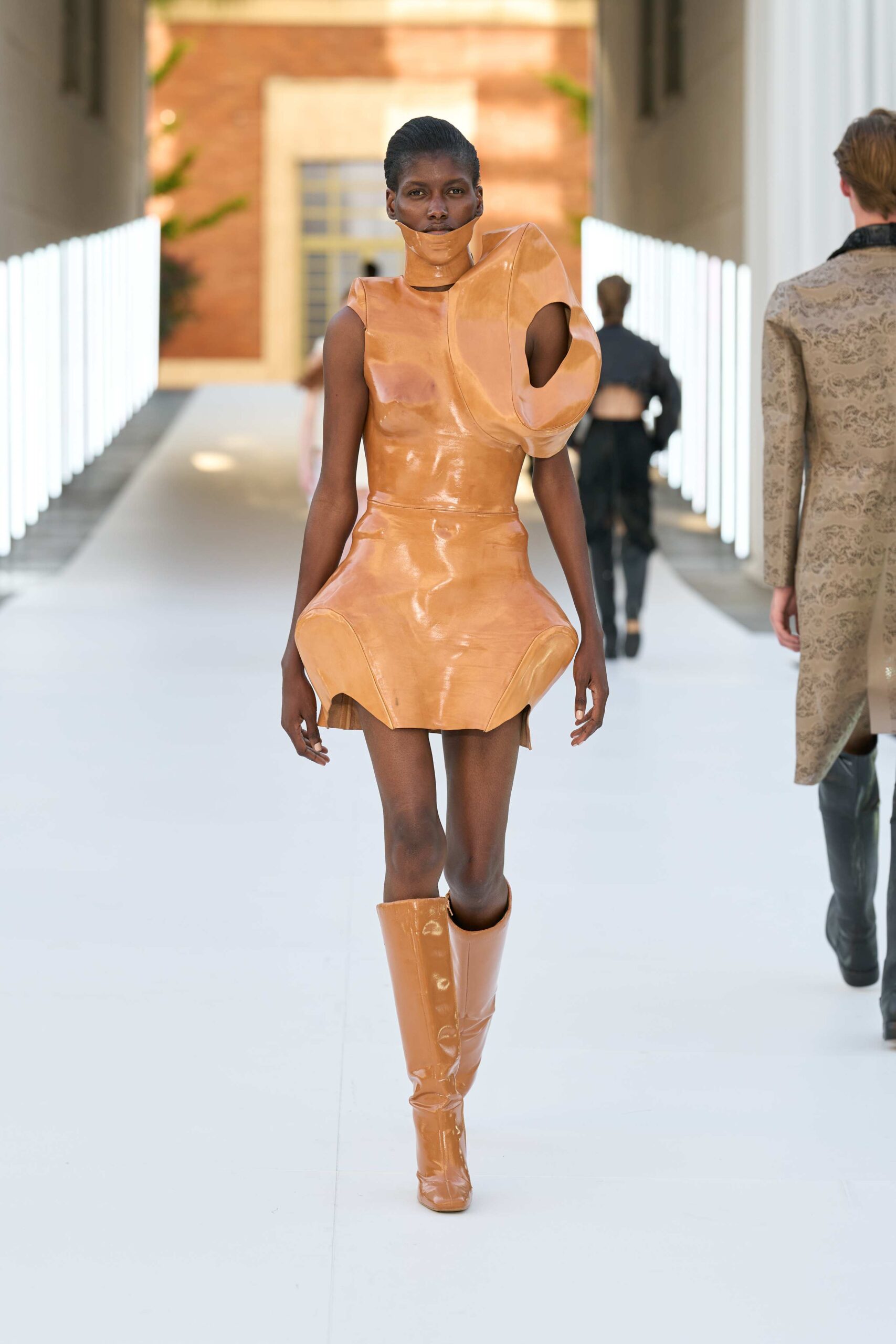
E: I wanted to mold different parts of the body, and leather was the best way to do that. I’d never worked with leather before starting this collection, so I had no idea what I was doing, but that might have been a good thing, because it was all trial and error. I used vacchetta leather, from a store called Alpel, which comes from the Tuscany region, so it felt nice to use something local and traditional to create something artificial. The natural orange color of the leather also spoke to me; it’s similar to human skin, but at the same time completely different, it’s very unique. That color, combined with how well the leather molds, made it feel right.
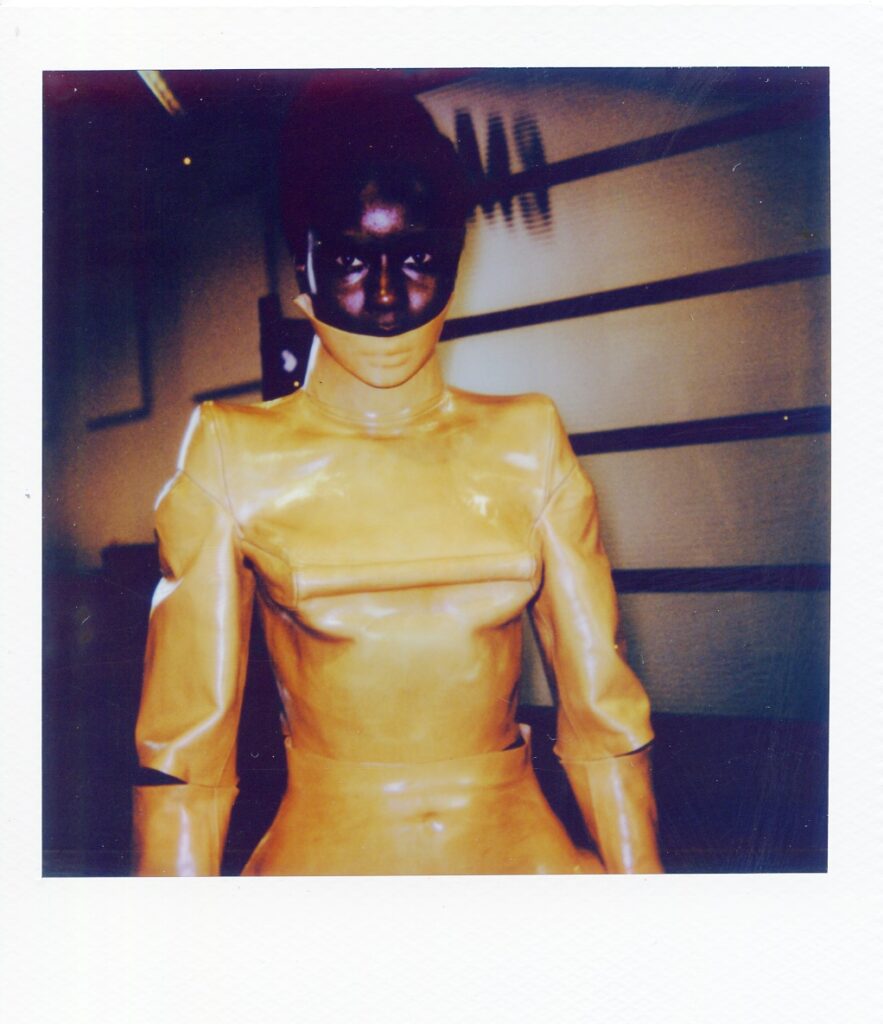
P: What’s the process of molding it?
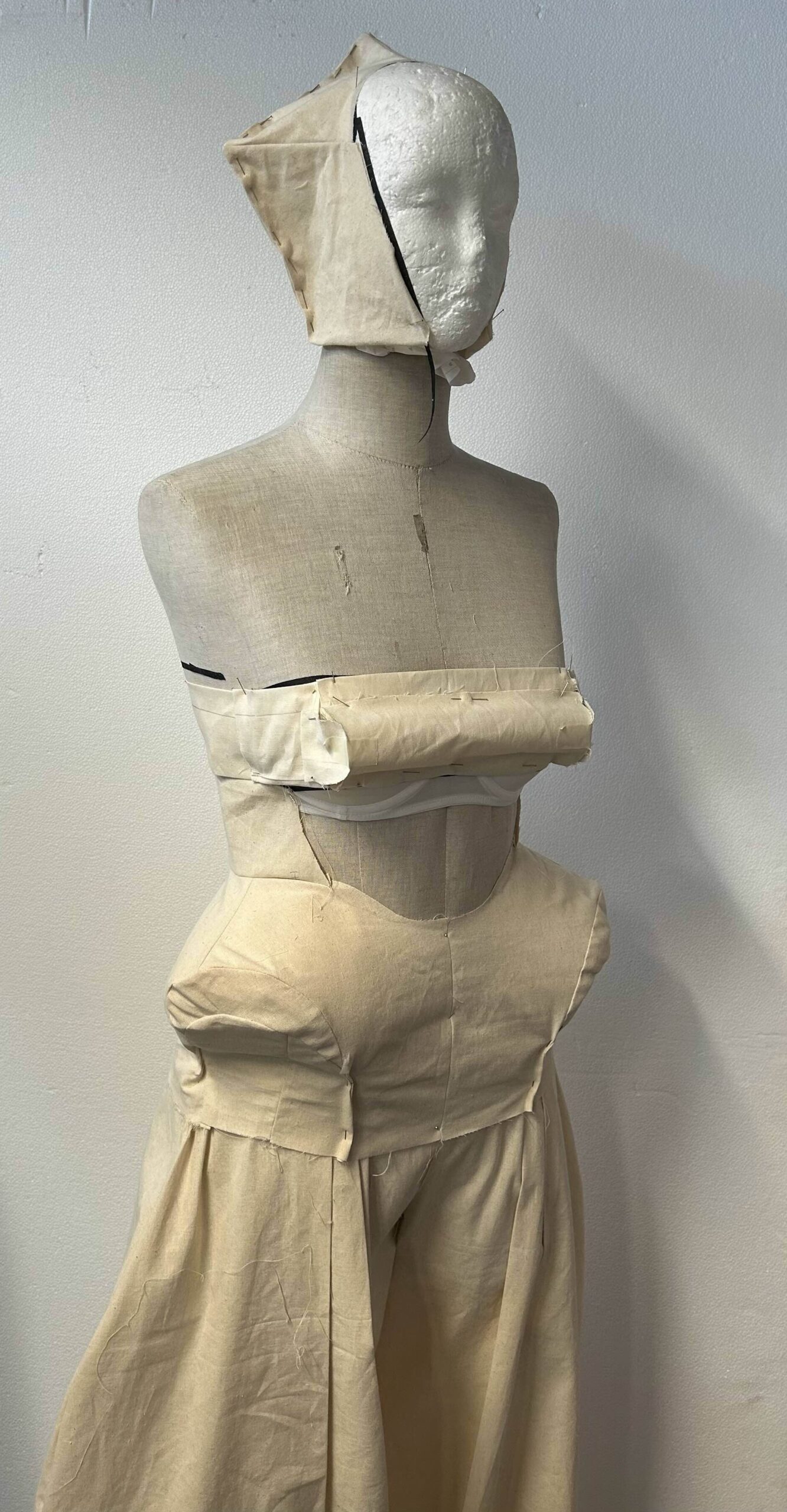
E: First I had to build the negative shapes, I made sculptures on mannequins, which was probably the hardest part, because I had to be sure of the shape beforehand. For the leather itself, you wet it to make it soft enough to mold, and it hardens as it dries. Then it was back and forth: stitching pieces together, molding again, and finally applying a top coat of varnish for the shine. I used a machine to stitch it, though the leather is quite thick so there was a bit of fighting with the machine.
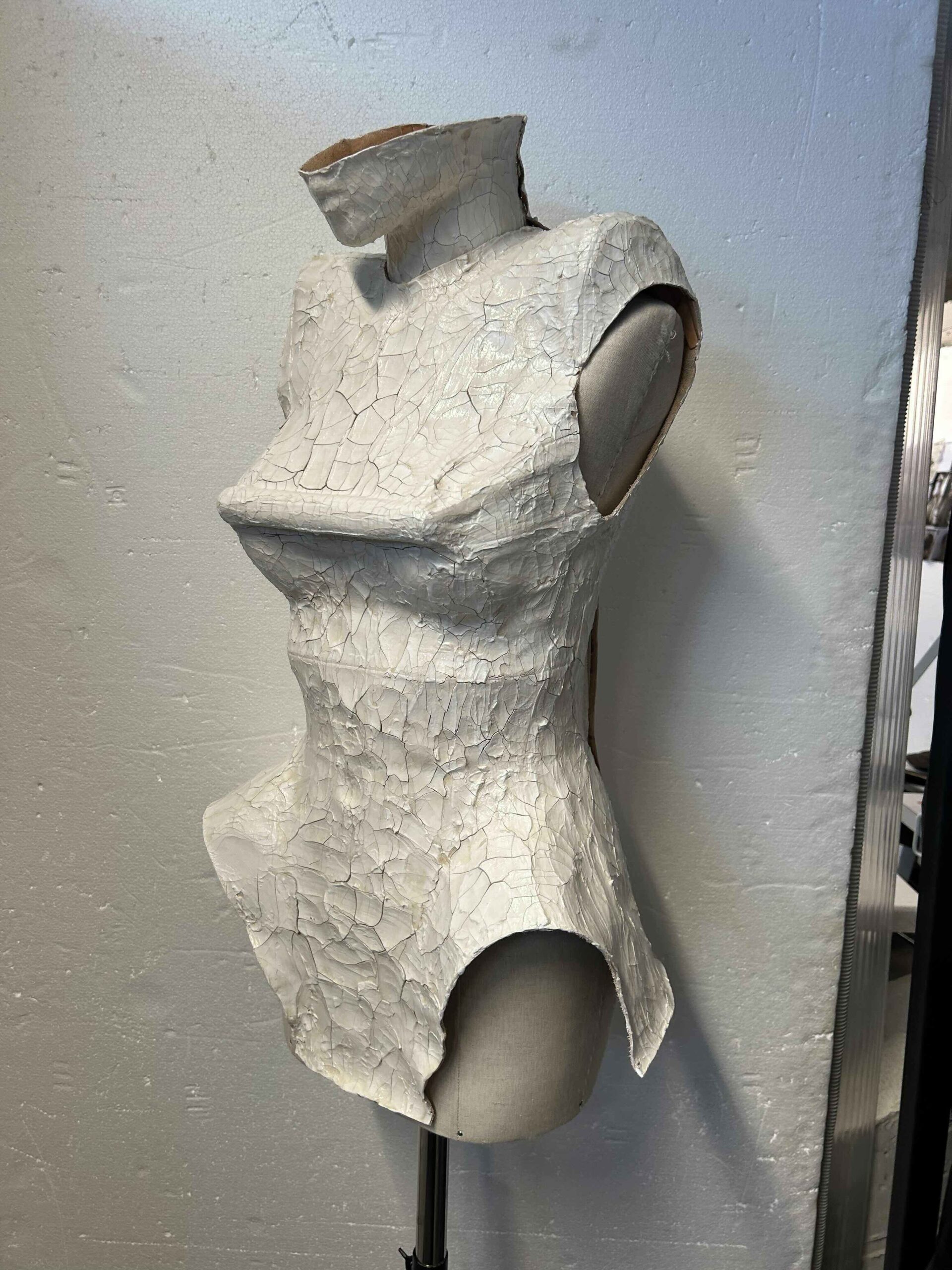
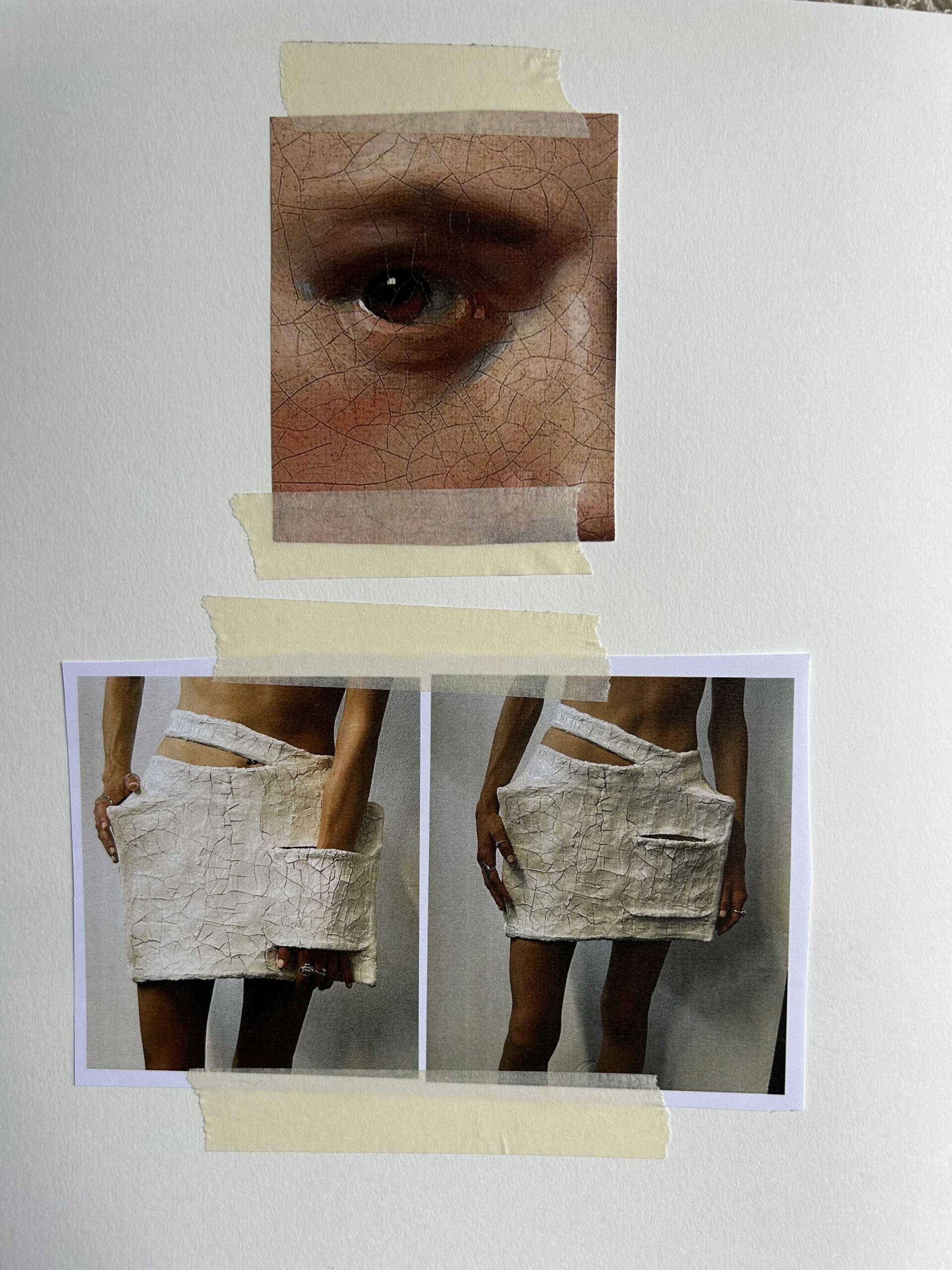
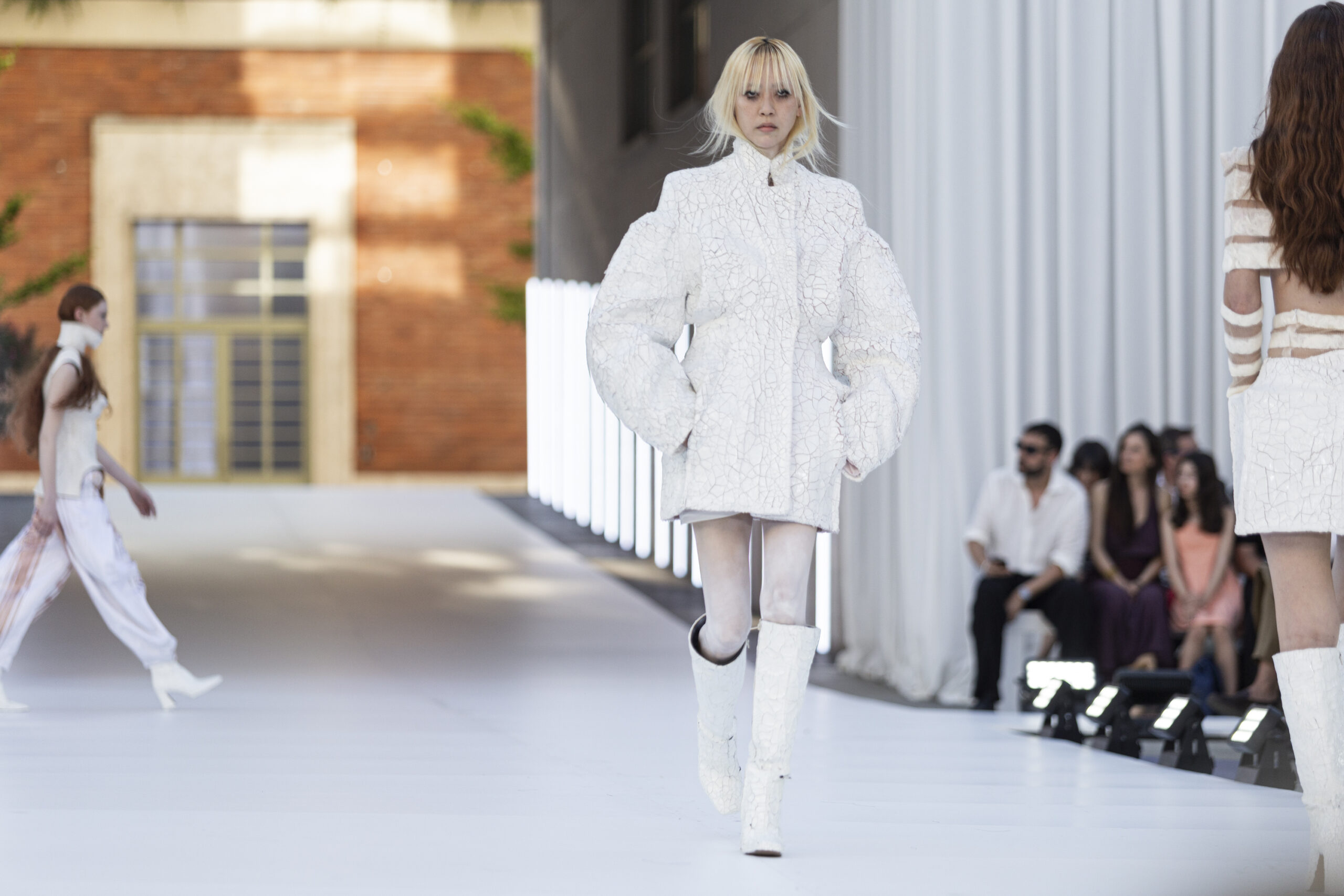
P: How did you achieve the cracked porcelain effect on your garments?
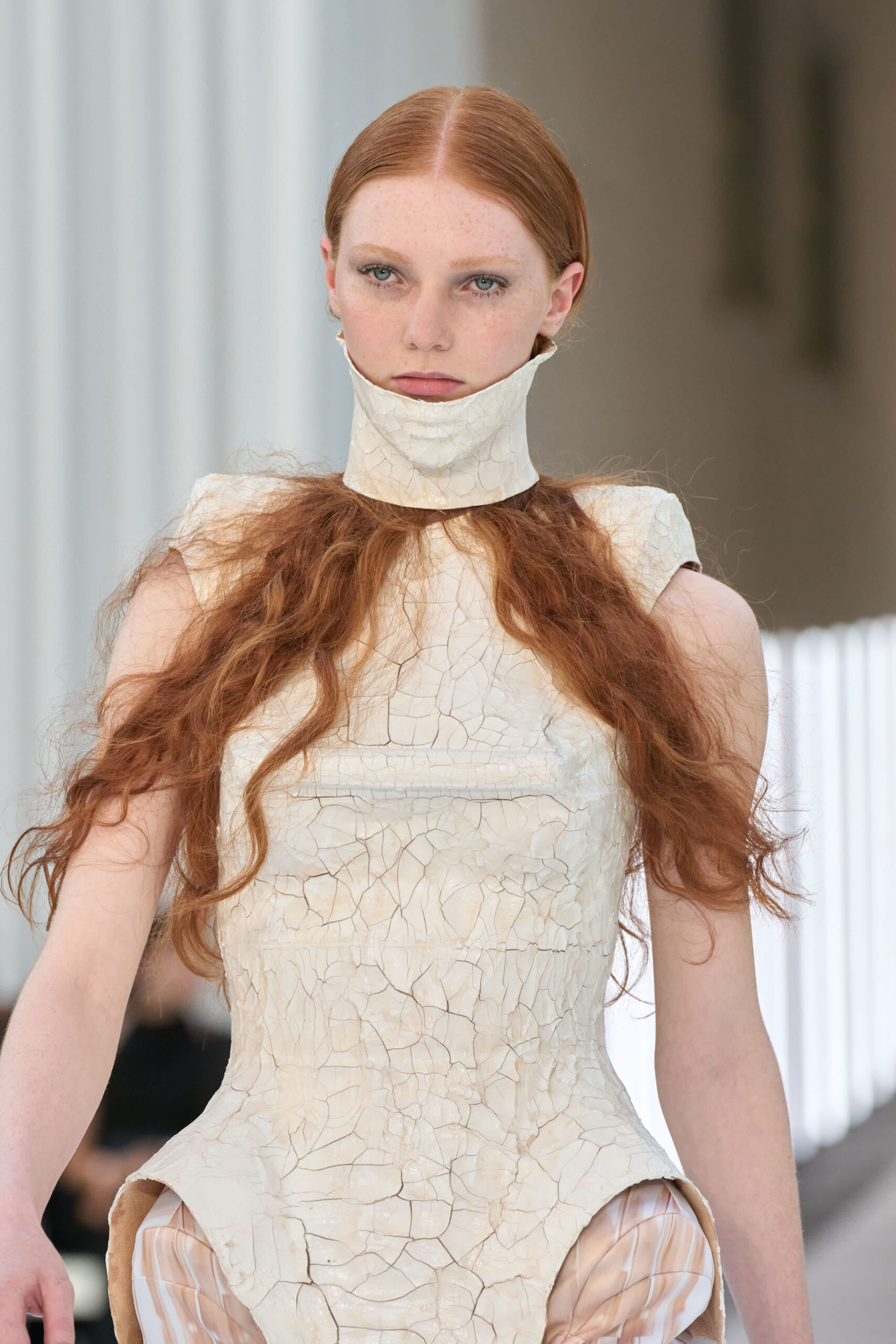
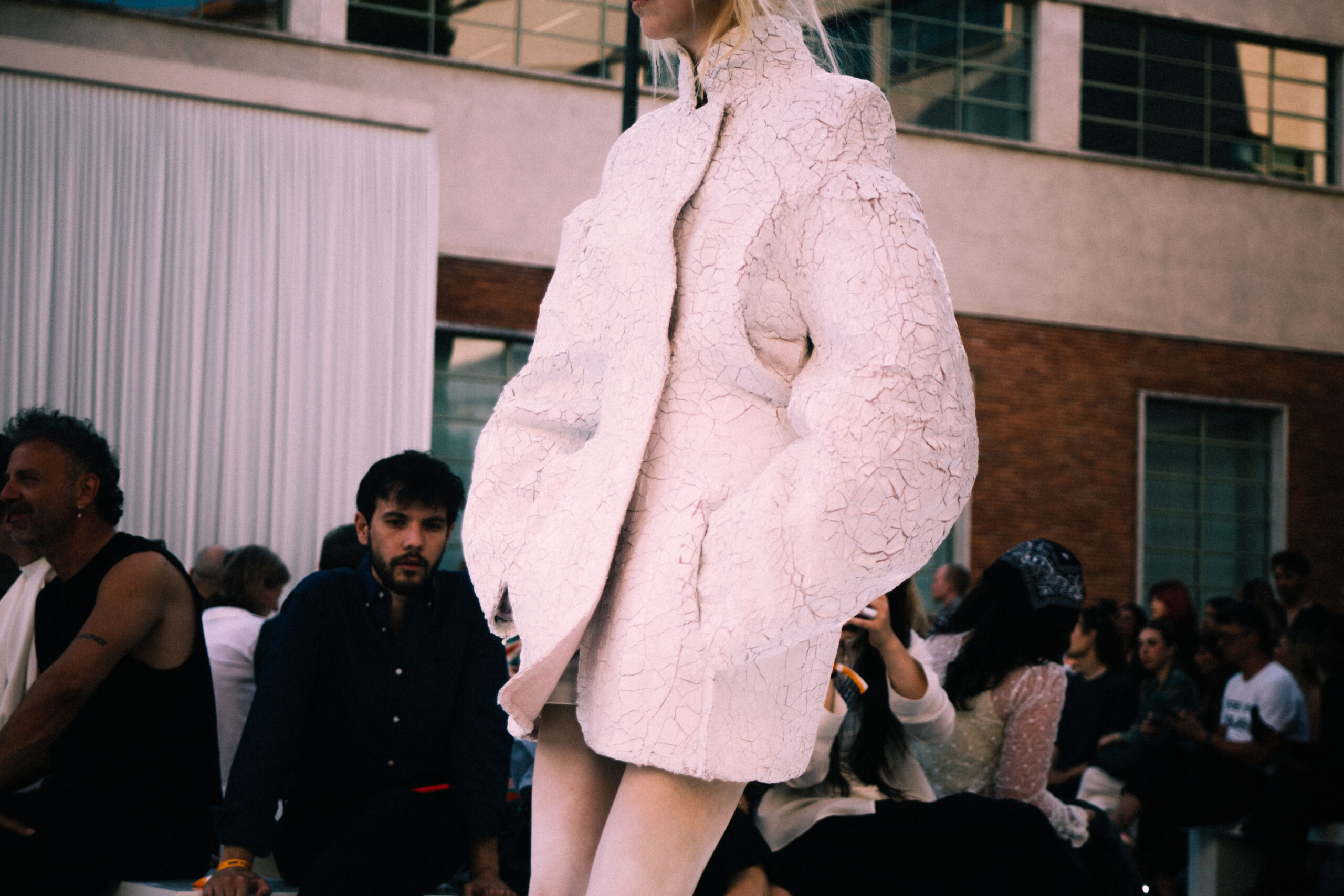
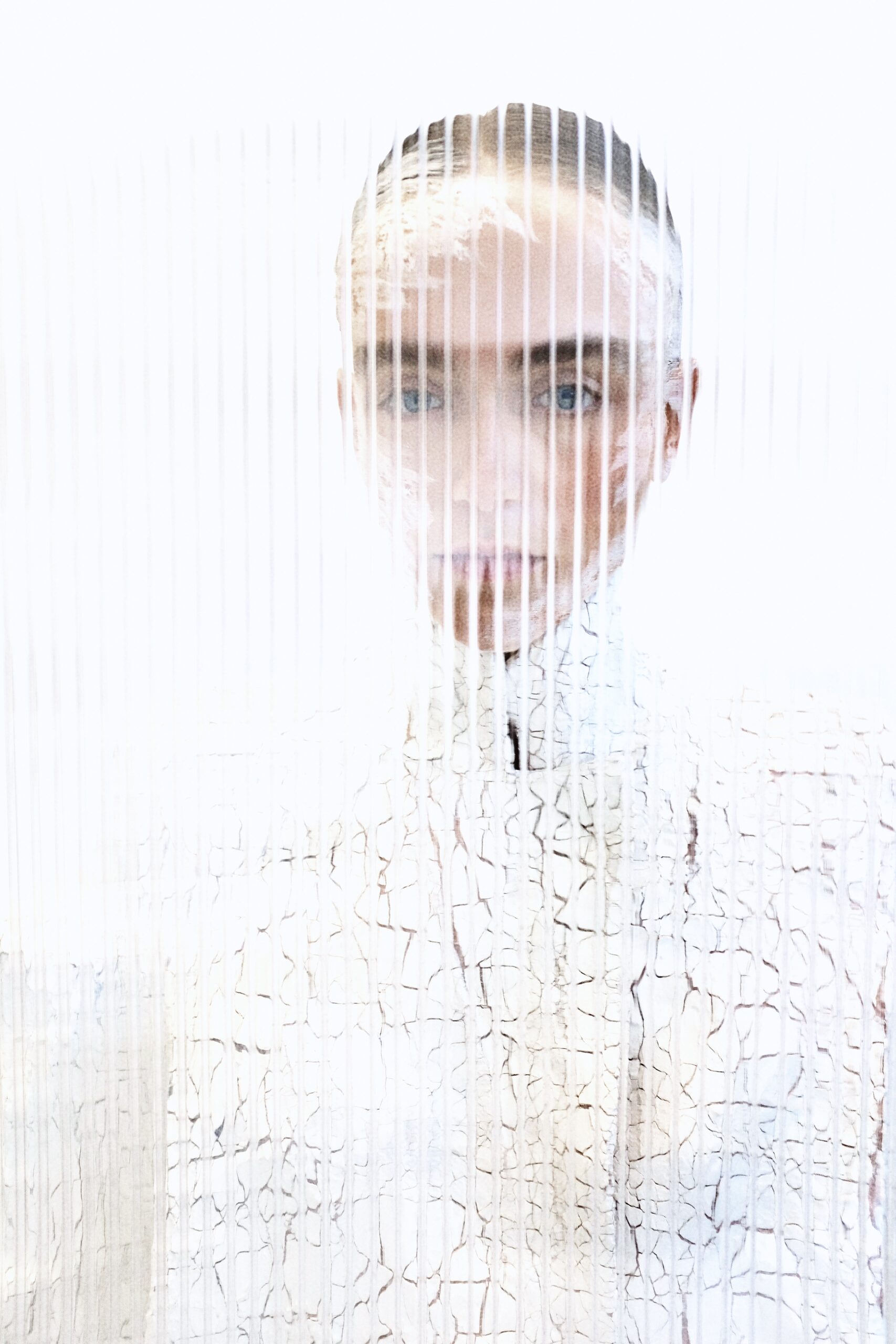
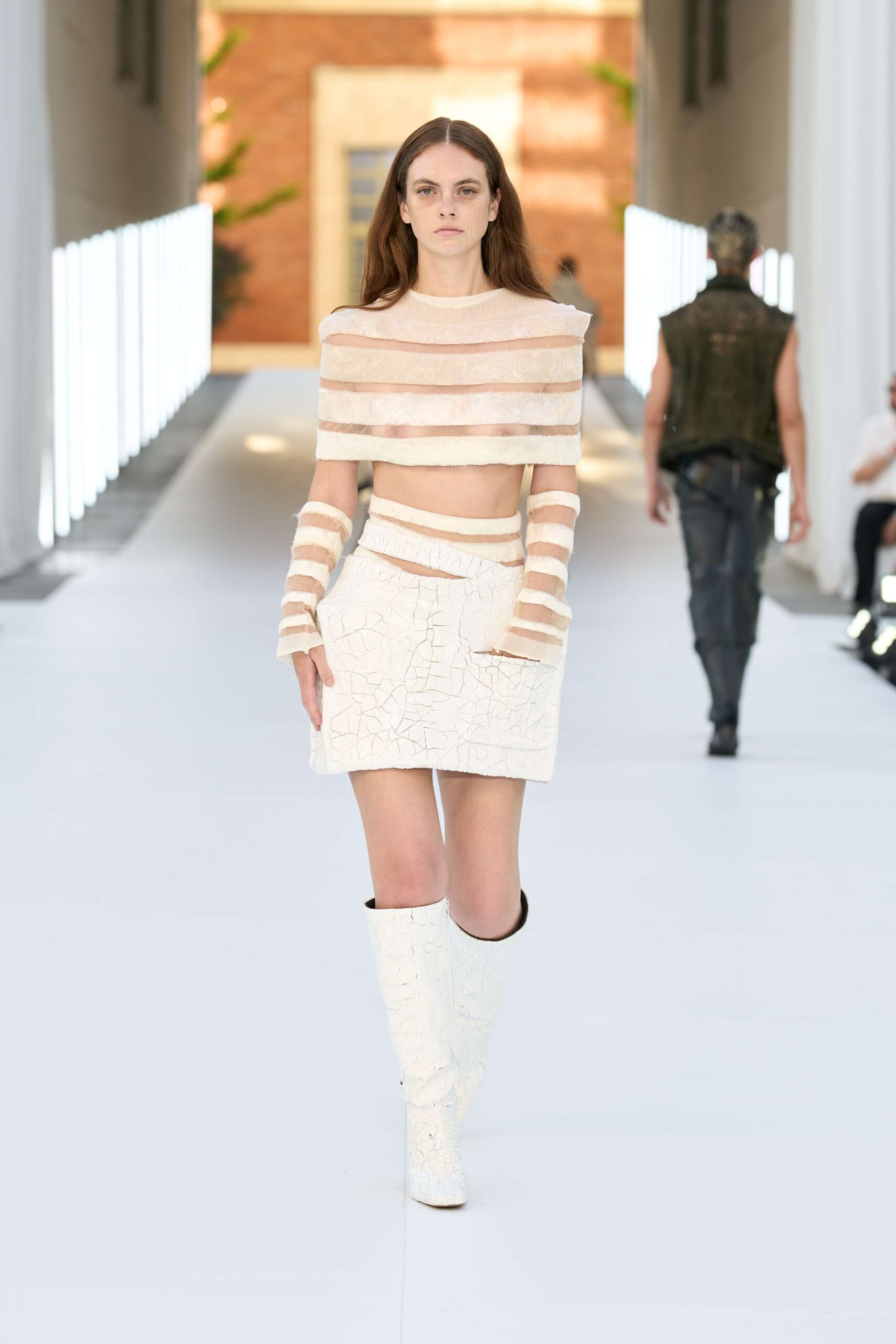
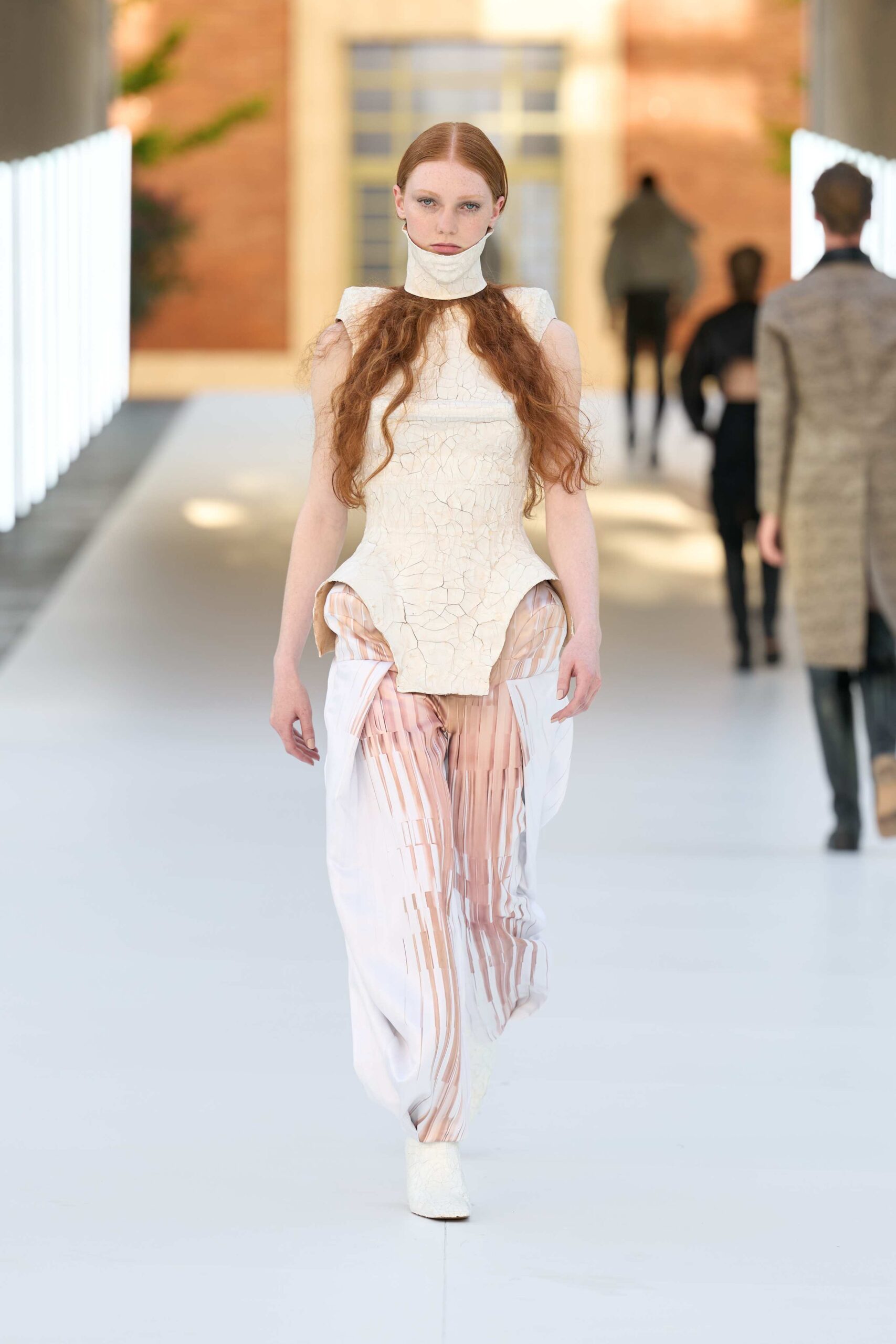
E: I found a way to do the crackling fairly quickly, it’s basically paint that cracks. The challenge was making it stay on the fabric, so I ended up using felted wool because its tiny fibers let the paint really stick. The crackling itself is acrylic paint mixed with a medium to make it more flexible, then cracked partly by hand. A varnish on top gives the shine and helps it stay in place.
P: There’s also printing in your collection, you’ve printed images of the human body. How did you do that, and where did the images come from?
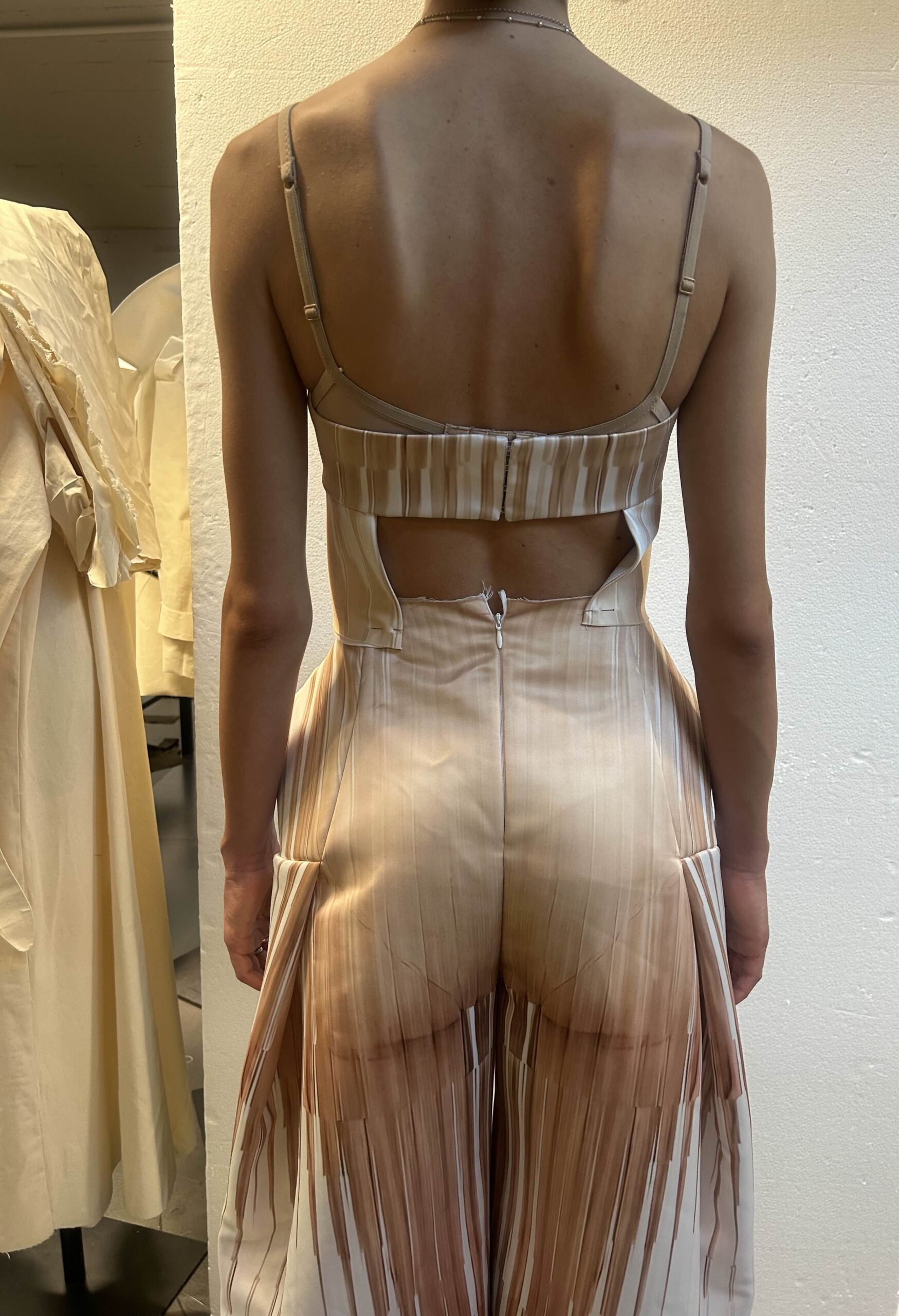
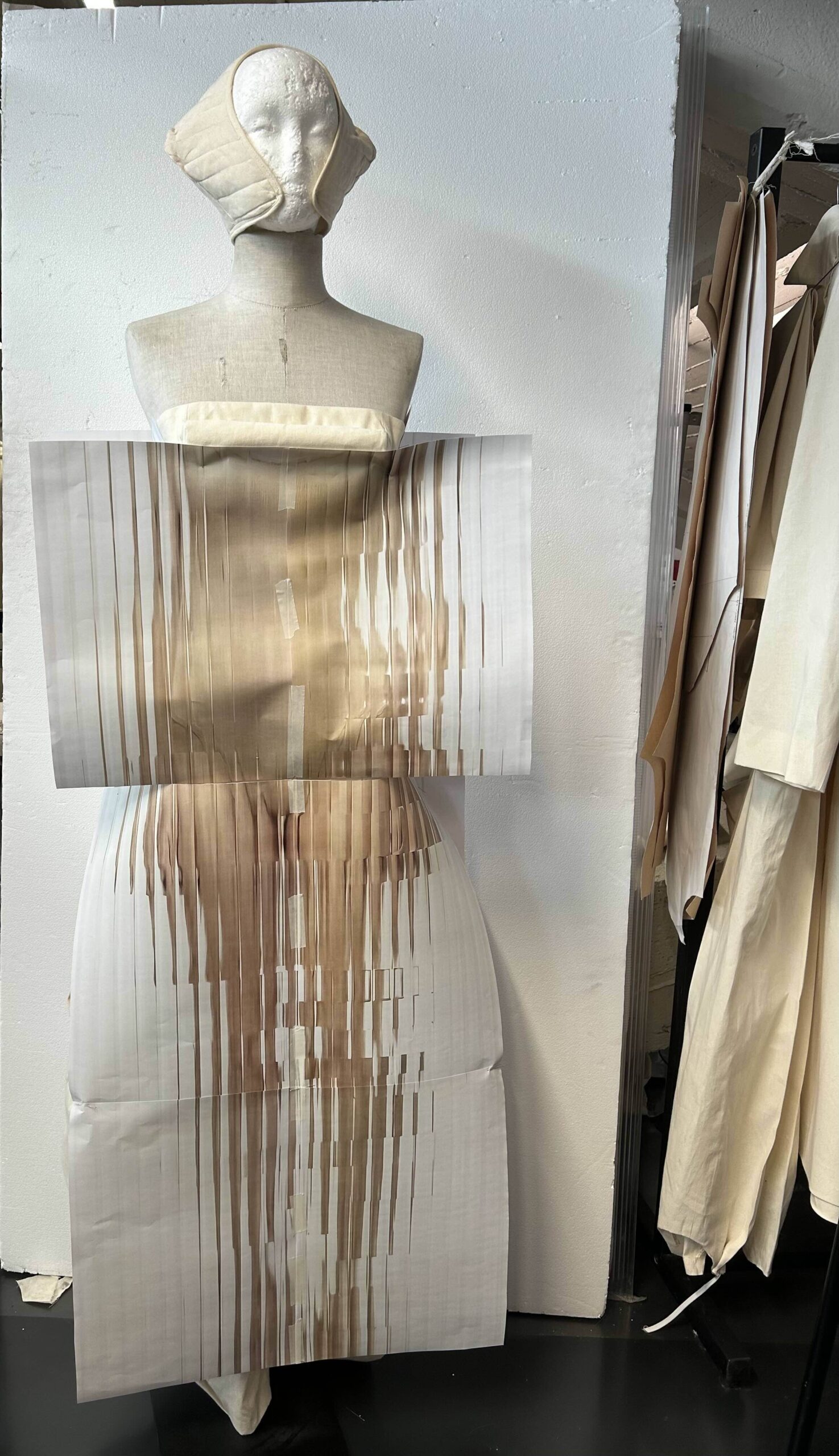
E: I had two prints. The first, with the legs, was inspired by the idea of a generated body glitching behind a kind of glass wall. I worked with AI a bit to help create it, we had a print teacher at school who showed us how to use AI in early print drafts, so I created the first draft with AI and then refined it myself. That print was on silk.
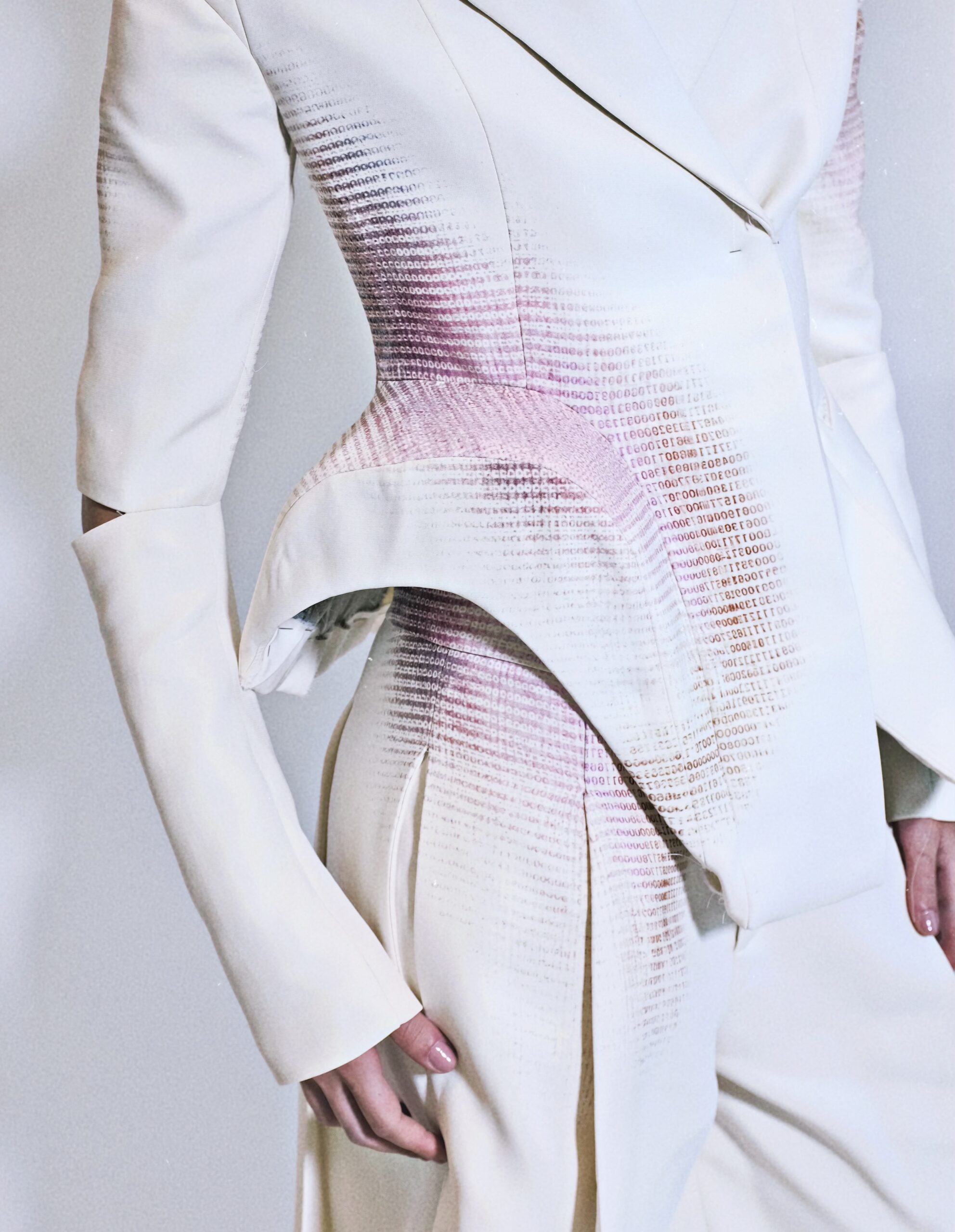
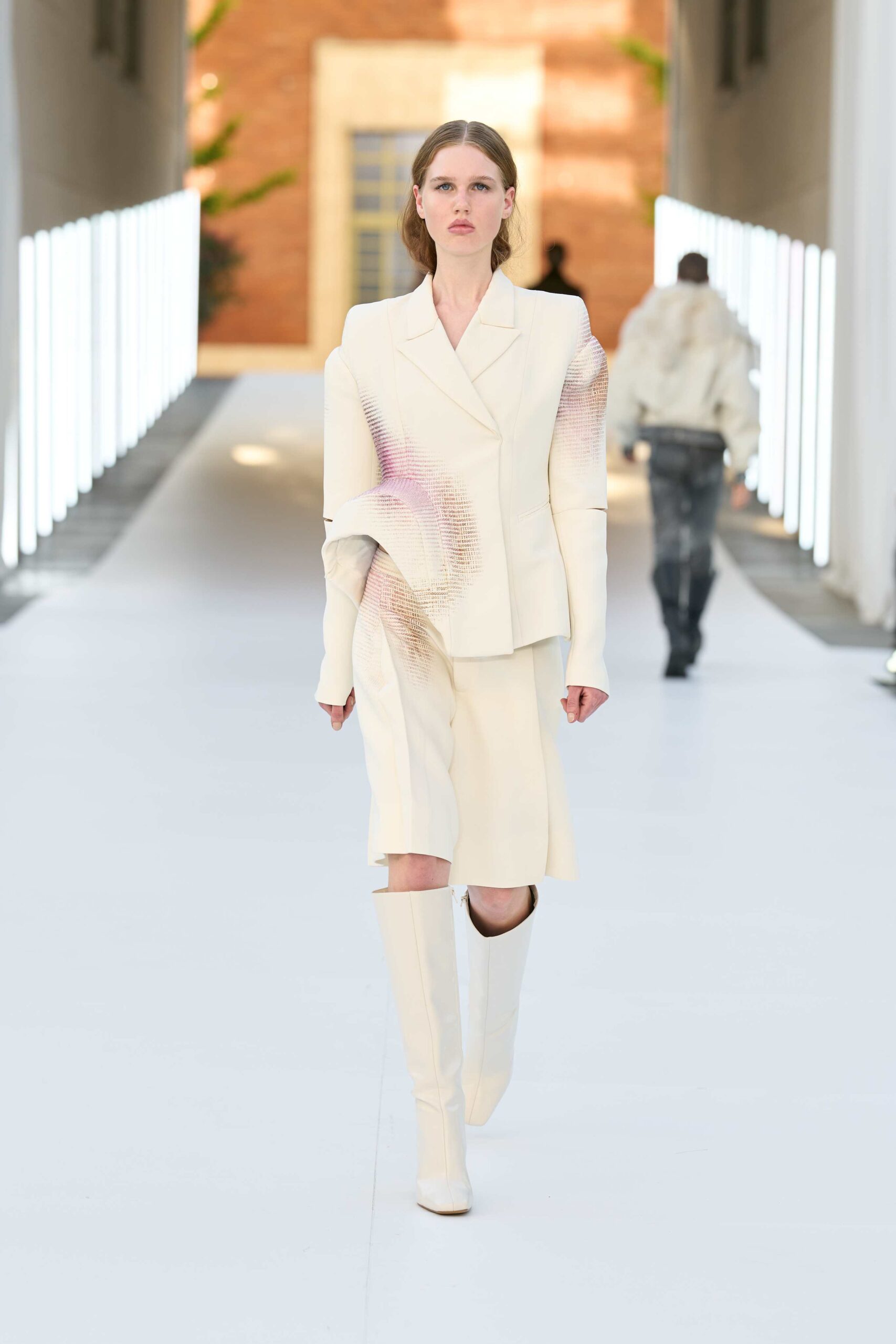
The second print, with the small numbers on the blazer and shorts, I developed together with Ostinelli Seta, who also helped with the printing process. The idea was to show the human caught between data and reality, numbers that look like digital code slowly forming a human body, in orangey-pink skin tones. That process was very technical, so I needed their expertise for a sharp, clean finish. That fabric was viscose.
P: What about the face masks, the half-face pieces? When did that idea come about?
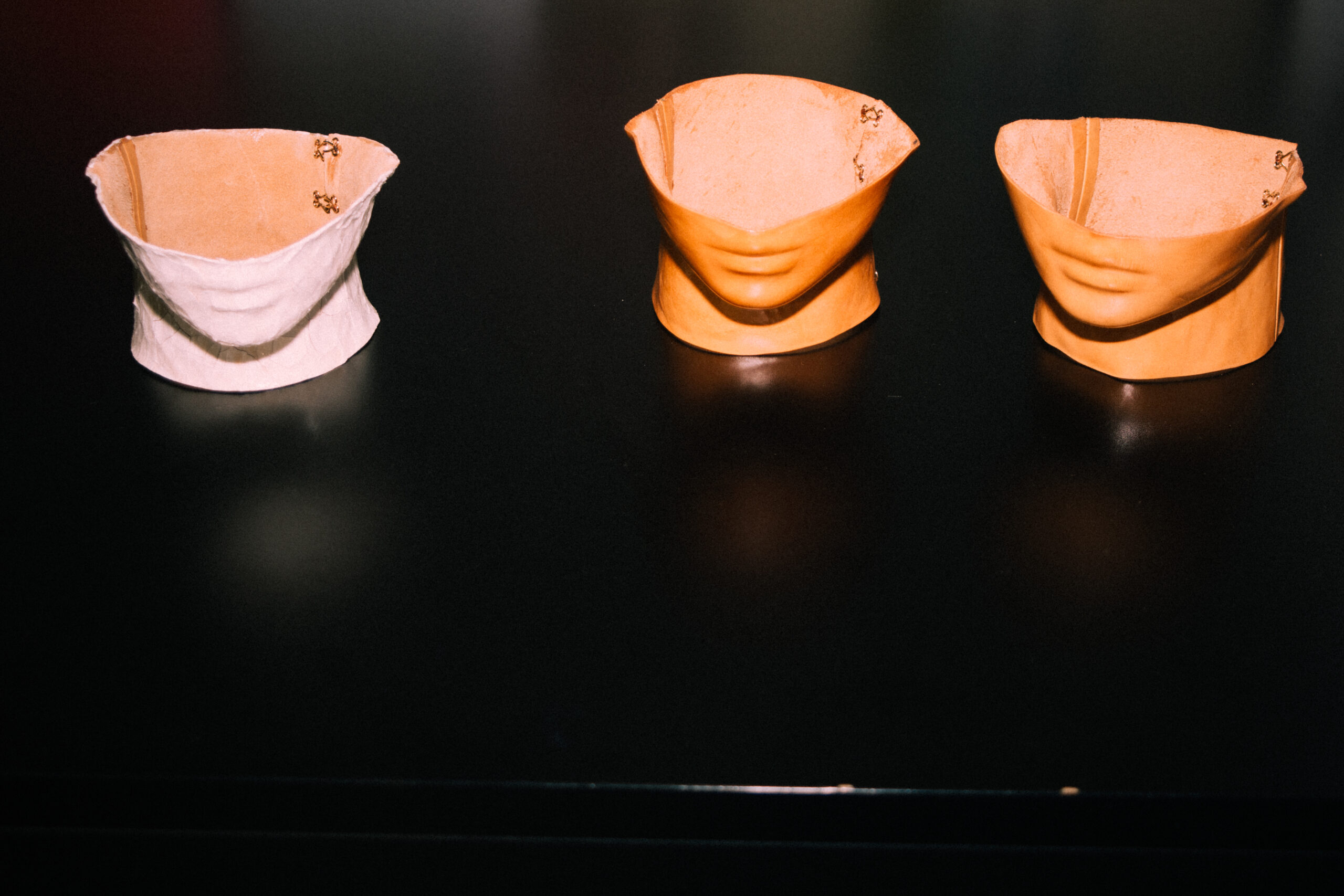
E: Fairly late in the process, I always felt something was missing. I realized that our first instinct when looking at an image or a person is to look at the face; it’s how we recognize whether something is real. So I wanted to play with that using a half-face mask, half human, half artificial. It also covers the mouth, which I later thought was interesting, because maybe that’s what separates us from dolls and mannequins: a doll has a mouth and eyes but cannot speak, while we can. Communication might be one of our defining human skills, and we should be proud to use our voice, that’s part of why I included that detail.
P: How did you use AI to develop your collection overall?
E: Mainly in the research process, I asked a lot of questions to see how it thinks and reacts. For example, I gave it images of Hans Bellmer’s sculptures and asked it to put a coat or dress on them, just to see what it would do. It didn’t really work, but that was interesting in itself, AI struggled to process those kinds of bodies. I also used it a little for the prints.
P: What do you think of our relationship to technology now, and what do you think will happen in the future?
E: I’m generally an optimistic person. Of course there’s a real fear around AI and technology taking jobs, but I think we have to learn to see the good in it too. I don’t see technology and humanity as opposites, we need to learn how to work with it and use it for our own good. In the future, I think we’ll keep learning to live alongside it, but also become more proud of what it means to be human: embracing imperfection and emotion instead of chasing perfection, since perfection is something technology can already do.
P: What’s next for Emilie?
E: First of all, I just want to keep learning, that’s what I feel most right now. The next step is an internship; nothing is confirmed yet, but I’m in the process. I hope to find a place where I can keep experimenting, especially with textiles and manipulation, since that’s where my heart is. I also have a few upcoming projects where the collection will be part of an exhibition, which I’m excited about, seeing it in a gallery space rather than only on the runway.
If you would like to stay up to date with Emilie’s work, you can follow her @emilie.wenckstern.
CREDITS
Written by
Winning collection
- Emilie Wenckstern “No Longer Human”, 2026. Sponsored by Ostinelli Seta.
Cover image
- Emilie Wenckstern “No Longer Human”. Photo by Filippo Fior and Salvatore Dragone / GoRunway.