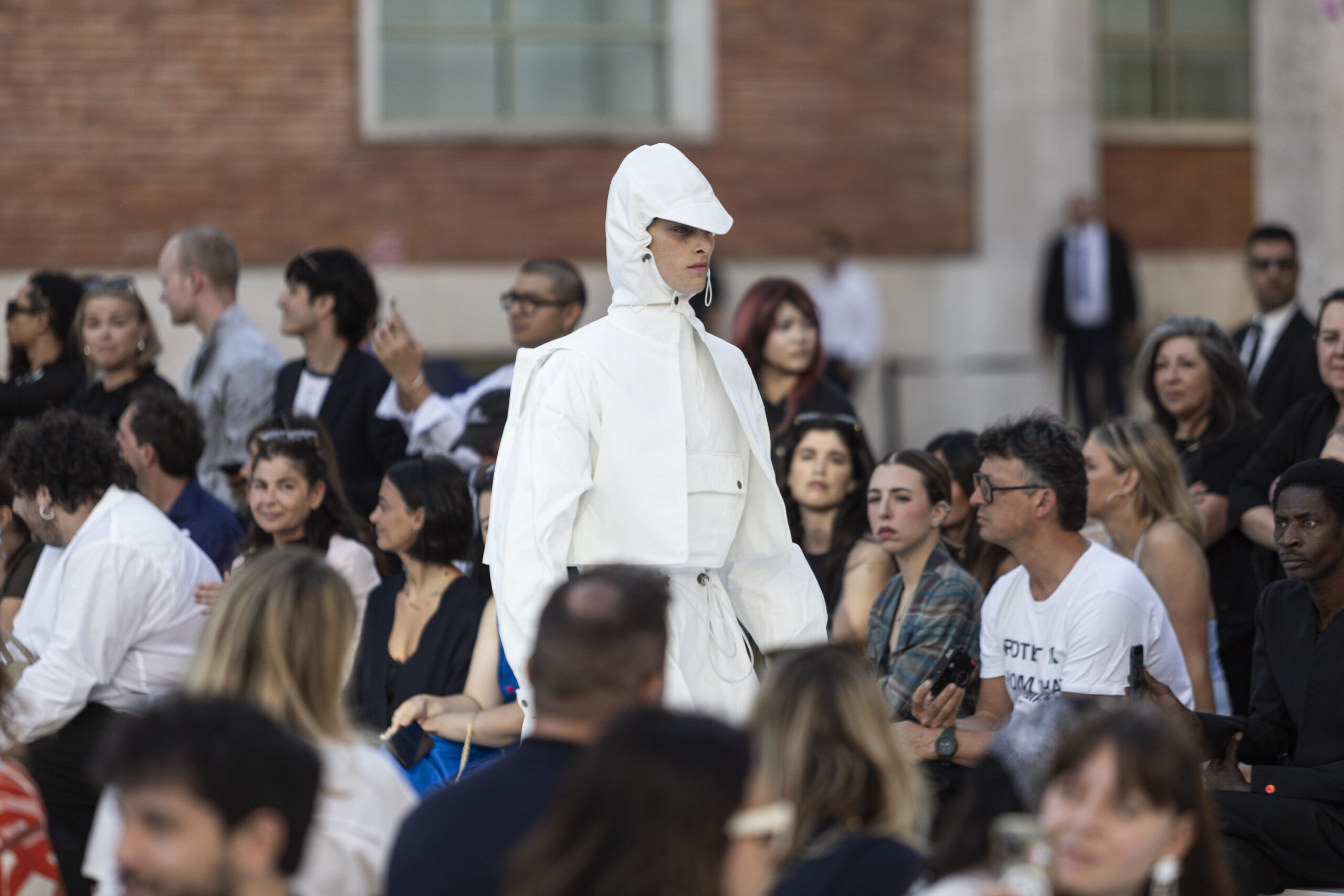
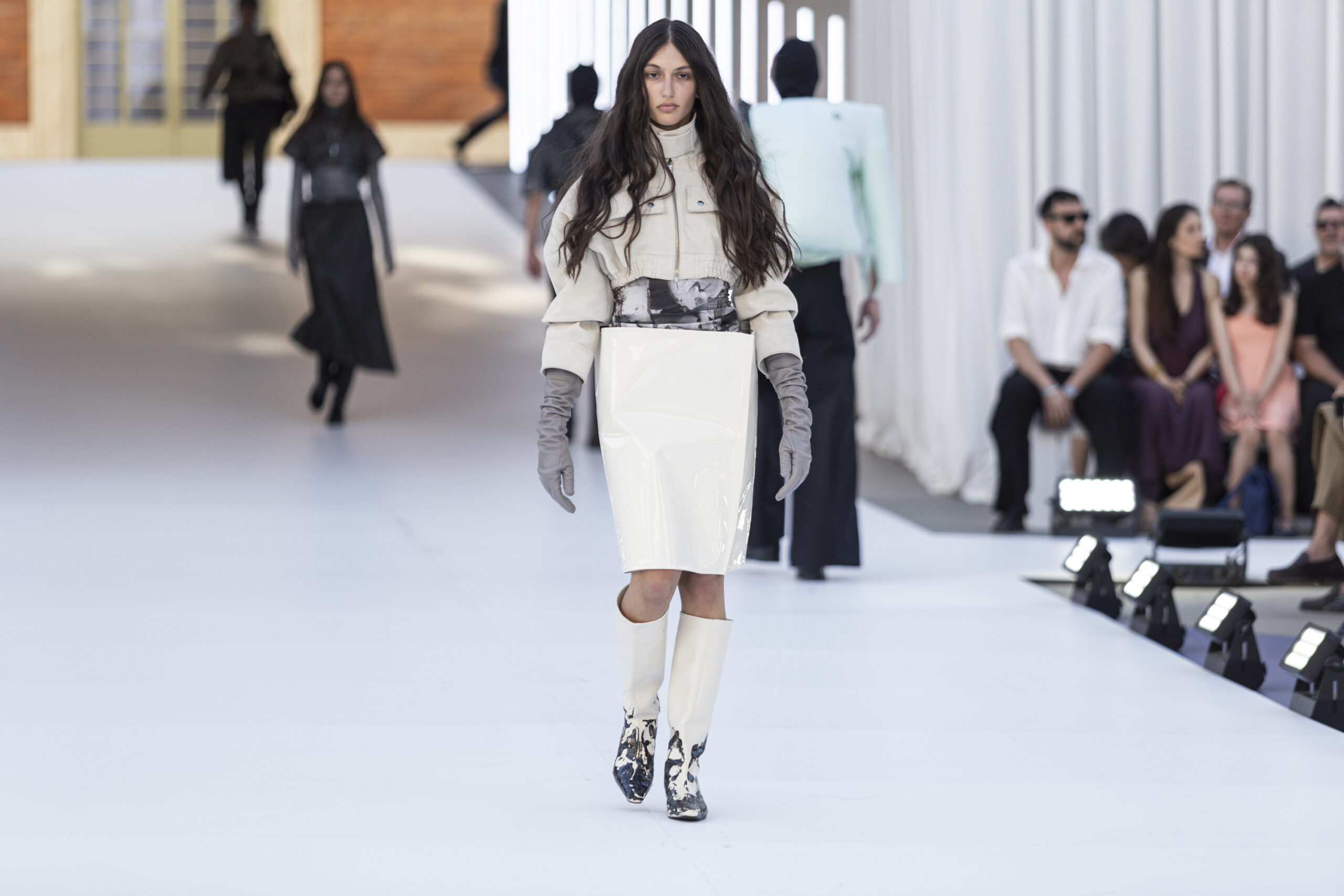
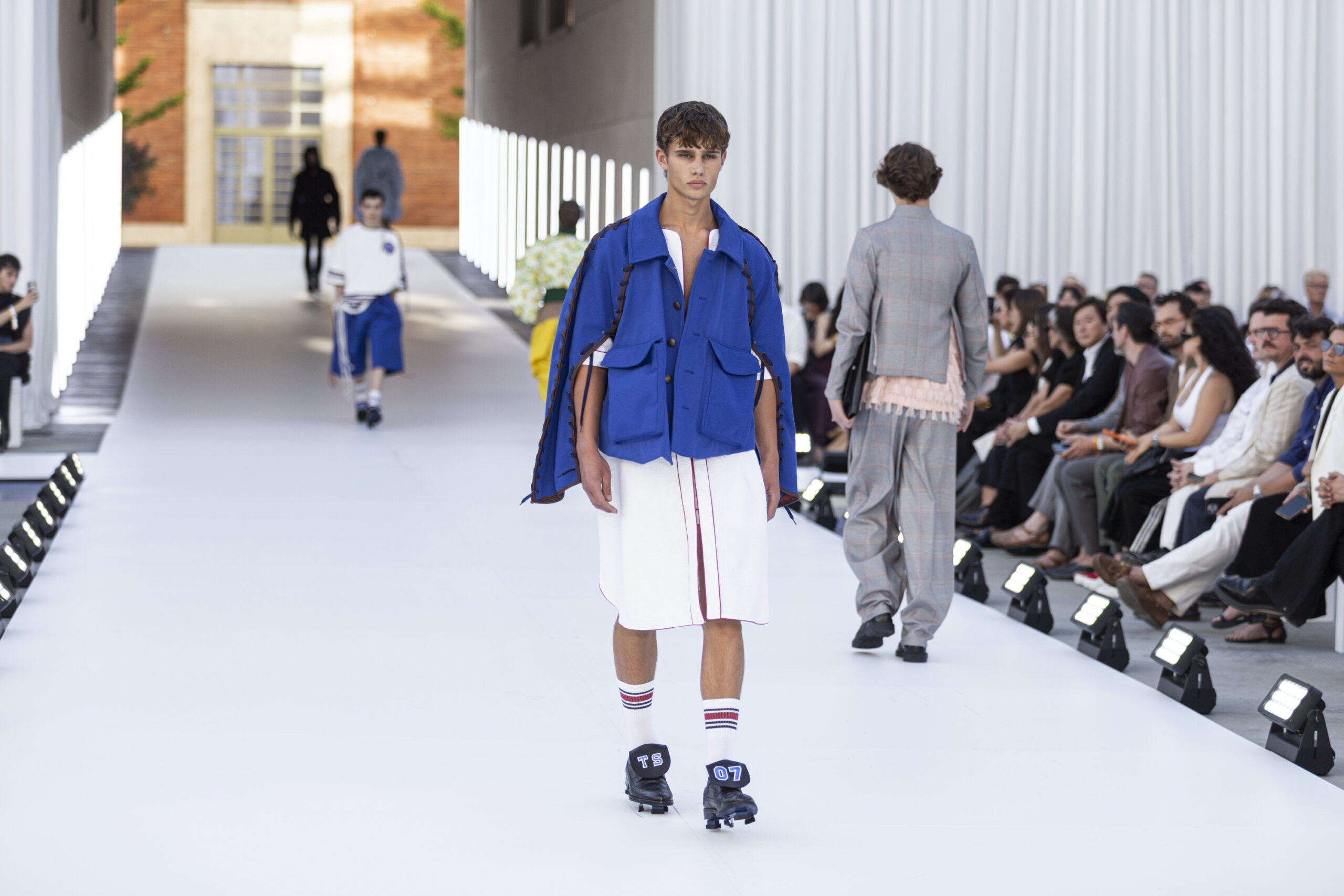
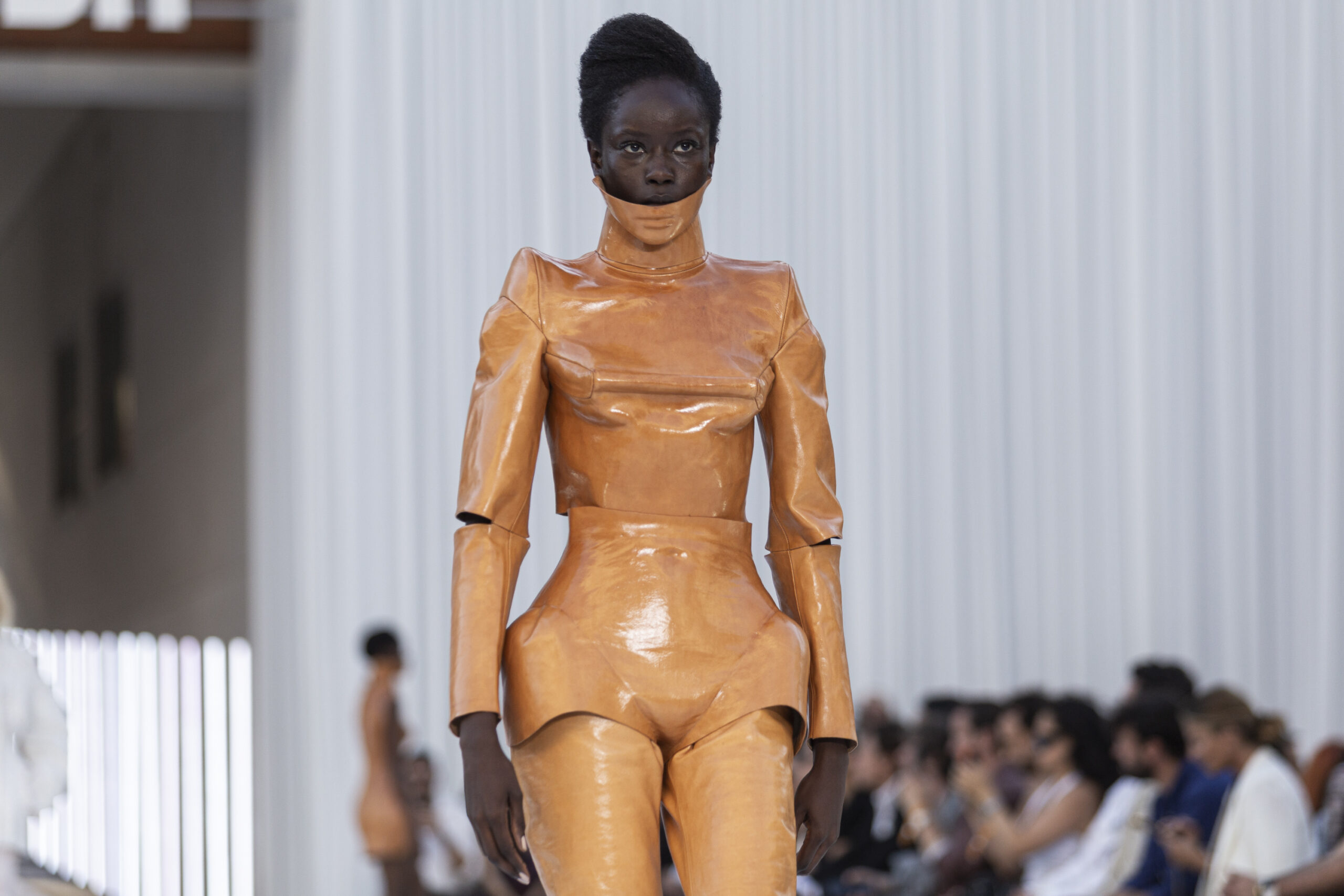
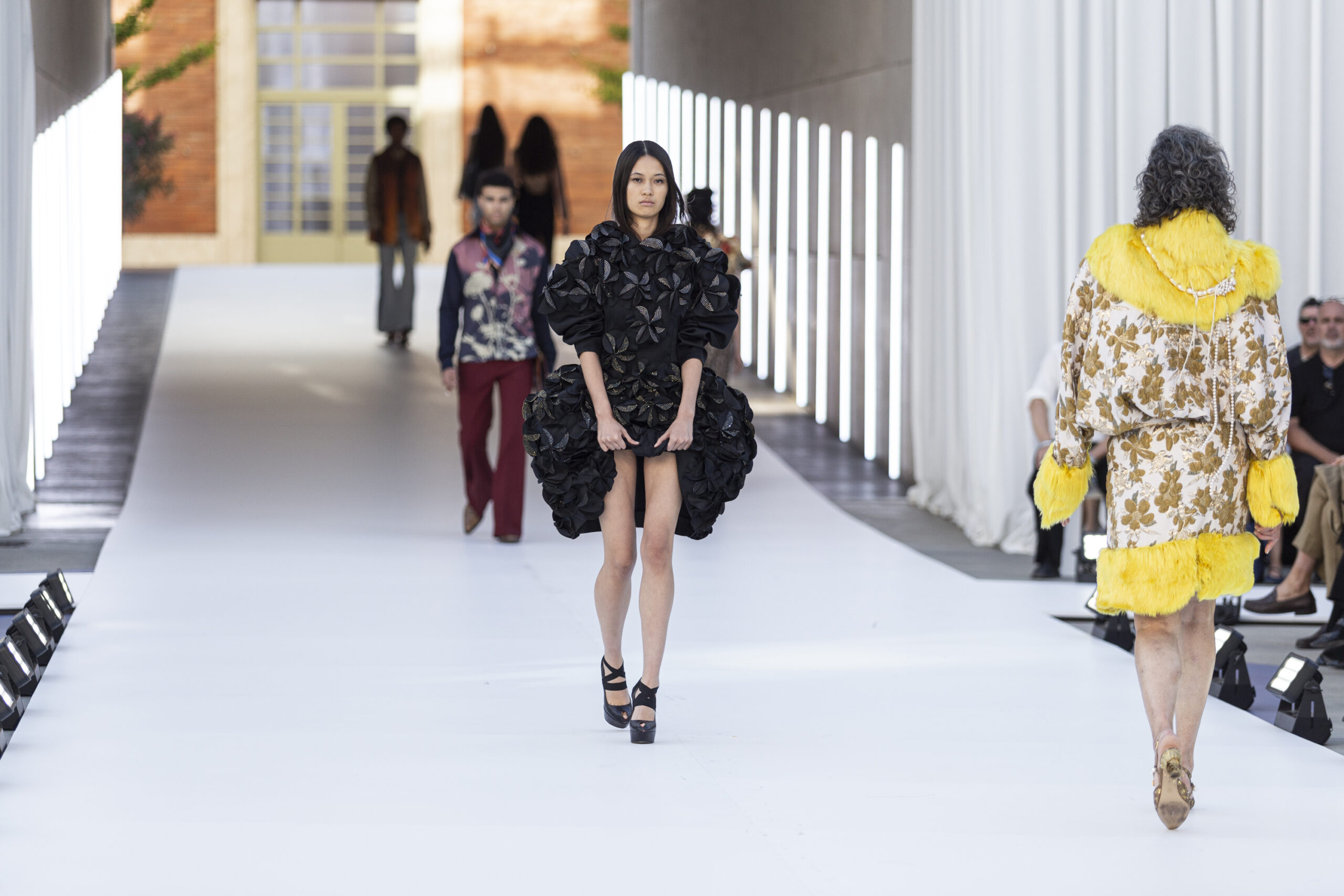
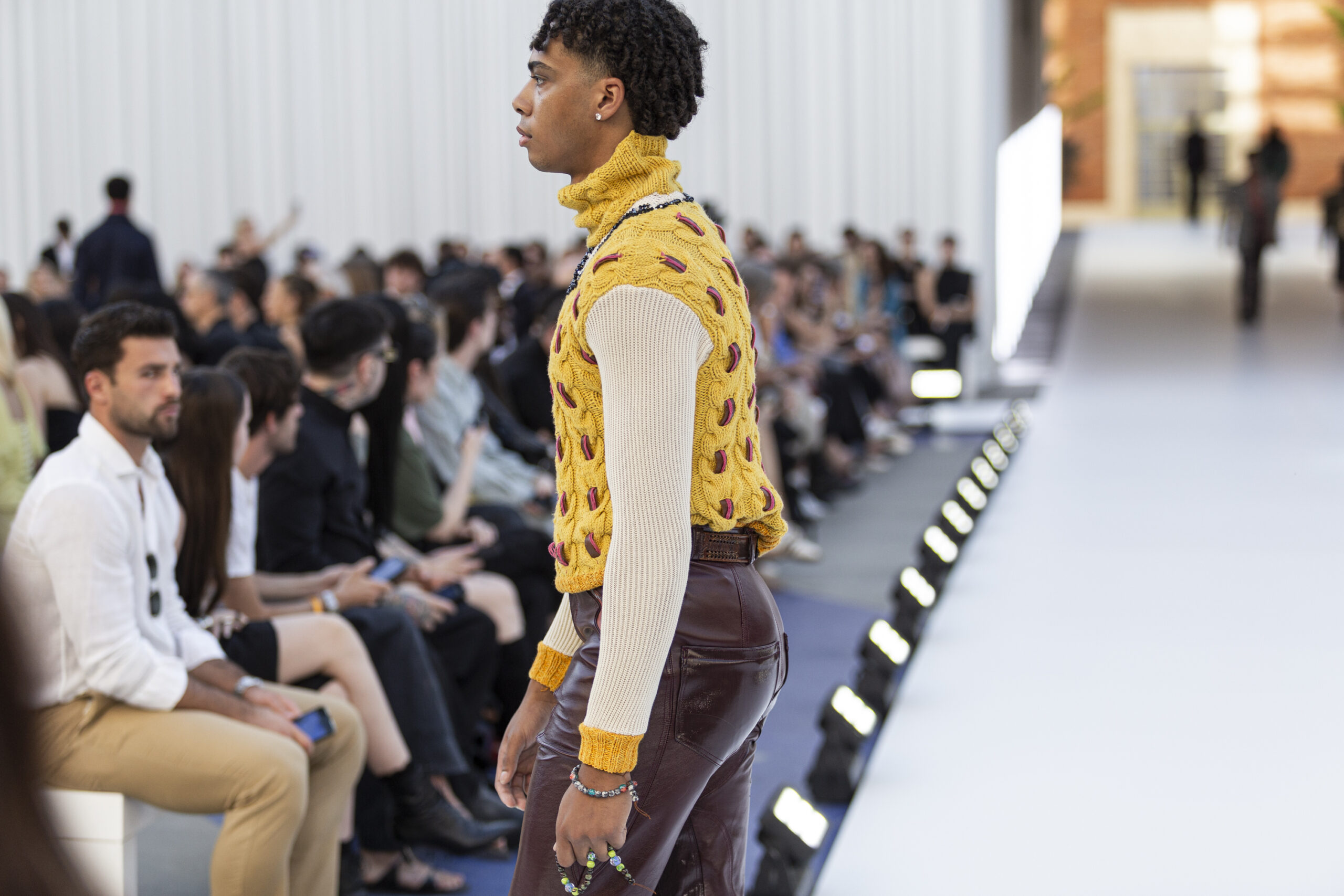
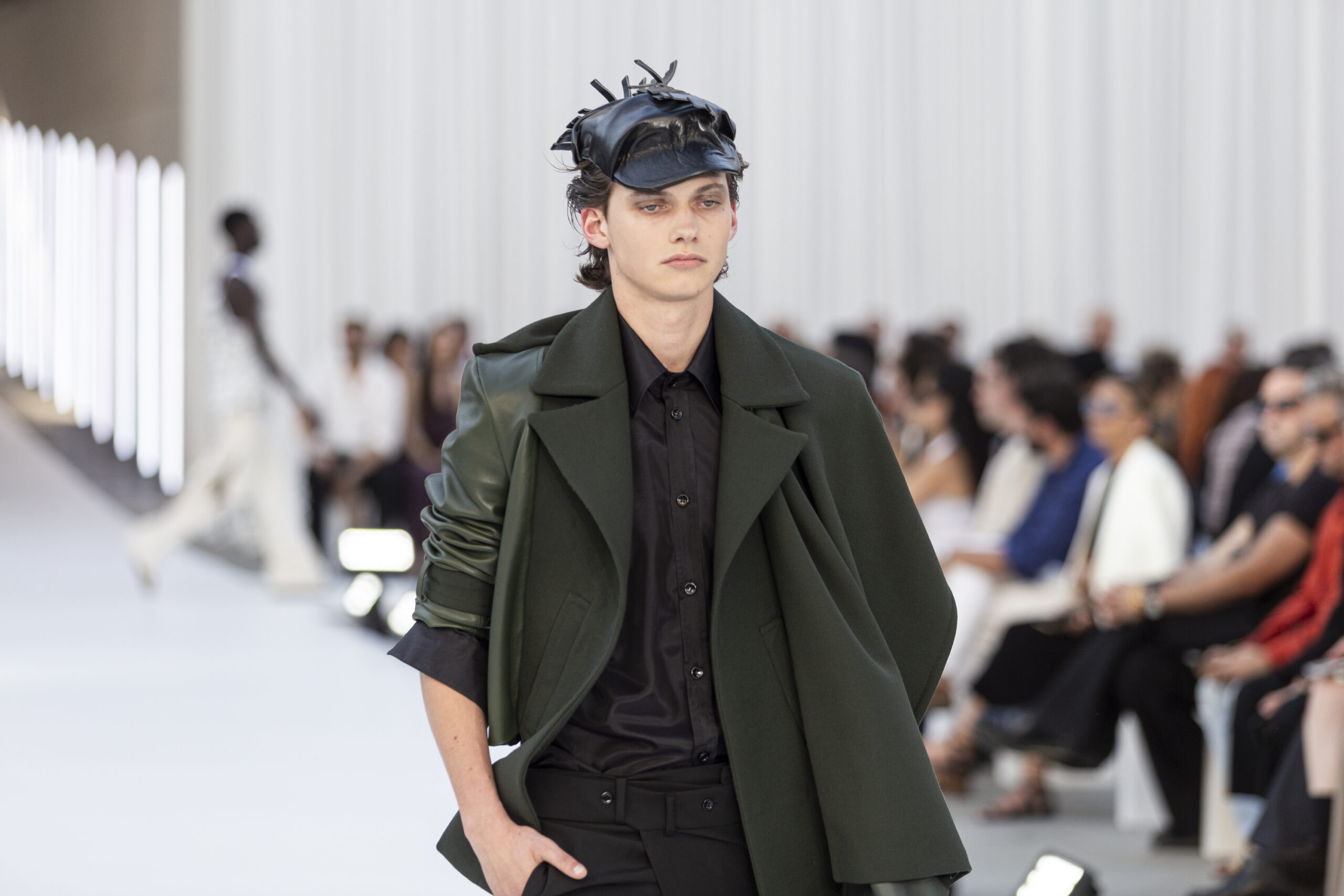
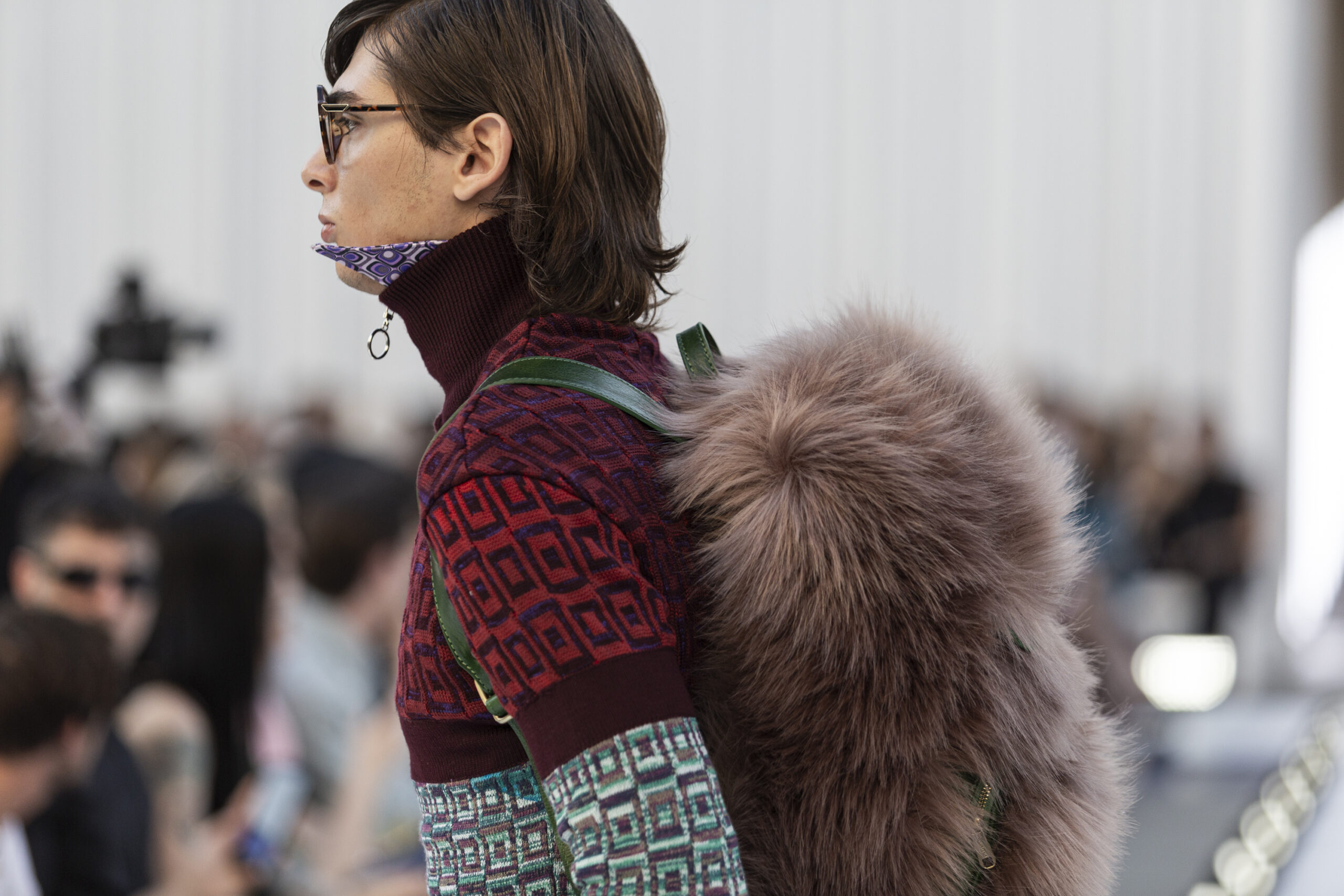
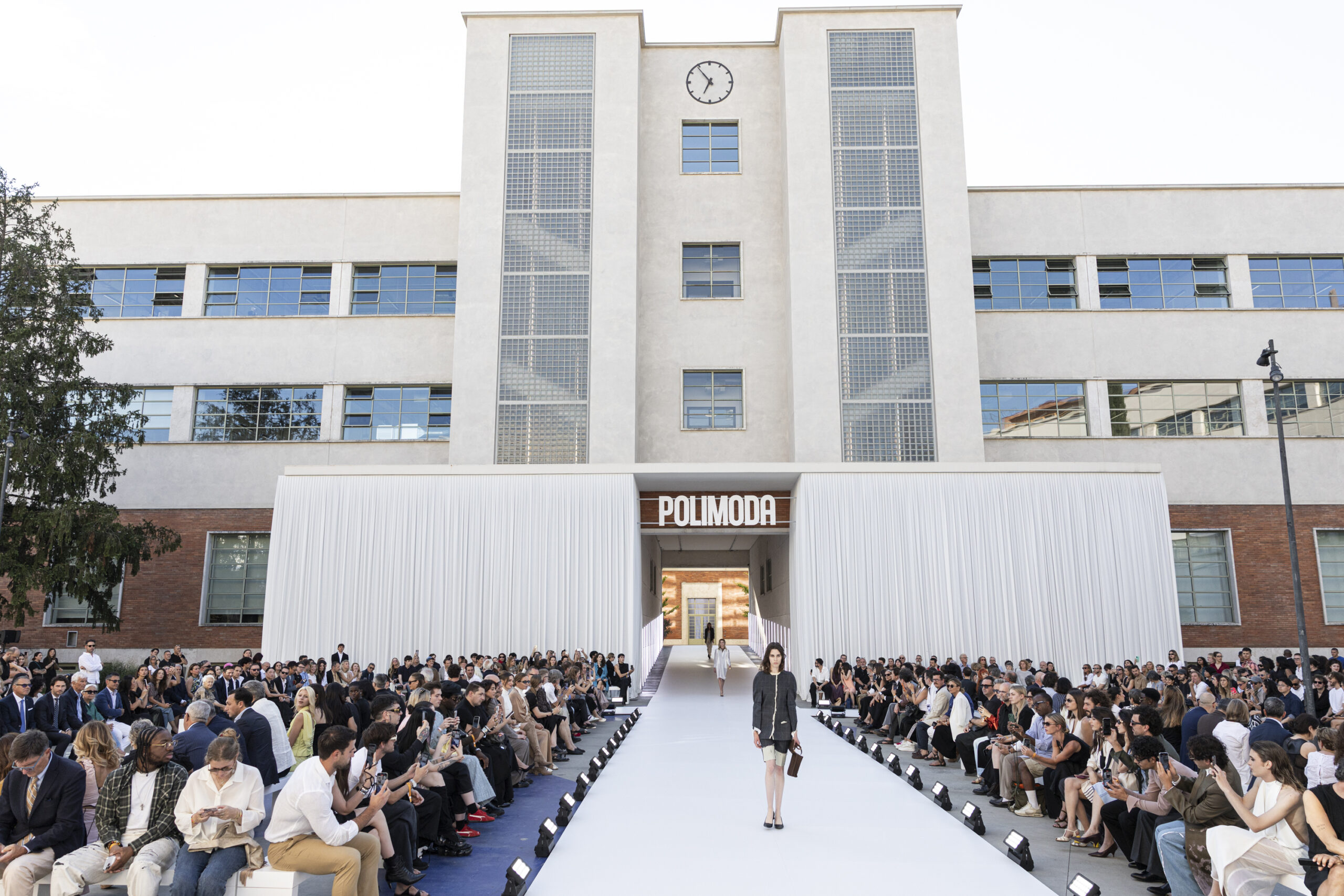
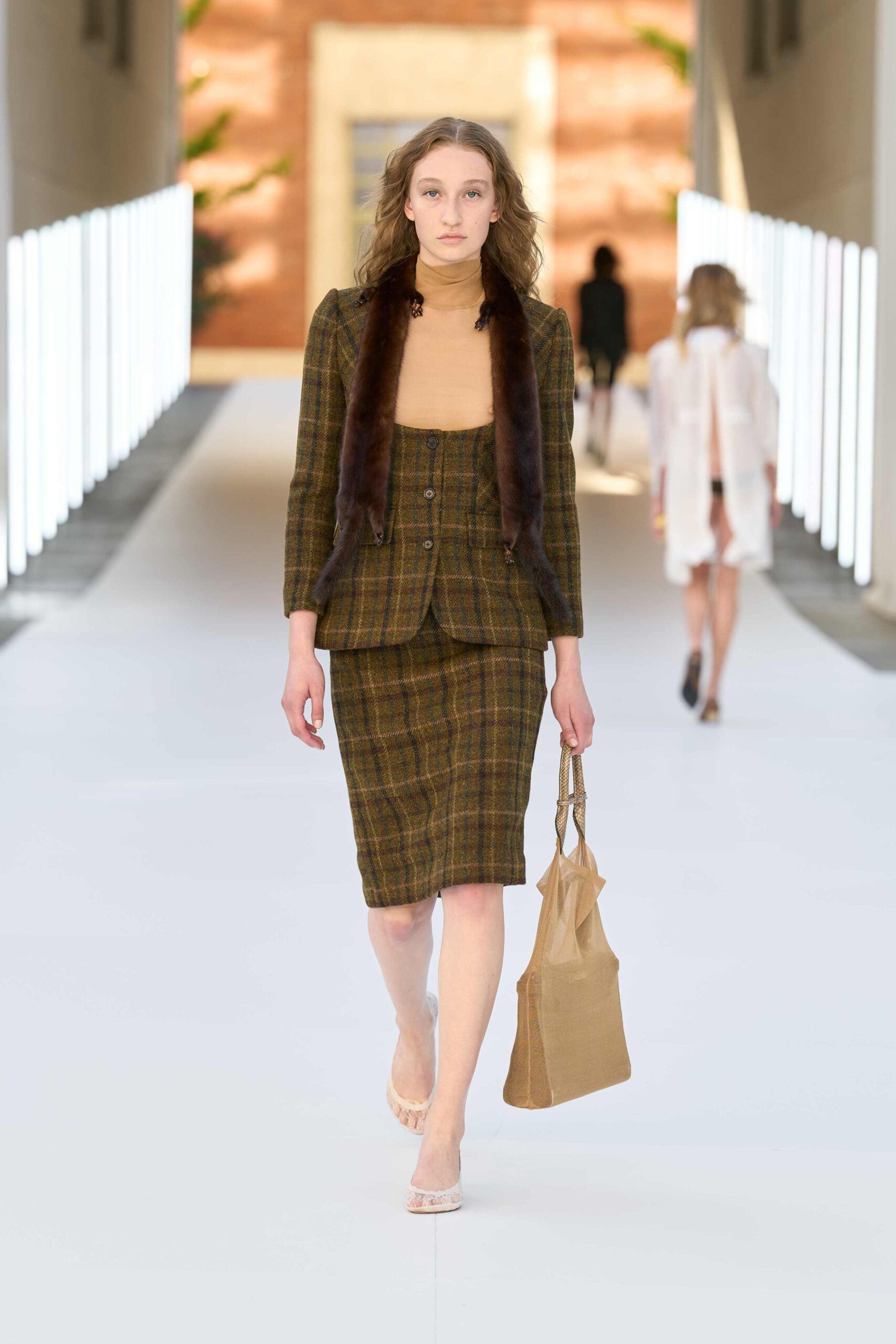
Journal correspondent, Aleksandra Popova, takes on the graduate show from a trend forecasting lens: defining fashion as communication, not decoration, and setting forward a thesis that calls us to bring back joy into our canons of taste.
It comes as no surprise that at the after party I scribbled down notes of admiration for the talent displayed at the 2026 Graduate Show; I caught a teacher on her way home, “I didn’t pick up my phone once. I usually have a favourite, but I couldn’t choose”, she said.
In Ingrid Loschek’s When Clothes Become Fashion, she writes “fashion is a social system based on communication”, whereas communication scientist Paul Watzlawick claims, “it is impossible not to communicate”, hence fashion is an inevitable means of communication. These statements apply from human being to human being, from human being to animal, and most importantly in our case, from human being toproduct.
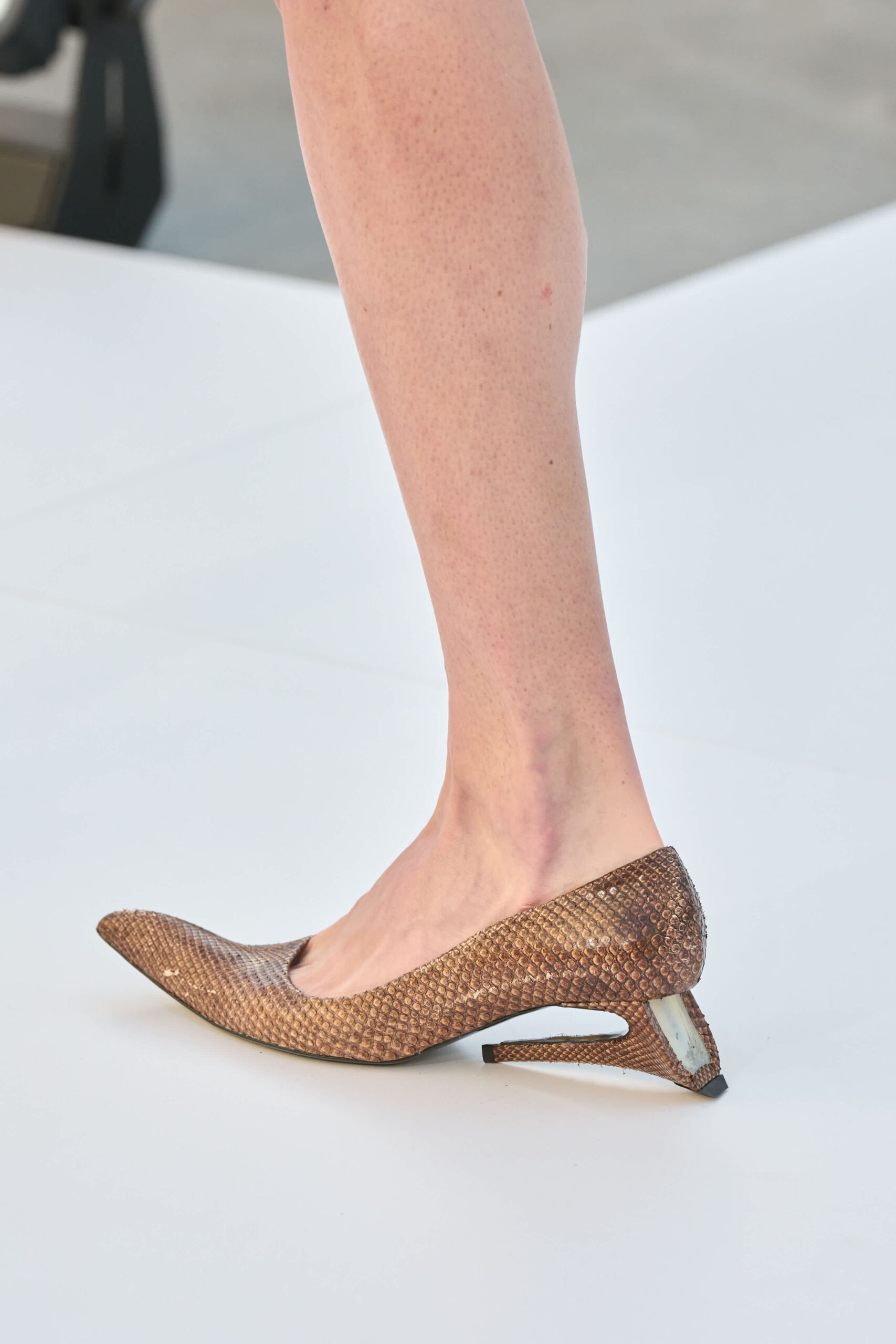
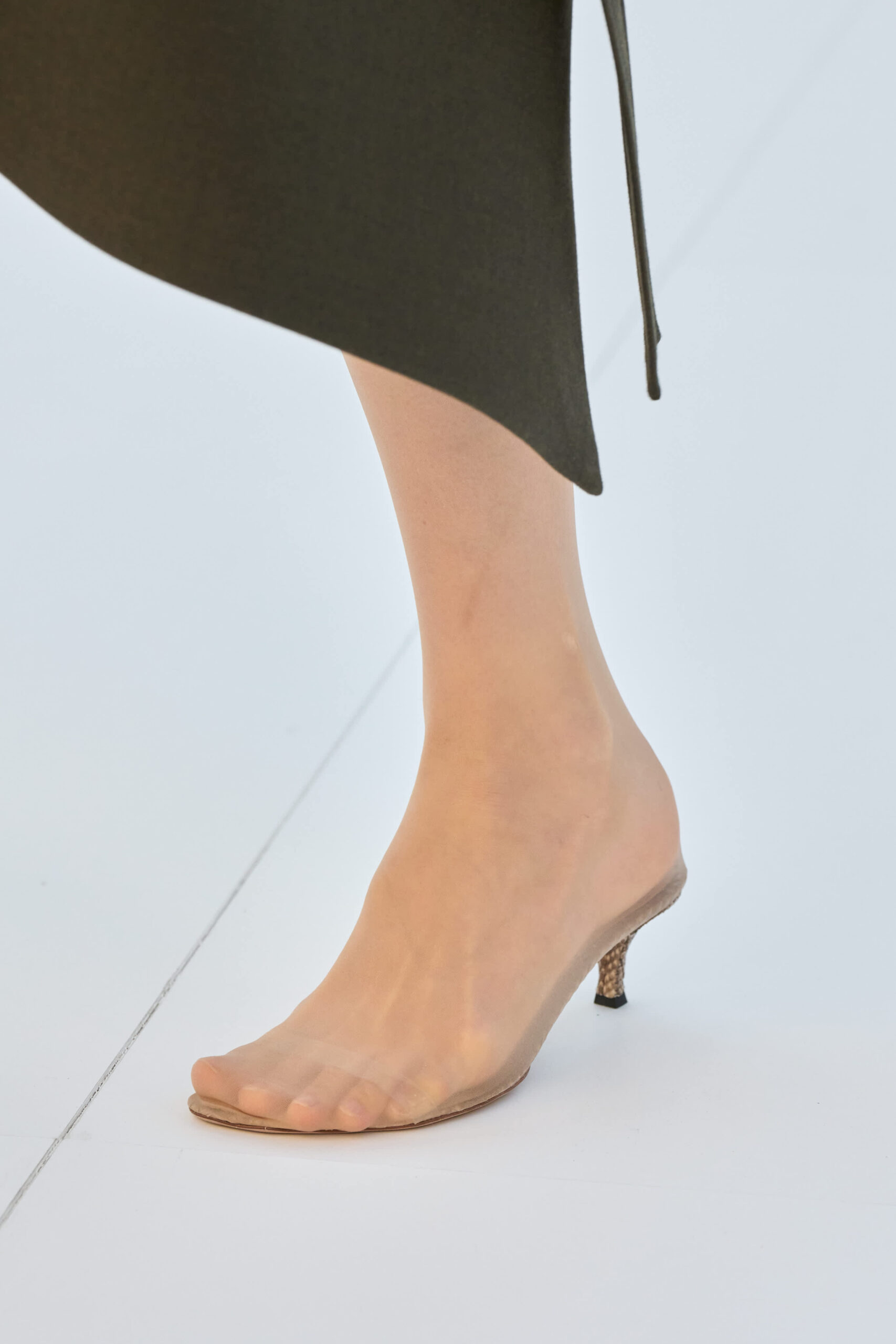
Sociologist Niklas Luhmann goes one step further with his thesis that“society is made up not of human beings but of communications.” We employ images where language fails and employ language where images fail. The additional function of fashion lies in a creation of social identity, which builds upon communication. To me, the runway has never been the display of a shoe, or simply the draping of a dress, but a broadcast, a “breaking news” worthy of a prime tv slot. Whether it’s Vincenzo Marrazzo’s broken heel model or Evelina Kryvopust’s seemingly transparent 50 mm heels, these are a vehicle for social identity that have no choice but to communicate
As algorithms accelerate and AI generated content becomes the norm, where else are young designers looking to but their own story? When the reference becomes replaceable, they look to the only place where they can go, towards themselves.
Aleksandra Popova
Aleksandra Popova Fashion Business student
We are moving out of Li Edelkoort’s 10 year Anti-Fashion Manifesto, where resistance and deconstruction became the norm. The pendulum in culture and in fashion is swinging back. Minimalism is finding a new definition, and maximalism has once again crept up through publications, from fashion to interiors. Maximalism is sometimes defined as “too much,” but what if it can rather be defined as honesty, a “display of entirety” rather than noise.
“It’s all about opening it up,” Aaron Dillworth tells me about his collection SUN IS HIGH SO AM I. He brings Miami’s contemporary language to his mothers Jamaican heritage in a blend of neutral tones, opening out the front end of his shoes, airing the models’ toes. A similar breeze can be felt on The Parajanov Street by Armenian student designer, Lusine Mkrtchyan. These students are always communicating, whether it be an experience held dearly or one they are trying to replace; through dress, behavior, appearance & speech. As algorithms accelerate and AI generated content becomes the norm, where else are young designers looking to but their own story? When the reference becomes replaceable, they look to the only place where they can go, towards themselves.
Lisa Criaco, The Pressure (Belgium)
Sponsored by Milior 1895. Photo by Serena Gallorini.
Diana Avetisian, Another Role (Armenia / Russia).
Collaboration with Zichen Wang, Undergraduate in Fashion Accessories Design
Sponsored by Preciosa. Photo by Serena Gallorini.
Emily Horton, Being Jew...ish (USA)
Sponsored by Shima Seiki Italia, Beste Hub. Photo by Serena Gallorini.
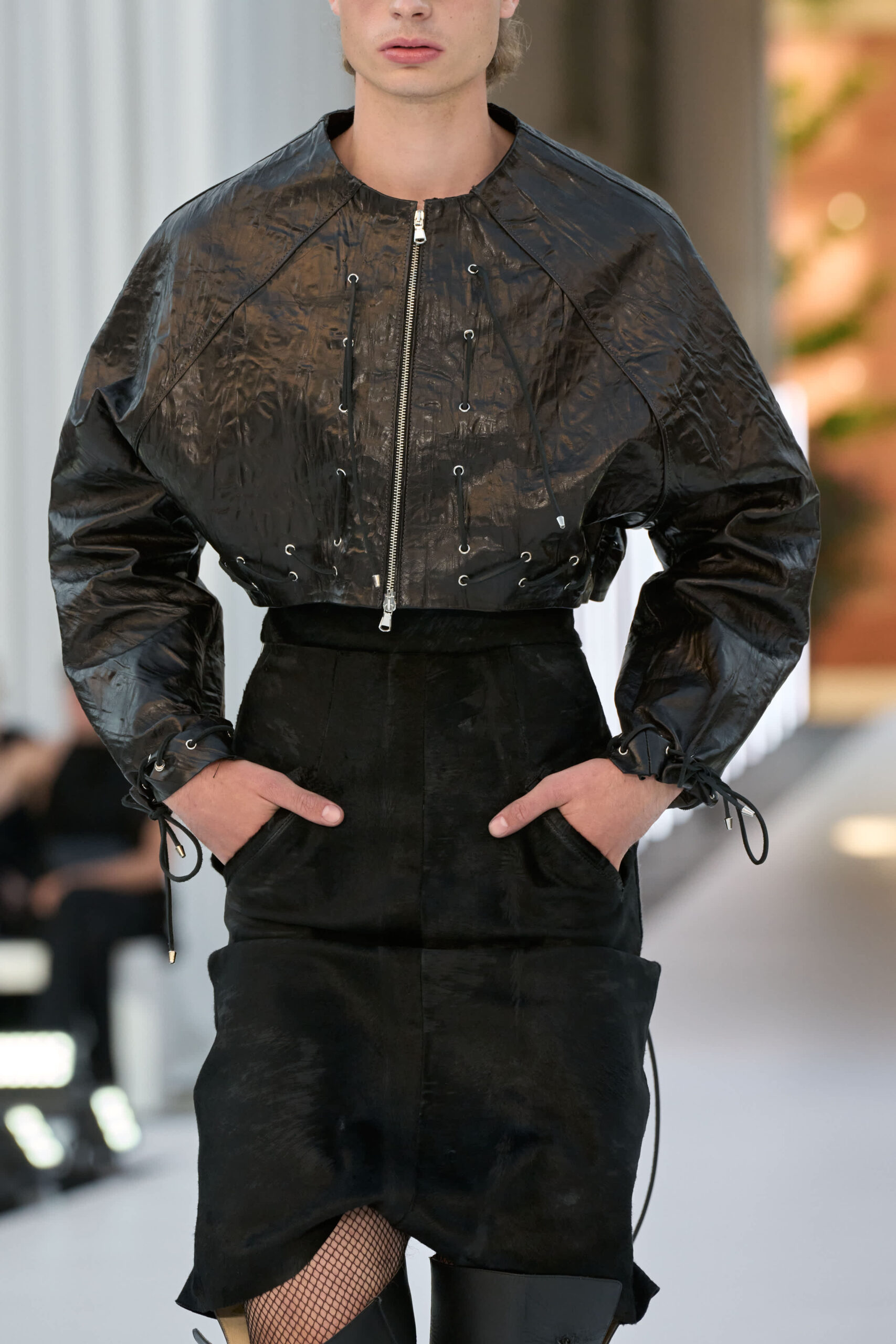
Emilie Wenckstern, No Longer Human (Germany)
Sponsored by Ostinelli Seta. Photo by Serena Gallorini.
Isabel Antonia Richter, Simulation (Germany)
Sponsored by Accoppiatuta Pratese, Guantificio Giglio Fiorentino, KN-Hit Srl. Photo by Serena Gallorini.
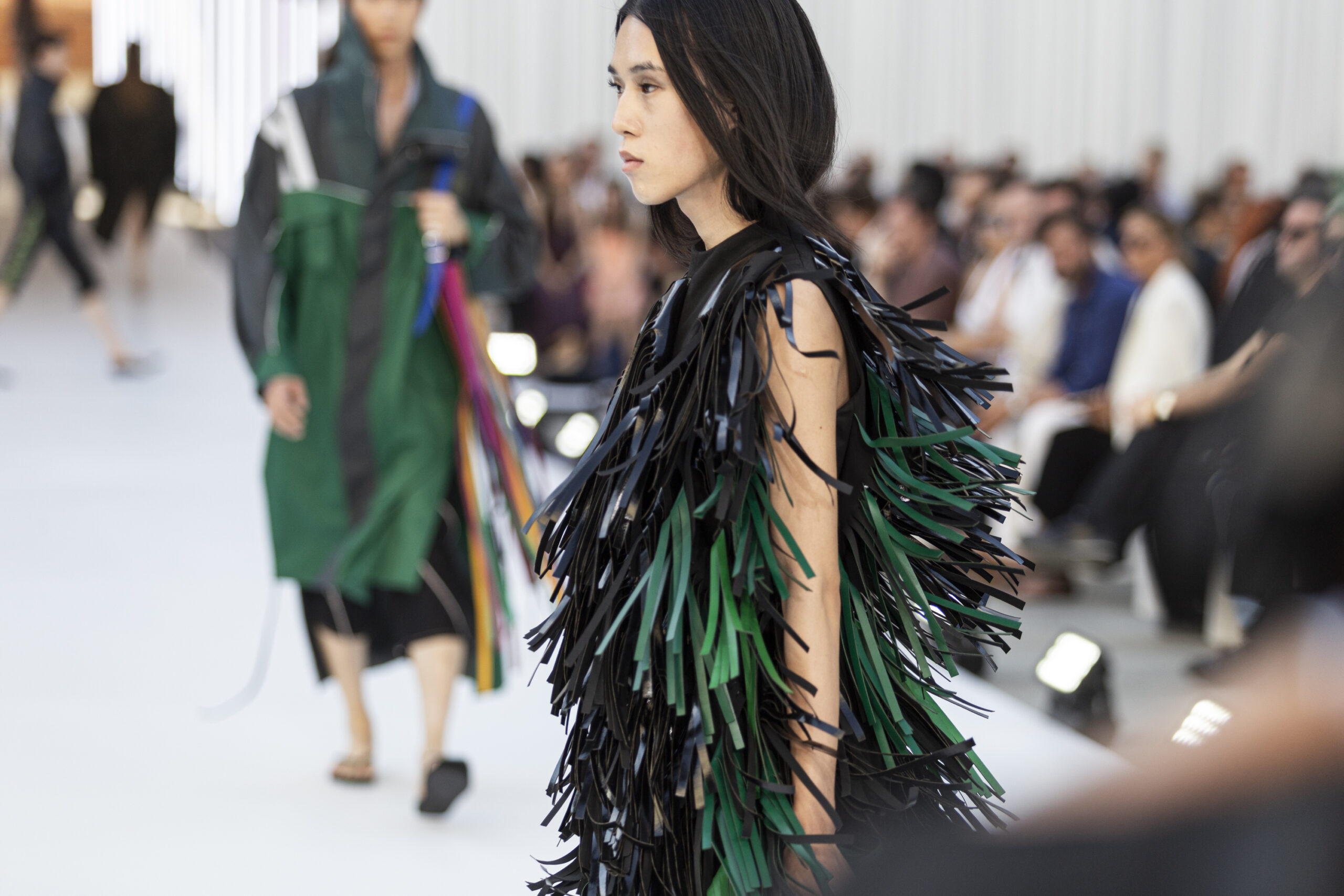
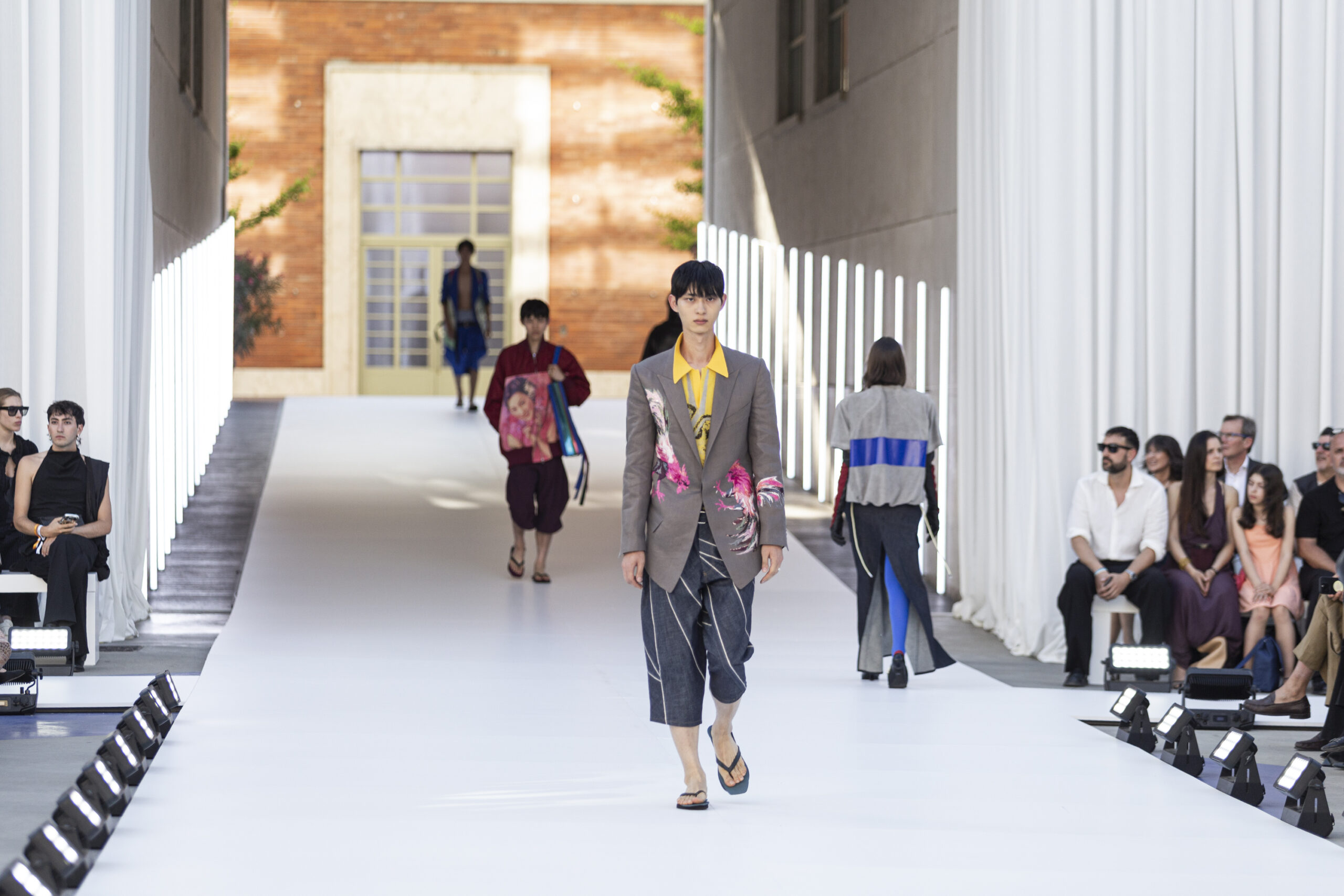
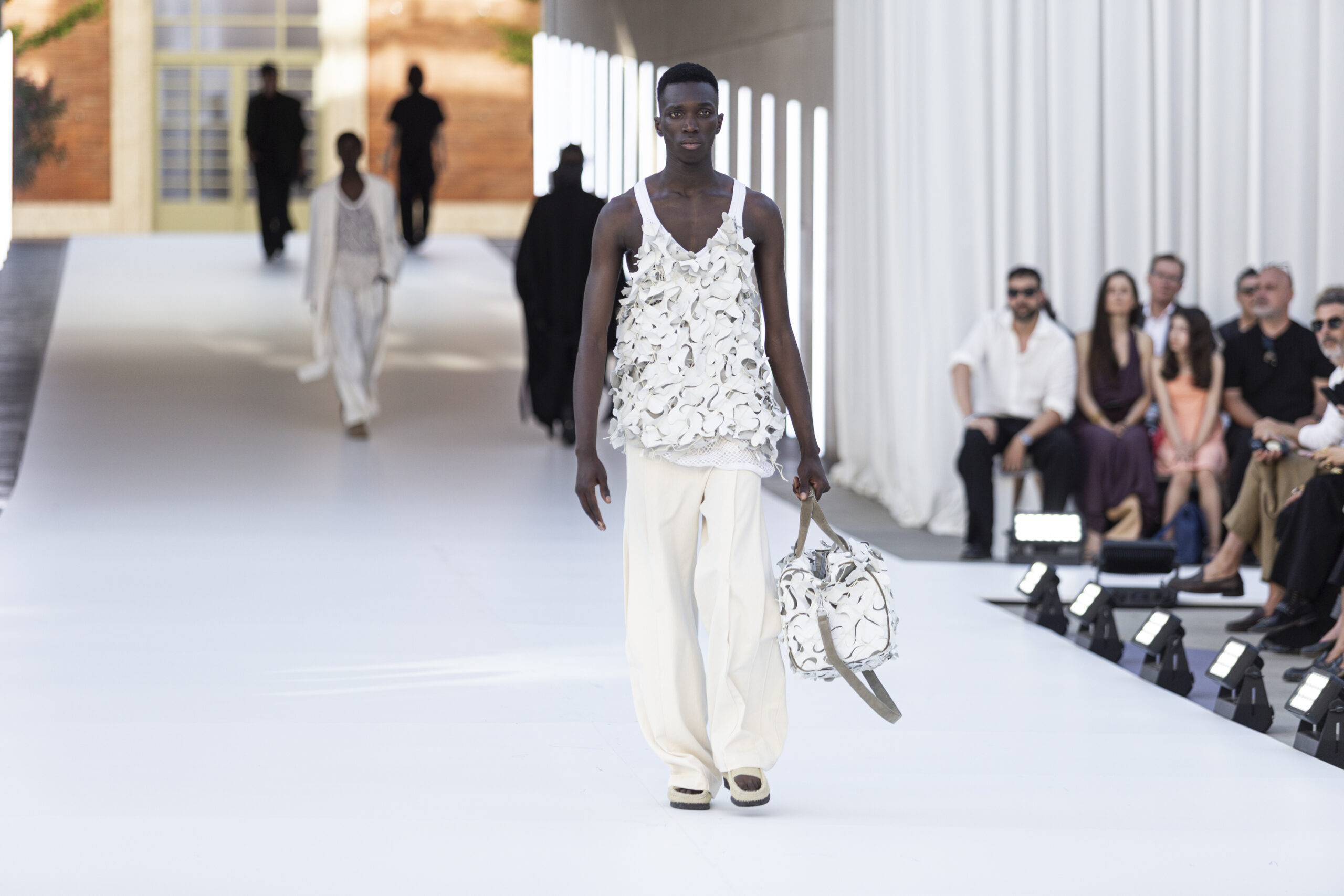
Jing Jirat Jitdee, Cool Back Home (Thailand).
Sponsored by Graziano Ricami. Photo by Serena Gallorini.
Anson Lorence Lin, Packages (Taiwan / Sri Lanka).
Collaboration with Richie Ye, Polimoda Business Alumni; Paula Ruiz Lorenzo, Undergraduate Fashion Design; Alessio Dai; Fabrizio Torrini; Beatriz Segura. Photo by Serena Gallorini.
dan David Segal, Frame Me If You Can (Israel).
Sponsored by Preciosa, Ostinelli Seta. Photo by Serena Gallorini.
Mari Enomoto, Exchange student from Voutrail The Fashion Academy (Japan). Photo by Serena Gallorini.
Lucia Romagnoli, Ab Umbra Lumen (Italy). Photo by Serena Gallorini.
Matilde Terranova, Teenager Boys (Italy). Photo by Serena Gallorini.
Isabella “Zaz” Alvarino, Hot Nerds (USA). Photo by Serena Gallorini.
“Is there anything left to use but your own voice?” Daniele Davitti, well loved teacher of aesthetics at Polimoda & artistsays, “I’m really interested in your generation, because you are living through times of crisis. What else do you have to show but your personality?” A pivotal thread of this graduate show is the exploration of the psyches of this generation. What does it mean to be young and to create in 2026? To be a designer?
Aaron Dillworth, SUN IS HIGH SO AM I (USA / Jamaica). Photo by Serena Gallorini.
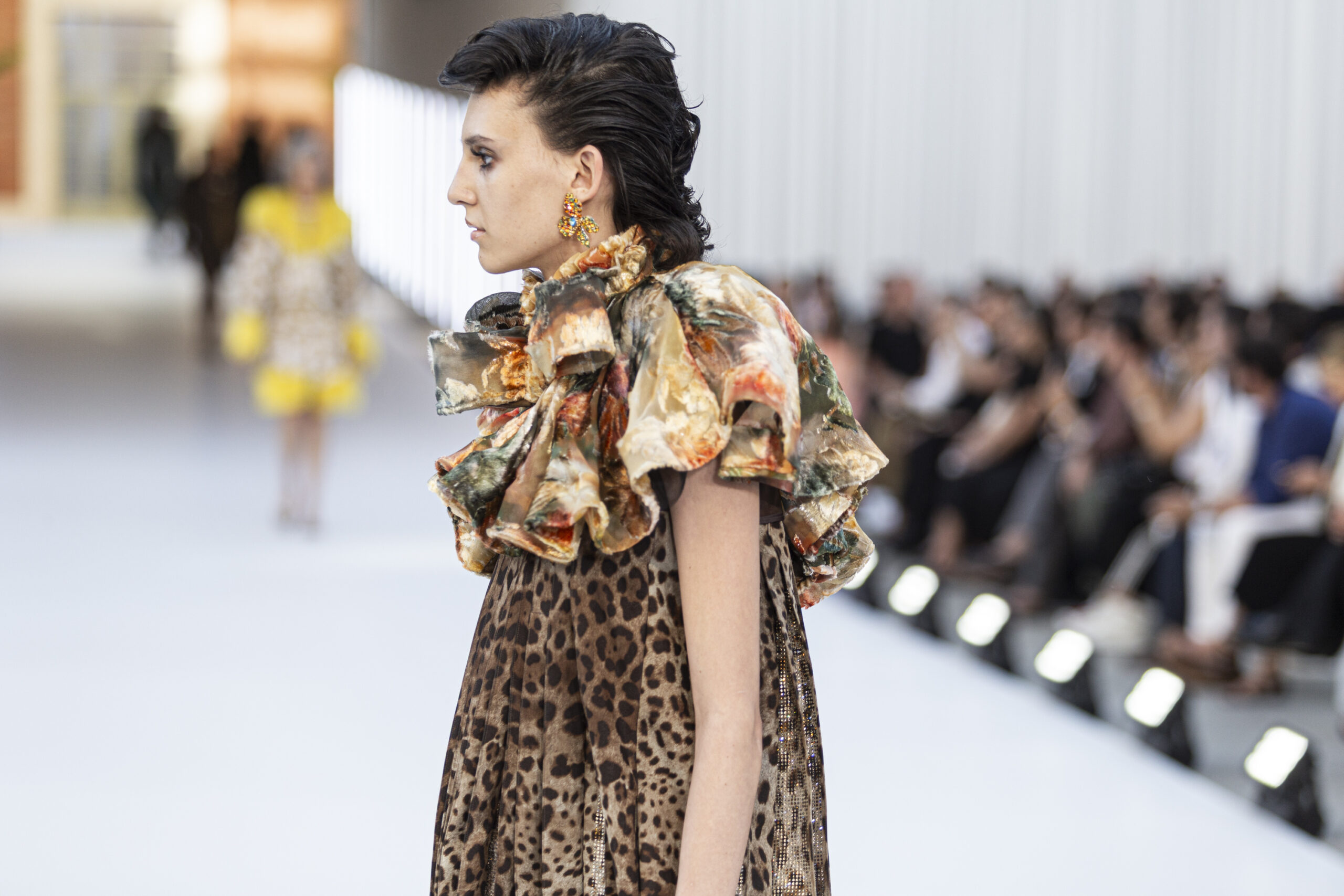
To Lisa Criaco her collection is about revival, “I spent all my time this year perfecting and stitching.” Lisa takes us to the depths of the sea with The Pressure whereas Isabel Richter takes us to the gas station at the end of town with Simulation, the one place we can still slow down. Alongside Victor Brial’s wandering silhouettes; Anson Lin’s invitation to fashion show backstage madness; Matilde Terranova’s ode to masculine adolescence; Francesca Valivano’s strong silver accessories; Idan Segal’s glamorous heist; Mari Enomoto’s sculptural dress; Lucia Romagnoli’s 70’s flare; Isabella “Zaz” Alverino’s hot nerds; Emily Horton’s cleats; Diana Avetisian‘s stained boots; Matteo Bardi’s ode to gay; my personal favourite Emilie Wenckstern’s sculptural garments; Jing Jirat Jitdee couldn’t do anything short of plaster a smile on my face. Taking reference from pop-cultural culinary icon, Grab, Thailand’s version of Uber Eats, each model wore flip flops, and reinterpretations of practical moped-proof raincoats. Echoing Isabel Marant & Chrome Hearts, whose flip flops have gone from ironic to every cool girl’s summer look.
Through cultural theory we understand that irony and sincerity are in a cycle. Societies continually reject exhausted irony for “new sincerity”, only for that earnestness to eventually feel cringey, prompting a return to ironic detachment. We can use skinny jeans as a case study. In 2008, they arrived in sincerity; you begged your parents to buy you skinny jeans at the mall and they made fun of you for how tight they are. In 2016, we reached saturation, everyone was wearing skinny jeans, in all iterations, from rips to acid wash. In 2020, they were officially out, officially considered millennial. In 2023, we returned to irony, skinny jeans were used to bait users on social media, they were funny, rather than a fashion statement. In 2026, we return to sincerity, once again they become a part of the mainstream fashion conversation, styled & worn by current celebrity stars such as model, Gabriette, channeling a genuine, rugged 2000s indie-sleaze aesthetic.
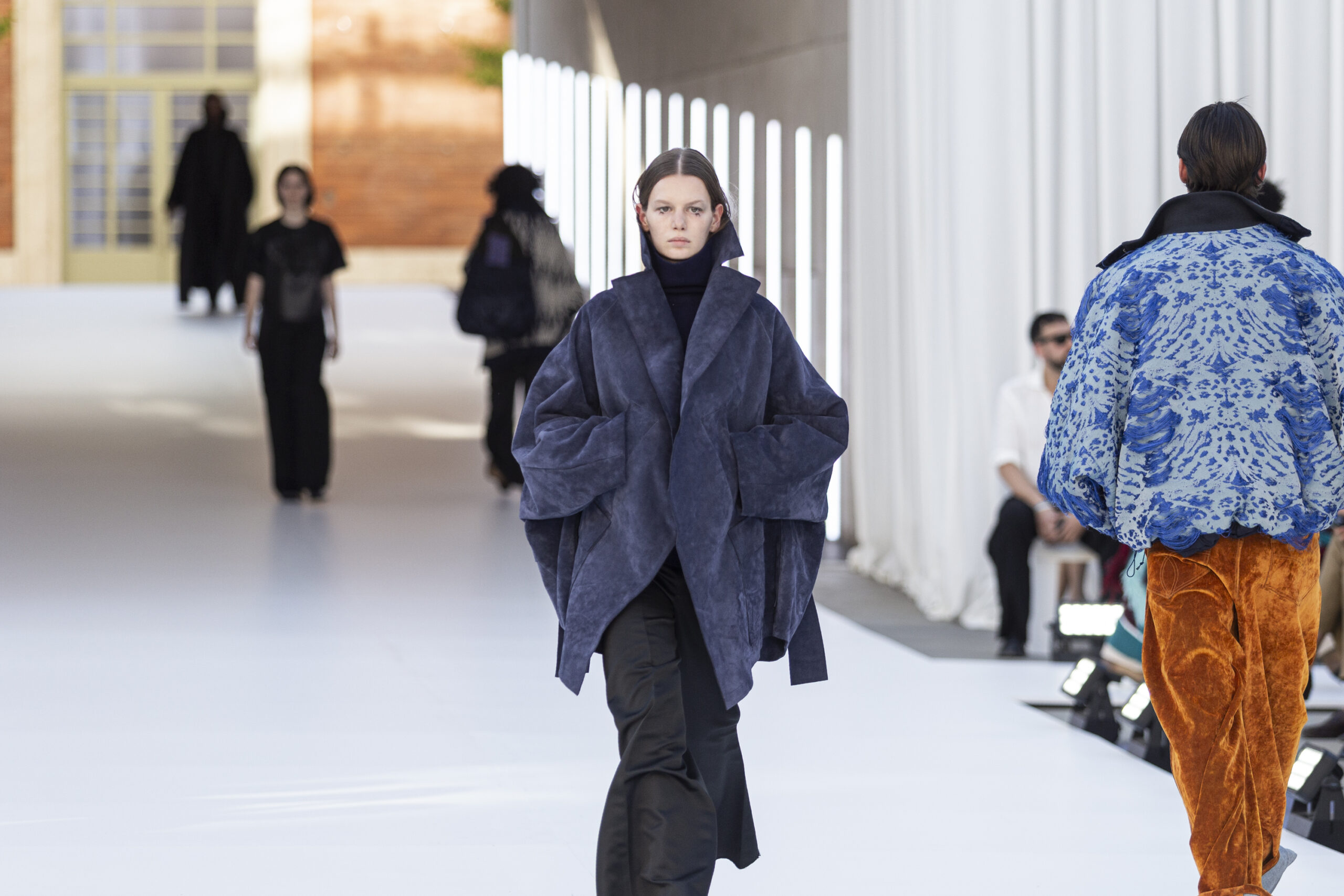
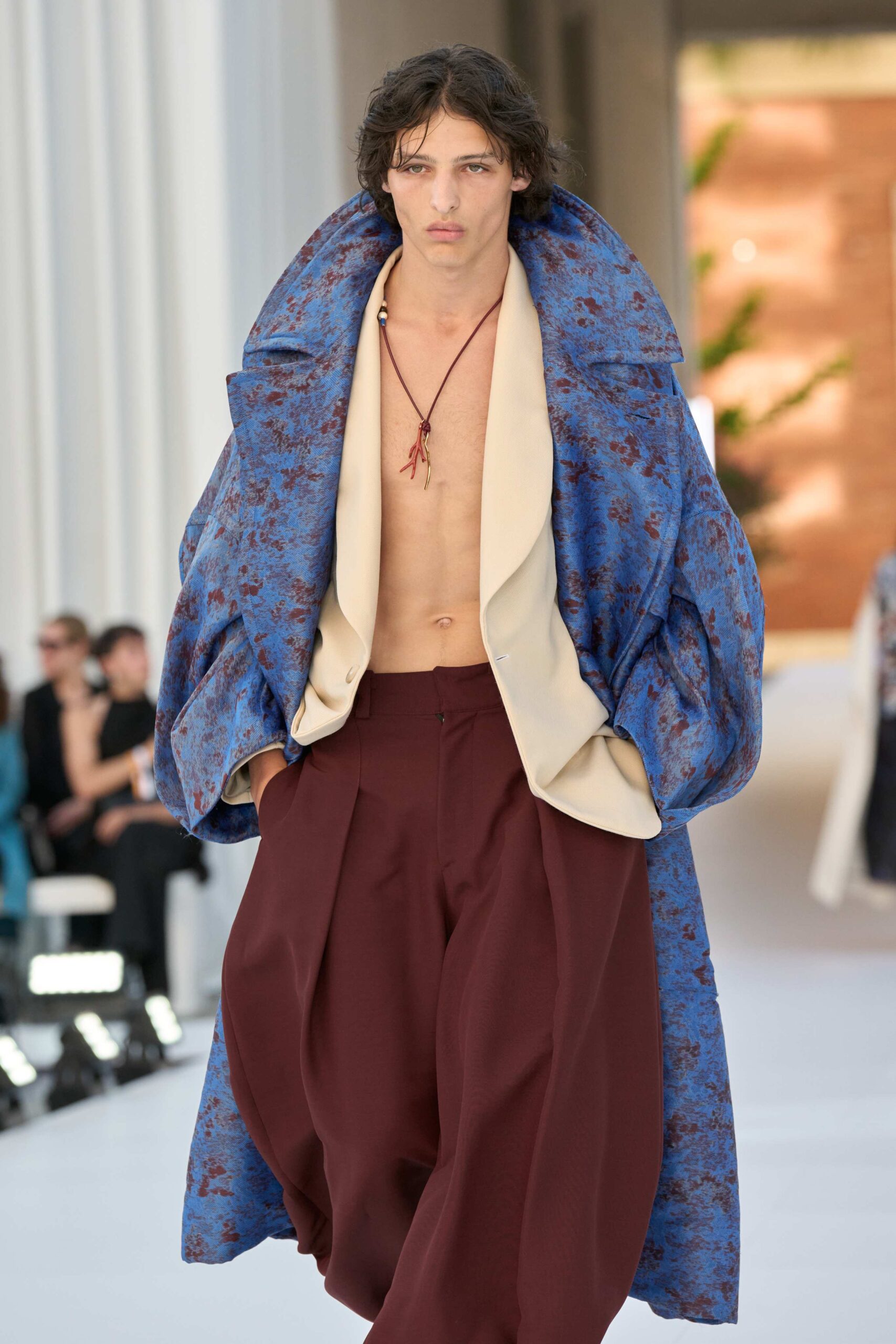
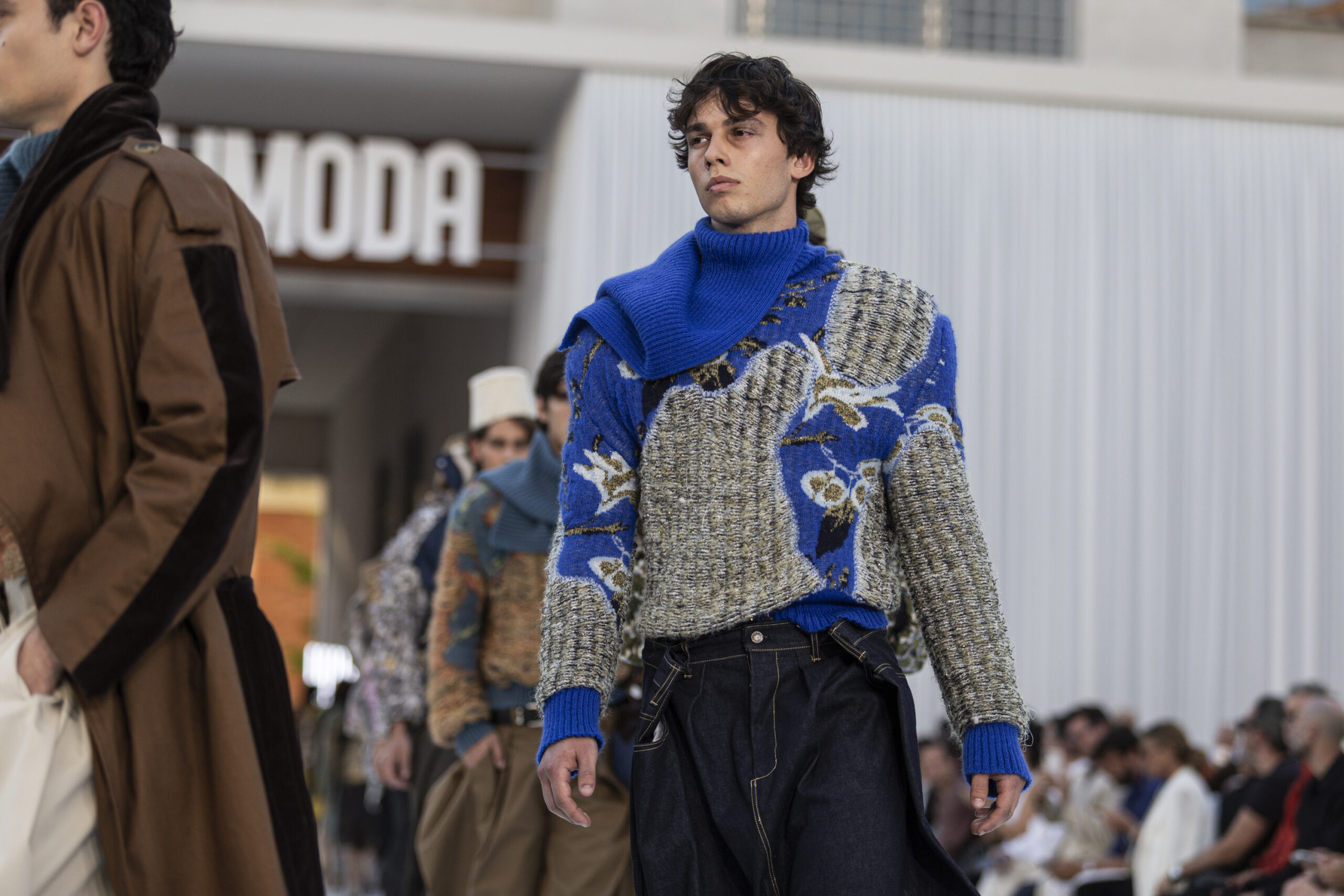
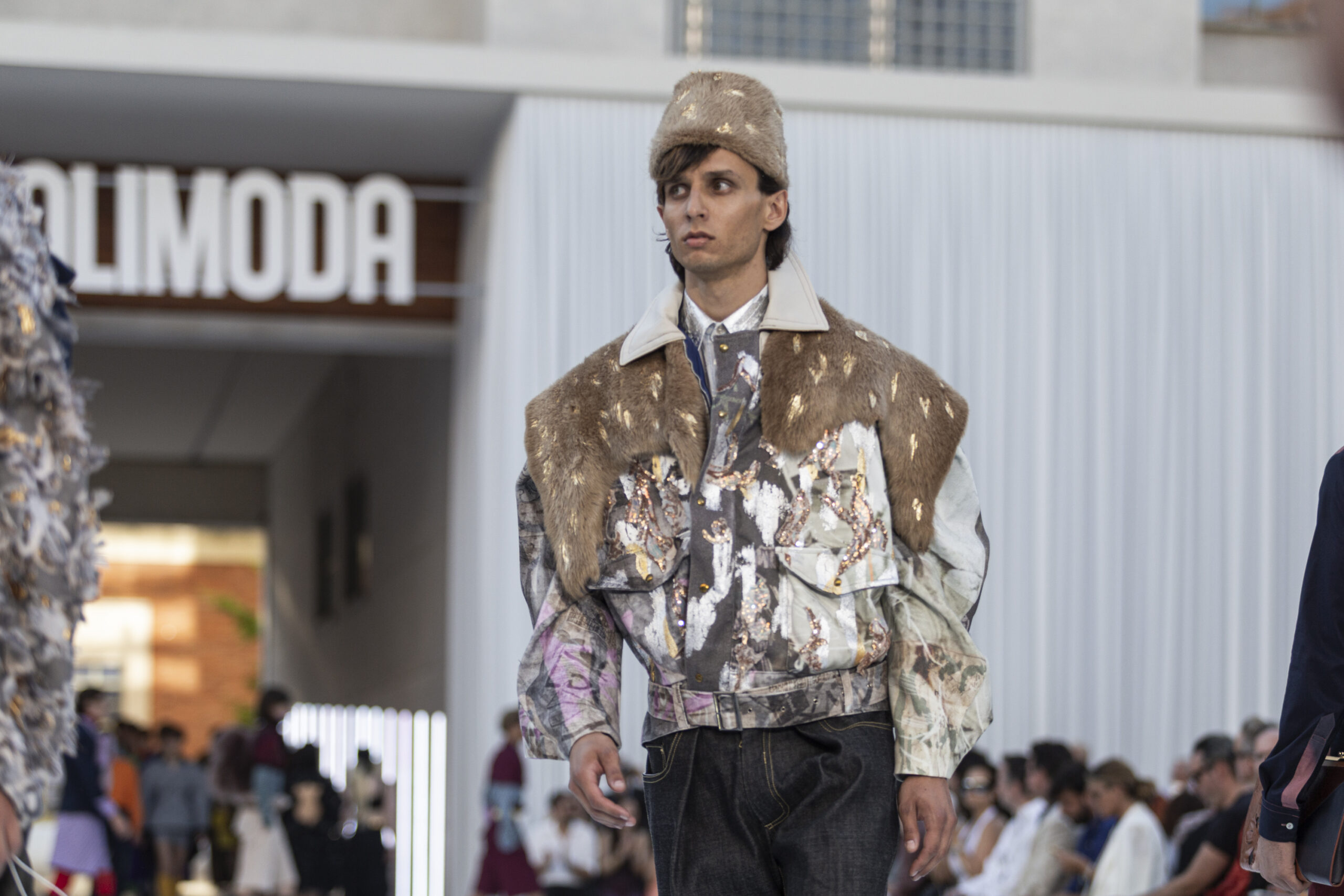
The return of “maximalism,” could just be going through a similar irony to sincerity phase of its cycle. We aren’t forgetting black, we are just Unlearning Neutral, as Jakob Nittman’s collection claims, “the intention of my collection is bringing color, fun and joy back into menswear.” It’s not about being obnoxious but rather it’s about being true. Establishing direction rather than making noise. It’s not about pollution, but communicating a statement.
Color is not only about joy but about freedom. If you gave yourself a choice, what would you really pick? How would you tell your story? How do you construct your palette and your taste? How do you communicate? This is an invitation to self-interrogate, to understand whether one’s current aesthetic is chosen or inherited. Fashion is communication and therefore an unconsidered palette is an absent statement.
REFERENCES
Loschek, I. (2009). When Clothes Become Fashion. Berg.
Niklas Luhmann and Bednarz, J. (1995). Social systems. Stanford, Calif.: Stanford Univ. Press.