
What we wear, listen to, and admire has never been immune to outside influence, but in the age of the algorithm, the forces shaping taste have never been so mainstream and perpetuating of wider societal structures. Master in Fashion Marketing & Communications student Claudia Nguyen Donate examines how digital recommendation systems have assumed the role of cultural tastemakers, quietly encoding existing hierarchies of power and visibility while presenting themselves as purely personalized.
There was a time when developing personal taste was intentional. You discovered a song on the radio, found a magazine someone had left behind in a café, or noticed an outfit on the street that stayed in your mind all day. Today, however, taste often arrives already curated, delivered directly to our screens by an algorithm that knows us a little too well.
But imagine, just for a moment, that taste could speak. Not as an abstract concept, but as a slightly arrogant guest at a dinner party. It would probably insist it has always been yours, entirely personal, shaped by your unique sensibility. And yet, if you listened closely, you might notice it repeating phrases it heard somewhere else. Borrowed opinions. Familiar references. Taste, it turns out, has always been a bit of a social performer.
INTELLECTUAL JUDGEMENT ON AESTHETIC VALUE
In its most simple definition, taste has long been framed as an intellectual judgement on aesthetic value¹, a way of deciding what deserves admiration and what does not. But historically, this judgement has rarely been innocent. What counted as “good” taste was often defined by those with power: those who had access to education, to art, to cultural spaces. Taste functioned as a quiet code. If you understood it, you belonged. If you didn’t, you were left outside the conversation.
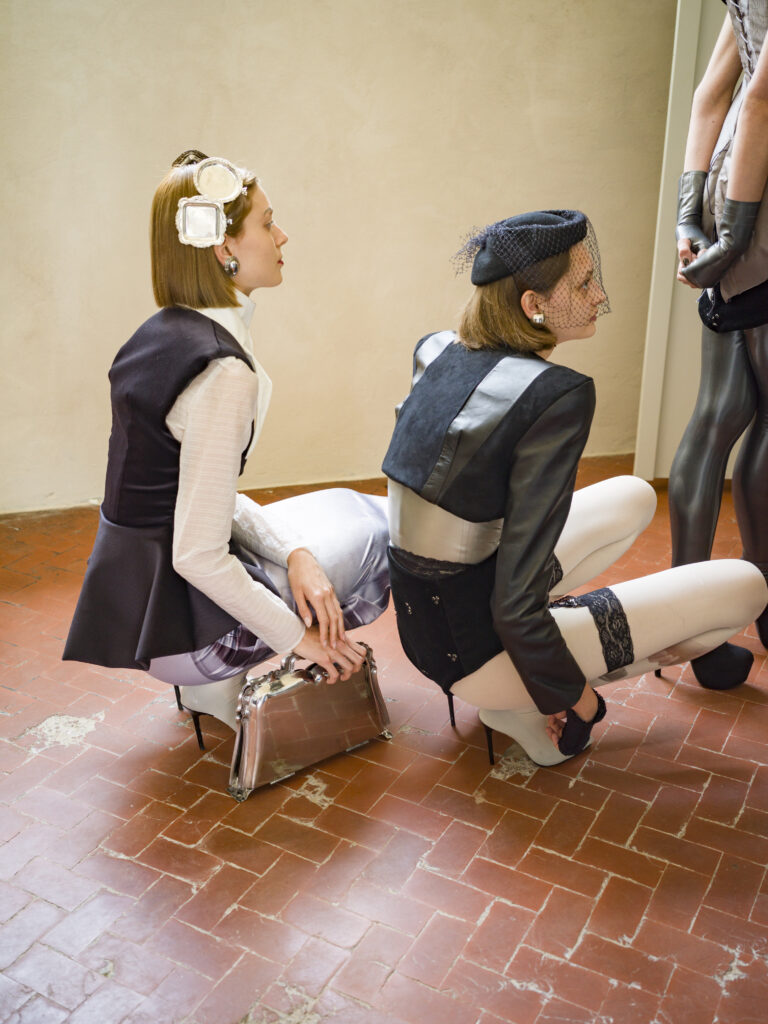
Sociologist Pierre Bourdieu called this cultural capital², the accumulated knowledge, sensibility and social literacy that allows certain people to move through cultural spaces with ease. The ability to recognise a reference, to appreciate a silhouette, to “just know” that something is refined: these are not purely personal instincts. They are learned. Absorbed. Inherited. Taste, in this sense, is less about what you like and more about what you have been taught to see.
Here lies a distinction worth pausing on, one we often flatten too quickly: the difference between taste and beauty. Beauty, at least in its traditional framing, gestures toward something closer to the universal, something that feels almost instinctive, even if that idea is endlessly contested. Taste, by contrast, is more malleable. It is contextual, cultural, constantly shifting. Beauty makes you look. Taste tells you how to judge what you see. Taste is susceptible to codification; it can be shaped, reinforced, even manufactured.
THE NEW CURATOR
There was something slow and personal about the way personal taste used to form. It required time, and curiosity. You had to look for things. Sometimes you had to get bored before finding something that genuinely interested you. Now we live in a moment where discovery happens instantly.

Open TikTok and within seconds the platform begins showing you things it thinks you will love. The For You page feels intuitive. It notices the videos you pause on, the ones you watch twice, and even the ones you scroll past too quickly. Slowly, without asking for permission, it begins to build a world around you.
An algorithm is disappointingly simple. It takes information, processes it and produces an outcome. The system is not separate from you, it is built from you. Every pause, every like, every second of hesitation becomes part of its education. You are training something that is quietly training you back.
VISBILITY AS VALUE
Fashion has become especially sensitive to this system. Trends no longer take months or seasons to circulate. They can appear and spread in a matter of days. For decades, the industry has had clear tastemakers: editors, stylists, photographers and designers who shape the visual culture we consume. Magazines curate images carefully, runway shows introduce new ideas and critics help translate those ideas into cultural conversation.

Recommendation systems now perform an “editing” role. They decide which images appear on our screens and which disappear before we ever see them. The difference is that this new curator does not operate with a creative vision. Its decisions are based on something mechanical: engagement. What keeps people watching rises to the top. What doesn’t quietly fades away.
Visibility no longer follows value. Value follows visibility. The more something appears and is engaged with, the more value it acquires. You don’t just see a trend, you accept it.
CULTURAL CAPITAL
The algorithm may feel democratic, but the hierarchies it encodes are not neutral. Research on recommendation systems, including work by scholars like Safiya Umoja Noble³, has shown that these systems tend to amplify existing patterns of cultural authority rather than disrupt them. What was already visible becomes more visible. What was already marginal is further obscured.
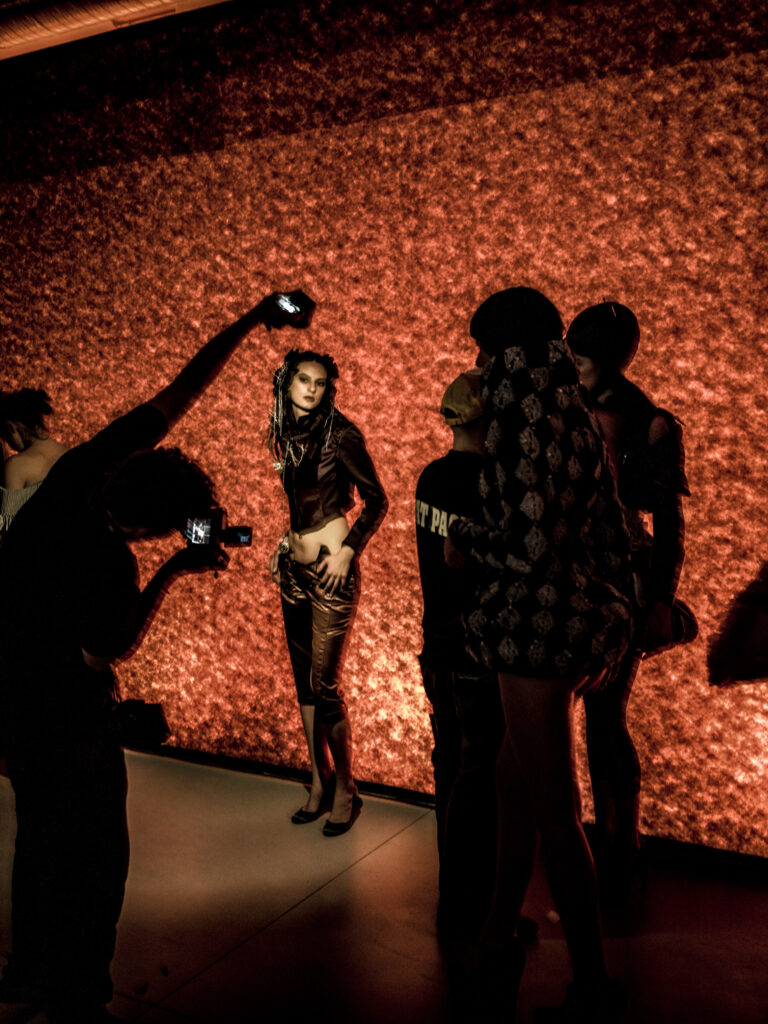
Other cultural inputs are still present, too: art, cinema, literature, and subcultures still shape taste, but increasingly through a digital filter. Their meaning is not lost, but it is compressed, simplified, repackaged into something that can circulate faster. Compared to the algorithmic flow, these influences feel slower, almost resistant. That slowness is precisely where their value still lives.
BEING AWARE OF WHERE TASTE COMES FROM
So what is “good” taste, really? Good taste, I would argue, is a form of awareness disguised as instinct. It is the ability to pause, even briefly, and ask: why do I like this? Not defensively, but with genuine curiosity.

Good taste is not about rejecting influence, it is about recognising influence. Understanding that what feels natural might is learned, repeated, reinforced, and remaining slightly suspicious of your own certainty. Knowing that your cultural capital is capital: inherited, accumulated and contingent. Over time, it becomes increasingly difficult to separate our desires from the system designed to guide them. The more interesting question is not whether the algorithm influences our taste, but whether we are aware of it when it happens, and whether that awareness changes anything.
Taste has never been independent. It has always been shaped by culture, by class, by the environments we move through. What has changed is that today those environments have moved into the digital realm. What does this mean? The algorithm reinstates existing patterns of cultural authority. It rarely proposes anything new or unique.
A new found awareness of how the algorithm serves you exclusively what is mainstream and acceptable could push us to return to referencing those analogy cultural influences of taste, therefore making for a shared cultural capital that is less repetitive of well implemented prejudices and injustices, more inclusive and diverse, and ultimately more flexible and interesting.
BIBLIOGRAPHY
- Internet Encyclopedia of Philosophy. (n.d.). Aesthetic Taste | Internet Encyclopedia of Philosophy. [online] Available at: https://iep.utm.edu/aesthetic-taste/.
- Huang, X. (2019). Understanding Bourdieu – Cultural Capital and Habitus. [online] ResearchGate. Available at: https://www.researchgate.net/publication/335024564_Understanding_Bourdieu_-_Cultural_Capital_and_Habitus.
- Noble, S.U. (2018). Algorithms of Oppression: How Search Engines Reinforce Racism. New York University Press.