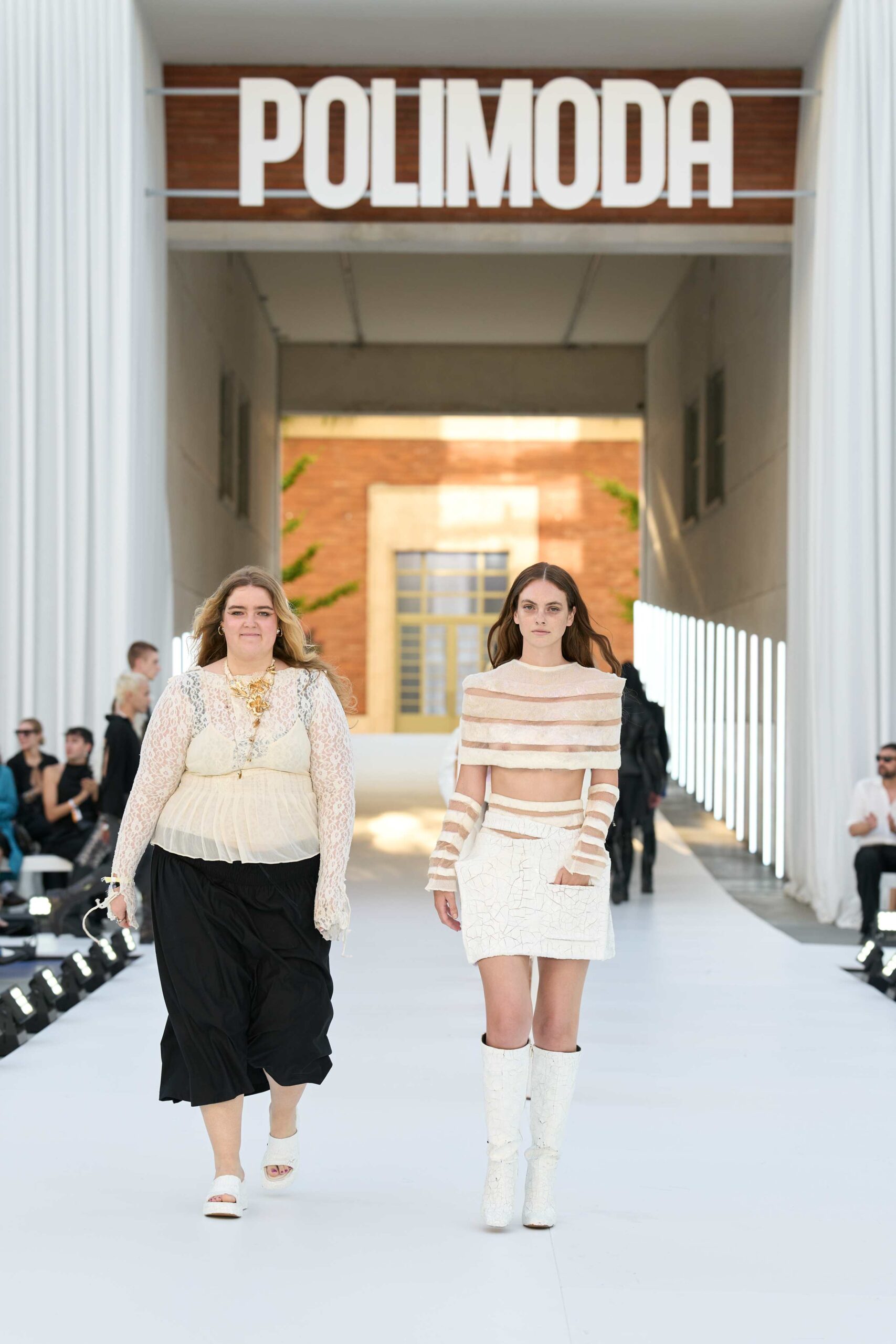
Emilie Wenckstern, a German designer who has just graduated from Polimoda’s Undergraduate course in Fashion Design, is the winner of Polimoda’s Best Collection 2026. The award was given for No Longer Human, the collection presented at the Polimoda Graduate Show 2026, held on June 15 in the square in front of the school Manifattura Campus in Florence.
At the heart of the collection lies a radical, contemporary question: what happens to the body when it can be generated, edited, and constructed before it is even physically present? Drawing on dolls, mannequins, sculptural figures, and digital avatars, Wenckstern probes the boundary between human and artificial, turning the body into surface, construction, and image.
The Graduate Show 2026 brought to the runway the work of twenty designers from fifteen different countries, the expression of a generation that has grown up in an unstable, accelerated, and profoundly transformed global landscape. The collections told a story of personal, socially aware fashion, in which memory, cultural heritage, identity, and lived experience become tools of creative research.
This year’s jury was made up of Eva Cavalli, fashion designer and model, Tuomas A. Laitinen, Fashion Director at SSAW Magazine, Danae Mercer, journalist and body confidence content creator, Eugene Rabkin, founder and editor of StyleZeitgeist magazine, and Simona Tabasco, the Italian actress known for The White Lotus. The jury was invited to assess the collections and select the strongest proposal, based on originality, technical execution, and design coherence.
“The pieces that will stay with me long after today’s show are Emilie’s. Her creative concept, how AI is influencing us to be ‘superhuman’, how for so long we’ve tried to achieve these things even in the Renaissance, and the role fashion plays in all of that, was so moving. Especially for me, as someone who works in the body confidence space. But I also loved the skill involved in the leatherwork, and the craftsmanship there,” commented Danae Mercer. Asked which look would stay with him longest after the show, Eugene Rabkin didn’t hesitate: “Emilie Wenckstern’s final look.” A choice that confirms the closing power of No Longer Human, able to condense the tension between artificial body, sculptural silhouette, and constructed identity into a single image.
The collection
No Longer Human, starts with a question posed to AI: if you had a body, would it still be human? In the digital age, identity is constructed, skin becomes surface, and the body is something to be designed. The collection probes the boundary between human and artificial, asking not only what a body is, but when it stops being one.
“We live in a moment where bodies are generated, edited, and can even exist before physical presence. Identity becomes constructed, skin turns into surface. I wanted to explore this boundary, not only asking what a body is, but when it stops being one. For me, it’s not just about clothes: I want to build a world that inspires others, to create a dialogue between the body, art, and the garment,” explains Emilie Wenckstern.
Twenty-seven years old, born in Hamburg with Spanish roots, Emilie Wenckstern grew up and studied in Germany, where she worked in an art studio, developing her practice across sculpture, art, and photography, before moving to Florence in 2021 to study Fashion Design at Polimoda, where she chose to channel her artistic vision through fashion. Among the references for her graduate collection: the German painter and sculptor Hans Bellmer, photographer Paul Kooiker, and the design of Alaïa, Margiela, and Schiaparelli.
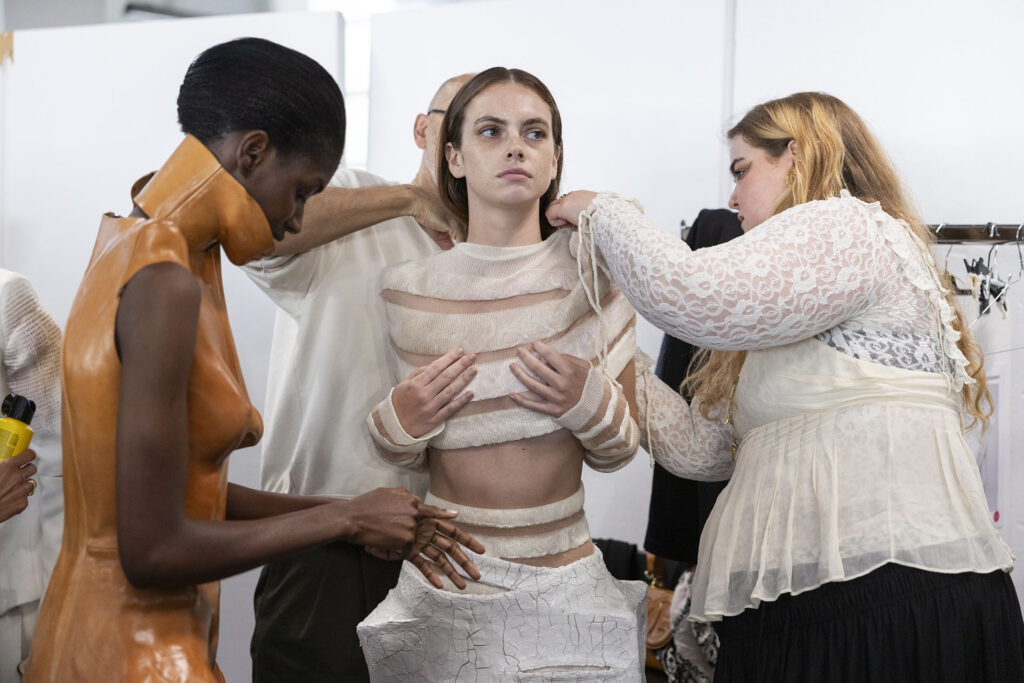
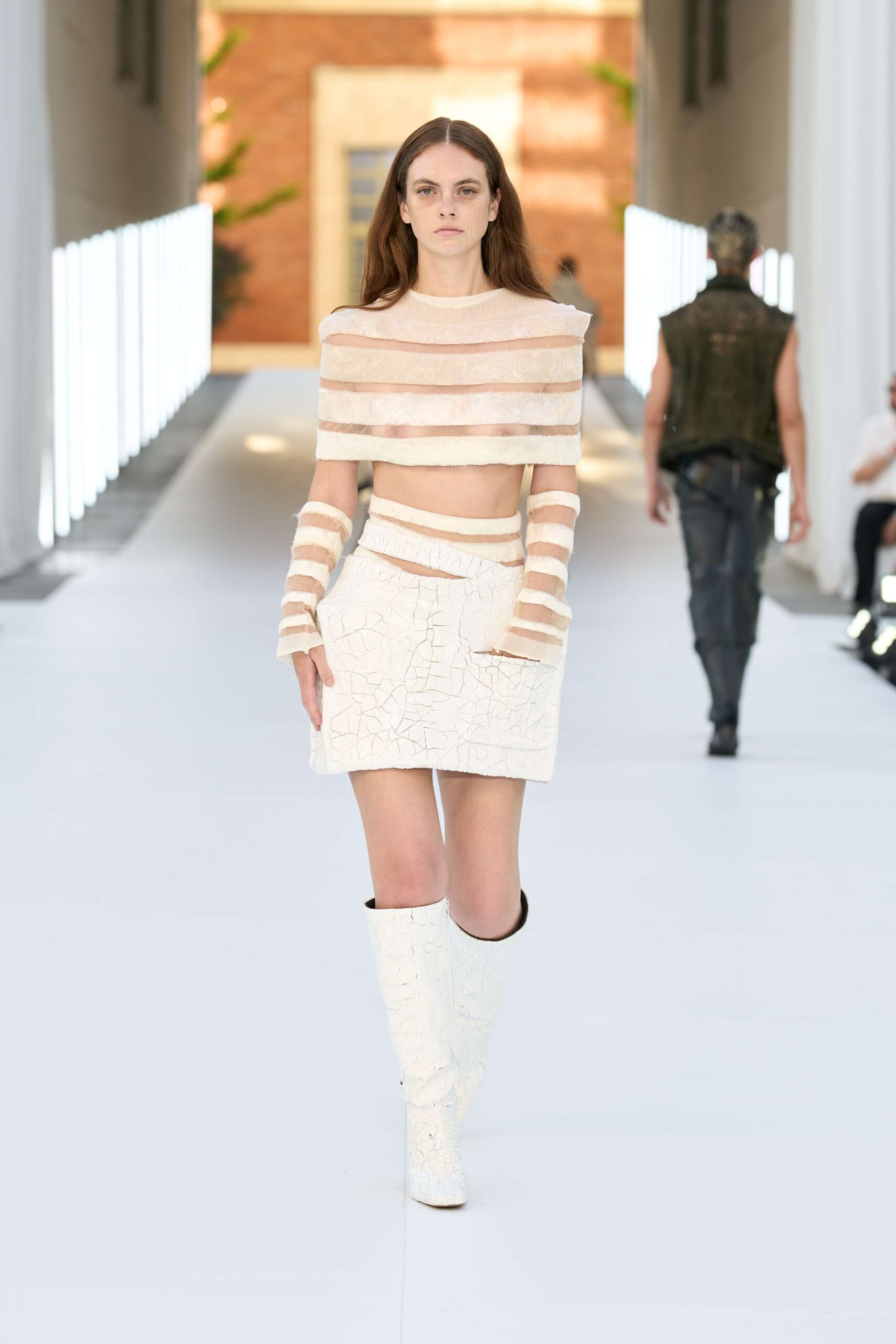
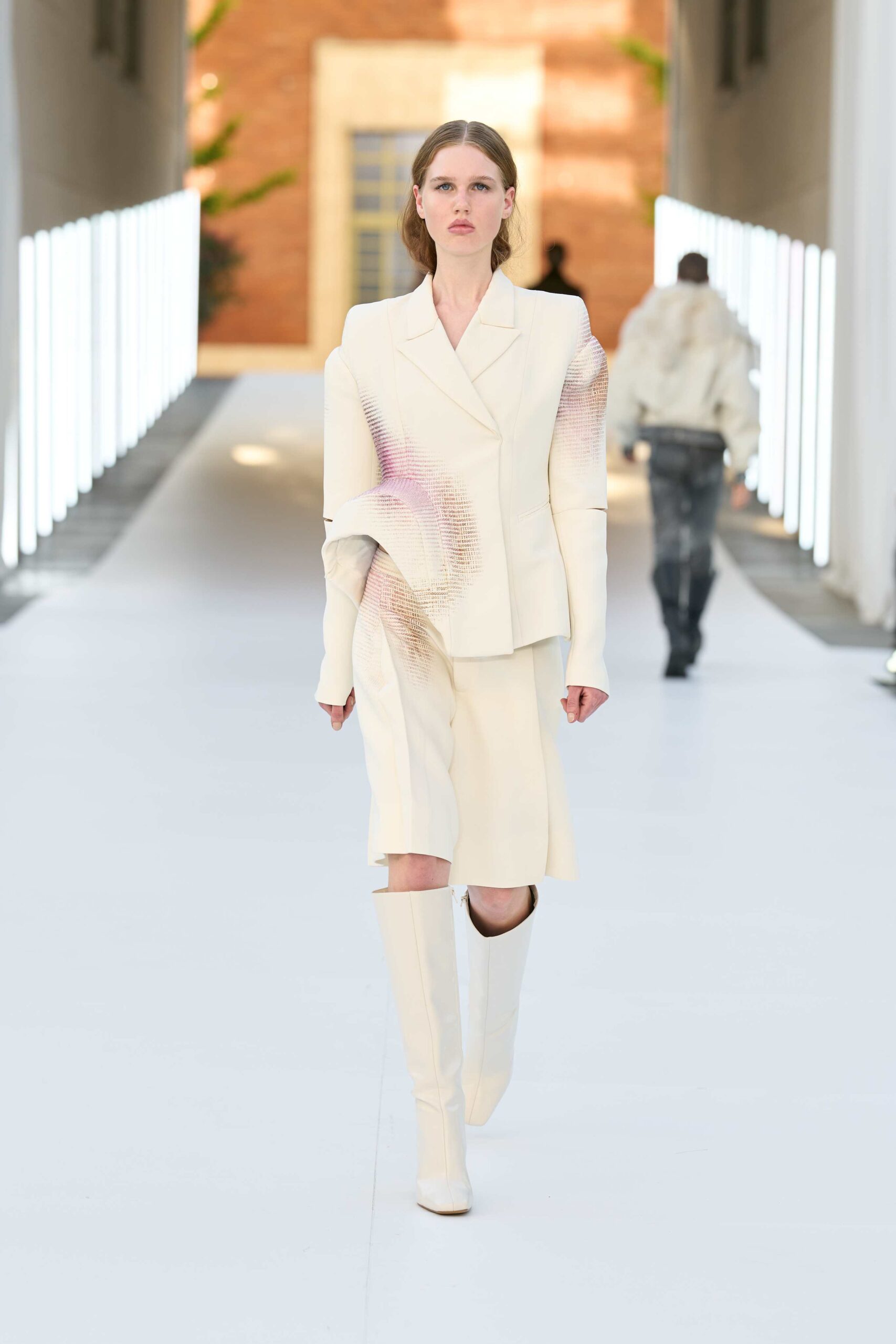
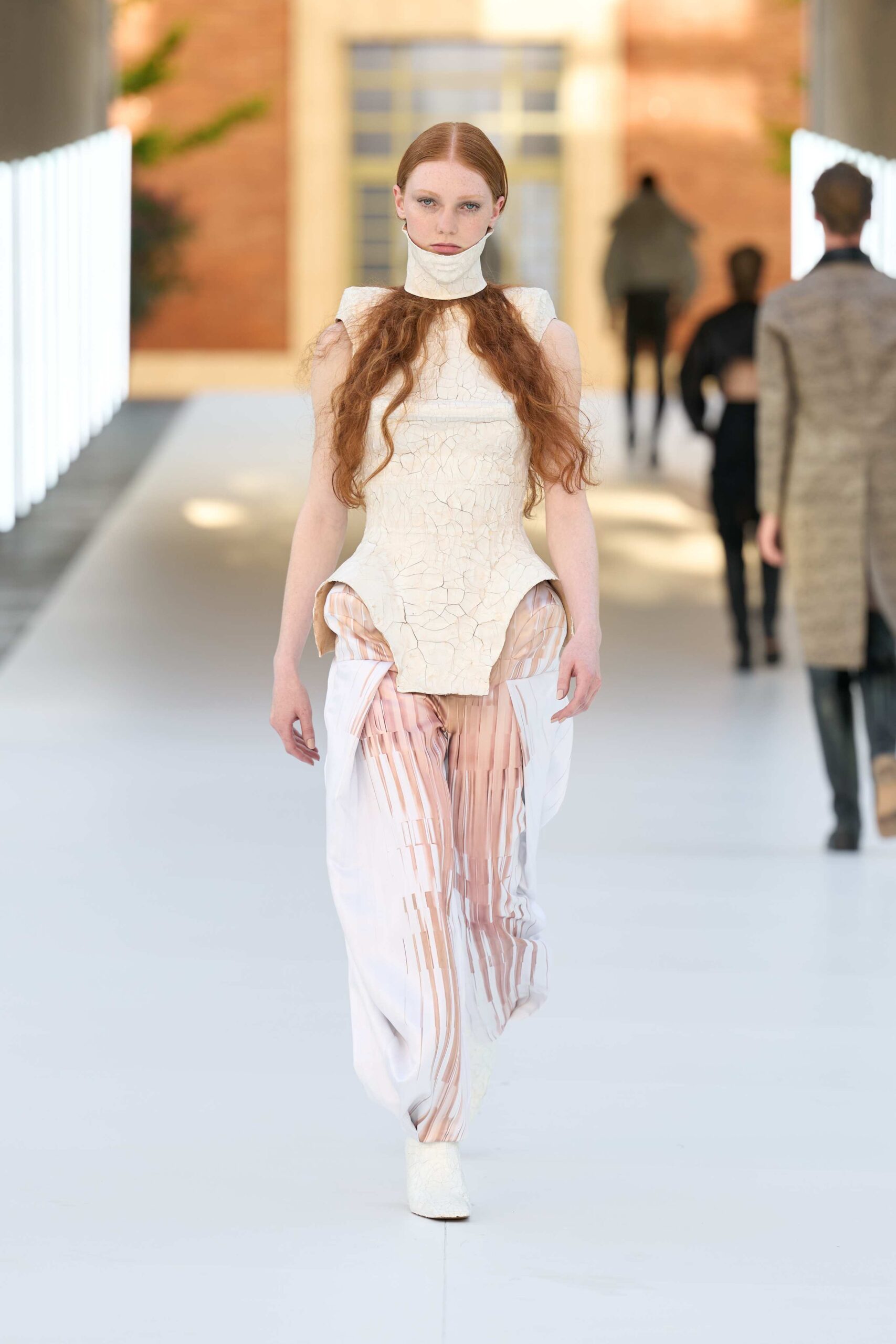
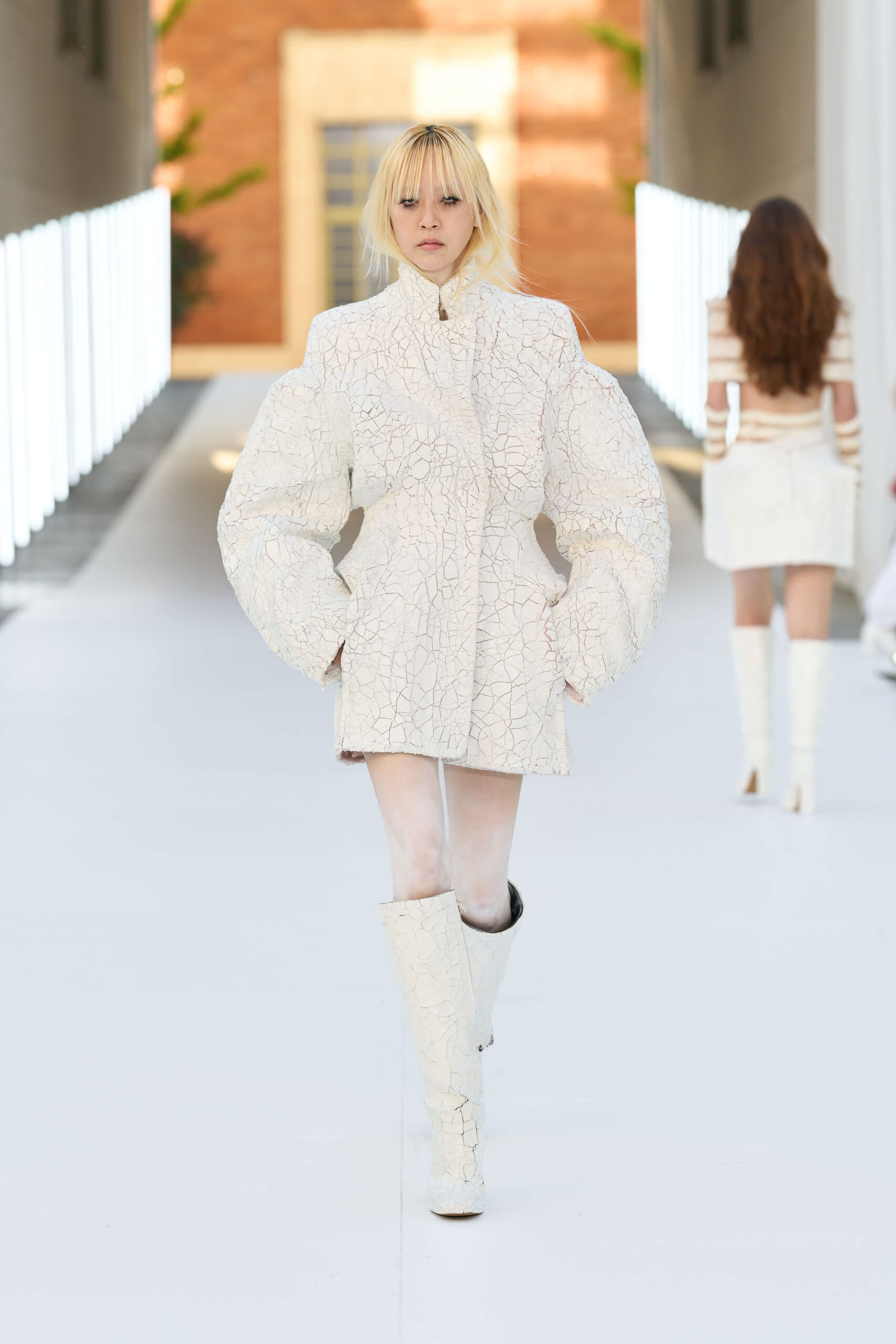
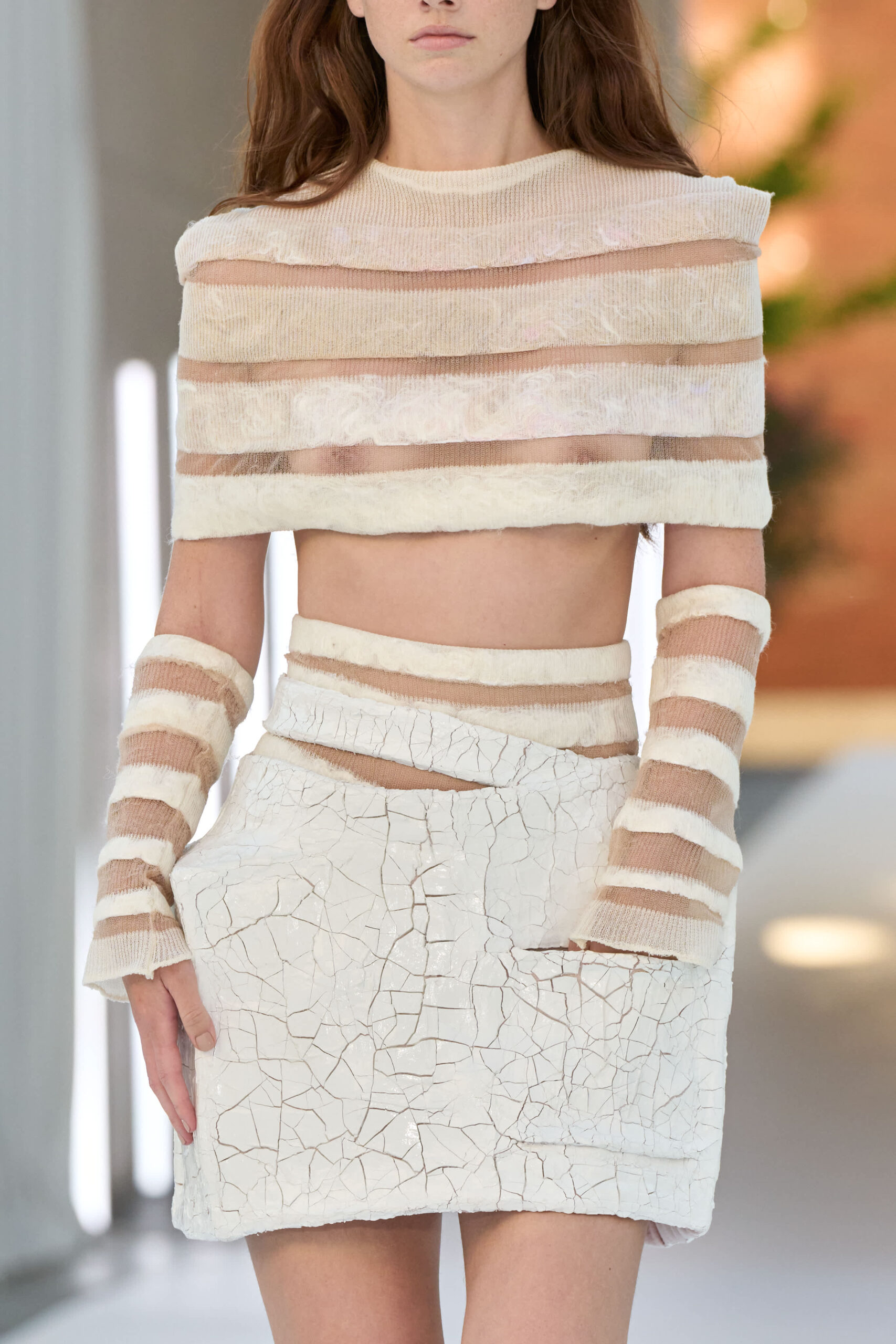
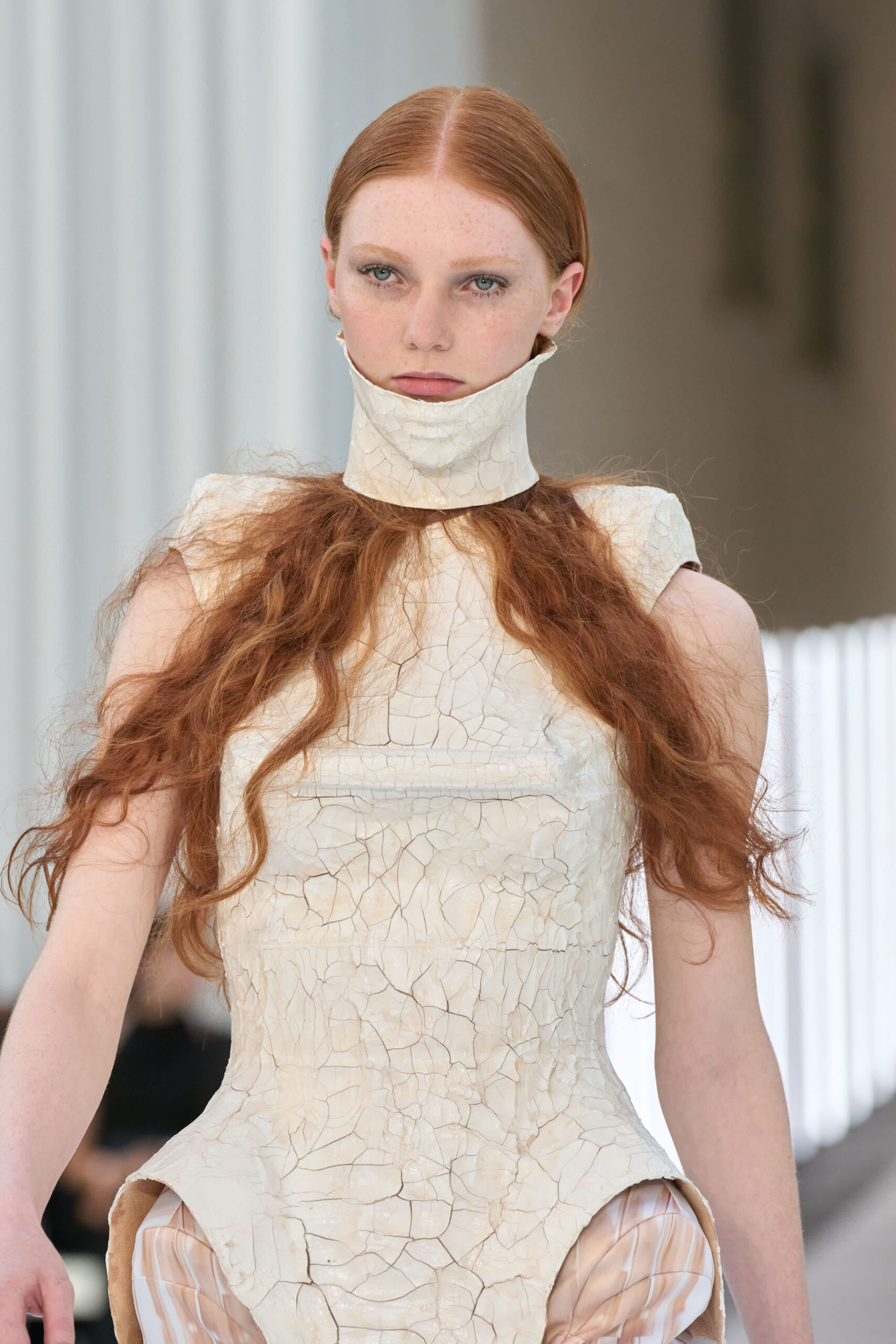
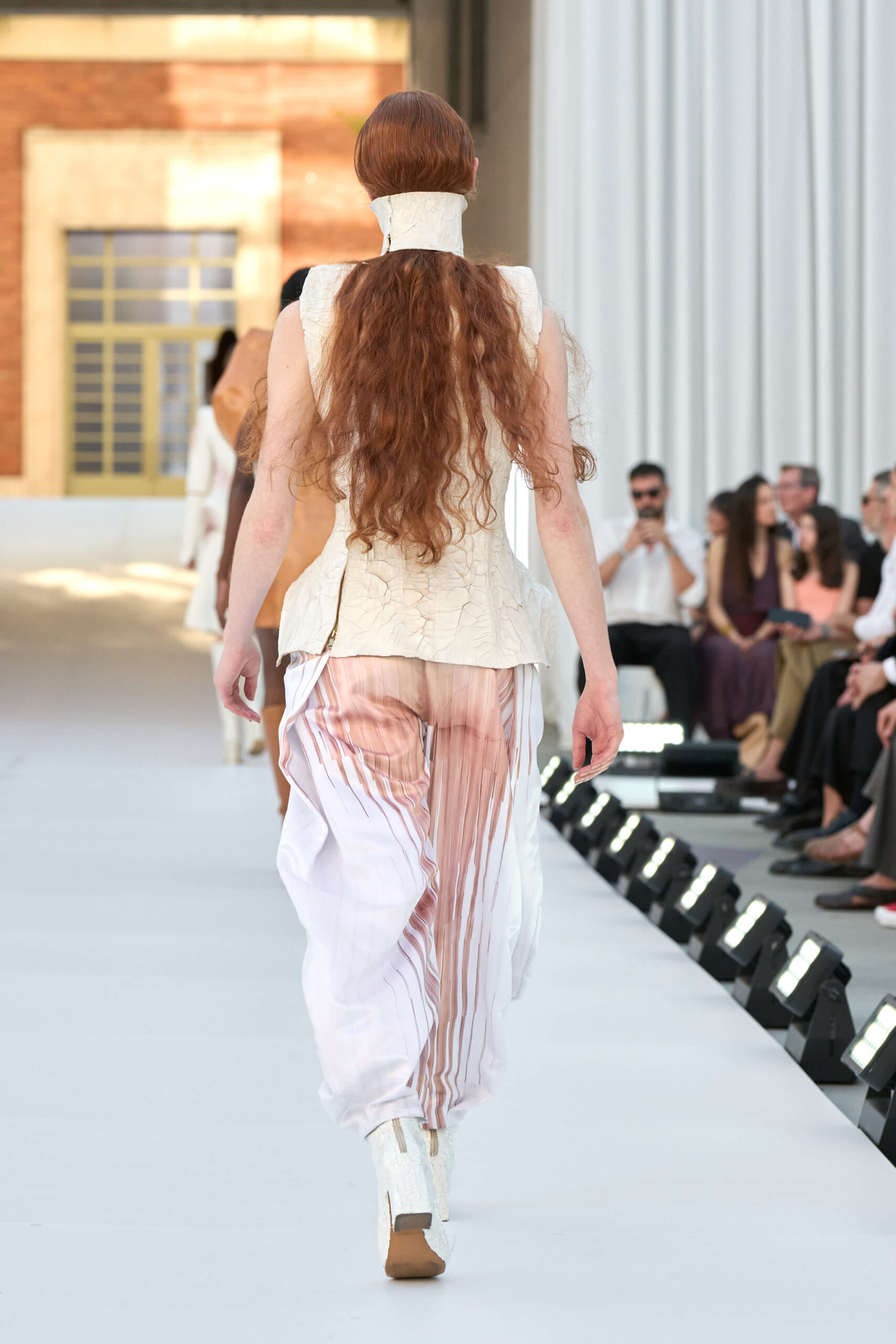
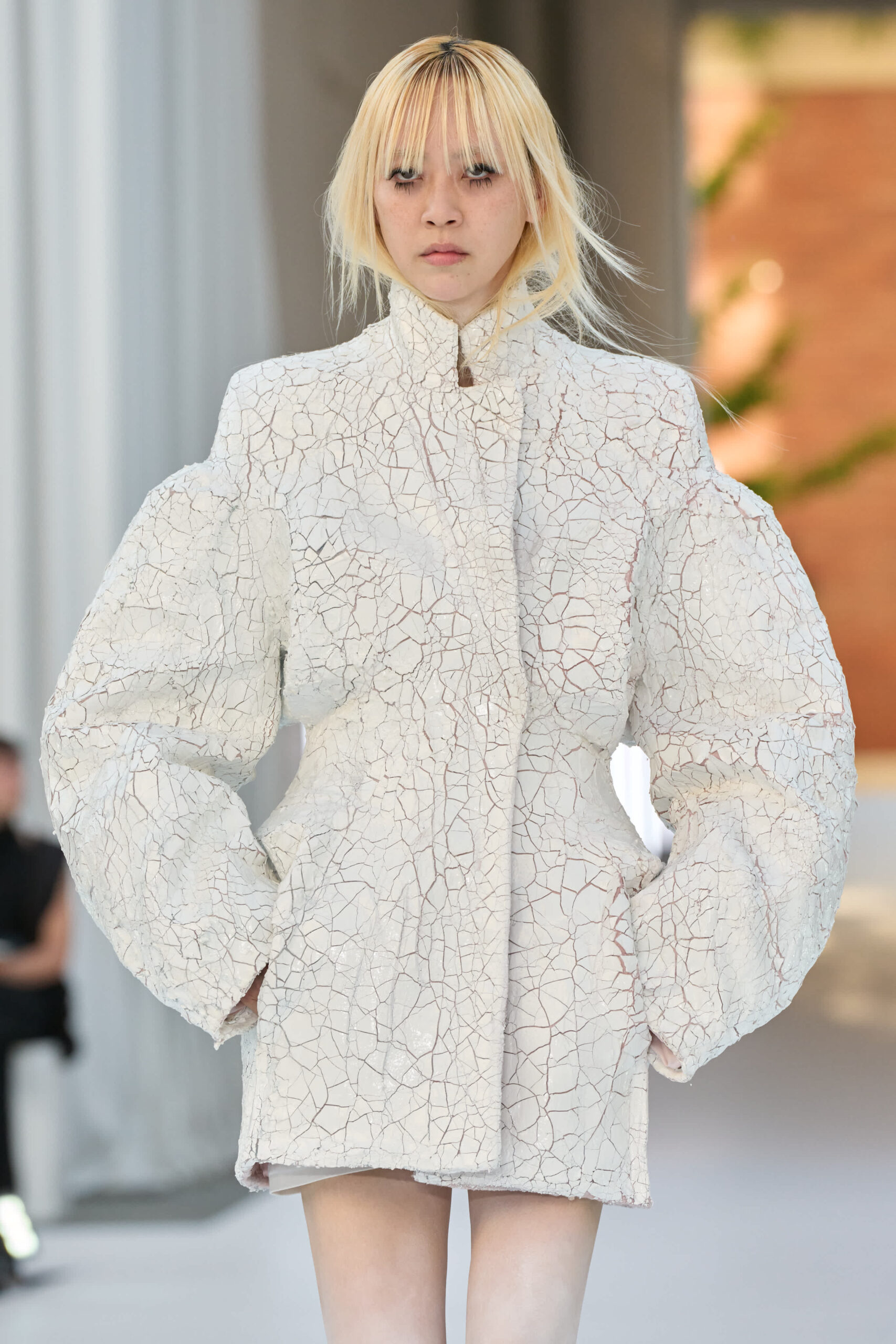
The collection unfolds across six looks, structured around two distinct, complementary material registers. The first takes shape in structured bodies with architectural shoulders, oversized jackets with balloon sleeves, miniskirts, and matching boots, all covered in a cracked surface applied to felted wool that evokes fractured porcelain. In the silk knitwear, the striations complete the register with an effect of veins and joints, while sheer bands and prints are inlaid into the fabric like a digital interference corroding the tailored form.
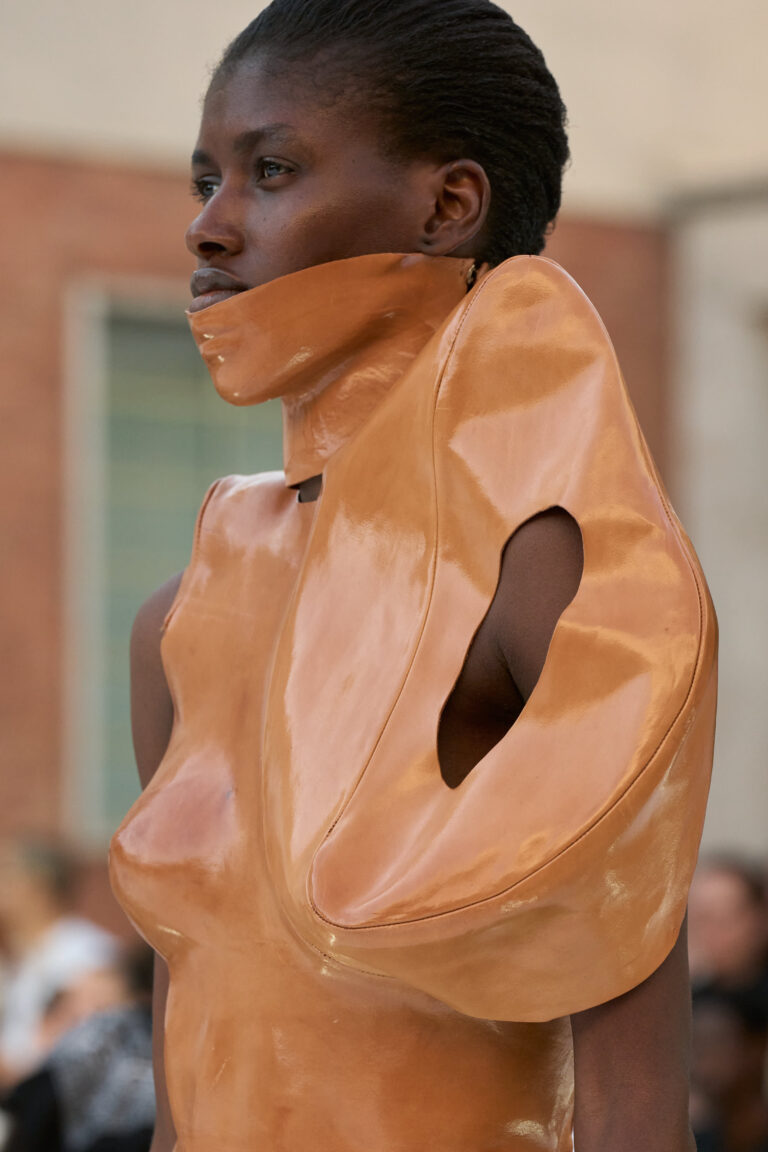
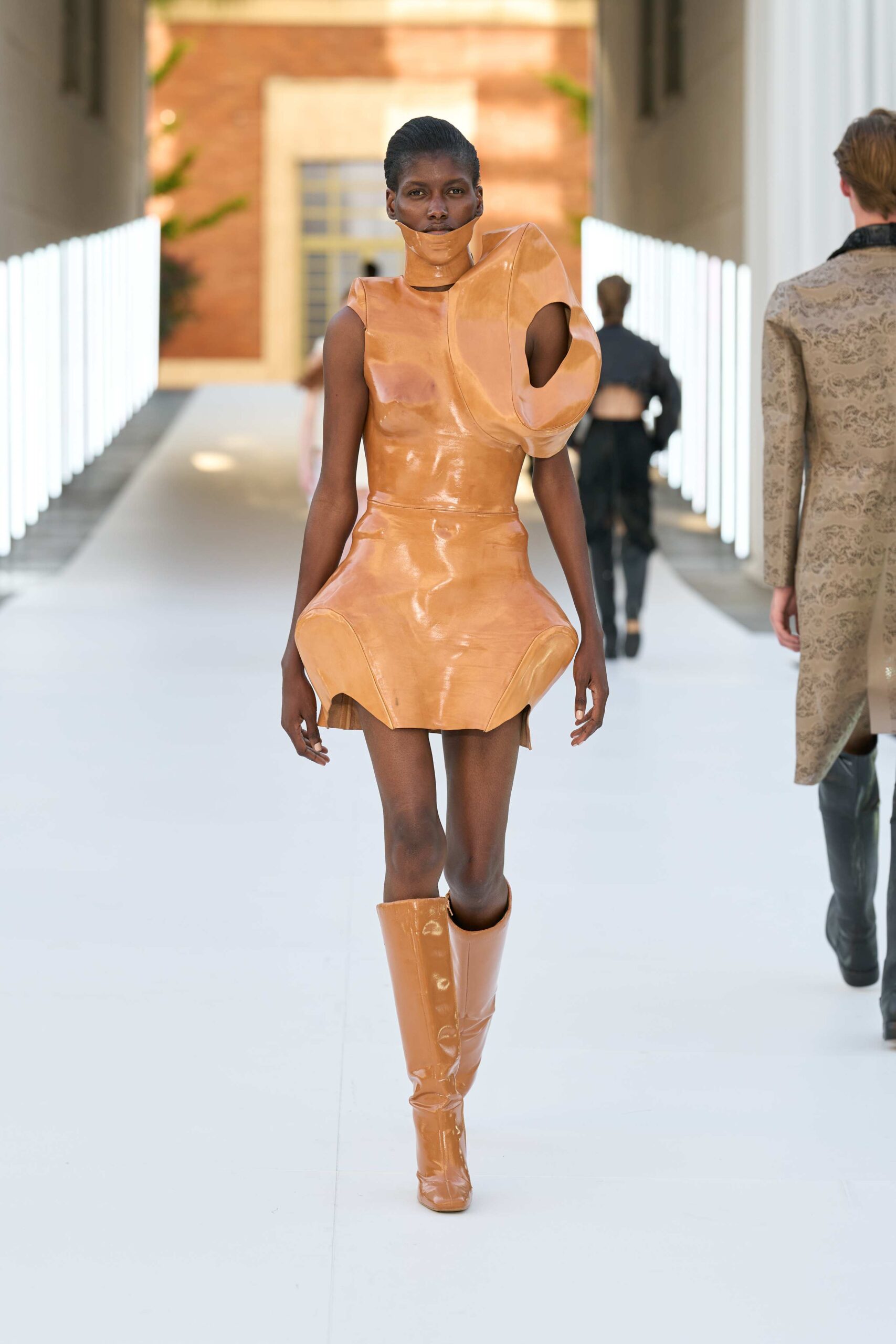
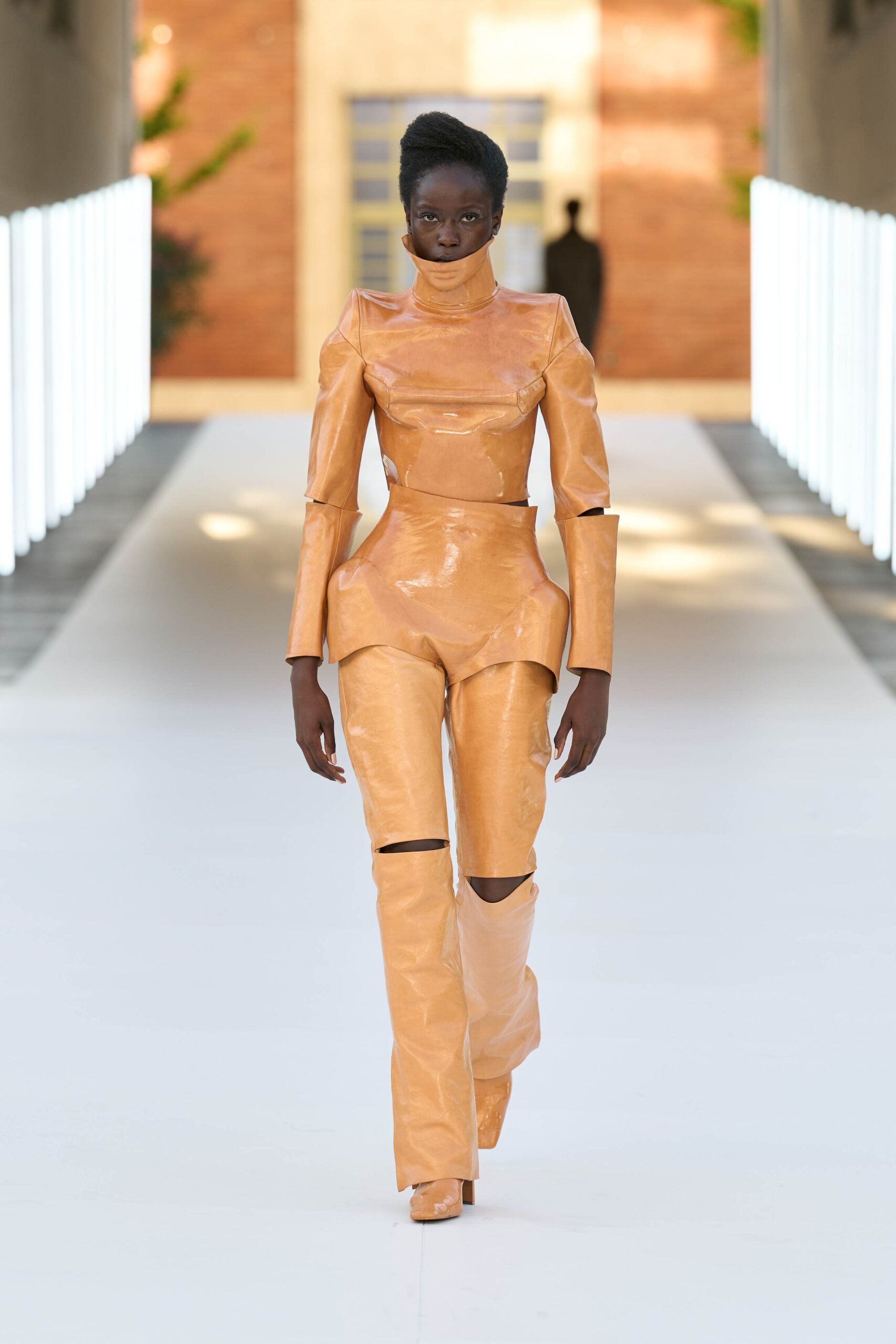
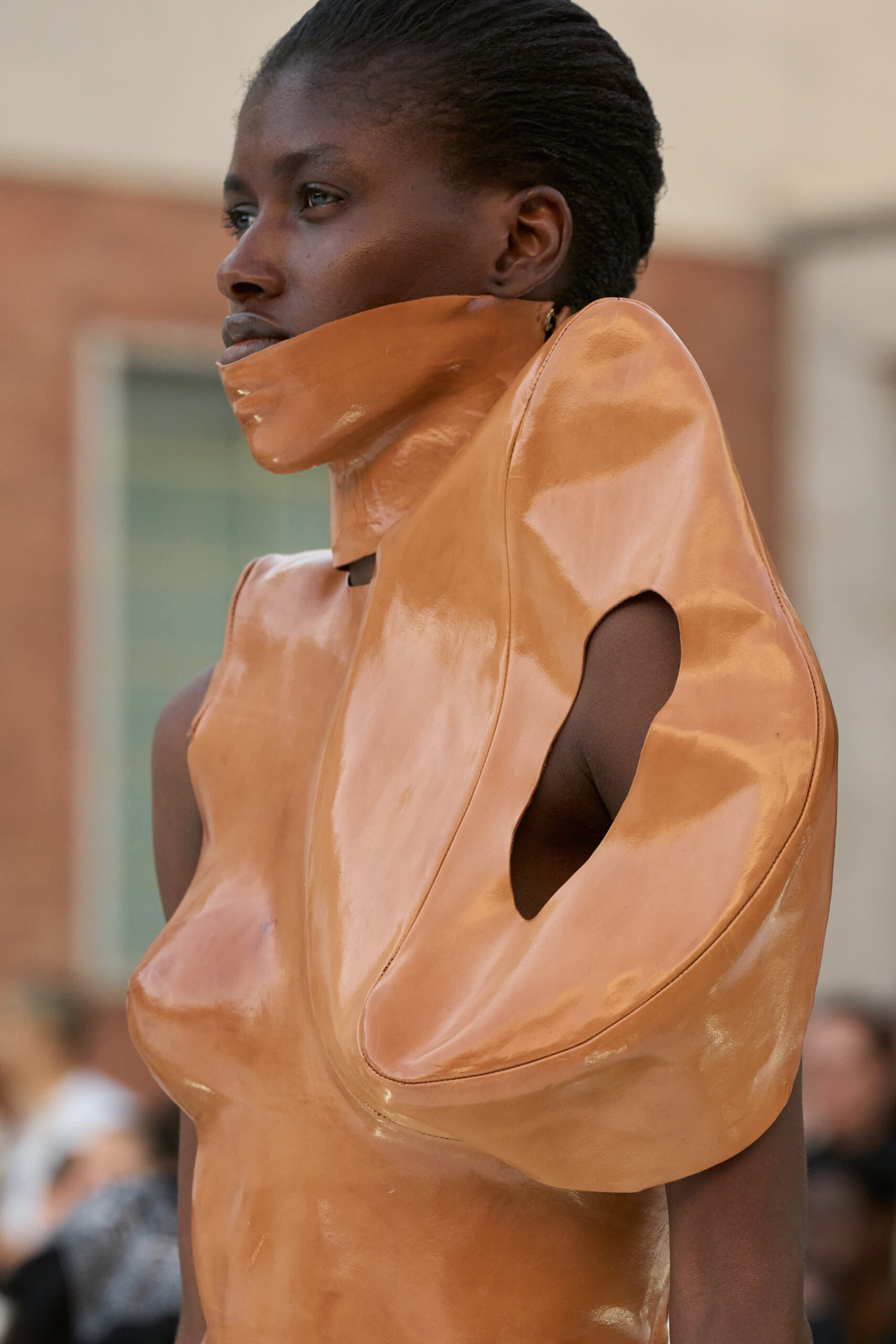
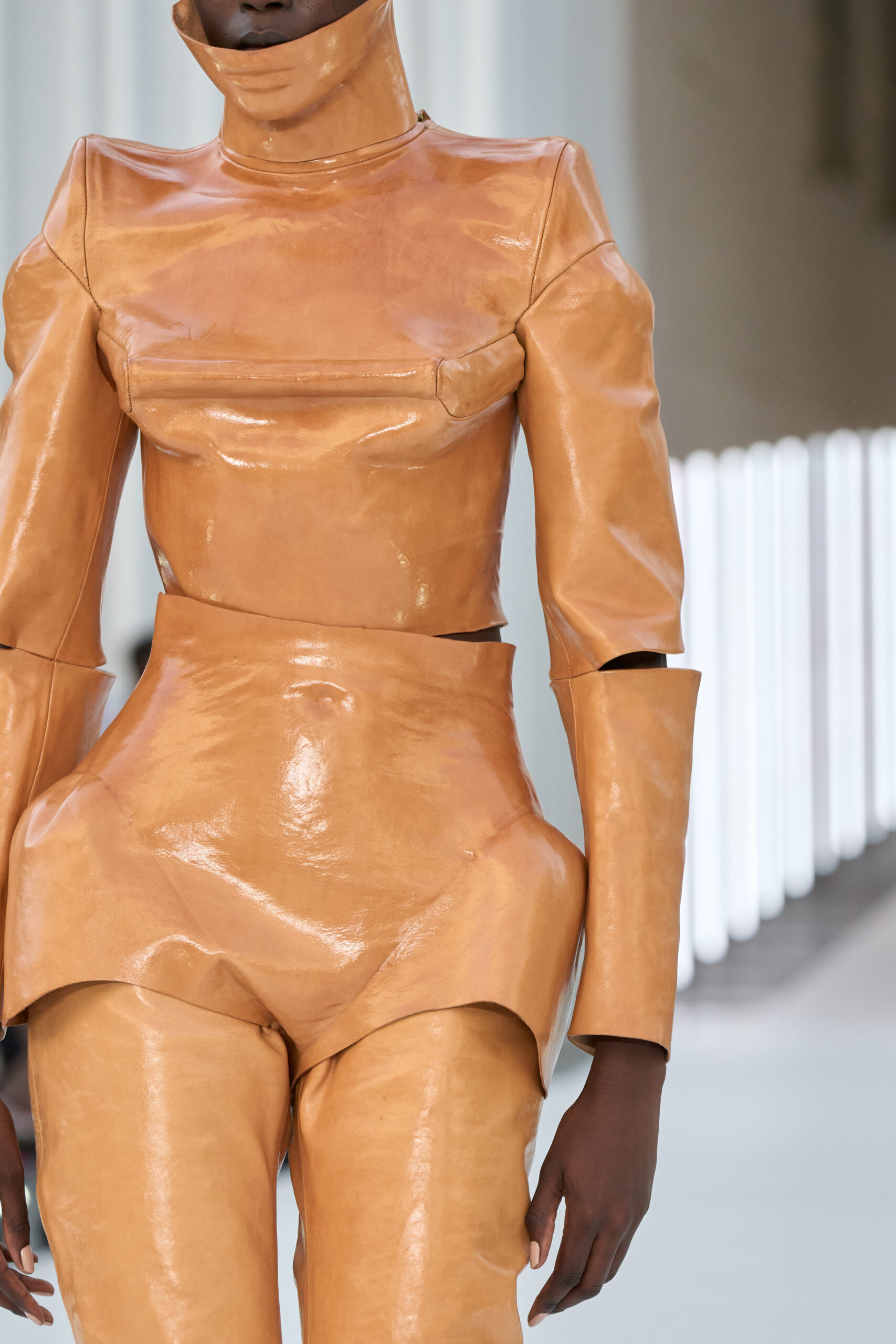
The second register is expressed through total looks in glossy, tone-on-tone leather, sculpted onto the body with cut-outs and asymmetric circular openings recalling the joints of a mannequin, a “perfect doll”, completed by matching boots that extend the silhouette until it disappears.
Among the accessories, a necklace that rises to cover the mouth like a half-mask recurs throughout: a detail that plays with the boundary between human and artificial, between those who can speak and those who cannot. Because if a doll has a mouth and eyes but cannot communicate, perhaps it is the voice, the ability to use it, that still sets us apart.
Positioned at the boundary between fashion and sculpture, No Longer Human finds beauty in a reimagined perfection, one recast in its strangeness and unease, idealized, constructed standards that have less and less to do with the reality of the human form.
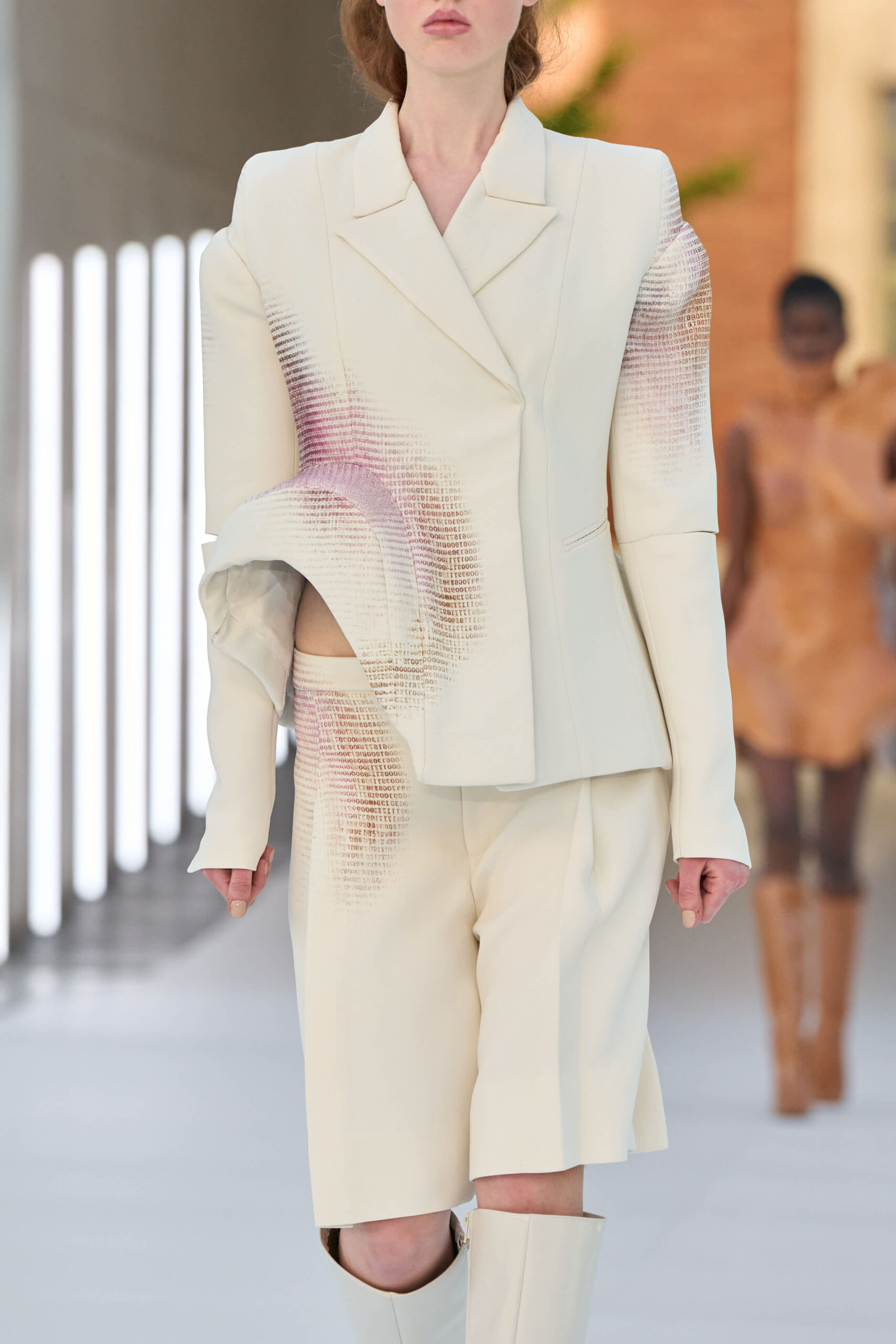
“The shapes and forms are strongly influenced by sculptural bodies like mannequins and dolls. I focused on exaggerated silhouettes, inspired by junction points of dolls, to create a sense of constructed anatomy rather than natural bodies. The color palette is intentionally muted, neutrals like white, beige, and pale pink combined with synthetic skin tones, colors that evoke both skin-like qualities and digital rendering. I chose materials that emphasize the idea of the body as something fragile and controlled. Cracked surfaces, inspired by porcelain dolls, reflect a sense of damage and imperfection, while still maintaining a certain beauty. At the same time, I worked with leather molding to shape the body, creating forms that echo the idea of an artificial, constructed anatomy. The contrast between fragile, broken textures and controlled, molded forms reflects the tension between vulnerability and manipulation within the body,” explains Emilie Wenckstern.
For the printed fabric used in one of the looks, Emilie collaborated with Ostinelli Seta.
Faculty and mentorship
“Emilie’s subject matter is very relevant today. It’s not only a clever concept, she managed to translate it with great technique, in a modern and powerful way,” commented mentors Luke and Lucie Meier.
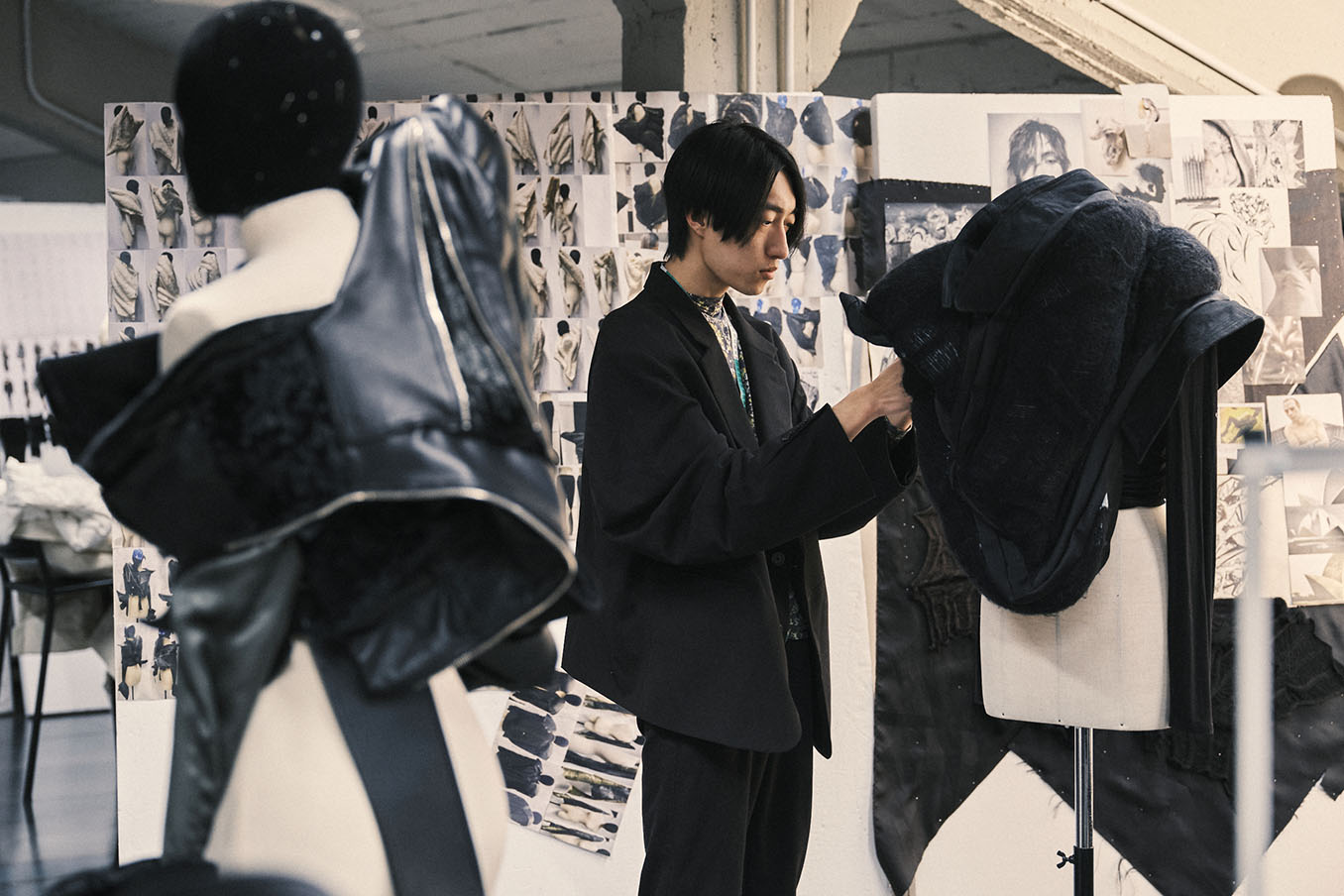
No Longer Human was brought to life in the workshops of the Manifattura Campus, where every piece was conceived, developed, and made under the guidance of Polimoda’s faculty. For the 2026 edition, creative directors Luke and Lucie Meier, returned to the school where they trained and first met twenty-five years ago, joining director Massimiliano Giornetti, together with An Vandevorstand the faculty, as mentors guiding the development of the graduating students’ collections.
The Graduate Show marks both an ending and a beginning: four years of training in which students from around the world built their own creative language in Florence, translating cultural roots and personal visions into industry-ready collections, and took the first step into a career within the international fashion system.