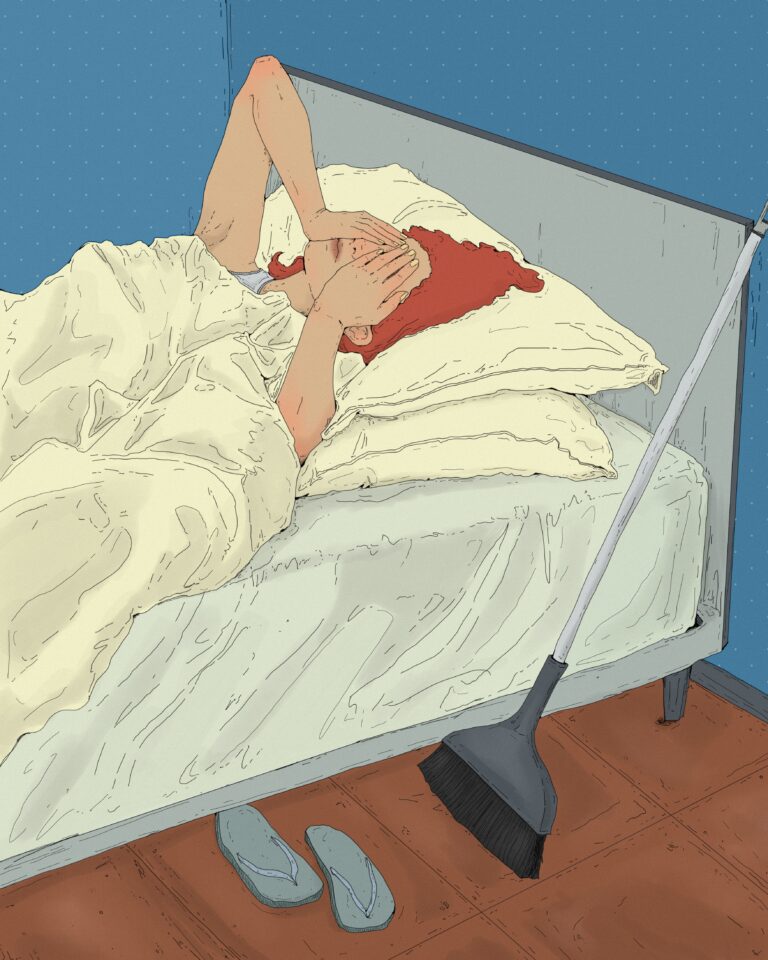
An internship can surprise you, and teach you far more than you expected. At the end of her course, Fashion Art Direction alumna Mobina Mirzaei found herself at Emilio Pucci Heritage. She spent her days cataloguing, steaming and exploring the archive, until she came across a 1963 newspaper column written by Carole, an intern who had once walked the same halls. The discovery gave Mobina something she hadn’t expected, and something fashion has long since lost: the feeling of belonging to something bigger.
Every year thousands of students graduate with a degree in fashion, and a huge percentage of who actually works and represents the industry on LinkedIn are people who didn’t get a degree in fashion at all. The sector is oversaturated with graduates from schools that promise access they can’t actually guarantee, competing for a shrinking number of entry-level roles that often exist mainly to be filled and refilled by whoever will accept the least amount of money and more importantly, someone who doesn’t need a visa. There’s no handbook that tells you this, you find out by living it. These careers seem to have started somewhere you weren’t invited.
I graduated in June 2025 from Polimoda. I was half-convinced that Fashion Art Direction was more of a beautiful idea than an attainable actual job title, and I knew that even a good thesis and a great school wouldn’t count for much if I couldn’t solve the far more basic problem of being allowed to stay in the country long enough to work.
Polimoda gave me a vocabulary with a critical eye for fashion and the skills to build on. But my internship at Emilio Pucci Heritage – Palazzo N6 is where I started actually learning. I found my way in by tracking down someone who had interned there before me, and the interview was unlike any corporate process. The blessing of a small company is that people tell you the reality of the job, no sugarcoating for a “brand image.” From the beginning, I knew what I was getting myself into.
I spent hours doing things that felt unglamorous: organizing, reading Pucci books over and over again, cataloguing, steaming, sitting quietly in meetings just absorbing how decisions got made. In the moment, none of it felt like “art direction”. In hindsight, I was learning more than I had at school. What surprised me most was how much of the job is translation. At school we focus on vision and creativity, and we almost forget how the real world outside that vision works. At first, the limitations you face and the “this isn’t realistic” feedback will knock you down, but eventually you learn to navigate it. It’s like being a politician: you need to translate your vision and push for it diplomatically to get your way. Nobody teaches you that skill directly. You pick it up by watching people do it well and badly, over and over, until you can do it yourself.
At some point during my internship, my days were fully focused on the archives. While restructuring the historical archive, I came across a newspaper column by an American girl named Carole, who had worked at Palazzo Pucci back in 1963. One sentence stuck with me: “At Pucci, every girl does many different things”, this sentence still holds true here today. From that day on, I understood I was walking the same path as those women, and here I was 63 years later after Carole. This Palazzo has seen so many lives, and I am just another person contributing to it. Fashion has lost this feeling in our era: the feeling of belonging.
I was lucky to have some of the best mentors at Polimoda and to work on projects essential to the career I’ve chosen. Four years ago, I was a girl from Iran struggling to even get a visa to study there, and I have to say, Polimoda stood by me through that. That same sense of being guided carried into the internship, where Laudomia Pucci became a mentor of a kind we rarely see anymore in fashion: someone who carries decades of history in her hands and still leads with the same care and instinct that built it. Working alongside her taught me that heritage isn’t just preservation or just looking at the past. It’s an evolution and it’s always about going forward.
If there’s advice buried in all of this, it’s simple and controversial: take the unpaid internship that feels right to you. You’re not the only one trying to figure out how to survive on your savings or if you’re lucky enough, your family’s support for six months. Almost everyone in this industry has done the same math you’re doing right now. Don’t treat the internship as beneath the “real” work just because you’re not being paid for it. The education you get there is what builds you, and eventually, it’s what brings you an income too.
CREDITS
Written by
- Mobina Mirzaei, Fashion Art Direction Alumna
Illustration by
- Rebecca Migliozzi, Creative Visual Producer and Fashion Art Direction Alumna
FASHION SCHOOL DIARIES
A column by students on life in Florence
Welcome to Fashion School Diaries, a new Journal column written by students, for students. From finding a home and starting an internship, to working showrooms, making friends, and navigating relationships, these stories are insightful, funny and sometimes touching, and until now, have remained untold.
CONTRIBUTE
Would you like to be the next columnist for Fashion School Diaries? Pitch your story to journal@polimoda.com.