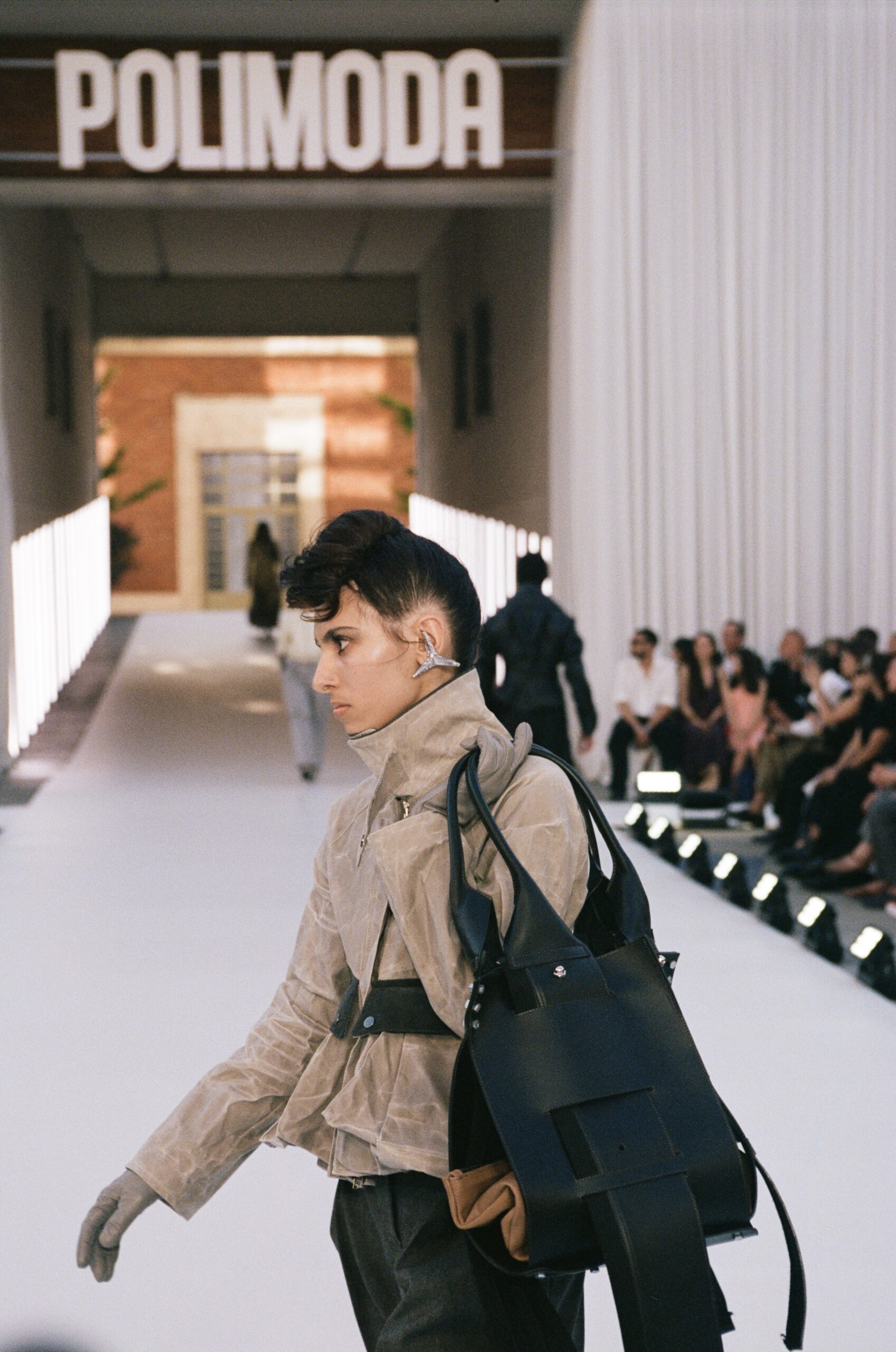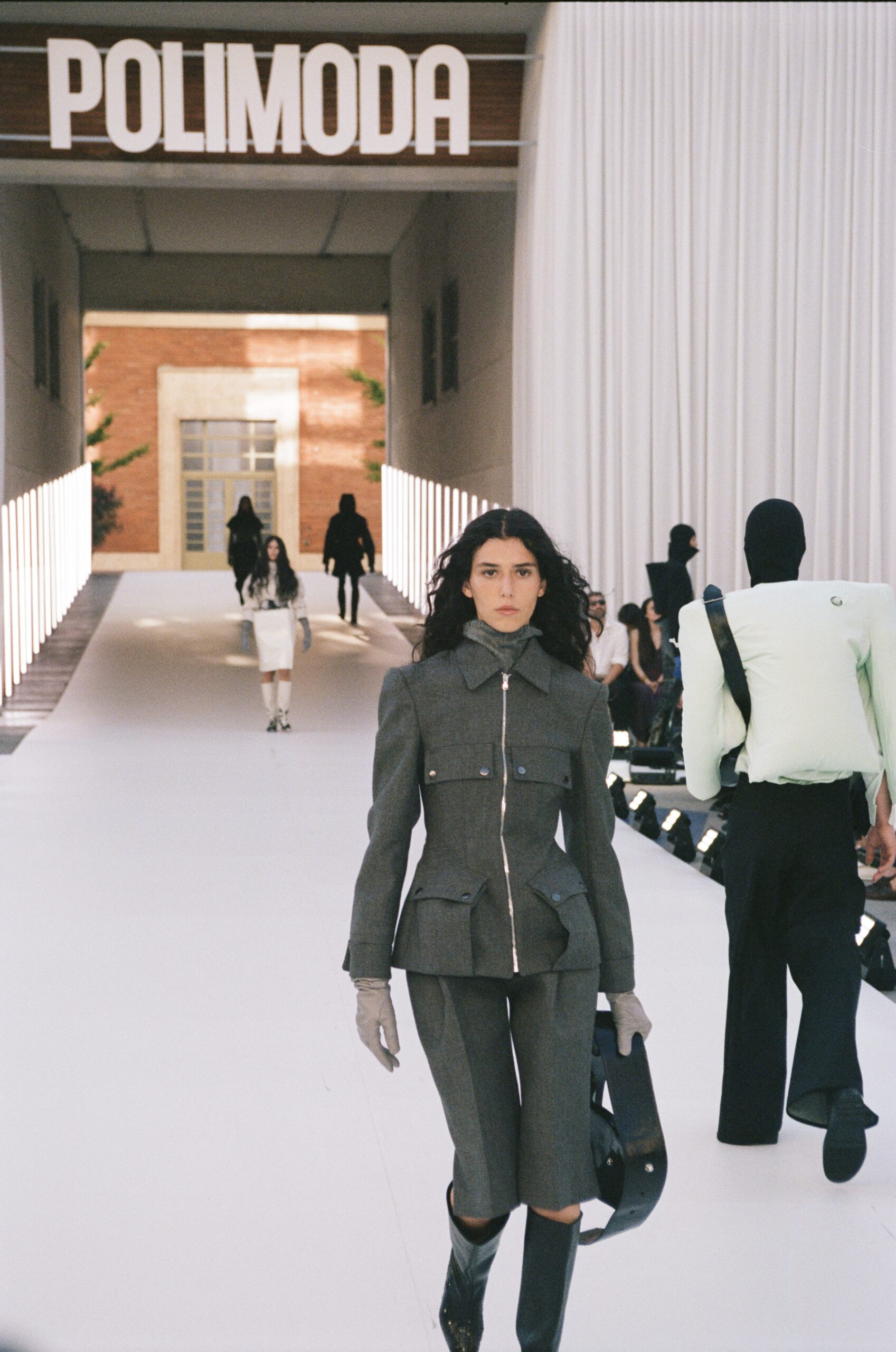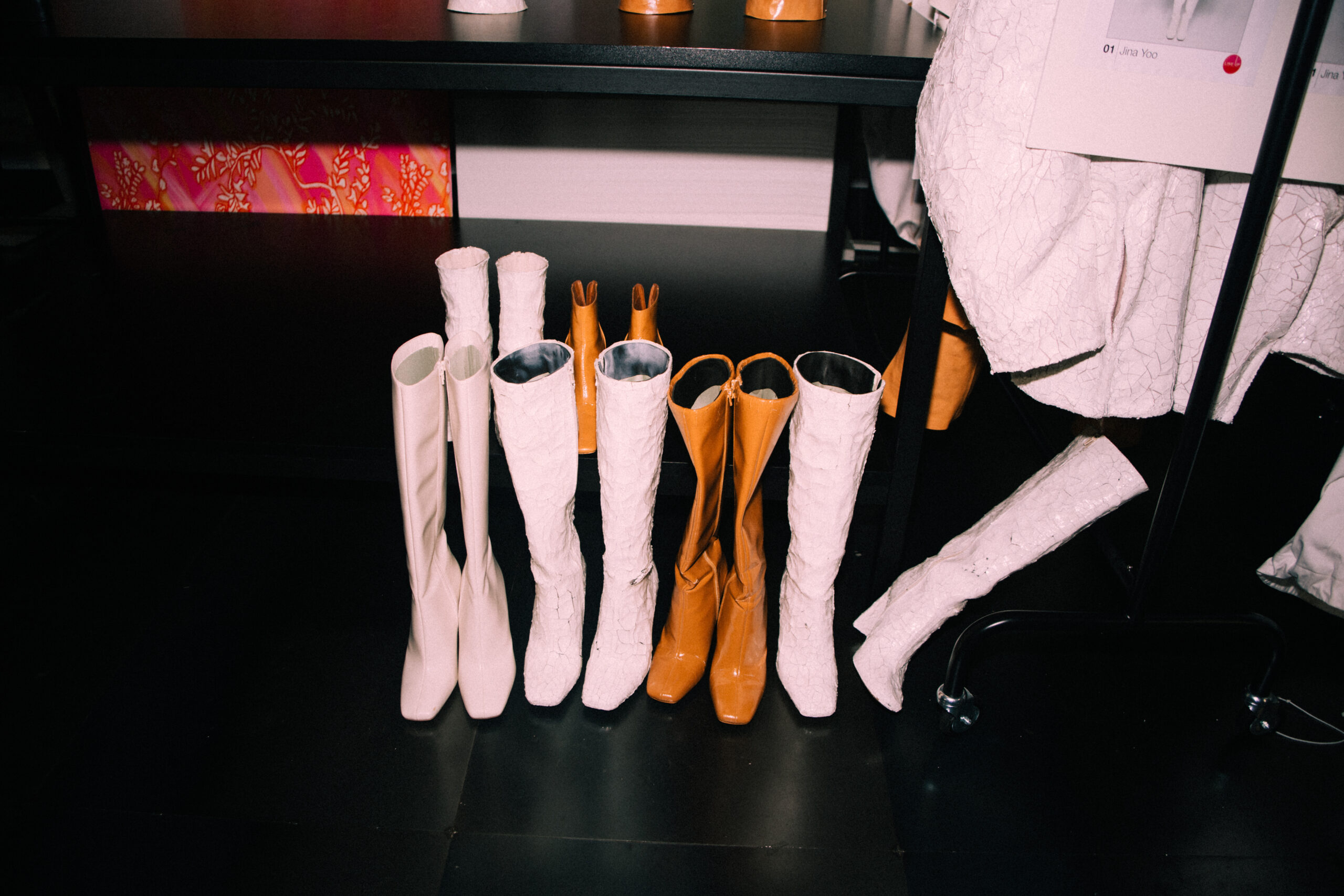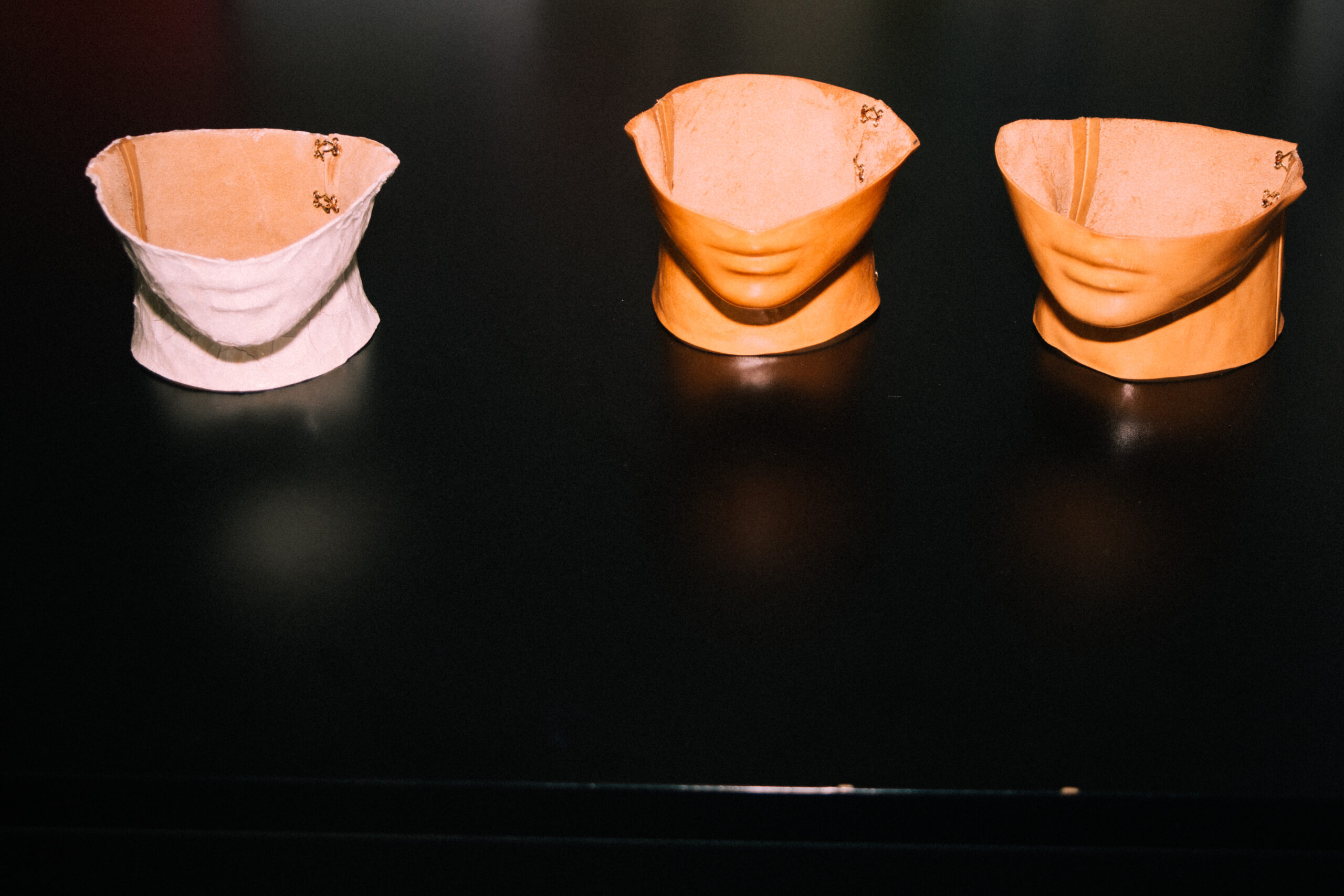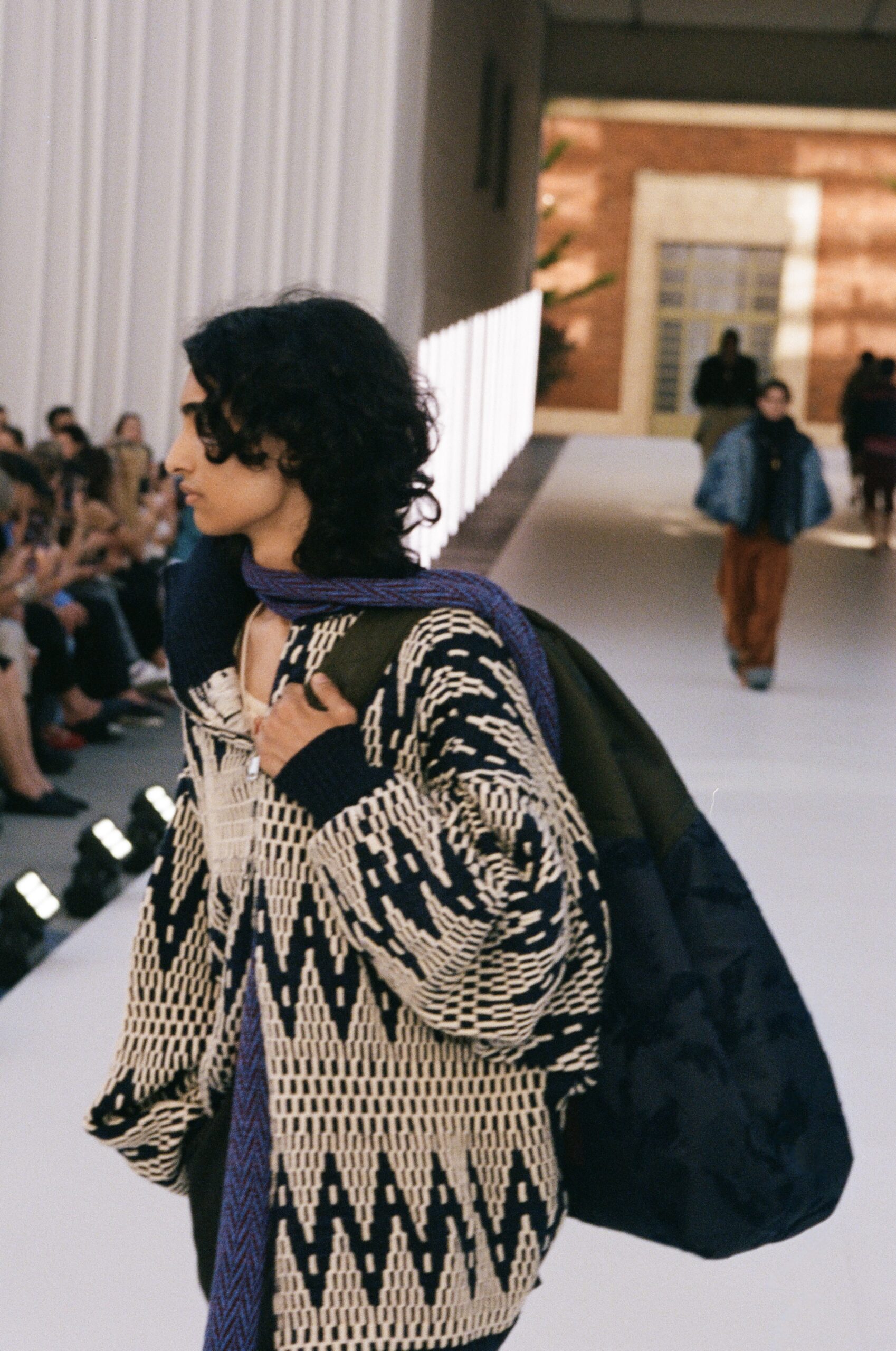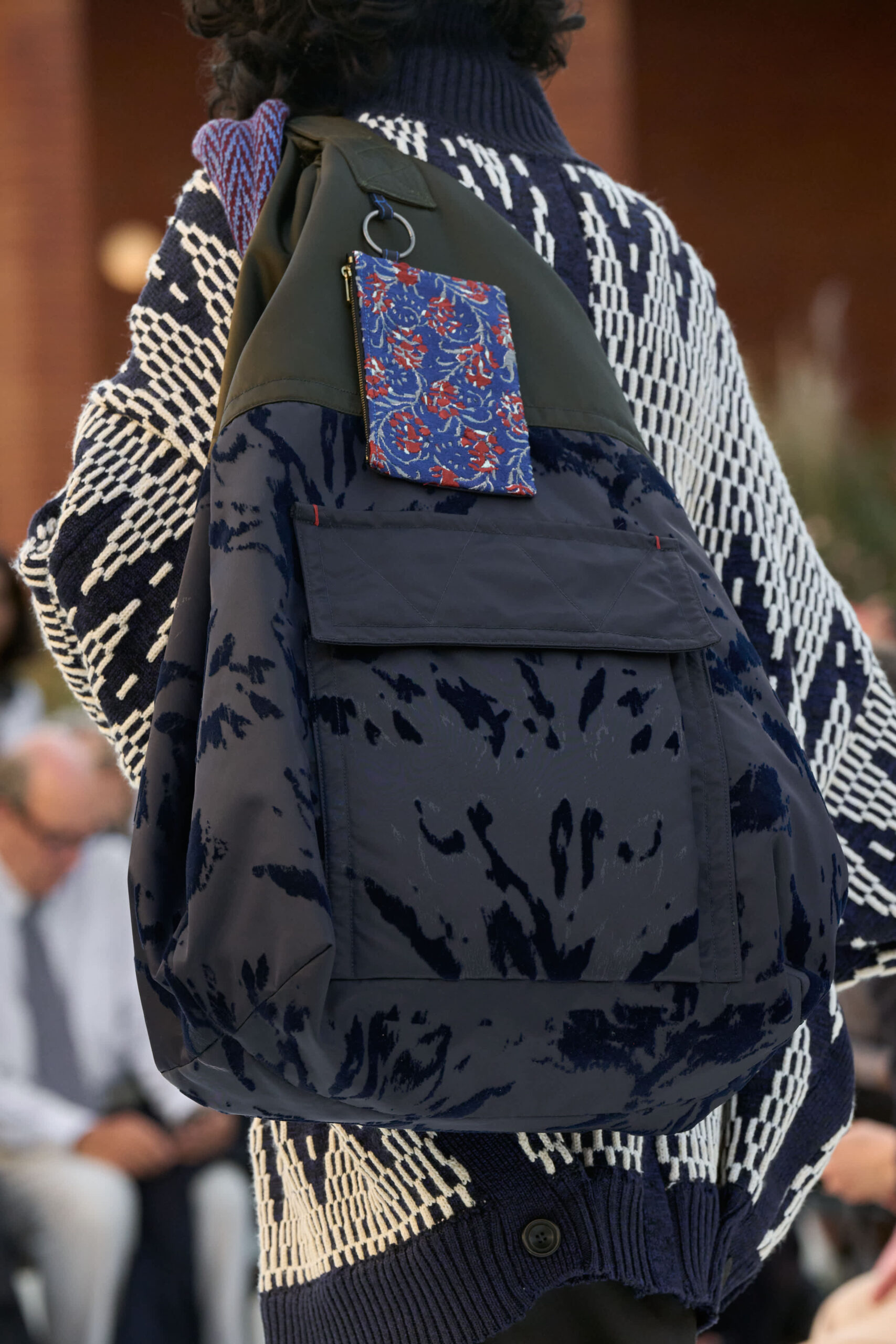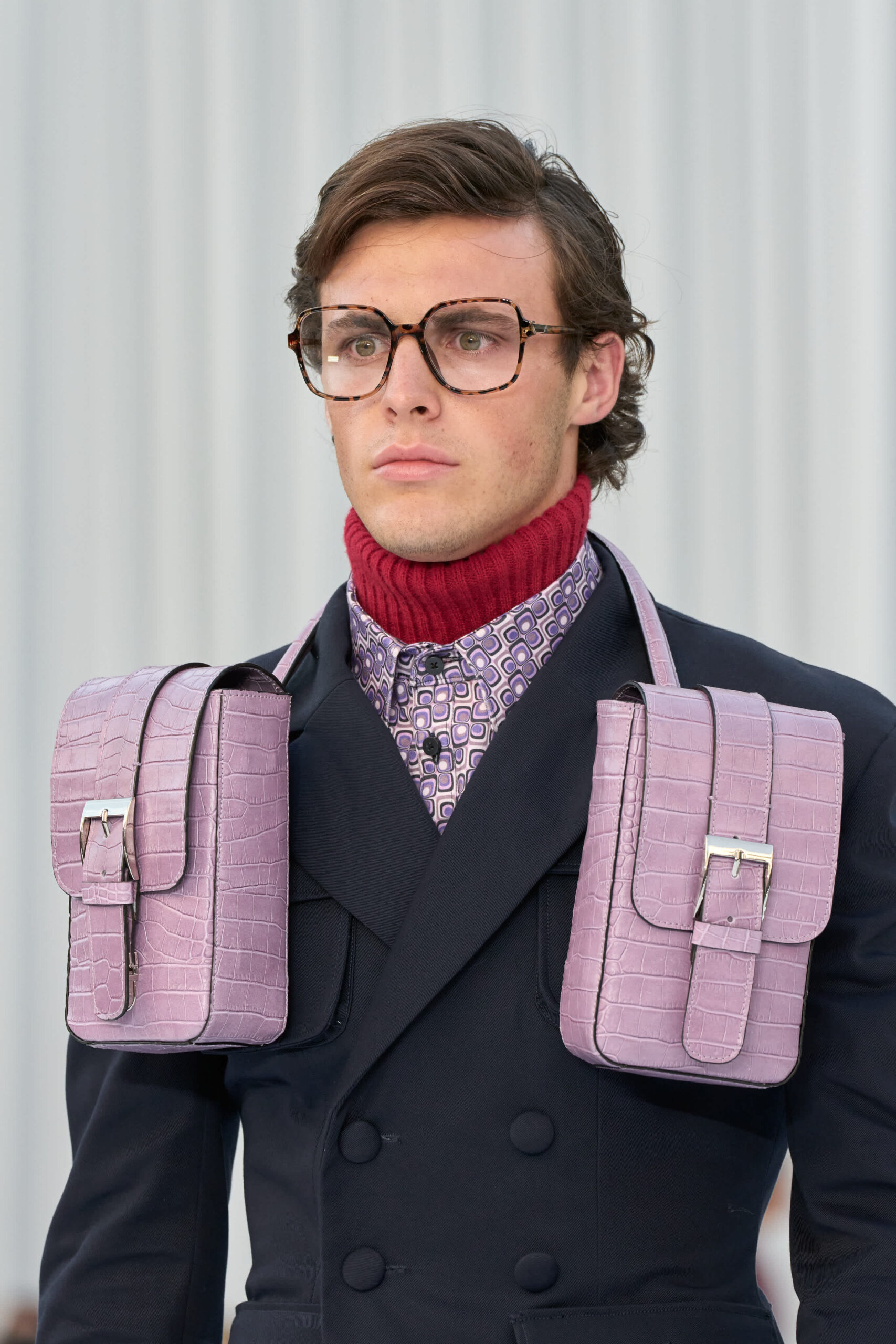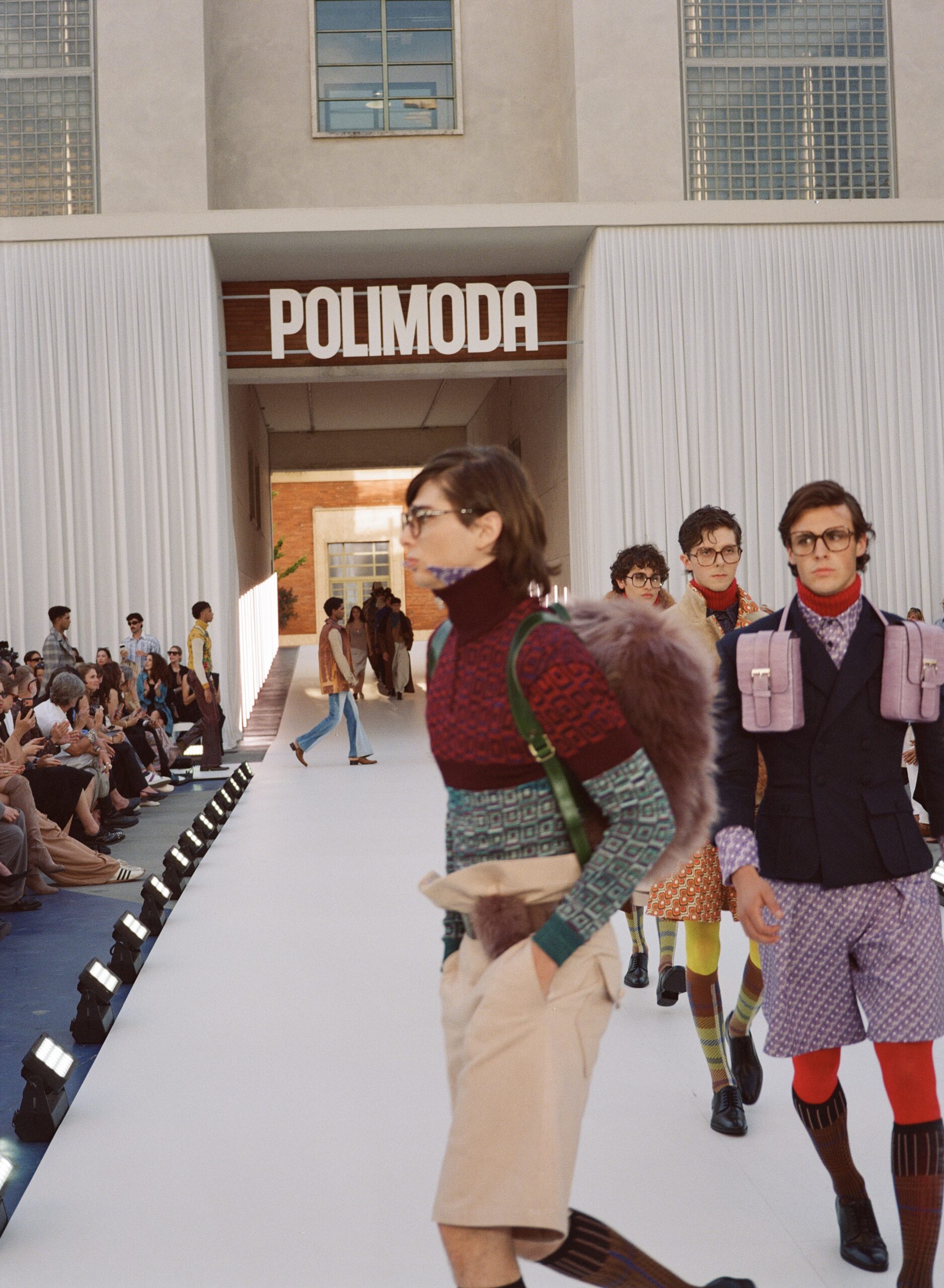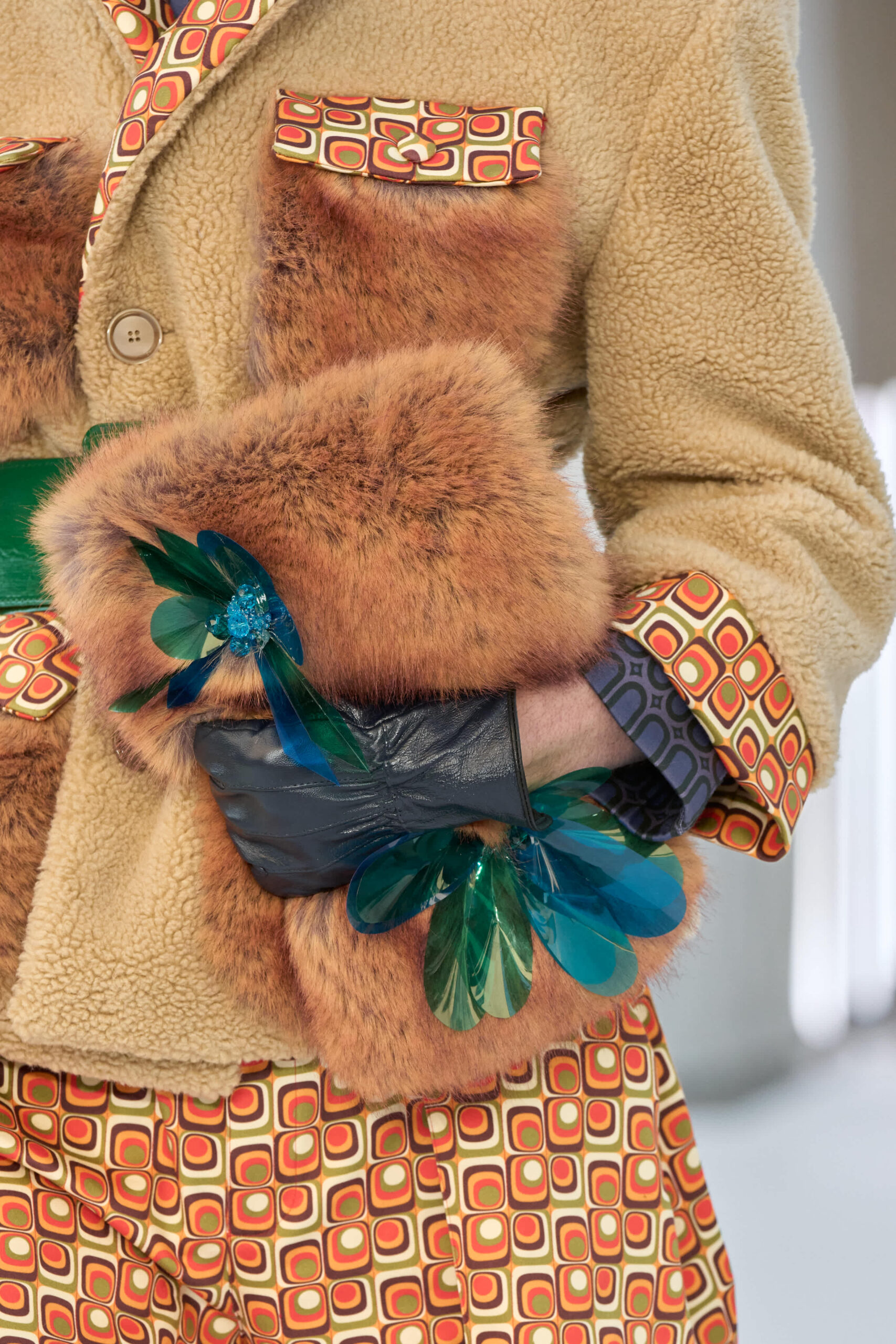
Accessories take center stage, and for good reason. The school’s commitment to accessories design and development brings an extra dimension to the graduate show and reflects the school’s truly multidisciplinary approach. With accessories designers among the most sought-after talents in the industry today, the work on display speaks to both the rigor and the creativity that Polimoda nurtures.
Arina Kuzmich and Riccardo Rinaldi are at the heart of it: these two business students discuss how this year’s accessories don’t just complement a look, but command the room.
Arina: Are rules as unbreakable as they seem? It was a question I found myself considering during the Polimoda Graduate Show, and one that lingered long after the final look left the runway. The accessories presented this year deserve a moment of their own, and we are more than happy to give it to them. As a lover of bags and shoes myself, I am naturally drawn to this category. Such accessories occupy a unique space where creative vision meets essential functionality, resulting in pieces that are complex in construction, rich in concept, and absolutely worthy of a closer conversation.
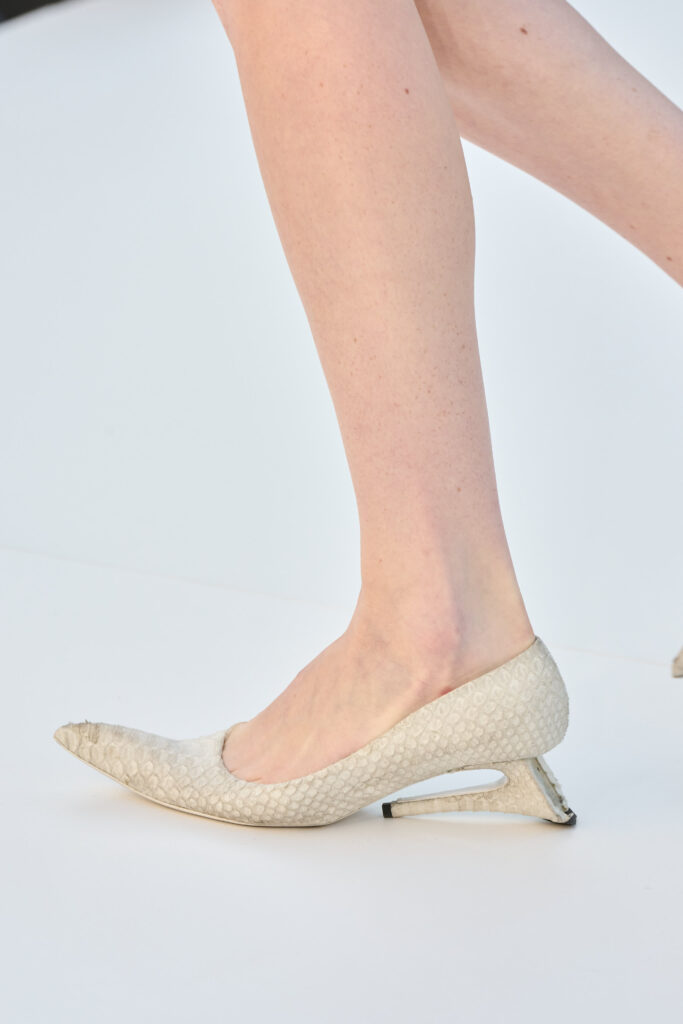
Vincenzo Junior Marrazzo for his collection Il Latte delle Vergini introduced us to a broken heel on a shoe crafted from exotic leather, transforming what would normally be an uncomfortable inconvenience into the focal point of the design, as well as a great conversation starter on a night out. As the designer himself explained, the broken heel represents “something innocent that has been corrupted, and yet you keep going.” In this way, Vincenzo has reimagined a sign of damage as a life-affirming statement.
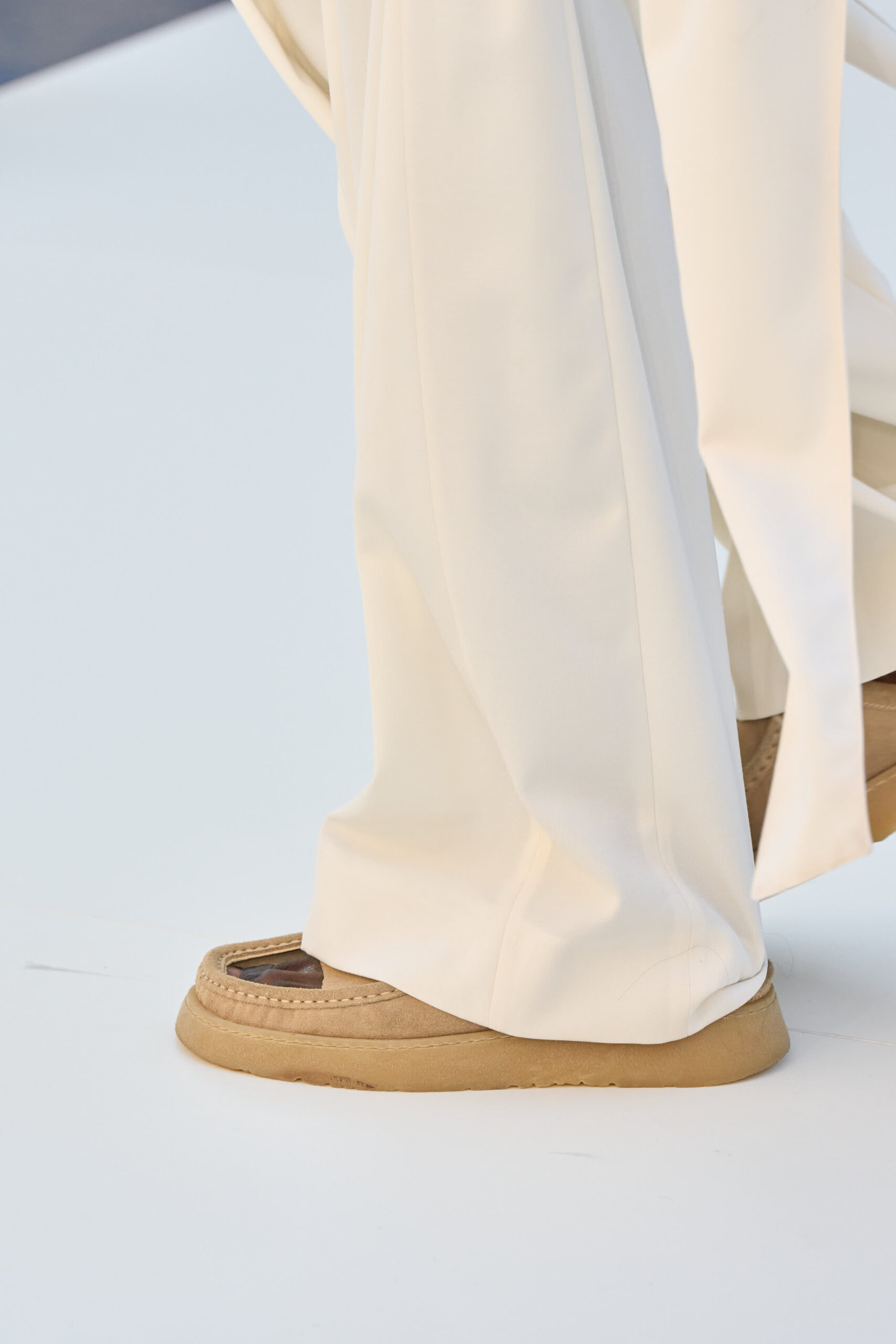
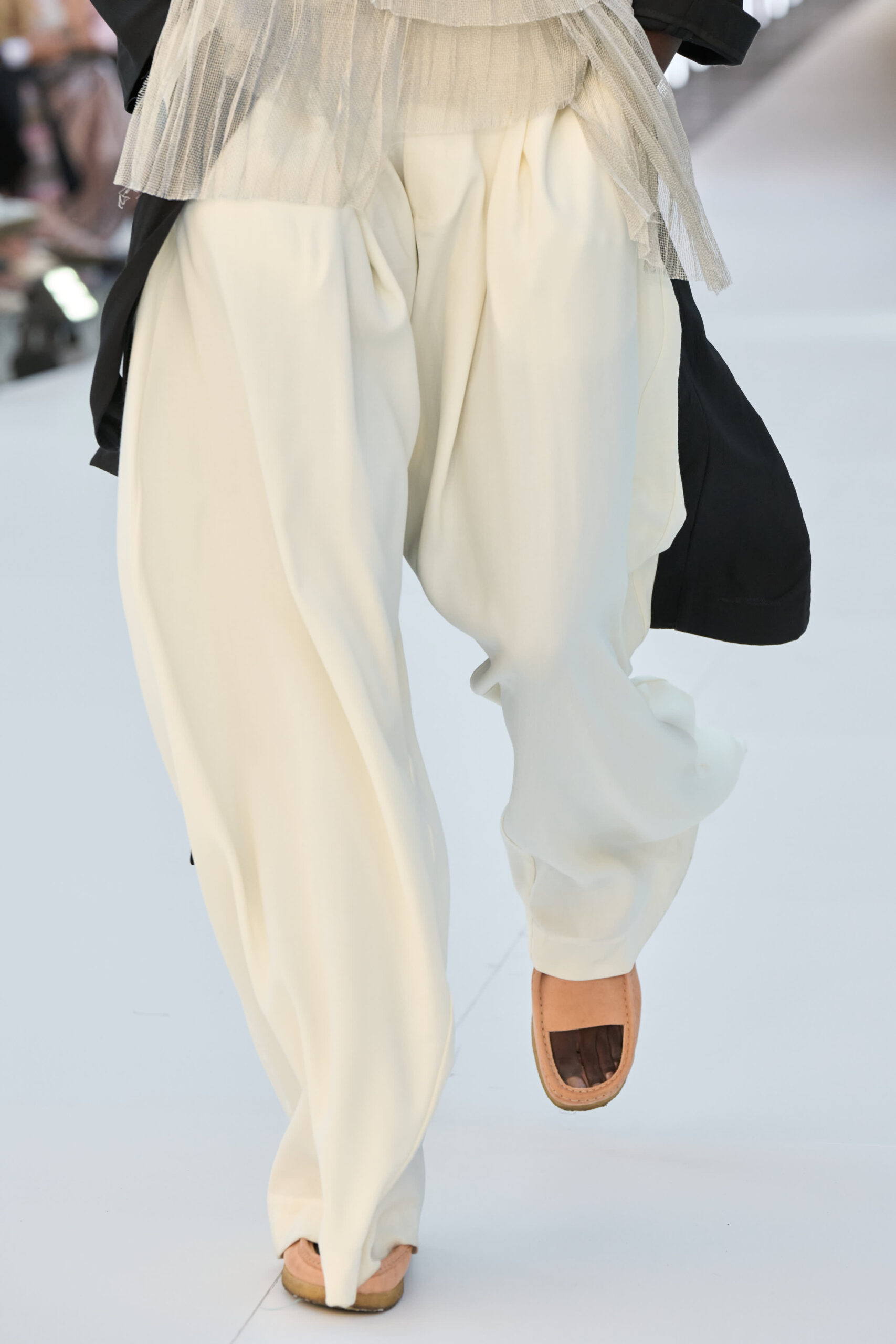
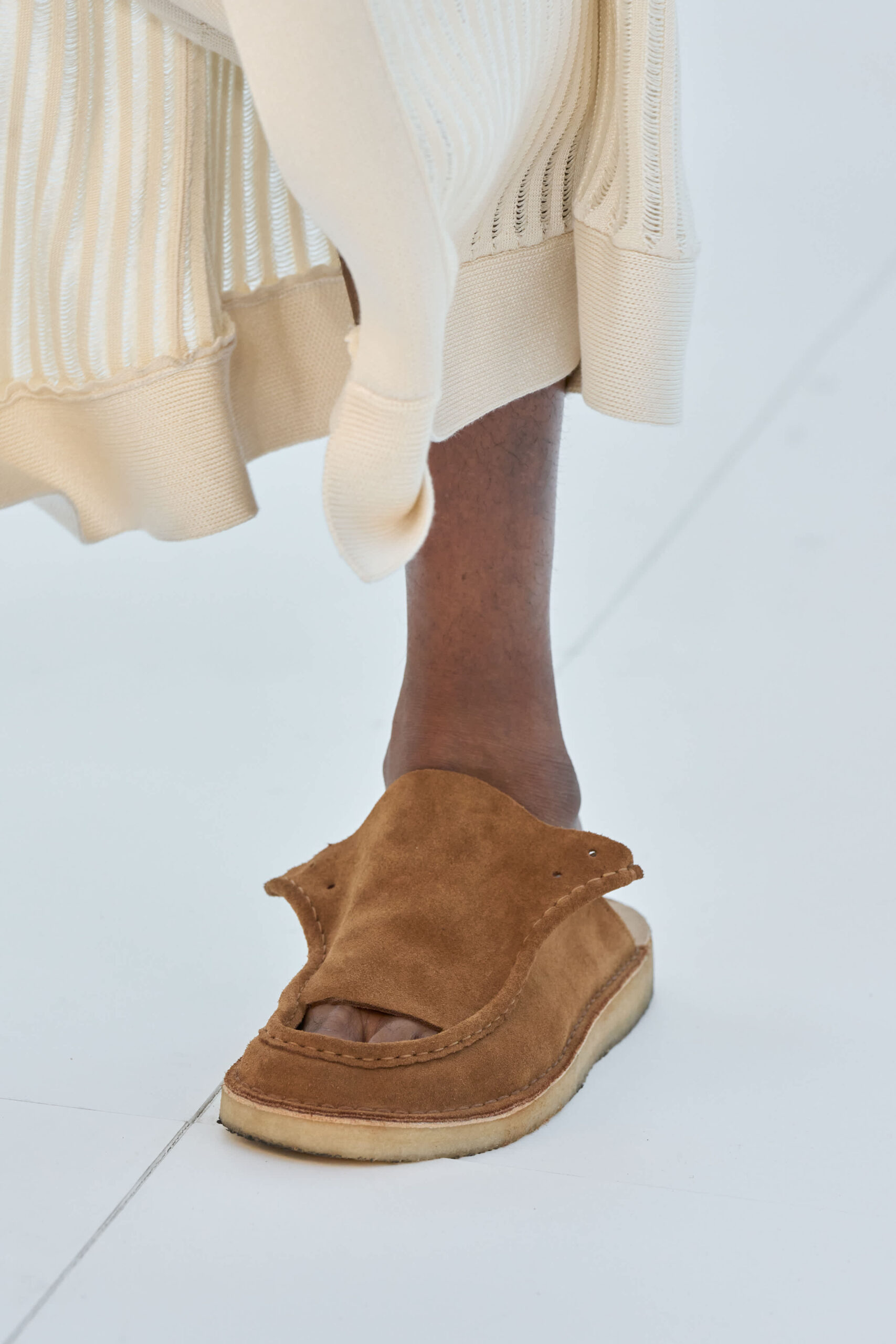
Another designer who took a familiar silhouette and gave it an unexpected twist was Aaron Dillworth with his collection SUN IS HIGH SO AM I. What at first glance appears to be a classic Wallabee, turned out to have cut-outs across the vamp, offering both stylish look and breathability, which makes it an ideal choice for the sunny days ahead.
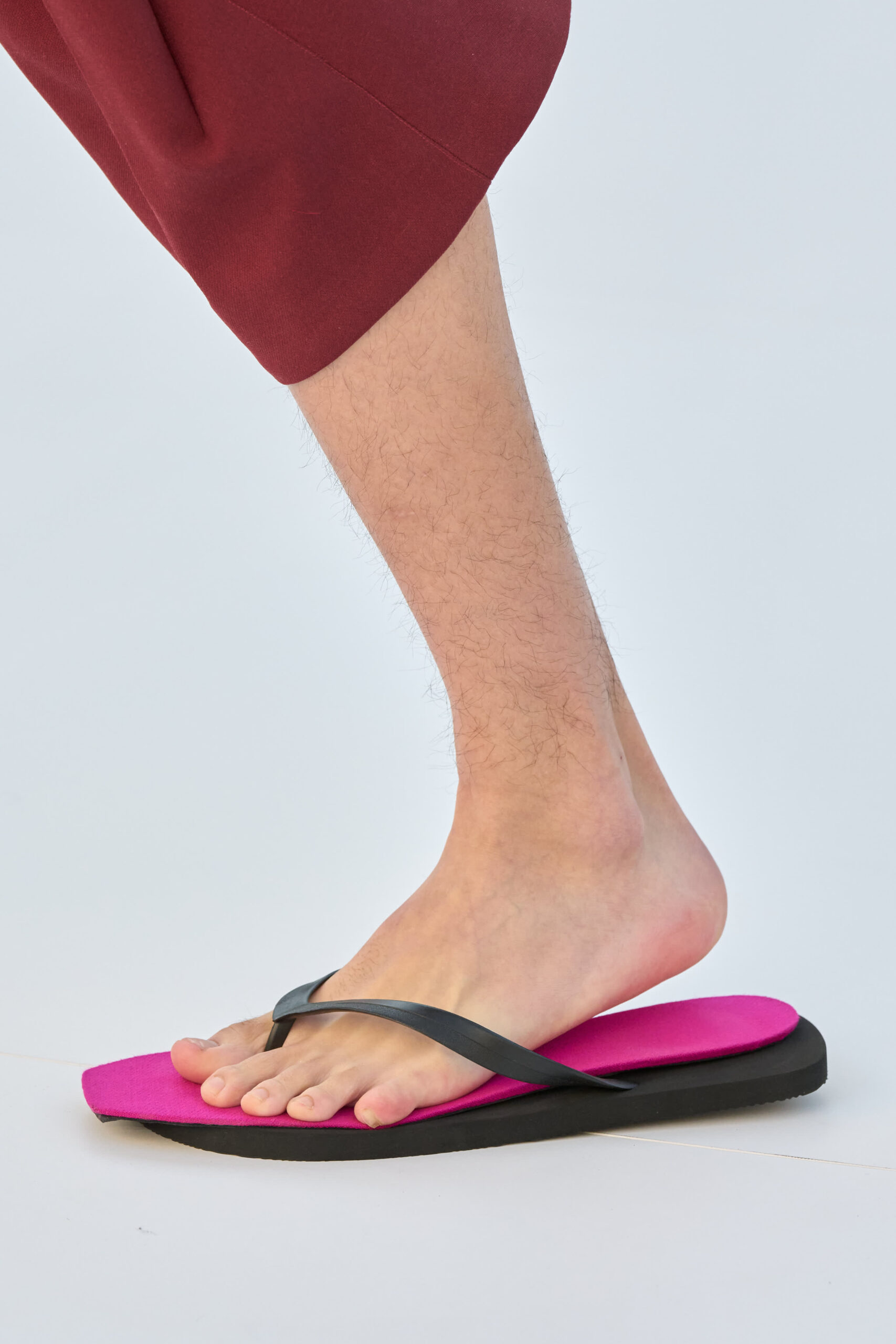
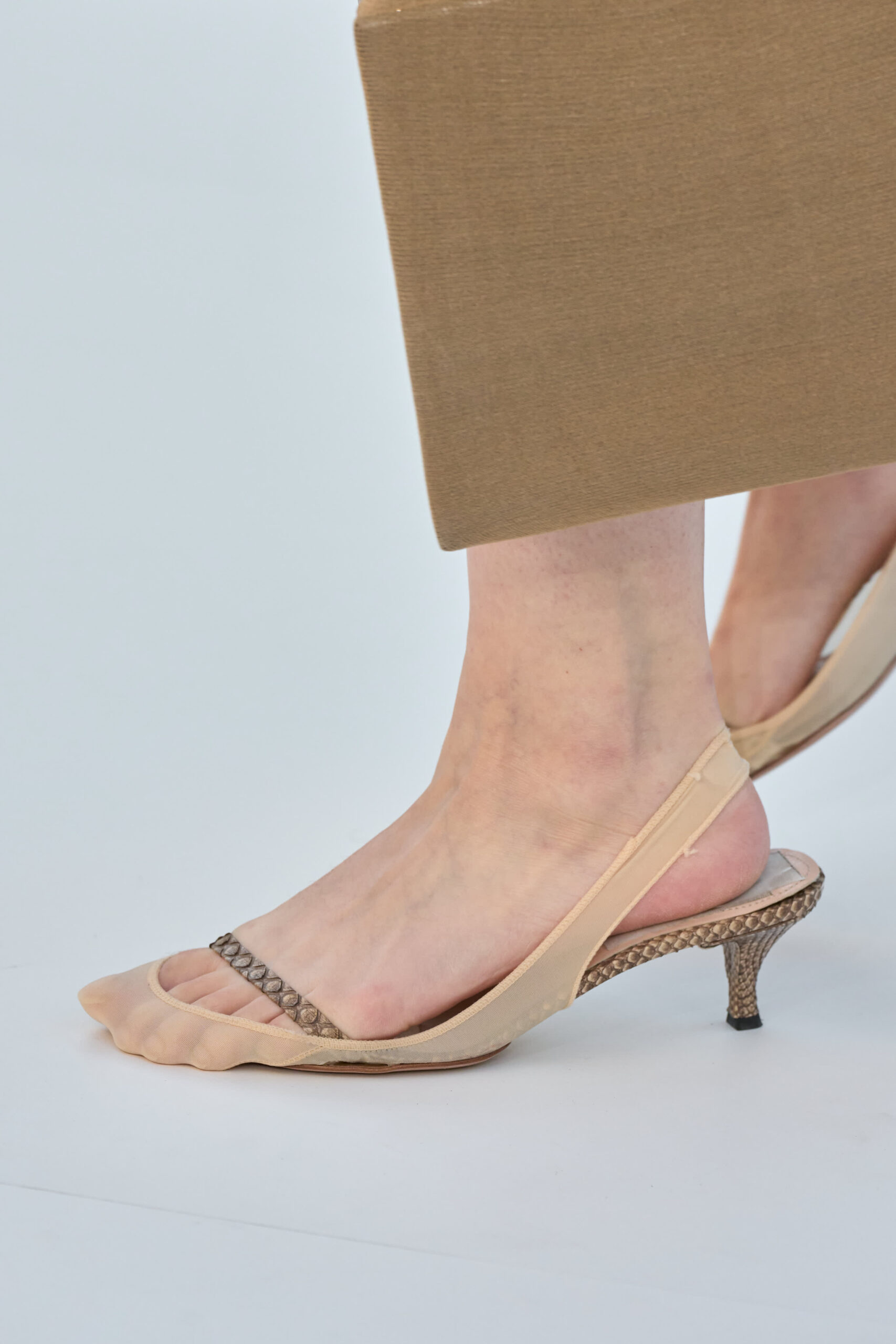
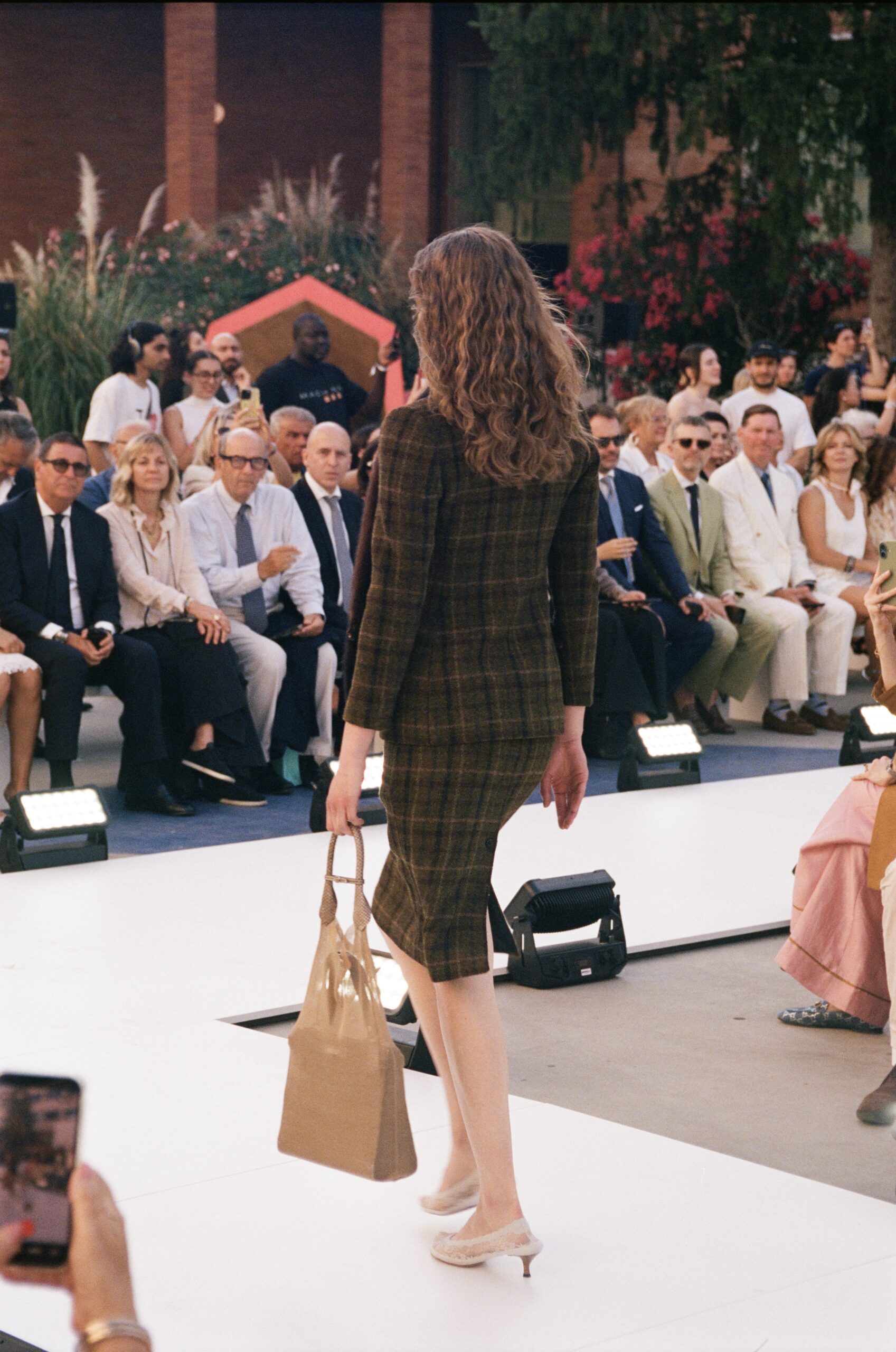
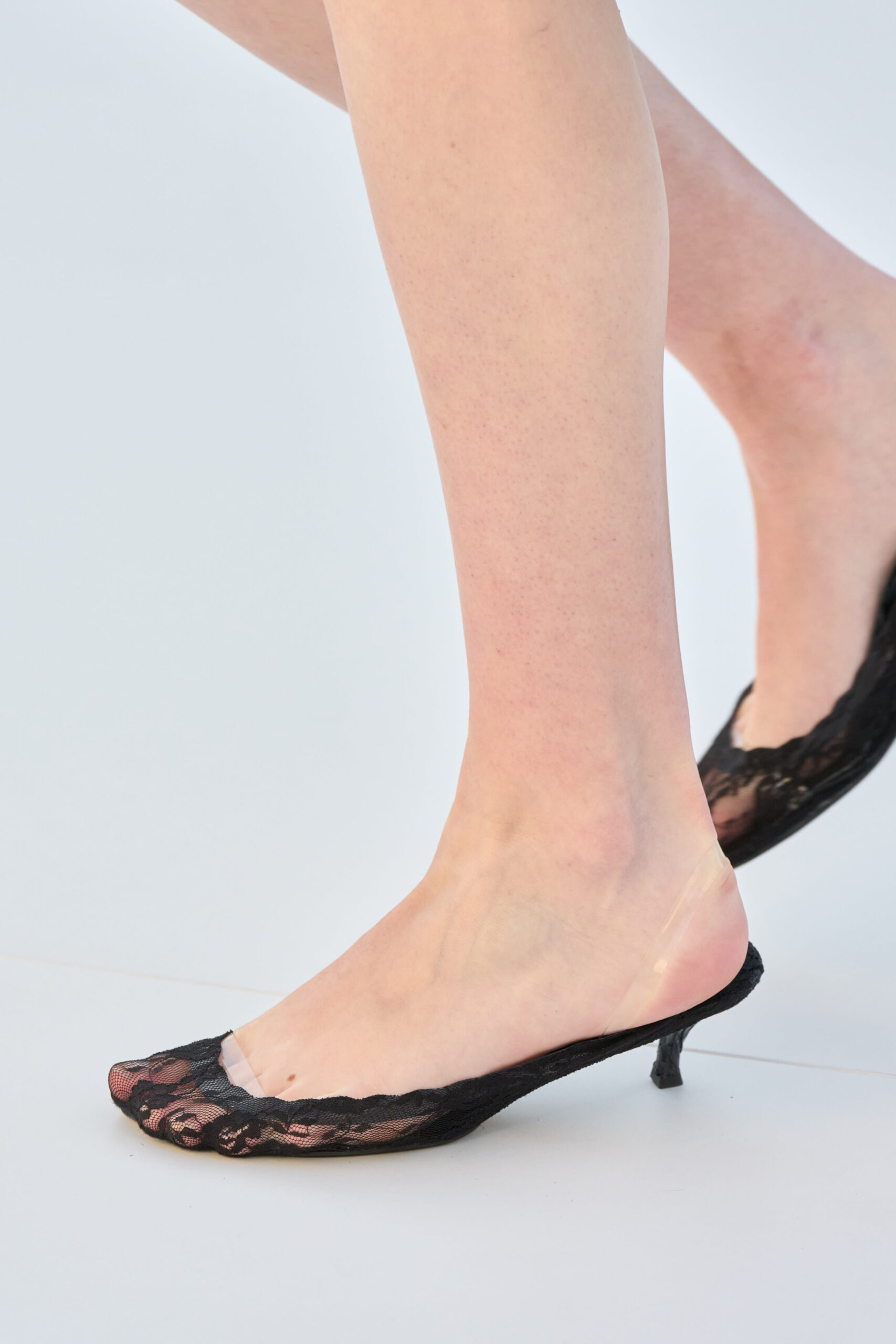
Summer-ready footwear also appeared in Jing Jirat Jitdee’s collection Cool Back Home. The designer presented elongated sandals distinguished by square toes and colourful insoles, details that made them feel both distinctive and look exceptionally comfortable. Meanwhile, Evelina Kryvopust, in UN, proposed “barely-there heels constructed from sheer tights, creating the illusion of a second skin. Finished with a python leather heel”.
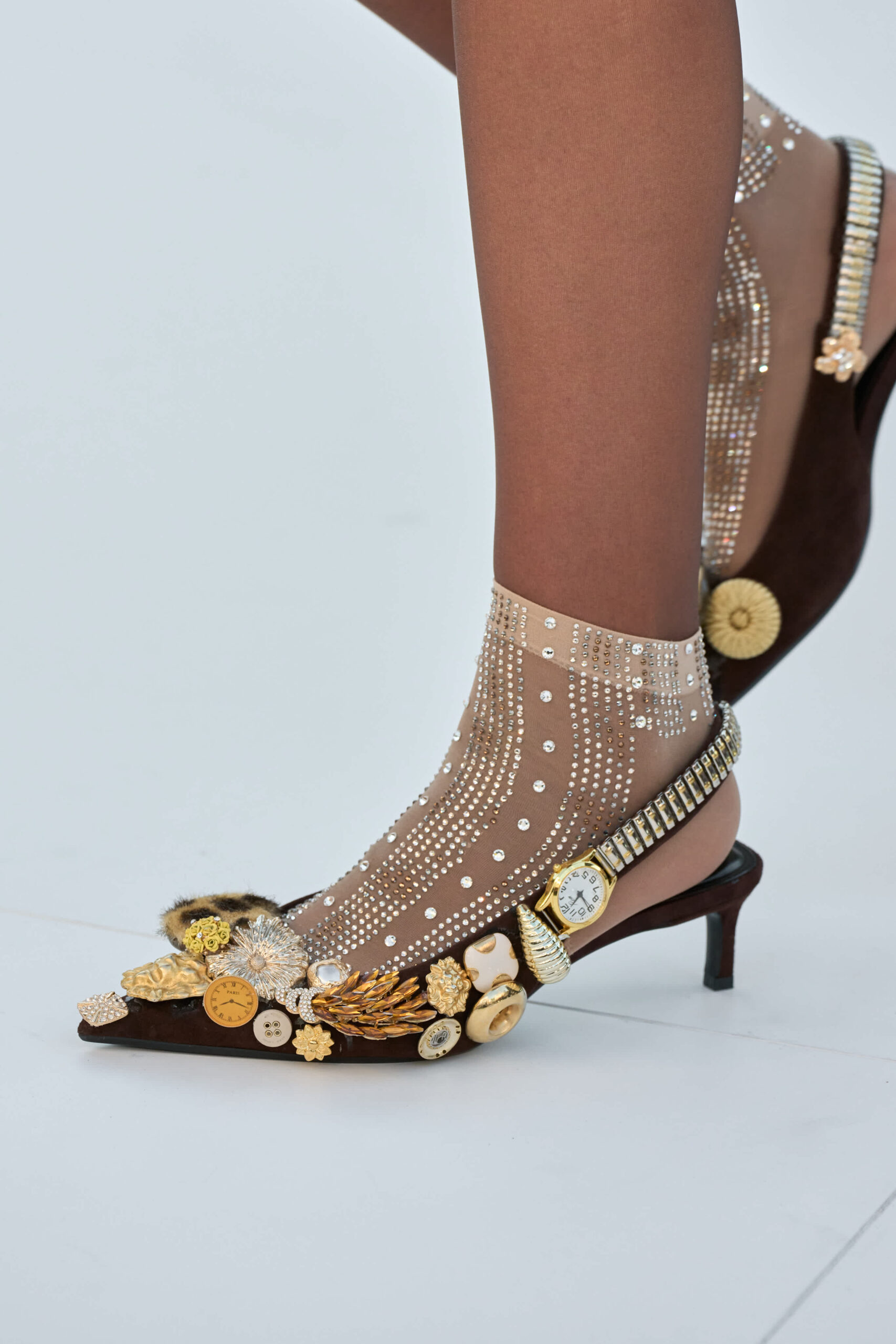
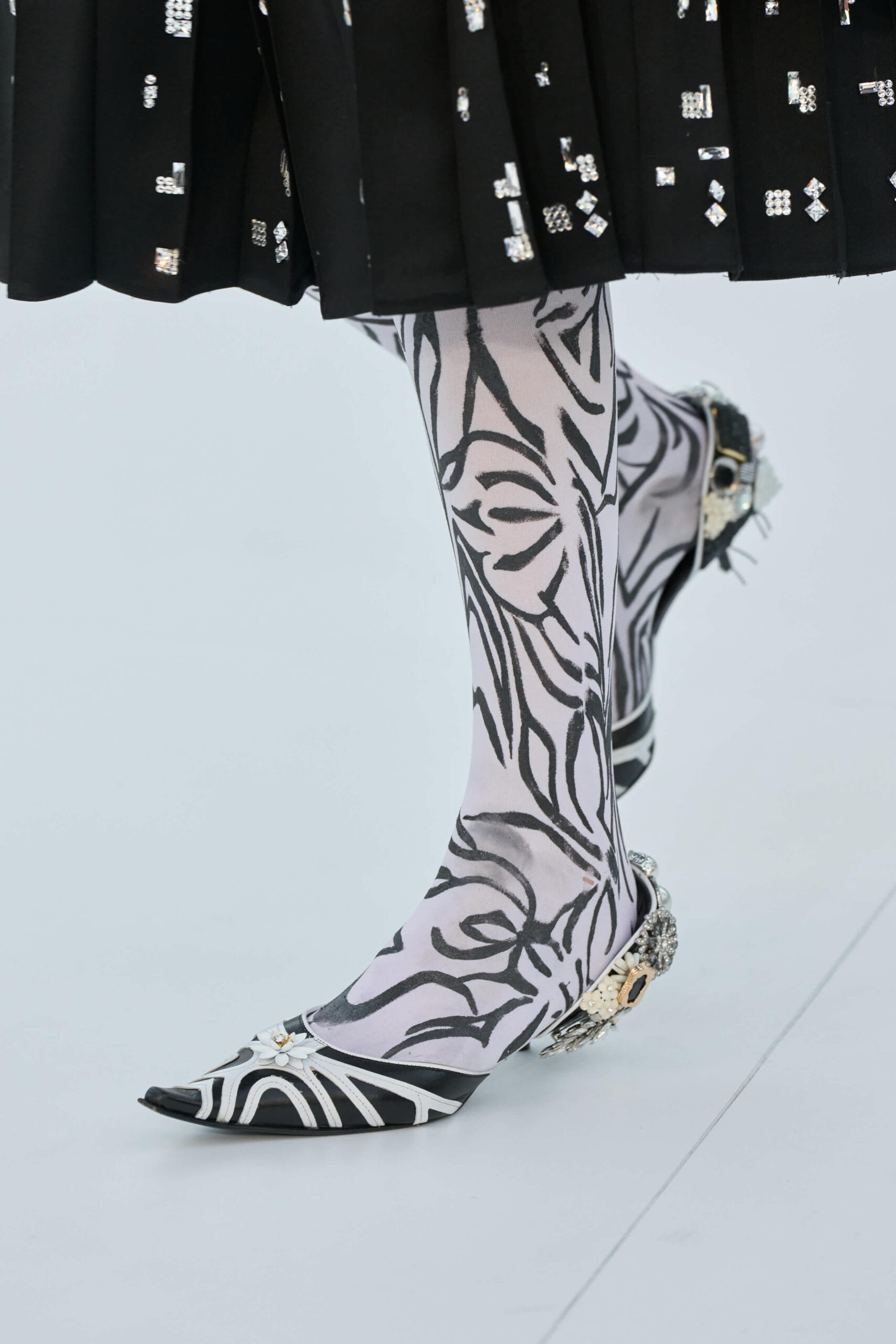
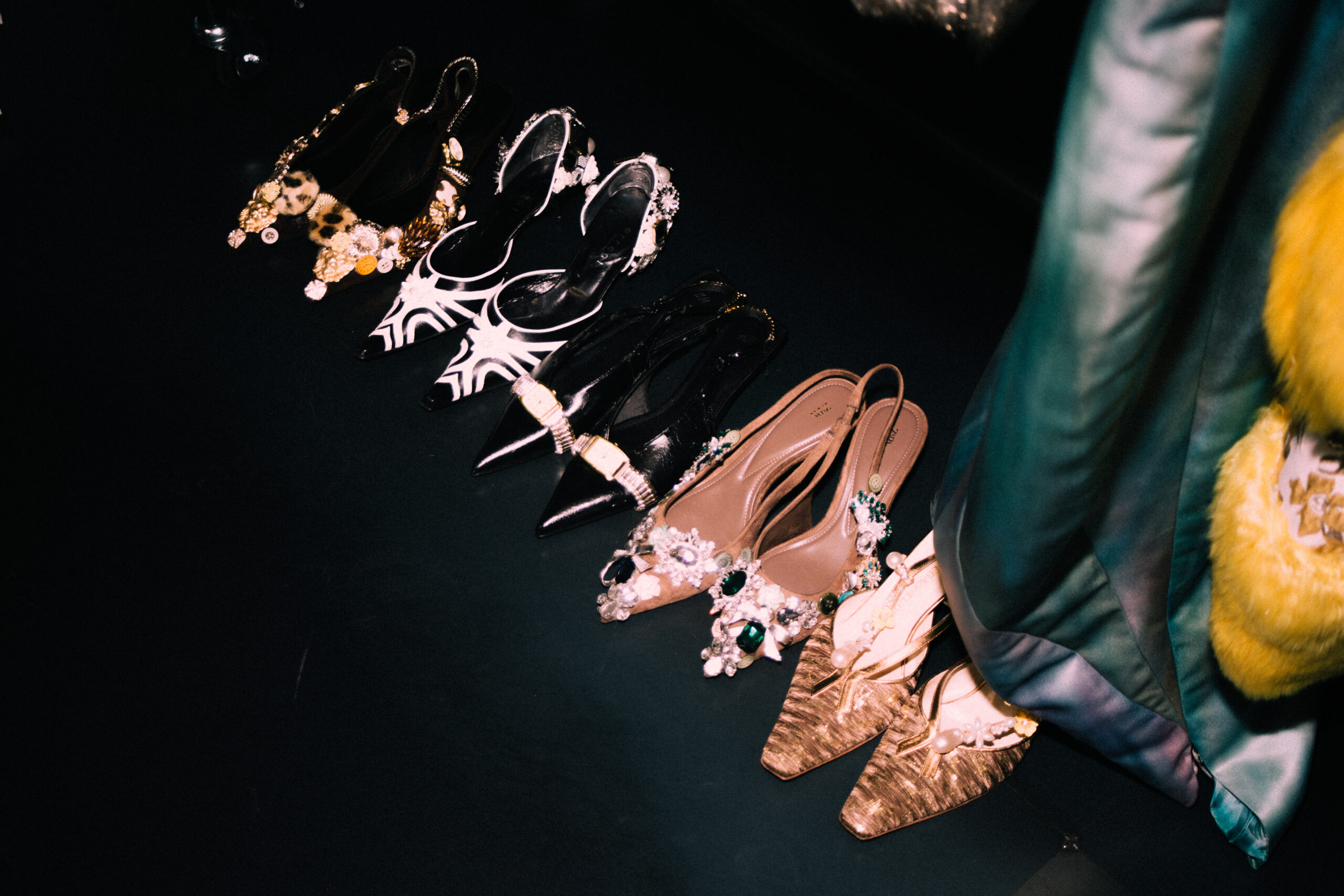
The shoe design created by Idan David Segal for Frame Me If You Can is as intricate and elaborate as it gets. From patterns that match the accompanying blouse and stockings to gemstones set in colours that mirror the dress, every element contributes to the overall vision. The addition of wristwatches at the front of Idan’s another pair makes the shoes even more unexpected (and timely).
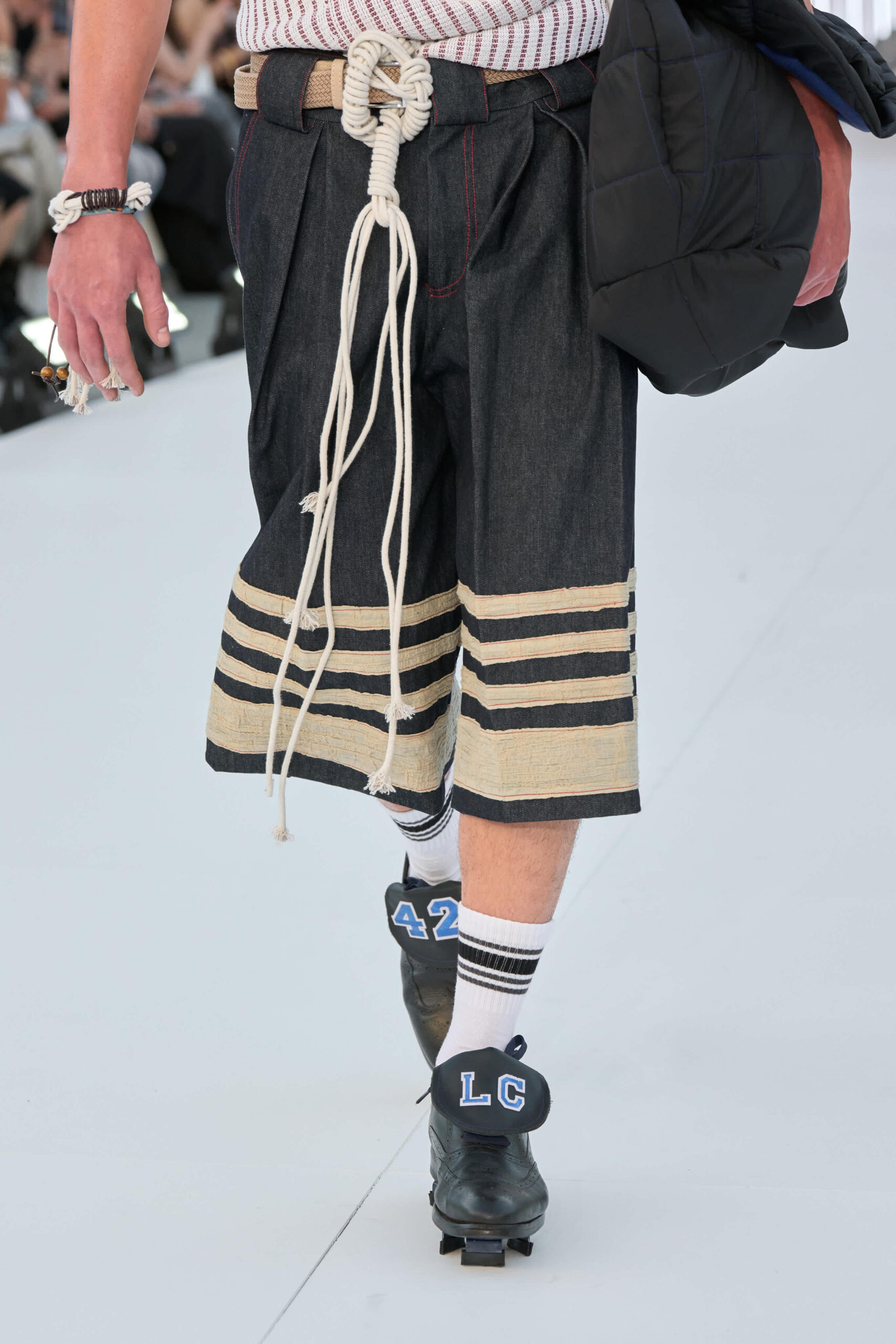
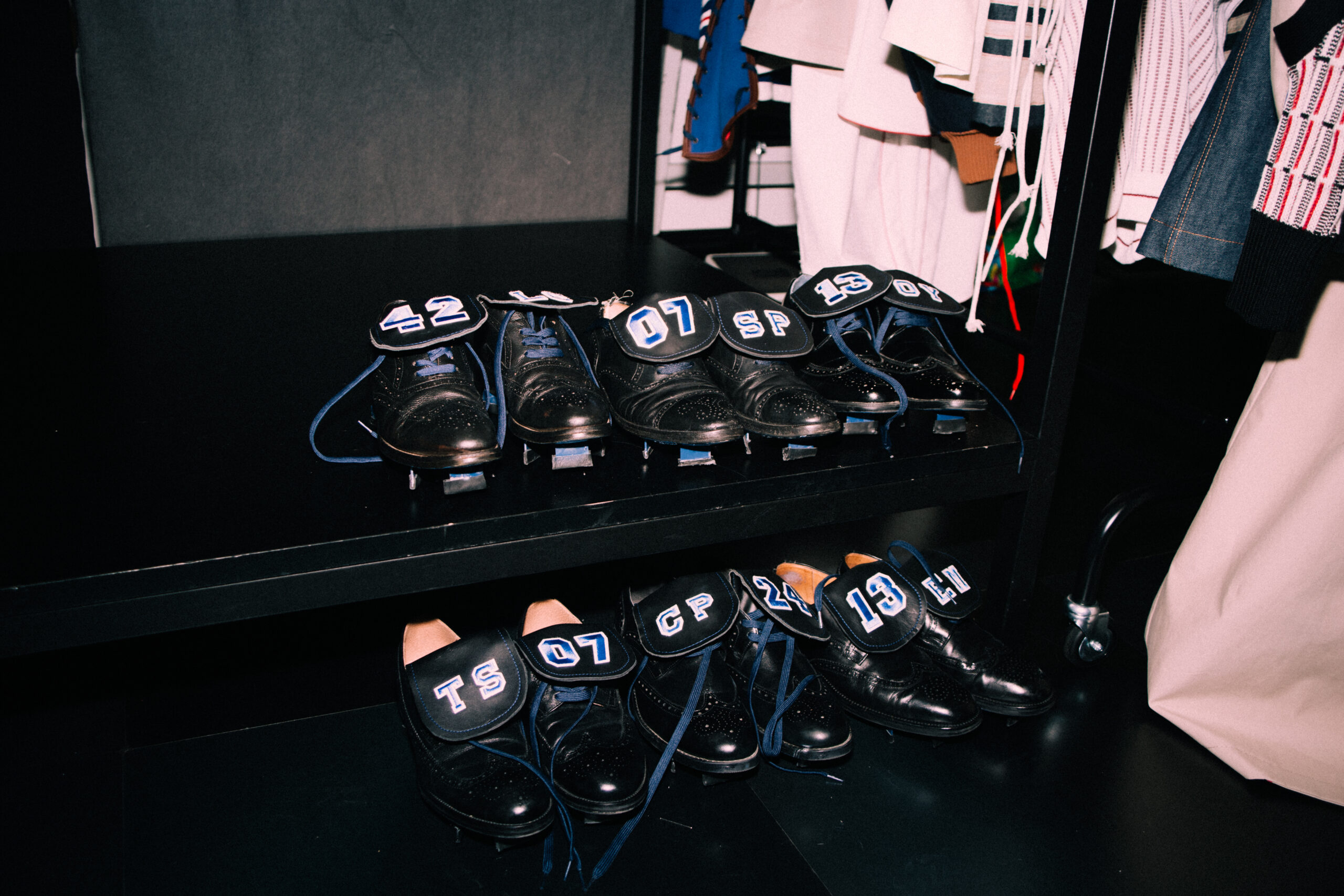
In collection titled Being Jew…ish, Emily Horton transformed classic wingtip loafers into vintage baseball cleats by connecting triangular metal pieces to the bottom. By merging a familiar footwear silhouette with athletic references and introducing a sport-inspired sole, she created a shoe that appears ready for both social occasions and a game on the field.
Meanwhile, Matteo Bardi, with VULNERA, took the art of lacing to another level, presenting knee-high boots wrapped in a network of laces that became a defining feature of the design, making them functional and decorative at the same time. Knee-high footwear also appeared in Lisa Criaco’s collection The Pressure. Her diagonally cut designs made out of glossy resin at times stood out as sculptural elements of their own, while in other looks they appeared to merge with what resembled to be leggings. The effect was almost as if the pressure itself was physically gripping the legs, slowly enveloping the person.
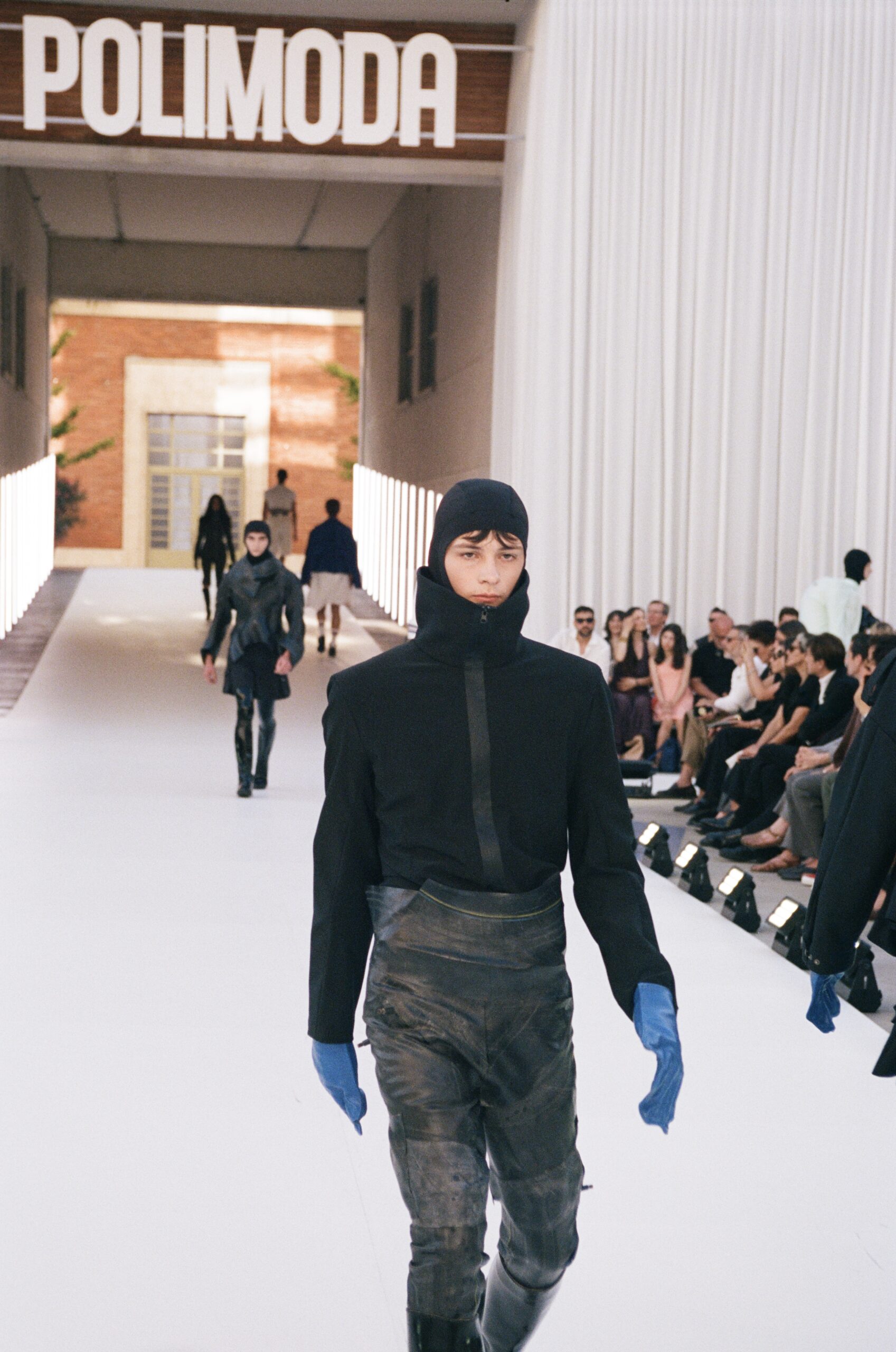
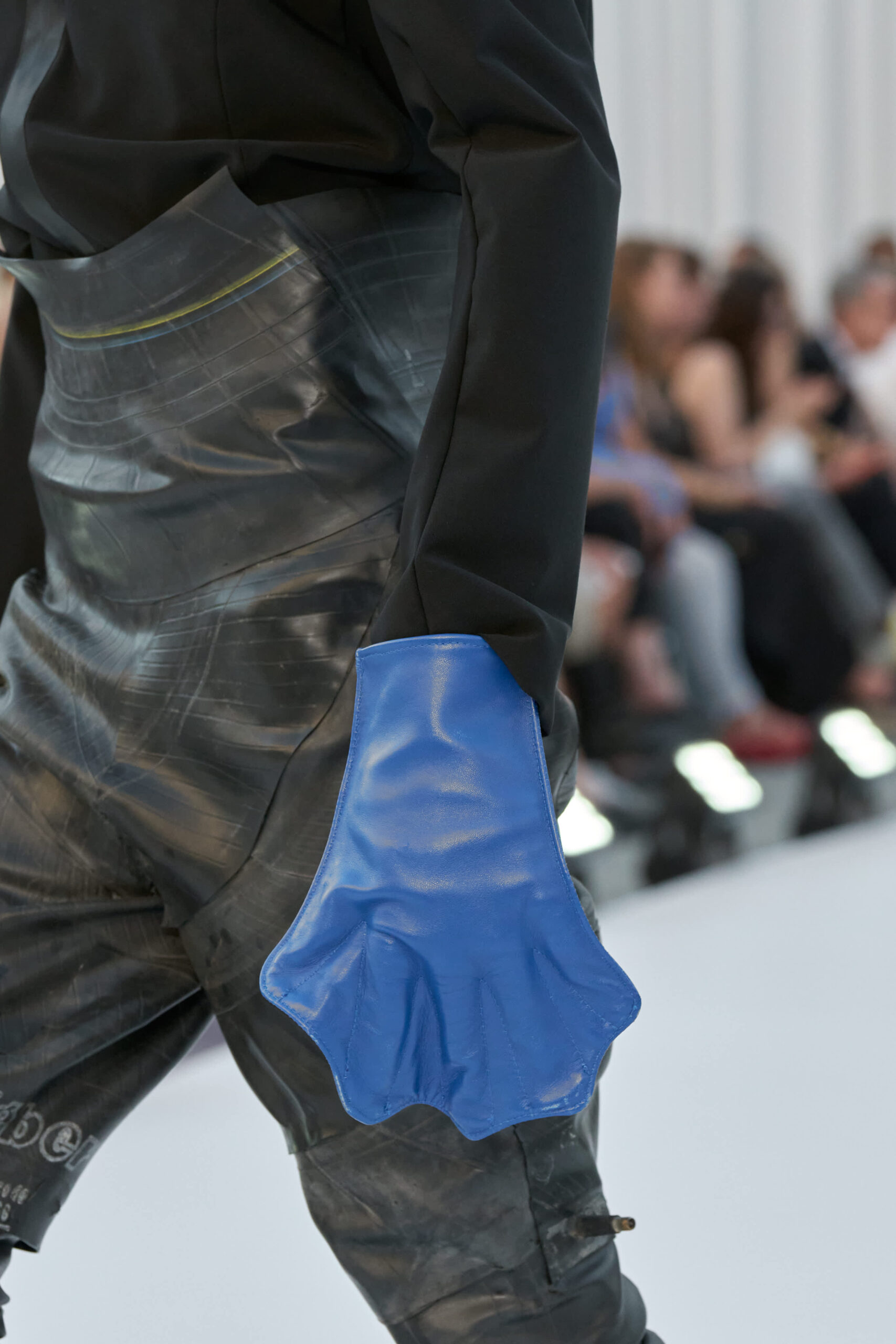
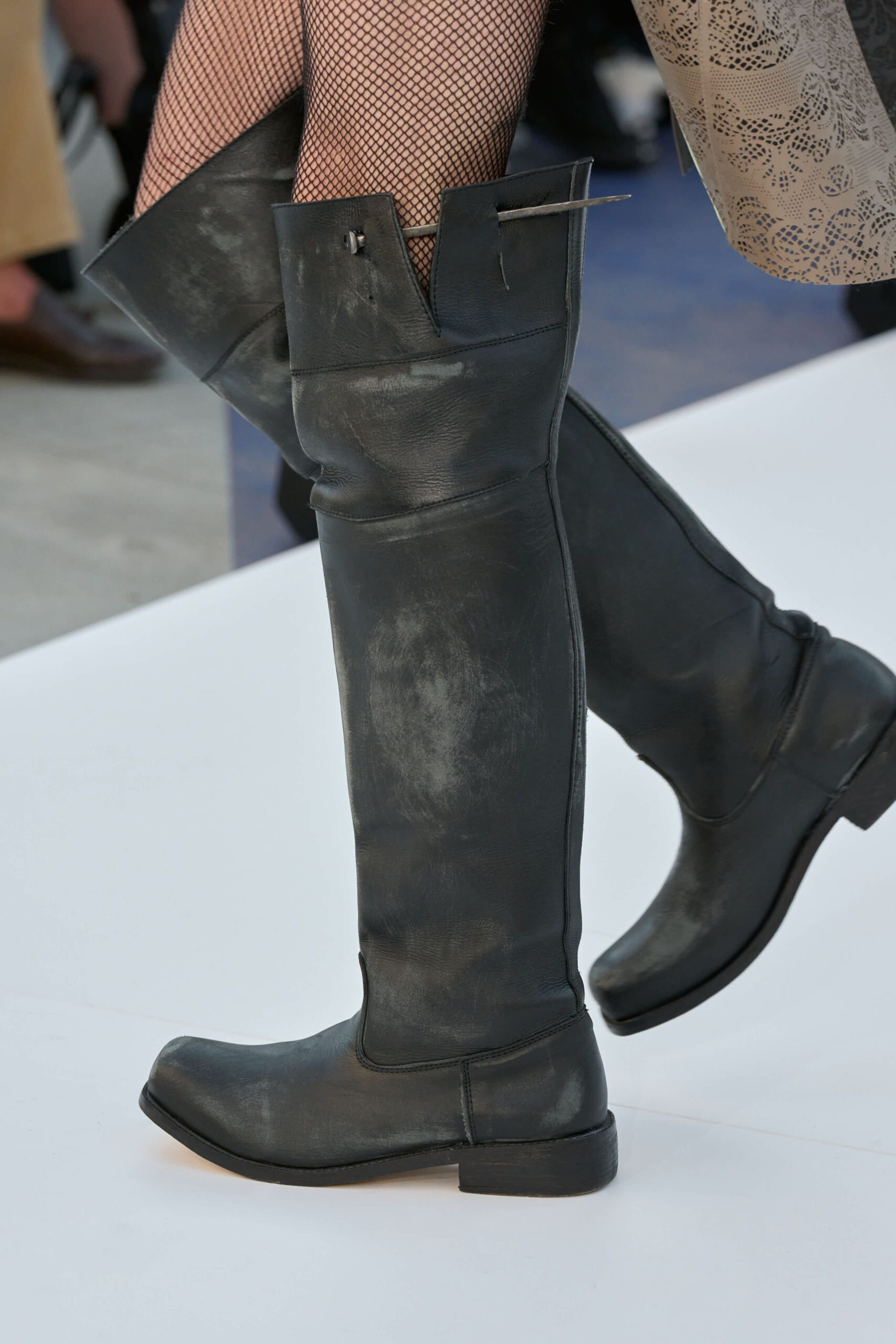
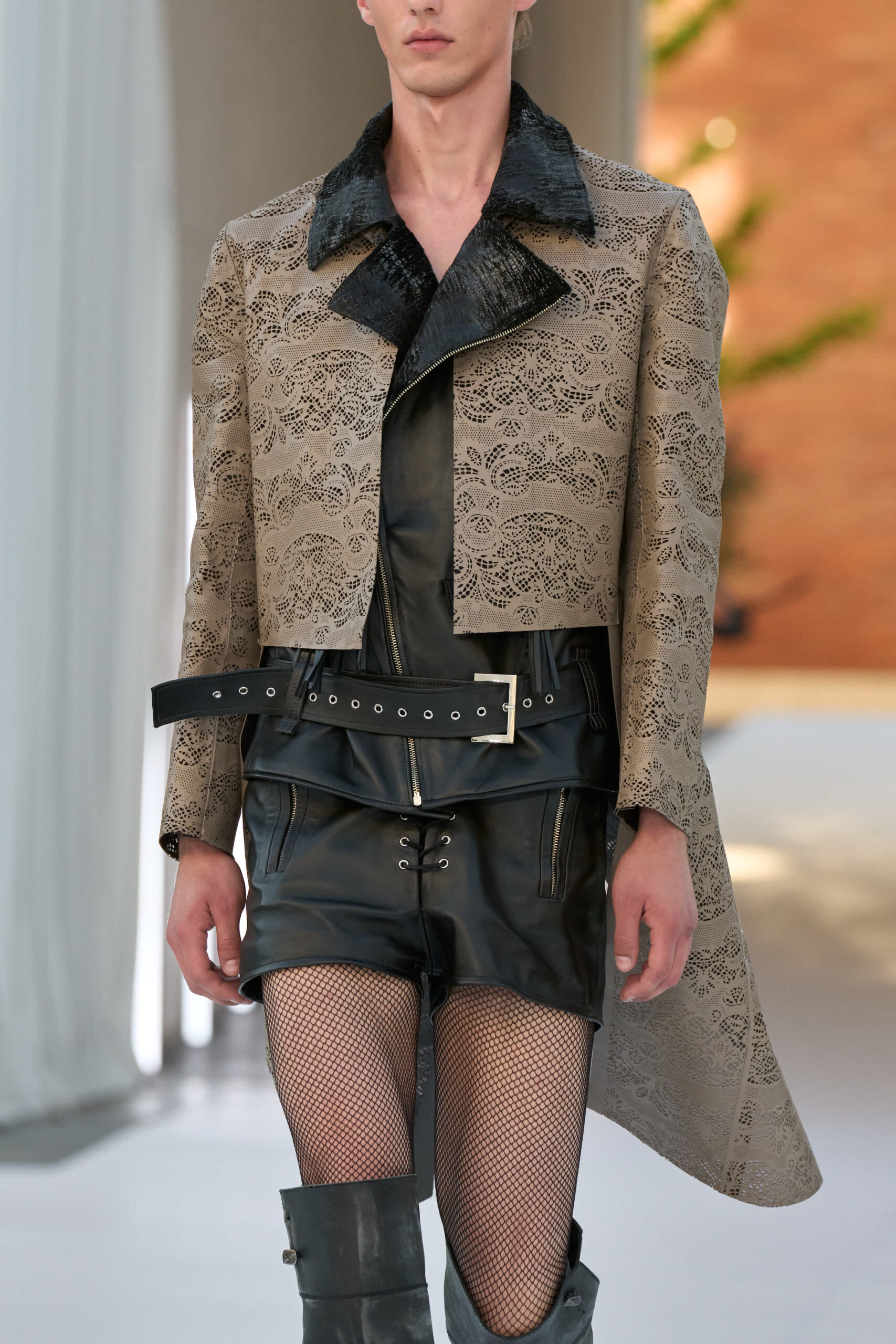
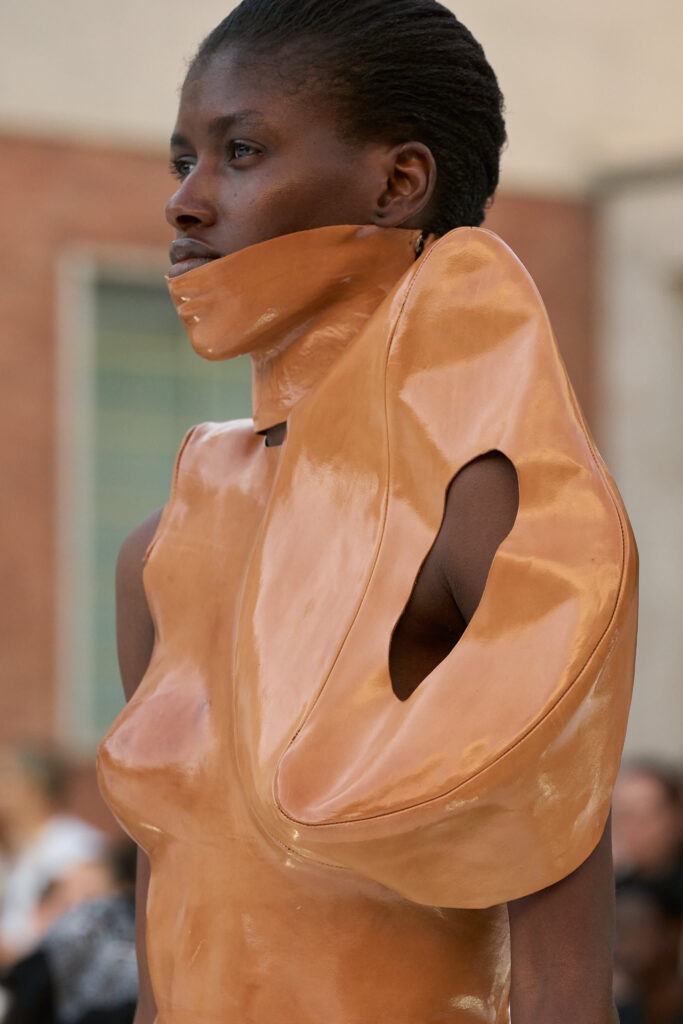
In terms of leather treatments, special credit goes to Diana Avetisian with Another Role and her collaboration with Zichen Wang, Undergraduate in Fashion Accessories Design student, Emilie Wenckstern with No Longer Human, and Victor Brial with Souvenirs of Wandering. All three designers relied heavily on texture as a means of expressing their creative vision, experimenting with finishes that appeared cracked, weathered, paint-like, or purposefully dirty, making their footwear stand out primary through the richness of its surface treatments and material manipulation.
Taking a look at this year’s footwear, rules are meant to be broken. However, in the case of these designers, it is equally clear that those rules were first studied, understood, and carefully considered. Only then can one move beyond convention in a way that feels thoughtful, intelligent, and tasteful. Well done!
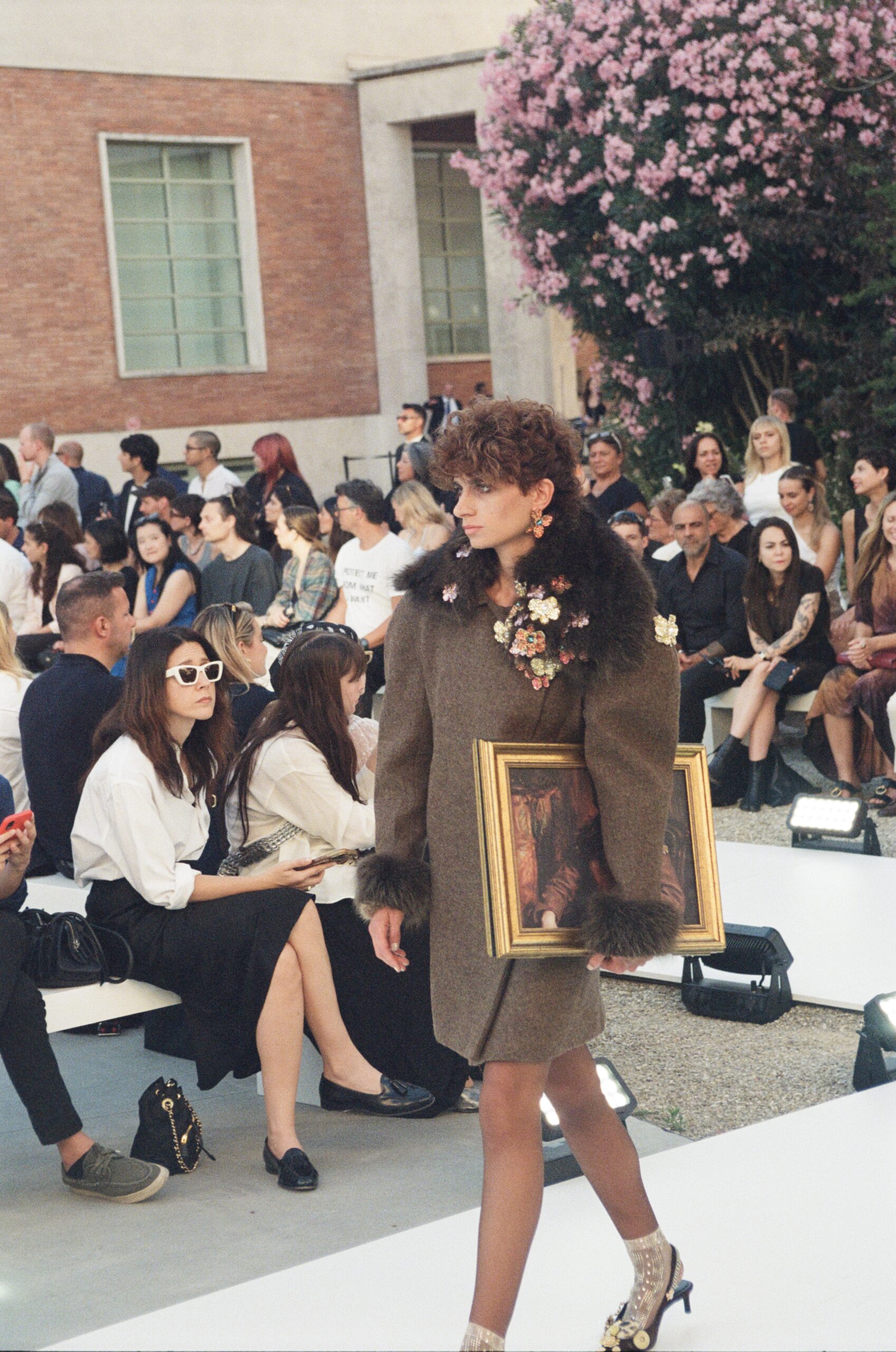
Riccardo: While Arina was looking at how designers challenged the rules of footwear, I found myself drawn to a different topic, what makes an accessory memorable today? We are used to provocative designs that get our attention, but what does it really take to render us speechless? I found the answer in Idan David Segal’s Frame Me If You Can collection. The matured models, embodying 80s maximalism, took over the scene, but what really had me astonished, is the painting which is actually a bag, and on the bag there is a painting of the model wearing that exact outfit. If that’s not self-love!
This bag carries so much with it, and I don’t mean strictly space wise. First of all, personalization. It represents a big trend in today’s market. What is more you than a painting of yourself on your accessories? One of a kind? Definitely. Narcissistic? Perhaps.
Keeping the customer at the center of the creative process means giving the possibility of wearing a bag in many different ways. It’s an interesting direction. That is what Isabella “Zaz” Alvarino focused on. With her collection Hot Nerds she decided to create a bag that can be worn 3 different ways. Around the neck, on the shoulder, and lastly as a handbag. This is thanks to its structure and an internal magnet. Again, personalization proves to be relevant for young designers.
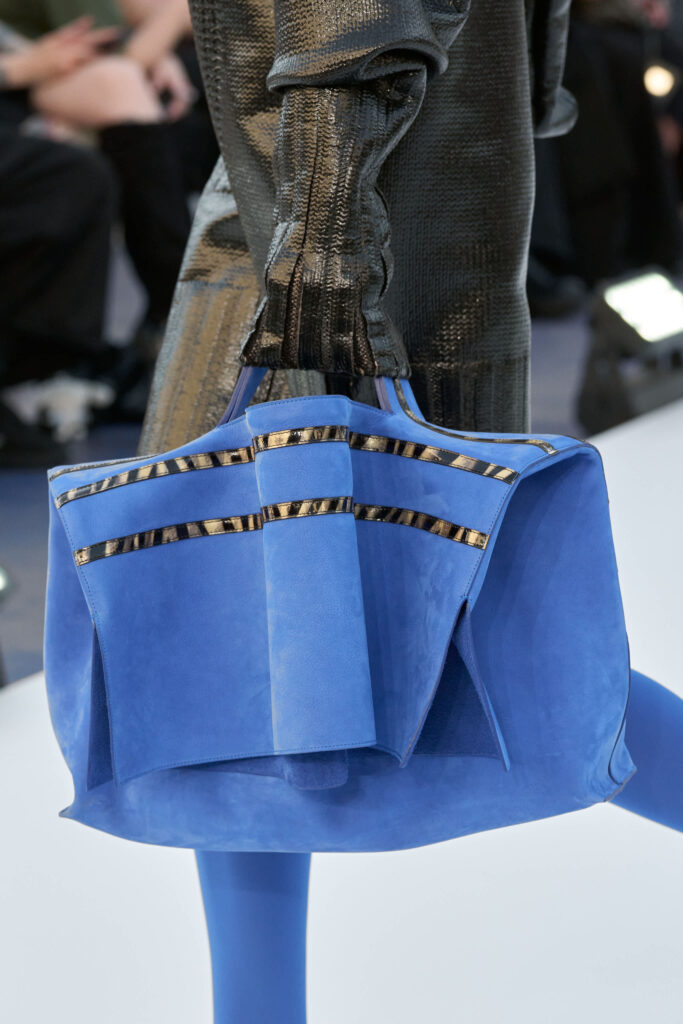
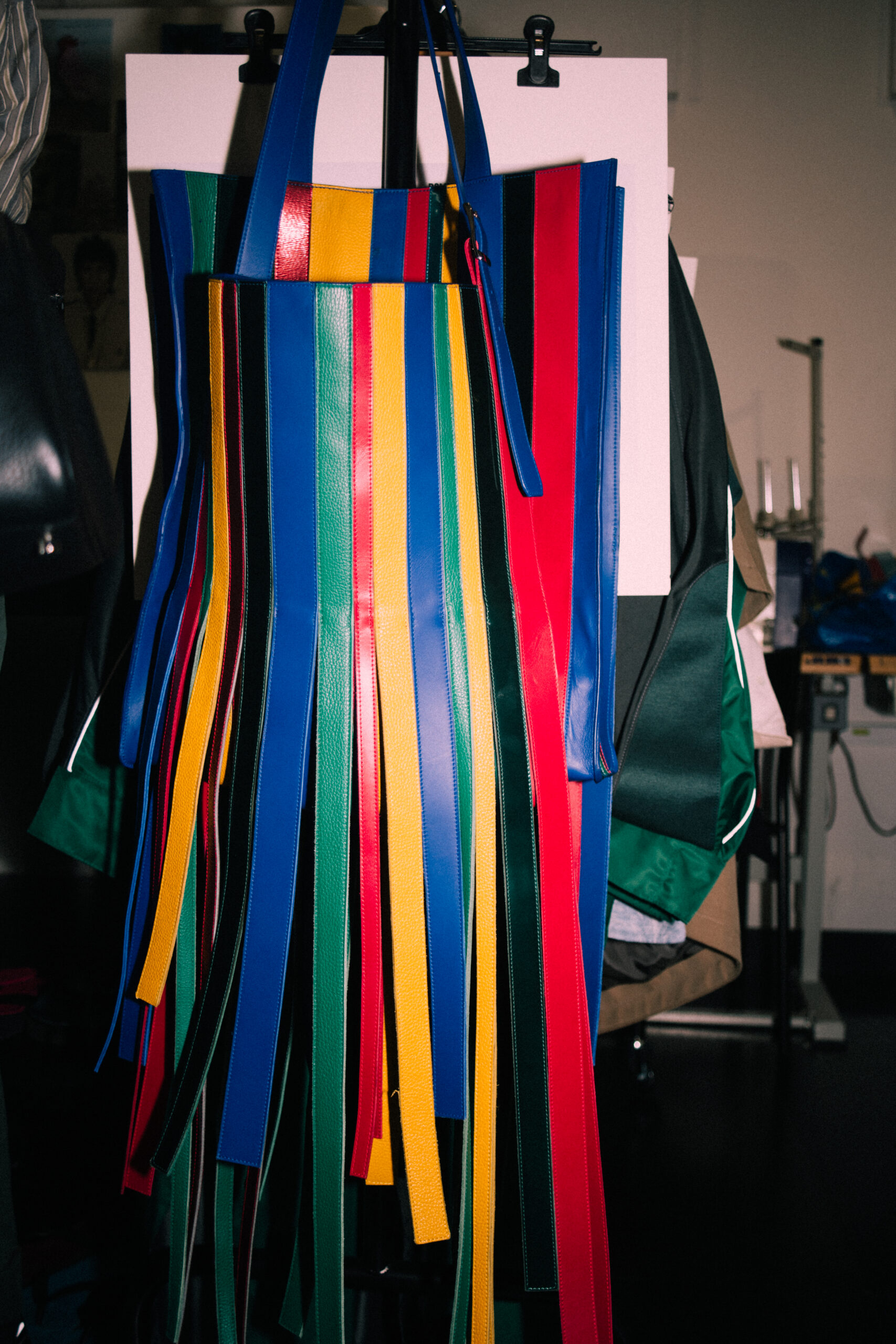
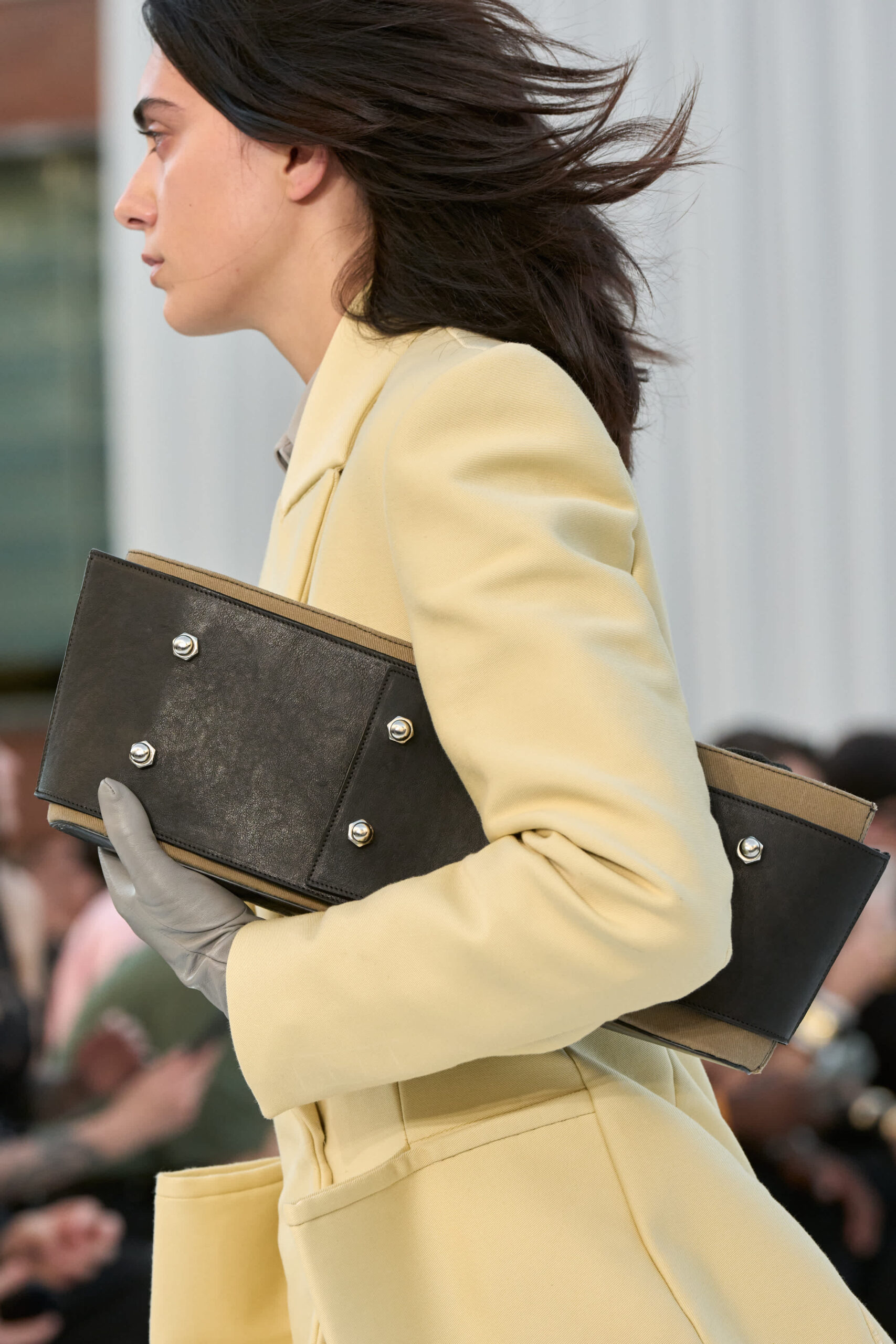
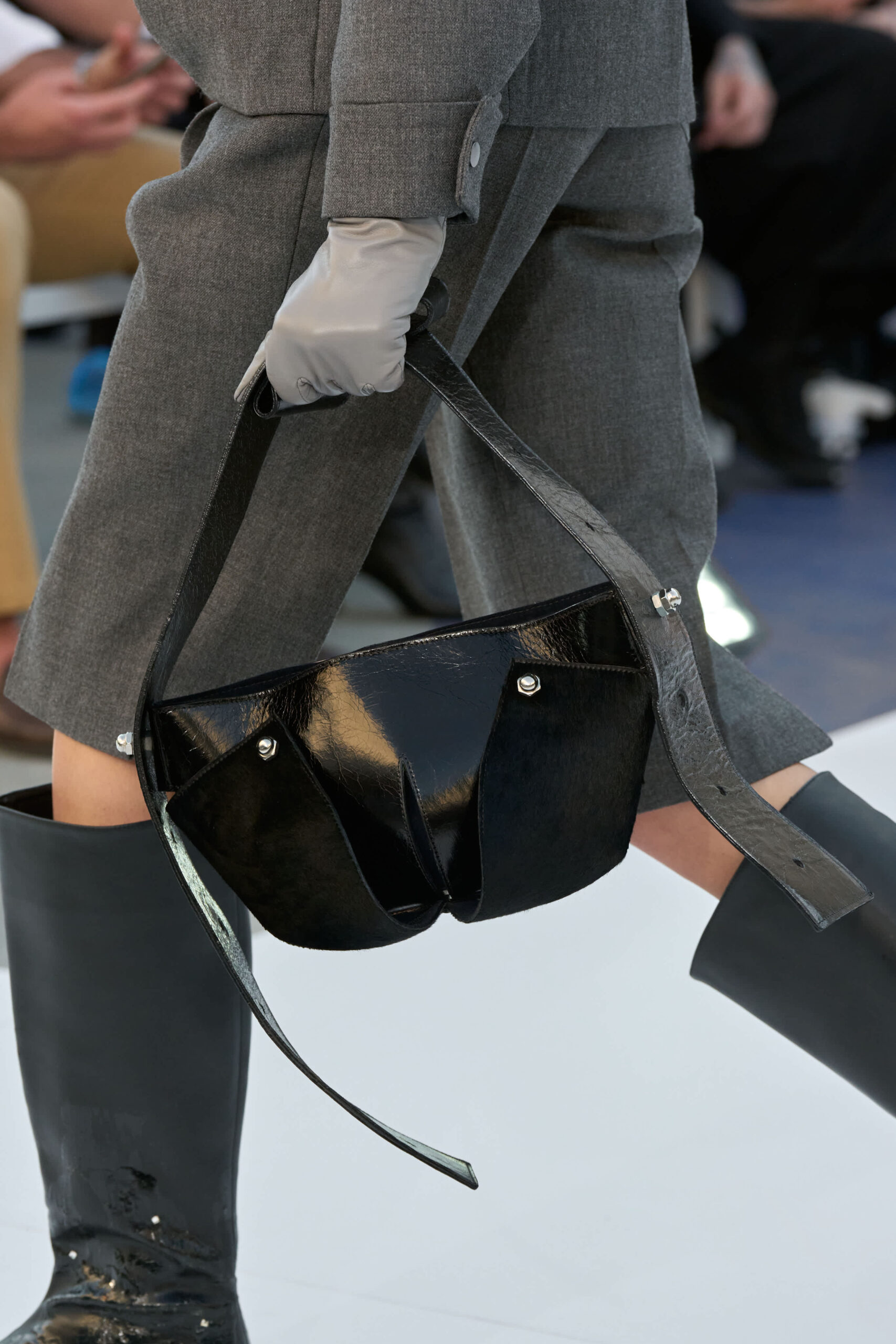
Some like to carry a lot, physically rather than emotionally, and Isabel Antonia Richter has designed the perfect big bag for them. A folded blue bag with two departments is the key accessory of her collection Simulation. If recent years have been dominated by mini bags that often sacrifice function for aesthetics sake, Richter’s design reflects a growing consumer desire for practicality. Today’s luxury customer is increasingly looking for pieces that can accompany a full day of work, travel, and social activities without compromising style.
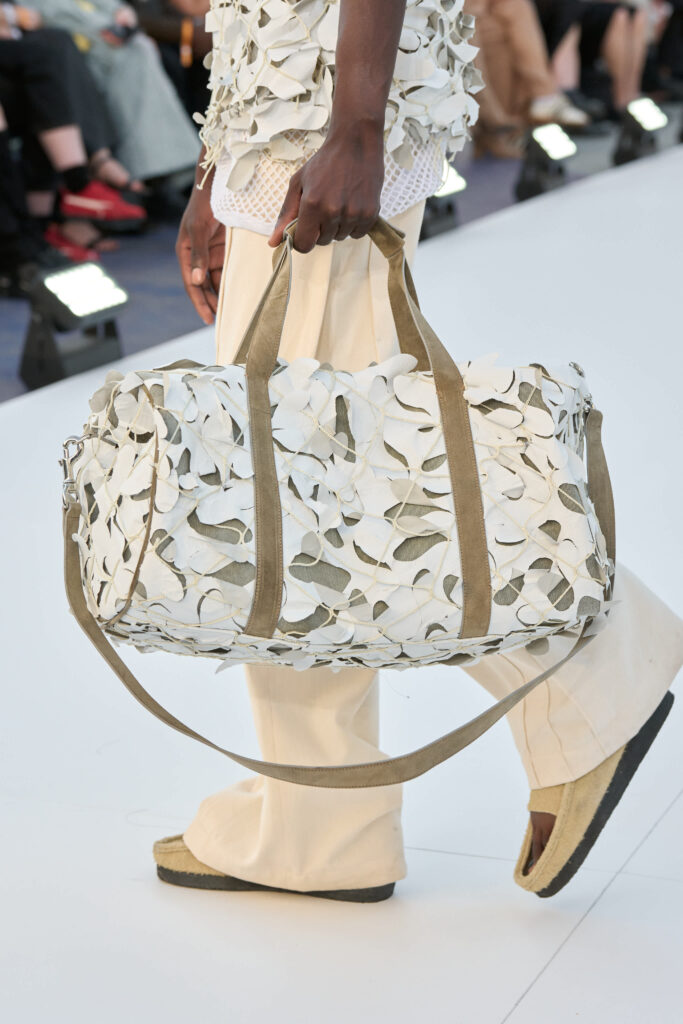
SUN IS HIGH SO AM I collection, by Aaron Dillworth, is the epiphany of cohesion. The laser cut bag matches the top, creating a dialogue in between clothing and the accessory. Aaron’s intentional and immersive approach generate a complete visual statement. If Aaron’s work speaks to visual consistency, Vincenzo Junior Marrazzo, offers something different: a reconsideration of value itself.
His use of reversed snake skin, where the most precious surface is placed against the body rather than displayed towards the world, challenges conventional ideas of luxury consumption. Inspired by the writings of Pasolini, the gesture suggests that true value does not necessarily need to be visible to others. It’s an act against capitalism.
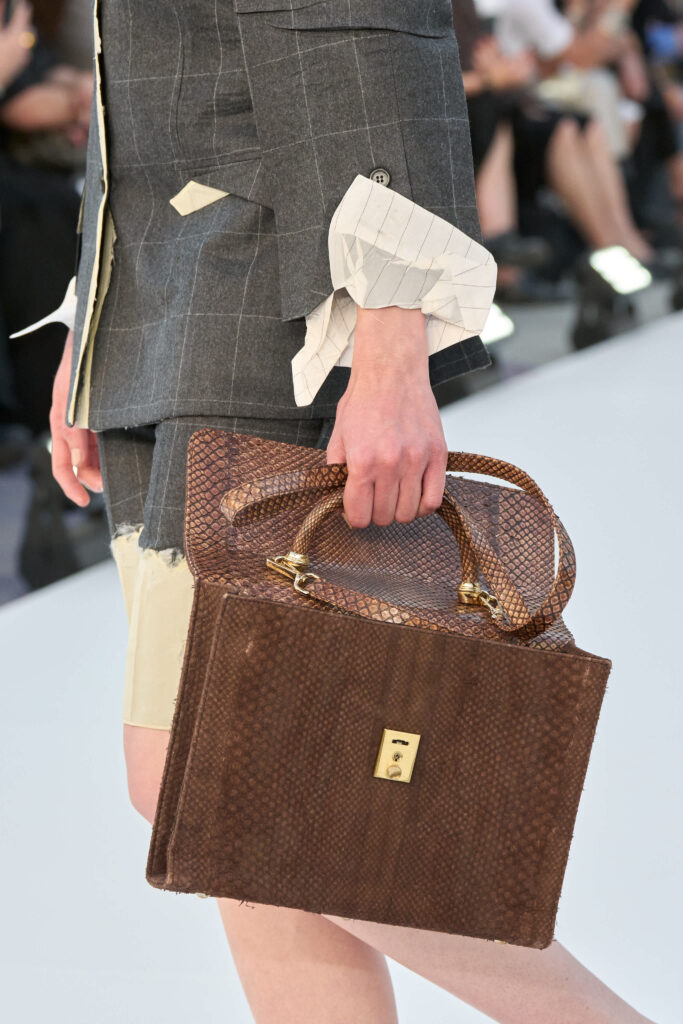
At a time when quiet luxury continues to influence consumer behaviour, this approach feels particularly relevant. Instead of using precious materials as symbols of status, Vincenzo proposes a more intimate form of luxury. As a designer, he privileges the experience of the wearer, rather than the audience.
Looking at all the collections, a common thread begins to emerge. Whether through personalization, versatility, functionality, art, or intimacy, designers are responding to a consumer who seeks more than decoration. Today’s most appealing accessories don’t simply complete an outfit, they communicate identity, values, and storytelling.
CREDITS
Written by
Cover image
- Emilie Wenckstern, No Longer Human (Germany). Sponsored by Ostinelli Seta. Photo by Filippo Fior and Salvatore Dragone / GoRunway.