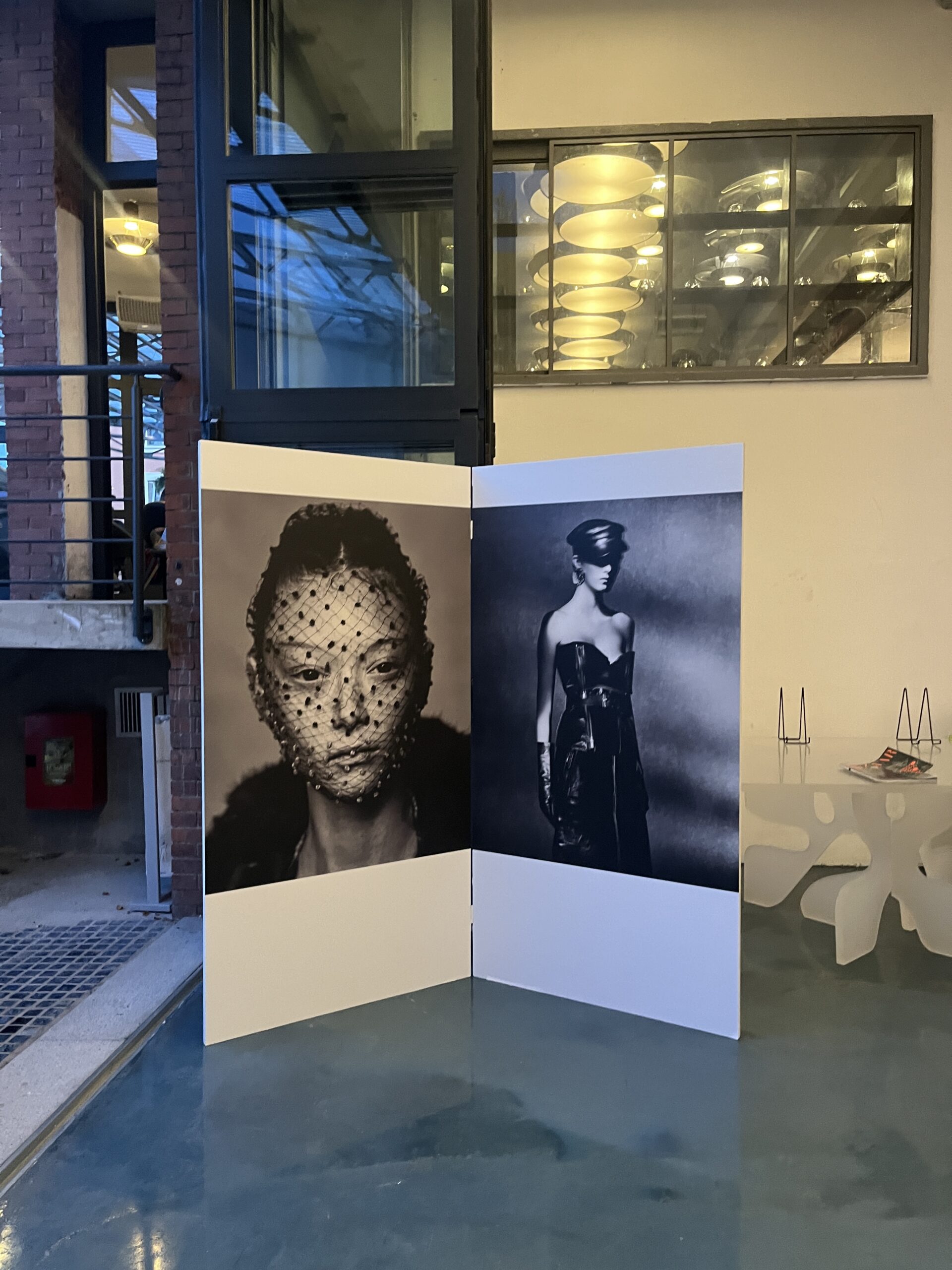
Journal correspondents Arina Kuzmich and Riccardo Rinaldi are back with another gentle yet stimulating conversation as friends and fashion students. Here, after attending a talk at Fondazione Sozzani, they discuss Paolo Roversi‘s illustrious career, the power of his photography, and how it invites us to welcome imperfection in fashion imagery.
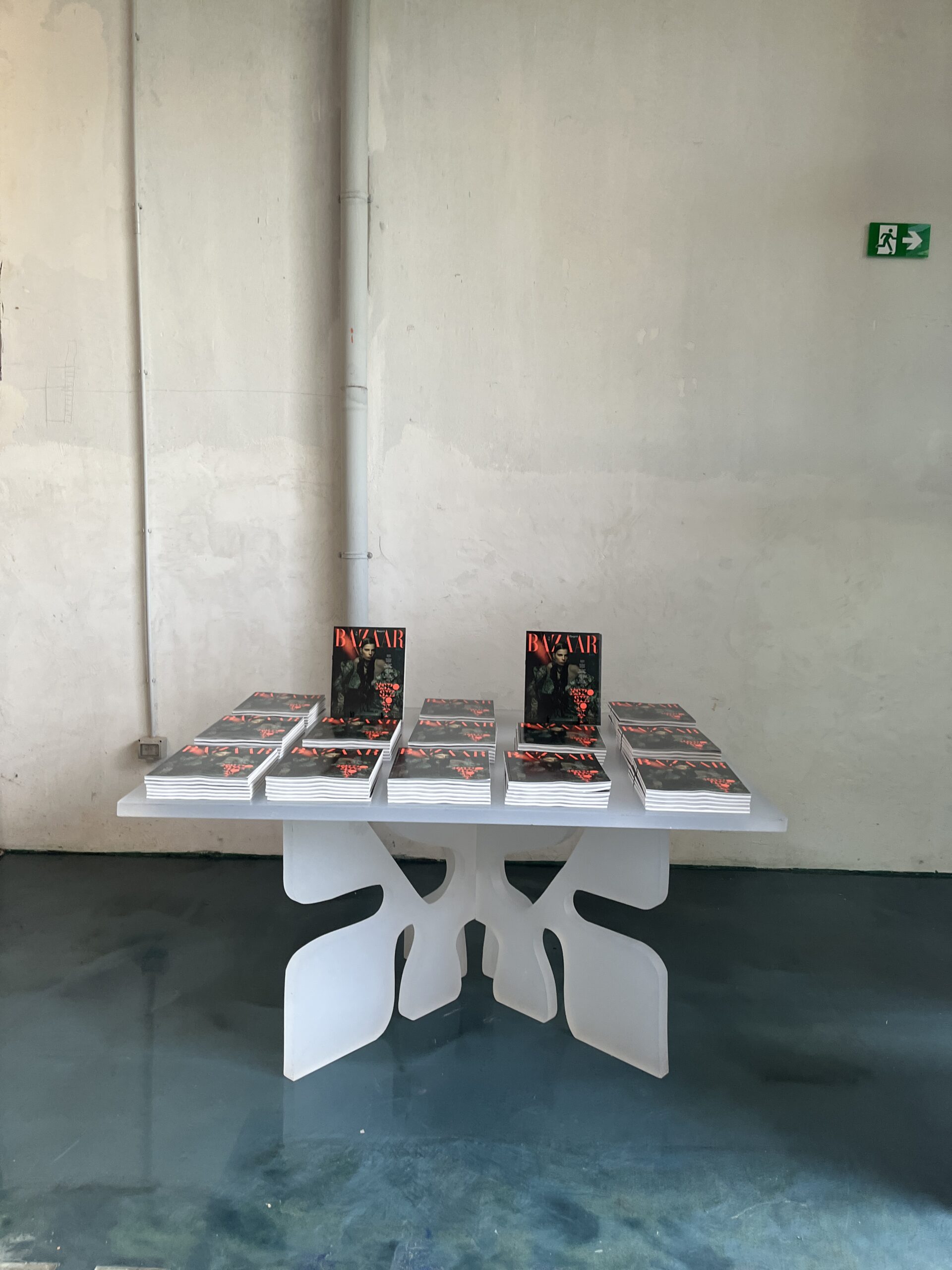
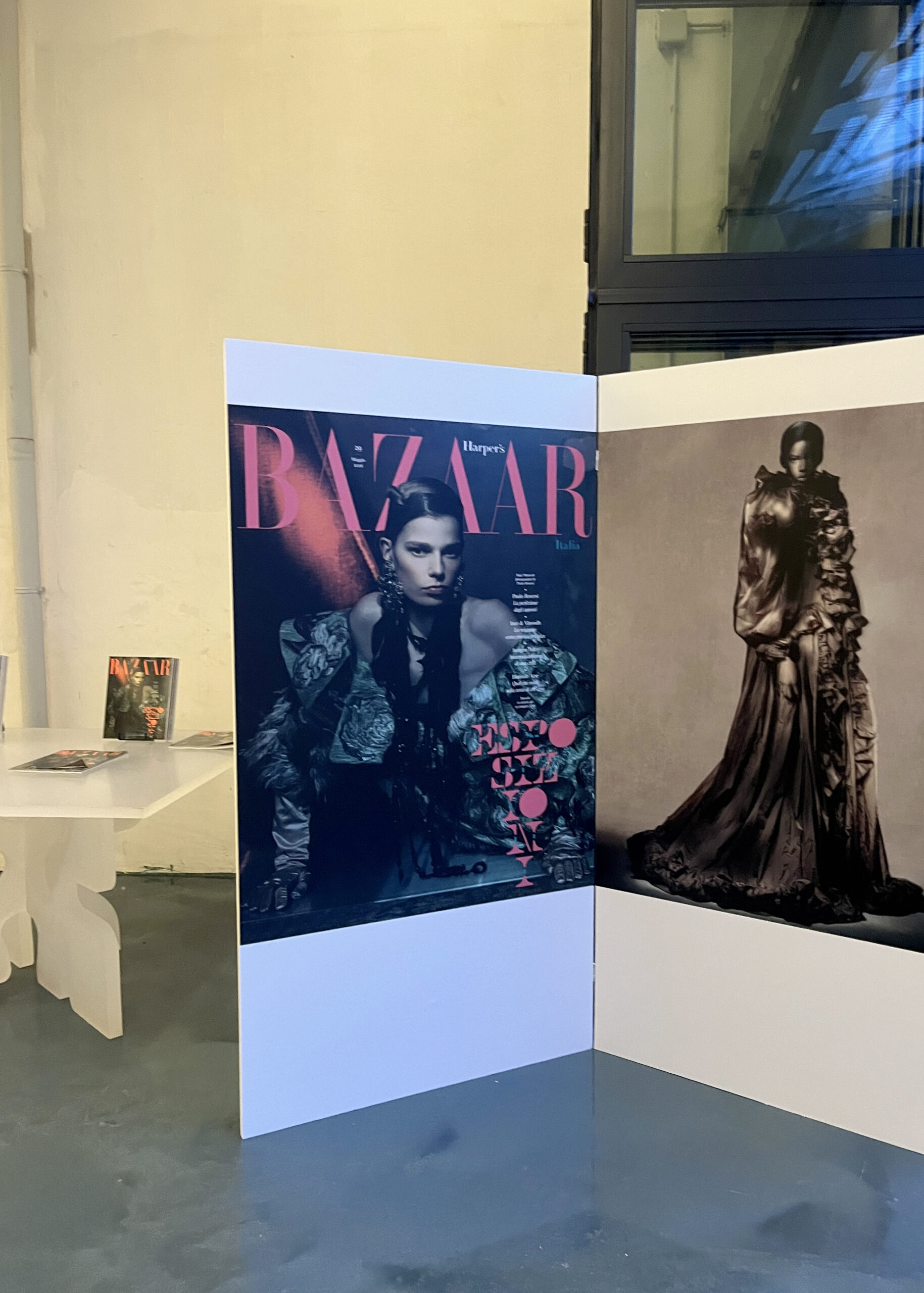
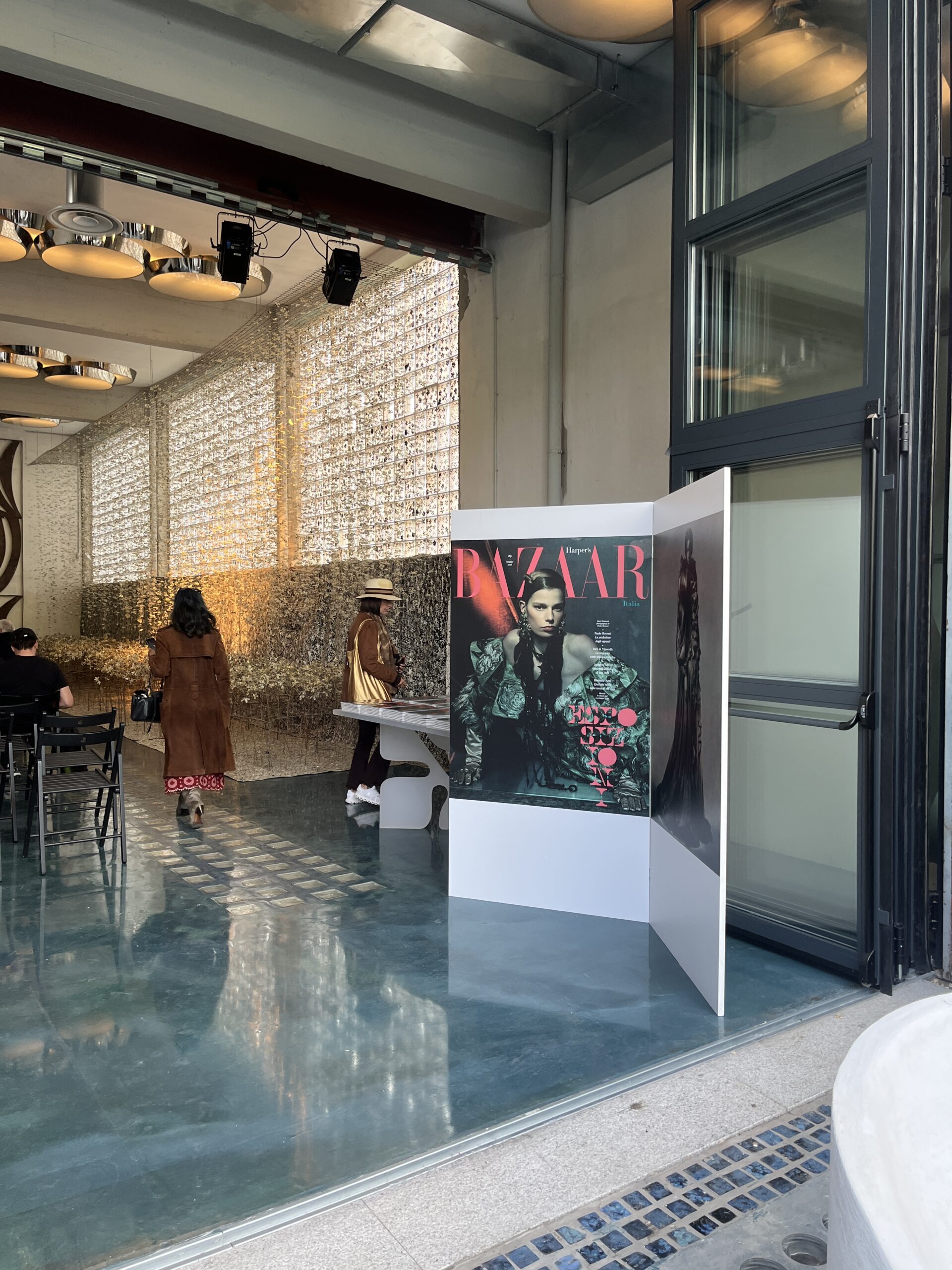
Riccardo Rinaldi: “Be obsessed with emotions, not with technique”; this is how Paolo Roversi addressed the audience that welcomed him at Fondazione Sozzani in Milan during the event in collaboration with Harper’s Bazaar Italia for the presentation of the magazine’s latest issue Esibizioni, dedicated to the opening of the Venice Biennale. The “Master of Light” photographer, known for his fashion shots with maison Dior, his intimate portraits of models, the Pirelli Calendar, and more, showed his most human and intimate side, talking to the many journalists and students who came to listen to him. Chiara Bardelli-Nonino, the Deputy Editor-in-Chief Features of Harper’s Bazaar Italia, conducted the talk and guided the audience in discovering Roversi’s career after his accidental encounter with the fashion world.
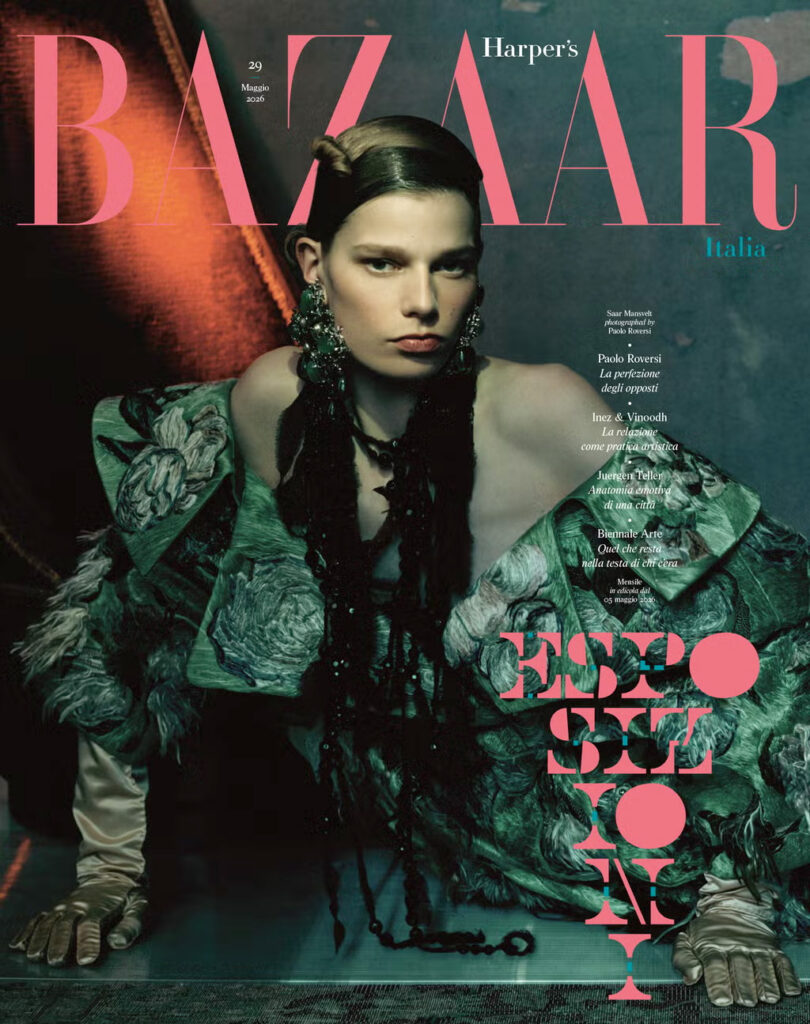
Arina Kuzmich: But are coincidences ever truly accidental? Once Roversi slightly opened the door to his past, I began assembling the pieces of his experience, until eventually a complete picture of his journey emerged before me, in which every encounter (such as the one with Franca and Carla Sozzani) and every photoshoot (like the one for Yohji Yamamoto, Fall 1986) held an irreplaceable role in shaping him into one of the most brilliant photographers of our time.
The beginning of Paolo Roversi’s career took place in the 1970s in Paris, where he worked primarily as a still-life photographer. Carefully sculpting light around his subjects, he treated stillness as the only constant within the frame. Everything surrounding the object was transforming (light, background), and through those transformations, the perception of the object would undergo changes as well.
One of Roversi’s earliest and most important works was a project titled Accidents Domestiques (Domestic Incidents). The series was photographed directly on the kitchen table of his Paris apartment. Through these images, he captured the intimacy of day-to-day life, placing household objects within the frame, among them even his daughter’s toys. From the very beginning, he chose expression over the perfection of the shot, and it was precisely there that the distinctive gaze we now instantly recognize as his own first began to take shape.
Riccardo: I was really impressed by the work of Roversi to reveal and not just to portray. His way of capturing the emotions behind a face, absorbing the sentiment through the expression, and printing it on a flat surface. He mentioned that at the beginning of his journey he struggled to photograph models because he was used to objects, later underlining the importance of establishing a relationship with his subjects. The relationship between the photographer and the model is personal and based on mutual trust. The model expresses something through their body language that is revealed by the photographer’s careful lens. In the case of Roversi, the shots are a whisper to the soul of the viewer. Through the light and nuanced contours of the subjects, he manages to bring out something undefined and elusive: the essence.
In an interview with Vogue Italia in 2024 by Francesca Marani, he said that for him, “photographing means looking with your eyes closed”, just like dreaming. Paolo Roversi’s shots are a celebration of imperfection, and that’s what makes them so special. The constant pursuit, or rather obsession, with perfection grips us all. But why do we want to be perfect? Beauty standards often make us feel inadequate, wrong, as if we are not enough. If we can learn something from Roversi’s art, it is that imperfection can be beautiful, because it’s real, like us.
Arina: And realness lies at the core of Polaroid photography, which is a medium Roversi truly mastered. He himself describes it as “a slow, meditative shooting process that gives one unique shot at a time.” With Polaroids, mistakes no longer carry the heavy irreparability we are so picky about when it comes to digital, easily editable images. The photograph becomes tangible, with its own smell and qualities inherent to a physical object. You stop perceiving the image as just another step toward a result, allowing yourself instead to see the result within the reality of imperfection. Paolo Roversi therefore brought mistakes into the fashion industry and gave them a new interpretation as something alive and therefore so compelling.
For example, the photograph he took of Stella Tennant in November 2001 for Vogue Italia. This image marked the beginning of my personal experience of perceiving his photography as something beyond aesthetics. I cannot give an exact definition of what draws me to this work, seemingly quite simple at first glance. But the graininess of the photograph, the simplicity of the setting, and the model’s gaze make me return to the image constantly, immersing myself deeper into the atmosphere created by Roversi.
Philosopher Rudolf Steiner has the following thought: there is me, there is what I contemplate, and there is something in between that connects us. And in this case, it is the photographer standing behind the camera who is responsible for this connection between the viewer and the model. And Roversi, more than anyone else, handles his role as mediator wonderfully.
Riccardo: Roversi draws attention to the unknown. In his photographs, the truth leaves room for shadows and darkness, which become the true protagonists of the photos. In one of his iconic shots, and one of my favorites, a messy-haired Kate Moss looks straight at the camera, sincere and almost abandoned to the lens: no background, no fancy clothes, just her. I found myself more interested in what I can’t see than in what I can. Reading his pictures is like unveiling a mystery. A mix of sensuality and intimacy that communicates with the viewer. The repulsion towards mechanism makes his photos more authentic, as he says, “the automatic machine doesn’t take the shot, it’s the heart that does”, which perfectly translates into his romantic approach.
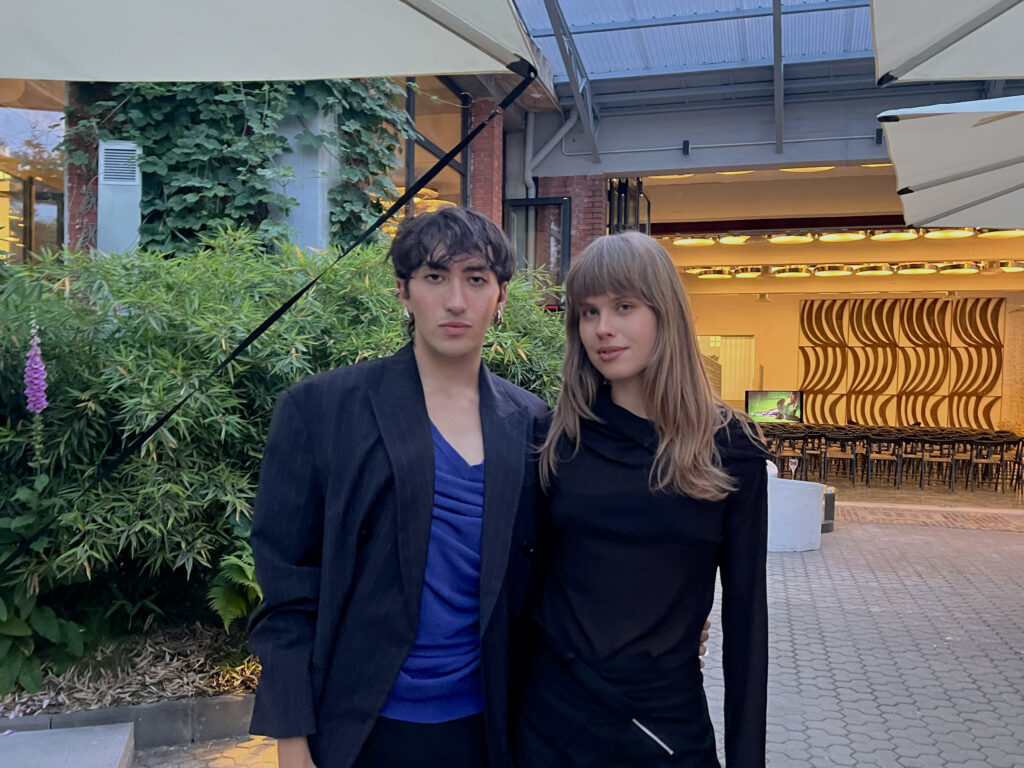
Arina: Being present at this talk felt like being given permission to make mistakes, to hear “no,” and to see every obstacle along the way as a unique moment that brings you closer to your becoming. Moving forward while carefully preserving the experience of the past, a thought that, like a thread, ran through the entire conversation between Roversi and Chiara Bardelli-Nonino.
At the end of the talk, Roversi answered a few questions from the audience. A girl stood up and asked, “What did you do when digital cameras arrived and, swept away the traditions of photography of the past?”, Roversi replied, “the first thing I did was go to sleep. After sleeping well, I picked up a digital camera and went out to shoot.”
CREDITS
Cover image
- Harper’s Bazaar Italia May 2026 Edition
Photos
- Provided by Arina and Riccardo