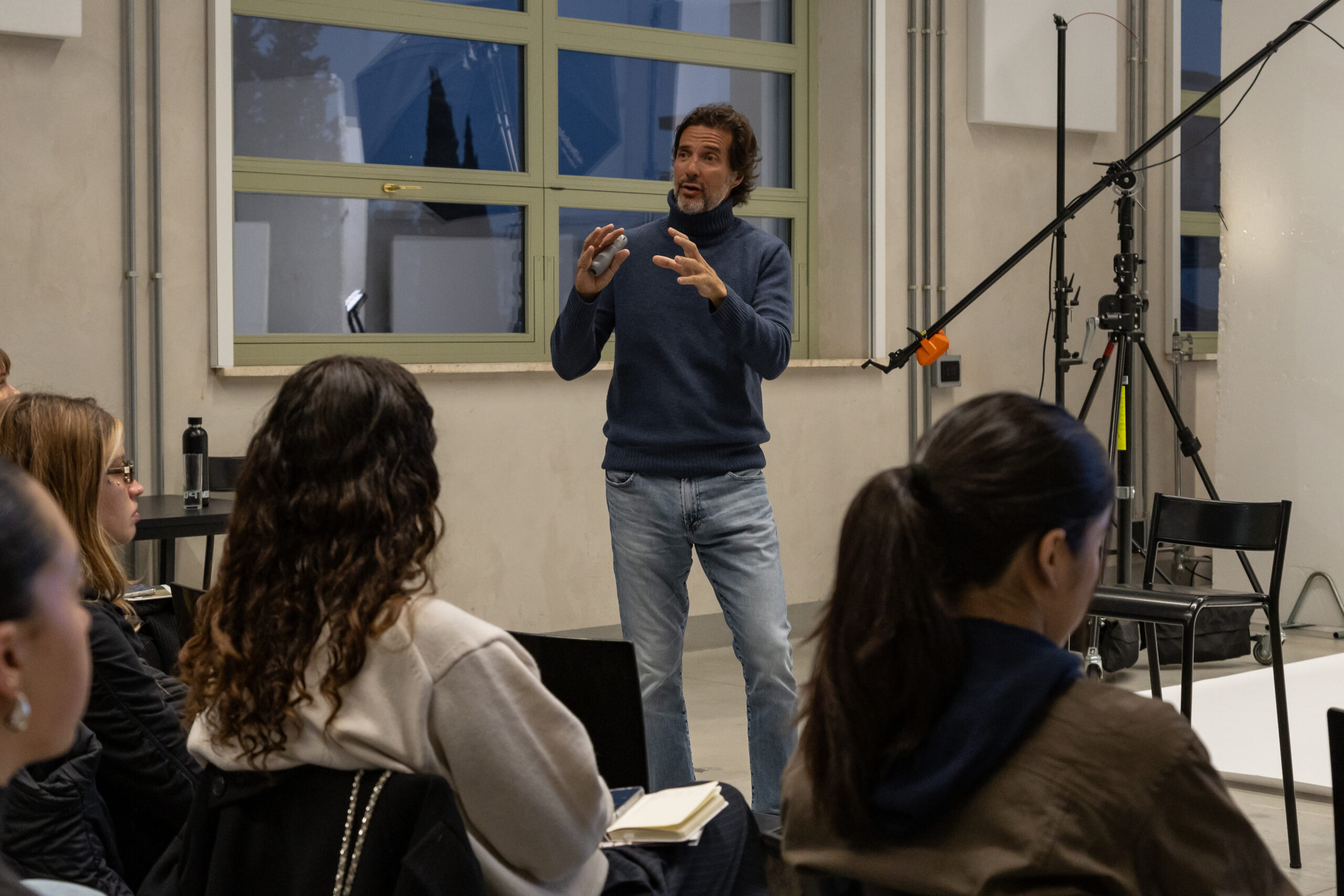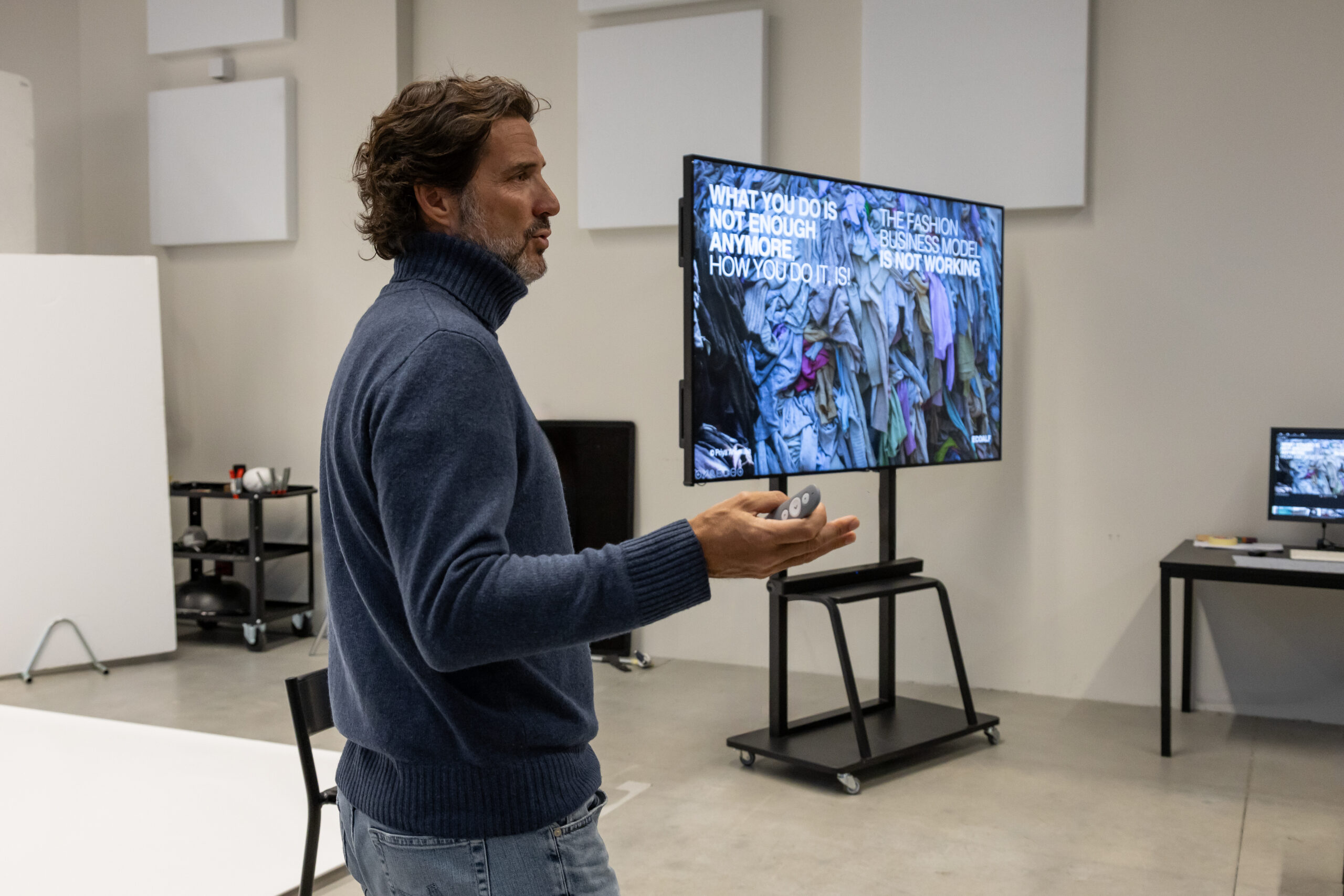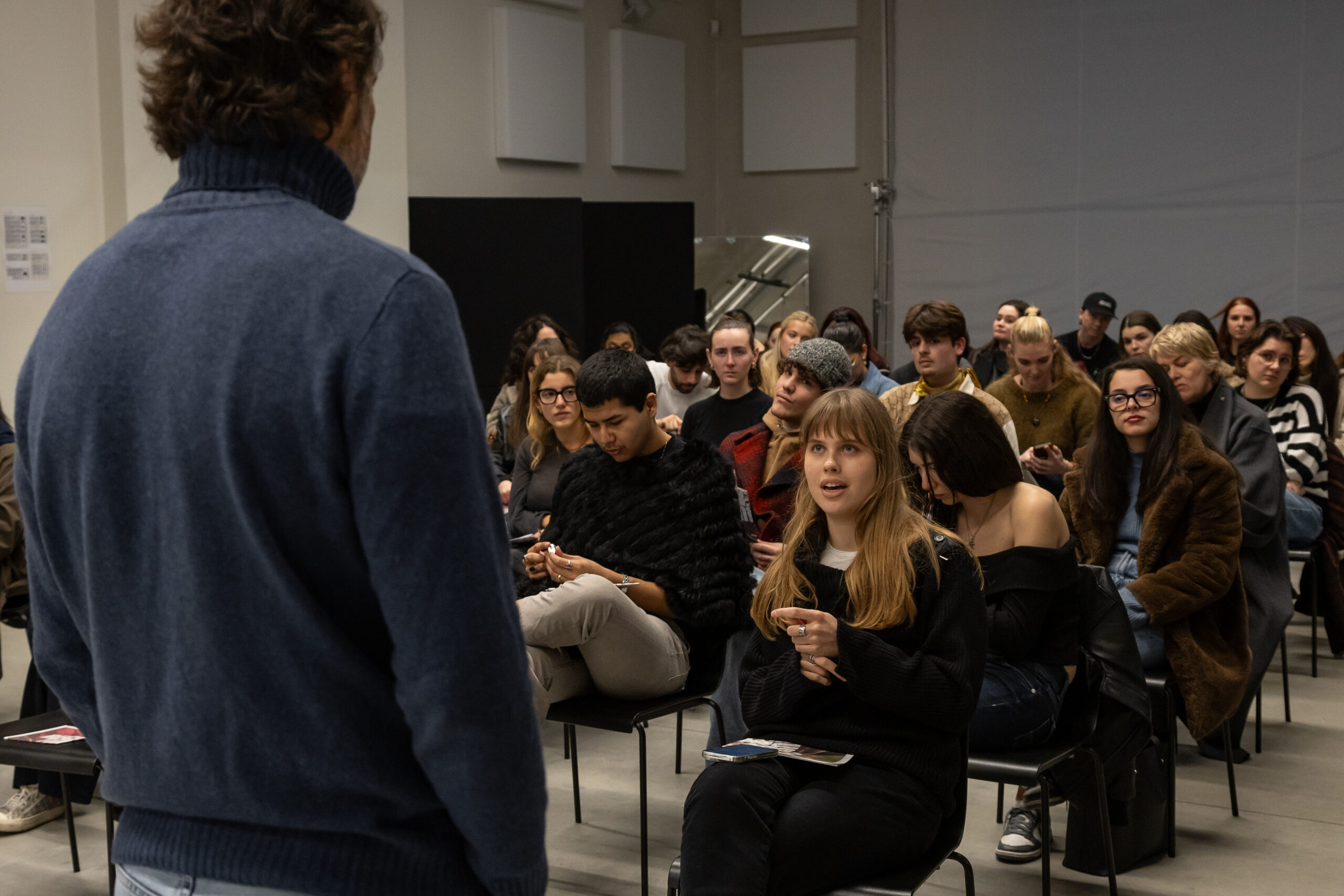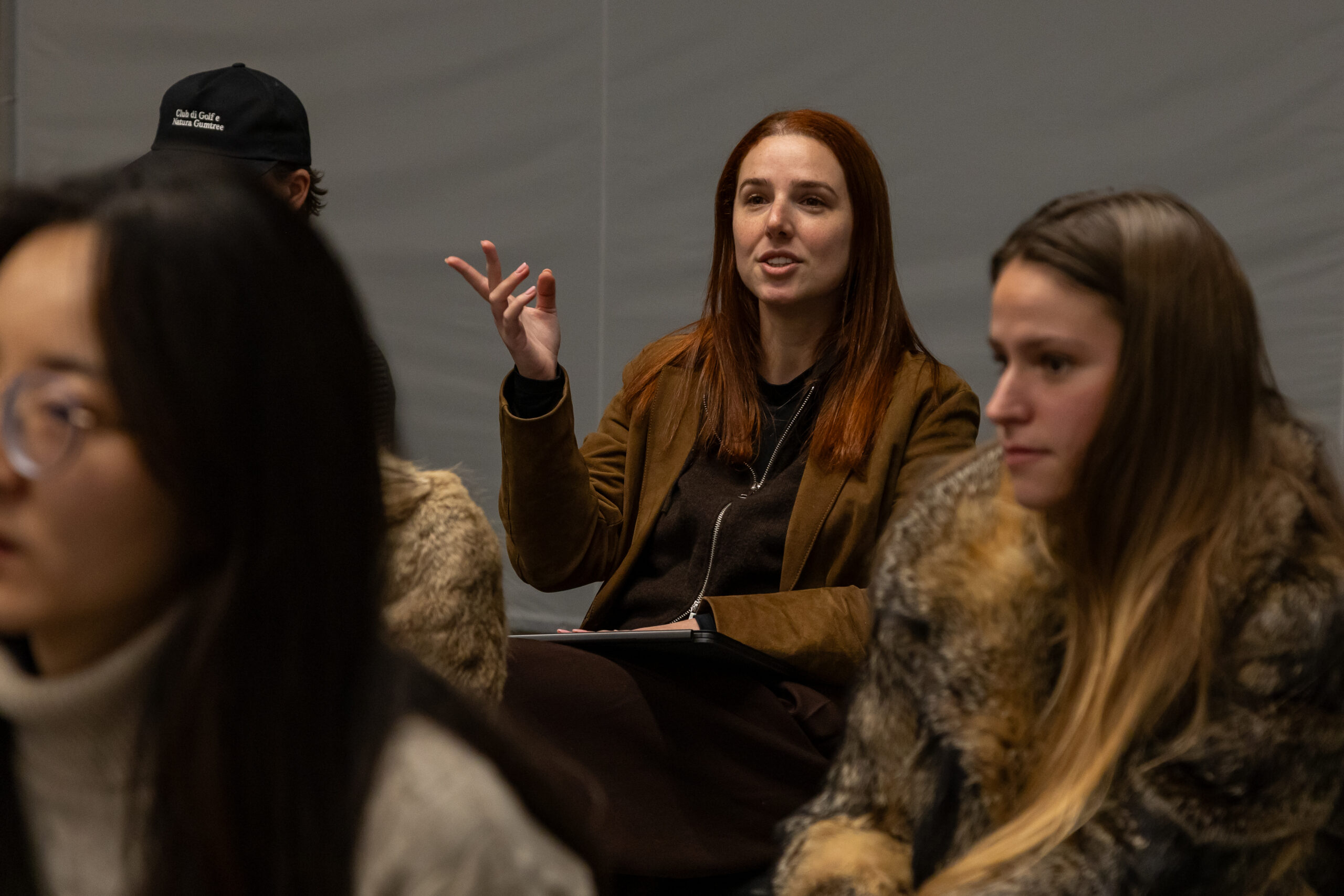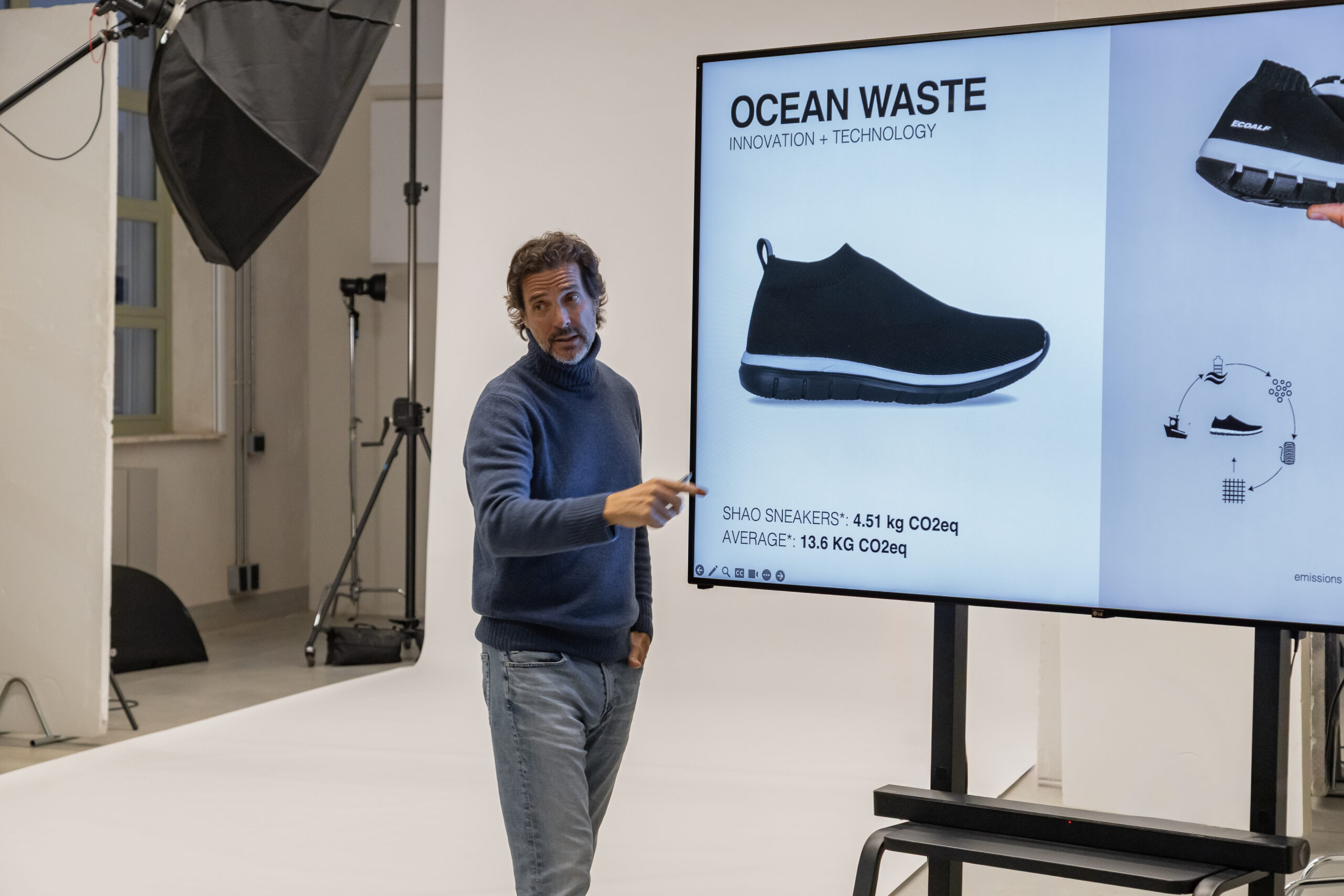
Founded in Spain by Javier Goyeneche in 2009, Ecoalf was built on the idea of the circular economy. Its founder came to Polimoda for a guest lecture that focused on sustainability through action over perfection, balancing profitability with environmental responsibility, and conscious consumption over material demonization. Arina Kuzmich reports.
Environmental responsibility lies at the core of the company’s philosophy: Ecoalf is widely recognised for its “Because There Is No Planet B” manifesto, which also serves as a core design element across its collections. It holds such certifications as B Corp, which recognises the highest standards of social and environmental performance, and GRS (Global Recycled Standard). The brand works extensively with recycled materials, ensures full traceability and ethical practices, and requires the same level of commitment from its suppliers.
For their upcoming collection, Ecoalf not only uses recycled materials dragged from the bottom of the oceans, but also employs mainly mono materials for the garments, making recycling of their clothes possible. Throughout the lecture however, Goyeneche emphasized that Ecoalf is not flawless, openly acknowledging that the brand is not perfect. Progress requires time, resources and a genuine willingness to rethink established approaches to sustainability within the fashion industry.
The brand’s sustainability approach applies to its comunication as well. Ecoalf rejects promotional campaigns and events such as Black Friday. Instead, the brand recently released a film titled “Where Everything Disappears”, which presents an unfiltered image of pollution within the fashion industry. The film encourages viewers to reflect on the actual price we pay for a piece of clothing.
Ecoalf remains a profitable brand with an international presence and has recently celebrated a pioneering store opening in San Sebastián, Spain. The store was built using cardboard only, simultaneously adhering to the brand image and bringing forward its main message and meaning.
So how should success be measured for a brand like Ecoalf? Is it scalability, sustainability or profitability that matters most? According to Javier Goyeneche, the answer lies in balance. As he stated: “There is no sense in growing without being sustainable.”
In 2015, Goyeneche celebrated a new milestone. That year, he founded the Ecoalf Foundation as a platform for environmentally conscious, like-minded individuals who are taking actions to reduce the growing pollution of the planet. With a strong focus on ocean preservation, the foundation has brought together fishermen, volunteers and scientists from around the world, united by a shared goal.
The Ecoalf Foundation operates independently from the brand. As Goyeneche explained, this independence is essential to ensure the foundation’s longevity. As a non-profit organisation, it must be able to exist on its own, as its mission extends beyond the brand itself and represents a collective vision of a more hopeful future.
The foundation also has network of more than 4,300 fishermen who collect plastic waste from the ocean, which is later transformed into fabric. Establishing such operational processes demands significant time and effort, far more than would be required within a conventional supply chain.
The underlying message of the discussion was that fashion itself is not so harmful, but overconsumption is. Black-list materials were once developed to meet specific needs. For example, Goyeneche does not reject plastic outright but emphasises conscious use. As he explained, “It depends on what you want to do with plastic. If you want to create something that will last forever, such as a window, it makes sense.”
This approach reflects Ecoalf’s ability to understand the nuances of the production process and its deep knowledge of the utility and effects of materials. Taking meaningful action and making gradual improvements towards sustainability is a complex task, while making promises is easy. The more ambitious the claims, the less action is often required. This mindset, however, must change. The focus should be on brands that may not be perfect but are genuinely striving to influence consumer behaviour and redirect attention towards environmental issues.
From a business perspective, Ecoalf continues to grow steadily, making sure that the values on which the brand was build on are not sacrificed for short-term profit. Since 2017, the company has experienced consistent and confident growth, proving that environmental responsibility and scalability can and should coexist, as long as there’s a proper balance between them.
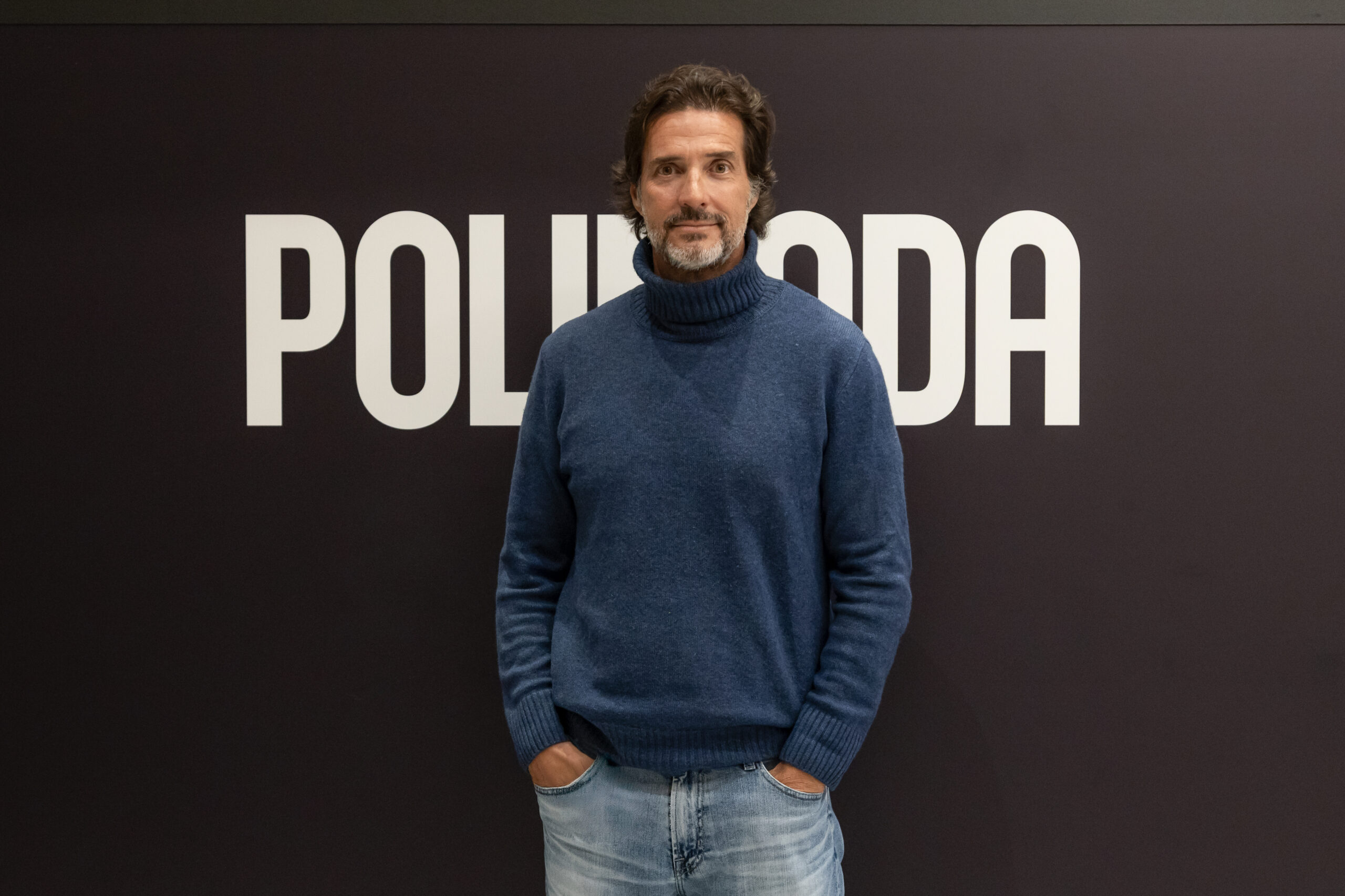
Goyeneche’s perspective was refreshingly honest. He emphasized that while brands cannot be flawless, they must demonstrate genuine commitment to sustainability. This means steering clear of material demonization, which often leads to consumer panic and confusion, and instead influencing consumer behavior through educational marketing and communications rather than short-lived, profit-driven activities that encourage uncontrolled overconsumption.