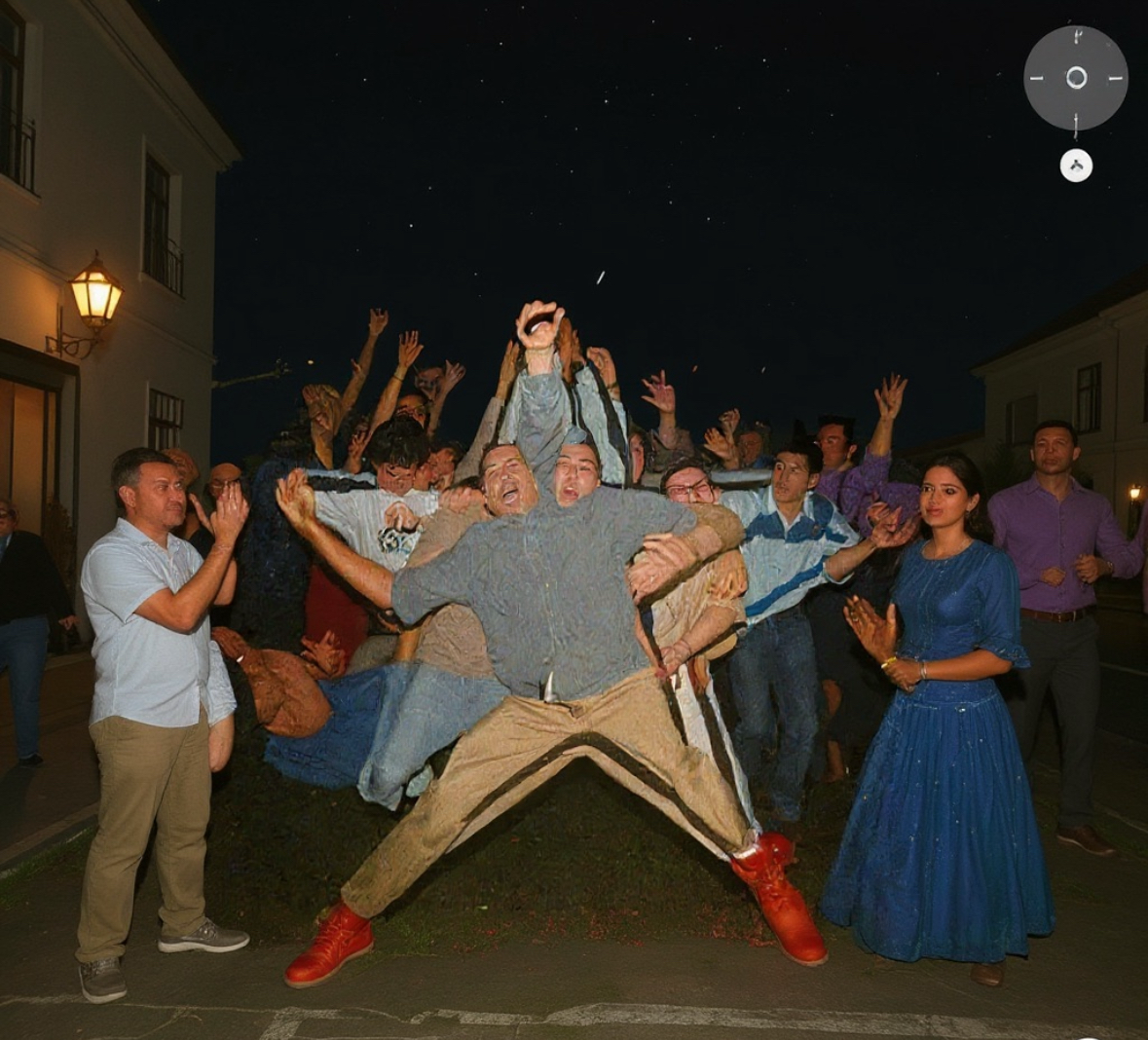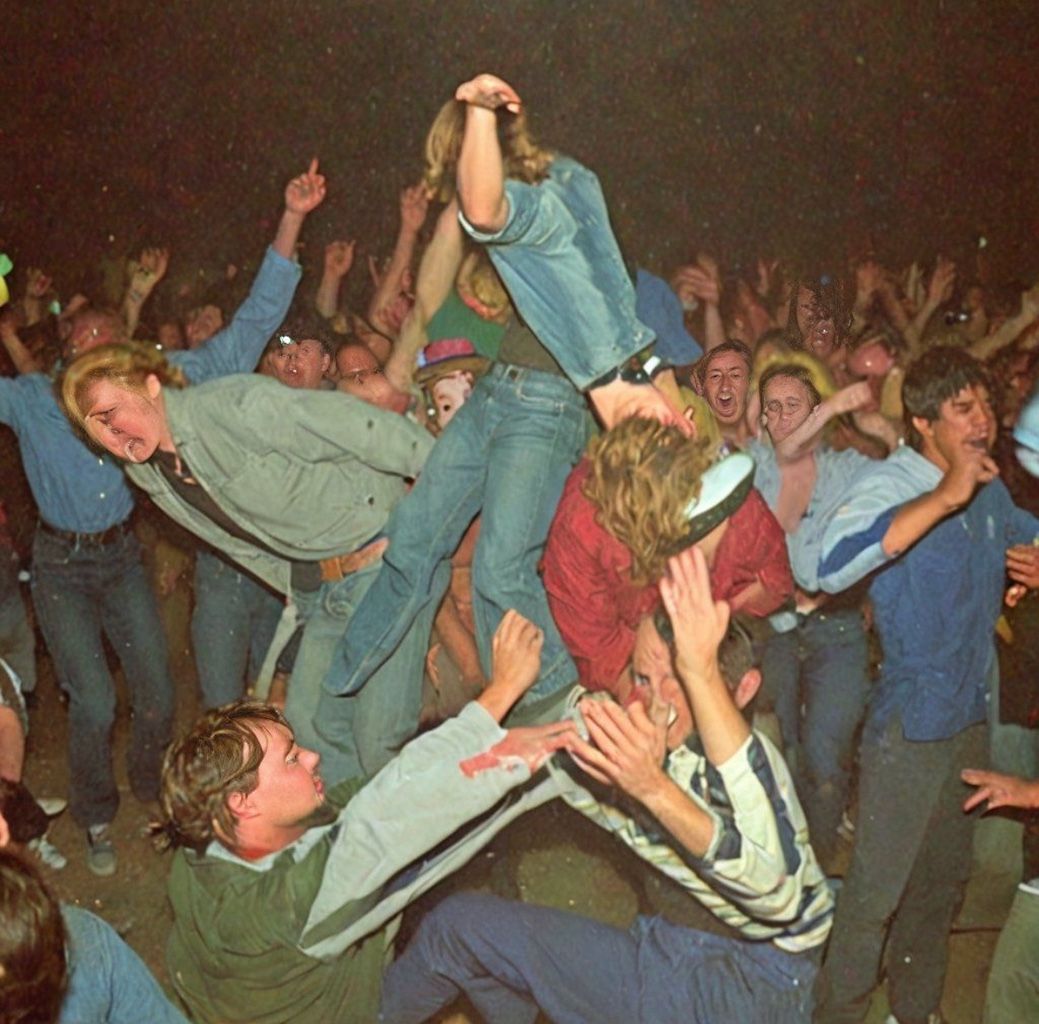
What happens when a fashion house and an artist come together to refuse comfort? Journal correspondent and Fashion Marketing Management student, Alara Arslan, sits down with Christopher Royal King, who also works under the name Total Emotional Awareness, to discuss his visceral DeVain campaign for Valentino, human and AI image-making, and why discomfort might be the only honest response left.
At Polimoda, we’re constantly encouraged to question images, not just to like them or decode them, but to really sit with them and notice what they do to us. When I first came across the work of Christopher Royal King, my reaction wasn’t analytical. It was instinctive.
Something felt off.
And not in a way I wanted to fix.
The images didn’t explain themselves. They didn’t comfort me or guide me toward a clear emotion. They didn’t try to be beautiful in a familiar, polished sense. They felt unresolved and slightly unsettling, like they were pausing mid-thought. And instead of pushing me away, that feeling made me stay. I kept looking. I kept wondering why I felt uncomfortable, and why that discomfort felt important.
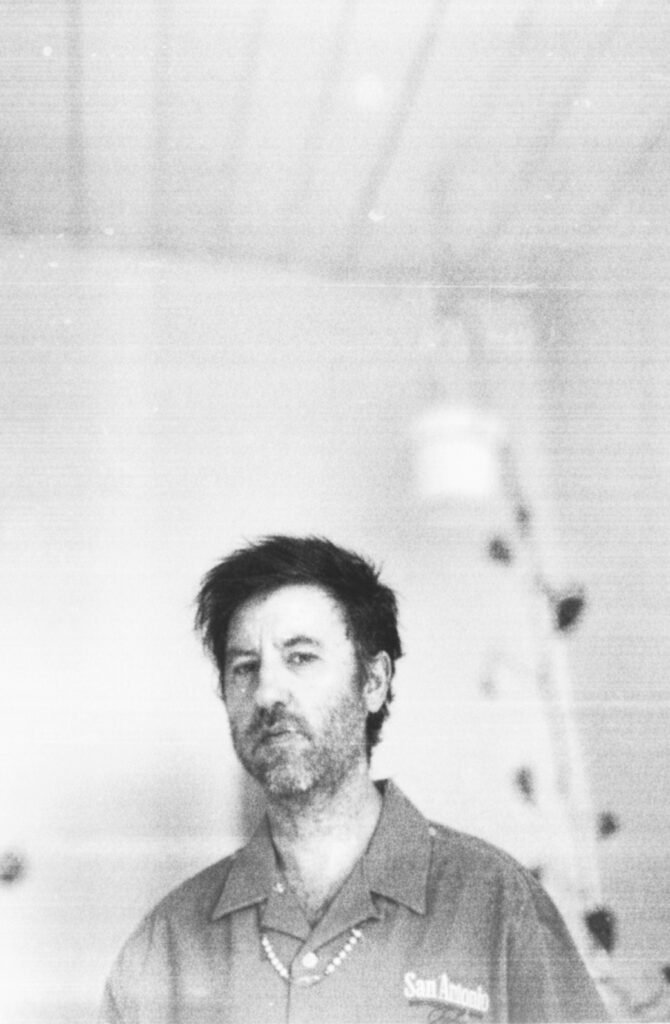
Christopher Royal King is a multidisciplinary artist working across music, image-making, and experimental visual culture. With a long background in sound and composition, he approaches visuals the way a musician approaches atmosphere through rhythm, mood, and emotional weight rather than clear narratives. Operating under the name Total Emotional Awareness, his work often explores liminal spaces, distorted bodies, and images that exist somewhere between intention and accident.
What interested me wasn’t just what he creates, but how he thinks. King doesn’t position himself as pro or anti AI. He doesn’t treat technology as a solution or a threat. He treats it as something that exists, and as a way to understand ourselves better.
The idea for this interview started very casually. I remember asking Phoebe Owston, Editor of the Polimoda Journal, if she had seen Valentino’s DeVain campaign. I told her I couldn’t quite explain it, but that I had an odd feeling about it, not negative, just unresolved. It stayed with me longer than I expected. She paused and asked a question that quietly shifted everything: does AI always need to feel comfortable?
AI so often feels helpful, reassuring, almost soothing. It answers questions when we’re anxious, fills in gaps, smooths things over. Some people even use it like a therapist. And suddenly, the conversation wasn’t about whether the campaign “worked,” but about why discomfort felt so unfamiliar, and whether that mattered. I didn’t want an answer. I wanted to follow the question. And that’s how I ended up reaching out to the artist behind Valentino’s controversial campaign, Christopher Royal King.
When King spoke about how he first began working with AI, his language was far from technical. It sounded personal almost subconscious. “It was almost in like a dream kind of secondary consciousness,” he told me. “The results were almost… I don’t want to say scary, but I was just like, wow, that looks exactly like what I was dreaming. I started using it like a dream journal.”
In King’s process, AI isn’t there to execute a fully formed idea. It’s there to reveal something unexpected. Meaning comes before intention. The image arrives first, and understanding follows later. That spontaneous, unfiltered quality is what gives his work its emotional charge.
Curiosity sits at the centre of everything he does. He said it himself several times that he’s “just trying to ask the big questions.” So, I asked myself some big questions: What happens when we aren’t here anymore? Why do certain images disturb us? Why do we react so strongly when something looks almost human, but not quite?
For King, this curiosity doesn’t start on a screen. It starts in books. He spoke about having a large personal library, especially filled with anthropology and theory, texts that help him understand how humans behave, believe, fear, and mythologise. That research becomes a quiet foundation for his work. AI might be the tool, but curiosity is the engine.
When we talked about the recurring spaces in his visuals: waiting rooms, thresholds, imagined dimensions, his answer was emotional rather than aesthetic. These are in-between places. Spaces of suspension. And that resonated. Many people today feel isolated, disconnected, stuck between states. King believes that’s why these spaces feel so charged right now, because people recognise themselves in them.
He also spoke honestly about why AI provokes such strong reactions. “Human beings can be pretty ugly and also beautiful,” he said. “I think that’s why people have such violent reactions to AI. It’s kind of holding a mirror up to people.” That idea felt especially relevant when we returned to the reactions around the DeVain campaign. While some viewers described the work as unsettling, King saw that friction as meaningful.
“I think something that’s effective, whether it’s art or advertising, causes a reaction,” he explained. “Making people feel a little uncomfortable can be important.” He connected this to the idea of the uncanny valley, moments when something looks almost right, but not entirely. An extra finger. A distorted body. A subtle wrongness that suddenly triggers a strong emotional response. “It says a lot about the human experience,” he said, “how we react to things being slightly wrong.”
The body appears often in his work, but rarely in an idealised way. Influenced by filmmakers like David Cronenberg and David Lynch, King sees the body as something mutable; a site of tension rather than perfection. When I asked him what the body represents to him, he didn’t give a clear definition. “I don’t really have a direct answer,” he admitted. “It’s more of a feeling.”
That honesty felt important. In fashion imagery, where bodies are often controlled and perfected, his approach feels quietly radical. The body isn’t there to be admired, it’s there to be questioned.
We also spoke about collaboration. King shared that some of his major projects began very simply, even accidentally. The collaboration with Valentino started with a message on Instagram he almost missed. What stood out most was not the scale of the brand, but the freedom he was given.
Sometimes the most interesting campaigns are the ones that interrupt the scroll and make us question why this approach was chosen at all. At that point fashion stops speaking at us and starts opening a conversation. That feels important to me as someone about to enter this industry.
As a fashion student, I was initially uncomfortable with the use of AI in campaigns. It felt like it risked flattening craftsmanship and diluting the value of a house like Valentino. Those concerns are real, and I still carry them. But speaking with Christopher Royal King complicated that view. Listening to him talk through his process, the research, the references, the time, the intention, made it clear that AI was never the work itself. It was simply one of the tools behind it.
Throughout our conversation, King kept returning to the same idea: asking the big questions. He spoke about his work as a way of understanding our place in the world, of sitting with things that feel unresolved rather than rushing to explain them. When he talked about working with Valentino, what stood out wasn’t the scale of the house, but how much space he was given to explore those questions. “They didn’t really keep a lid on it,” he said. “They trusted the process.”
That was the part I kept coming back to. In an industry that often prioritises clarity, polish, and immediate desirability, this kind of trust feels rare. At that point, whether the tool is AI or a camera becomes secondary. What matters is the willingness to let artists question rather than conclude.
Entering the fashion industry now means deciding what kinds of questions we are willing to ask and which ones we are brave enough to sit with. If fashion is going to remain culturally alive, it won’t be by avoiding new tools, but by using them with intention, curiosity, and the confidence to stay unresolved a little longer.
CREDITS
Written by:
Cover image by: