Two students have an open and insightful conversation about beauty as protest, its role in our lives, and their personal connection to it, after an inspiring visit to the new Dries Van Noten Foundation in Venice. Drawing on philosophy, fashion history, and personal style, they explore what it means to seek beauty in a world that often prioritizes speed over substance. From Christian Lacroix’s embroidered couture to the quiet defiance of dressing for oneself, the conversation becomes its own kind of manifesto.
Arina Kuzmich: Let’s start with beauty; a beautiful jacket, a beautiful sunrise, a beautiful person. Beauty is personal and public, subjective and objective, comforting and scaring. We simultaneously share it and keep it to ourselves, it helps us find the right words and takes them away completely. That said, one thing is undeniable: beauty is vital. We crave it, to have it present in our lives, to be surrounded by it, as if our survival depends on seeing a mesmerizing art piece or a garment.
When I first learnt that fashion design was created as a response to the Industrial Revolution, everything fell into place. Beauty as a response to machinery. Beauty as a response to reckless mass production. In his Letters on the Aesthetic Education of Man, Friedrich Schiller wrote: “Thus, one of the most important tasks of culture is to subject man to form even in his purely physical life and to make him, as far as this depends on the realm of beauty, an aesthetic being; for only from the aesthetic, and not from the physical, can the moral state develop.”
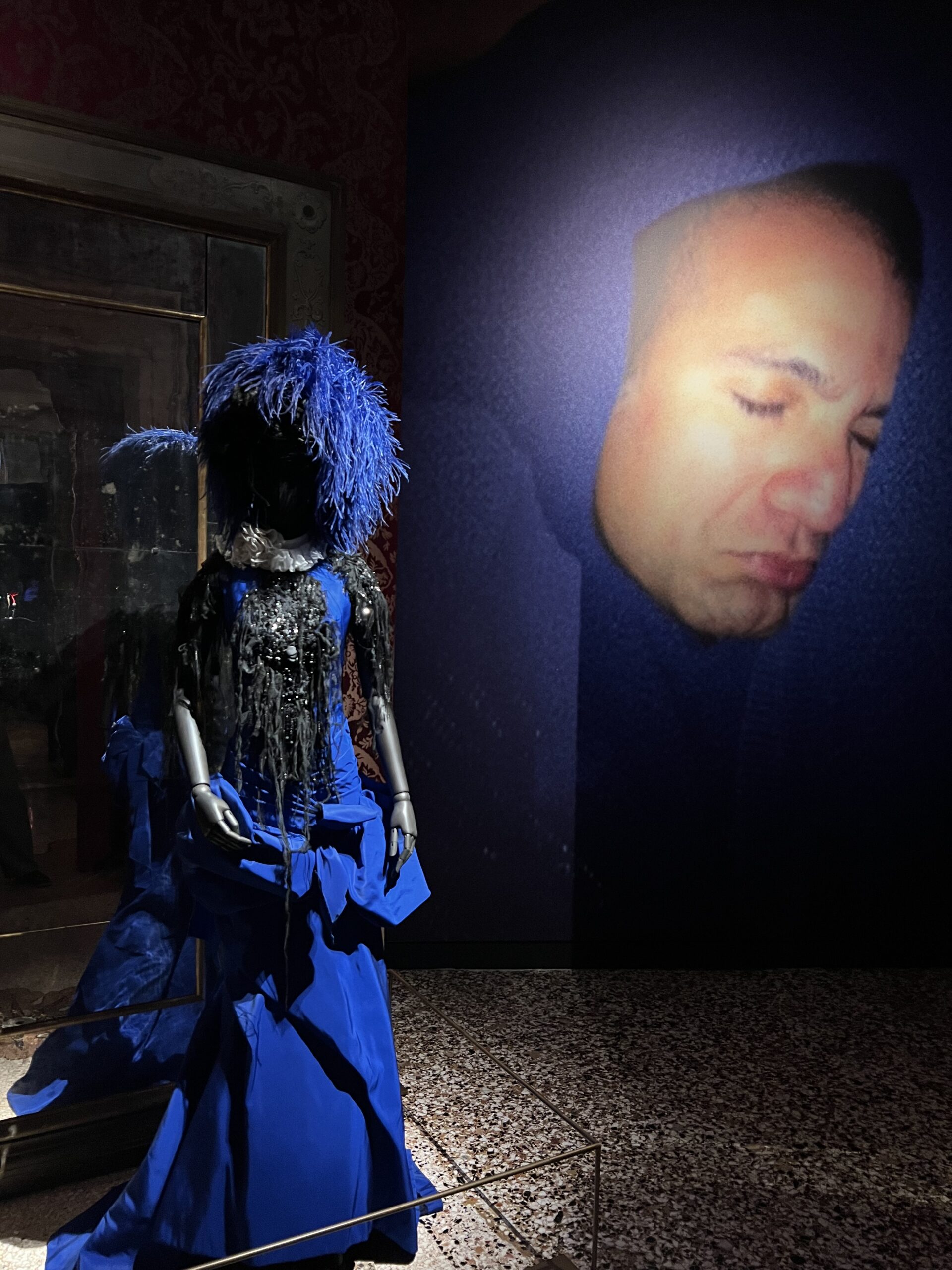
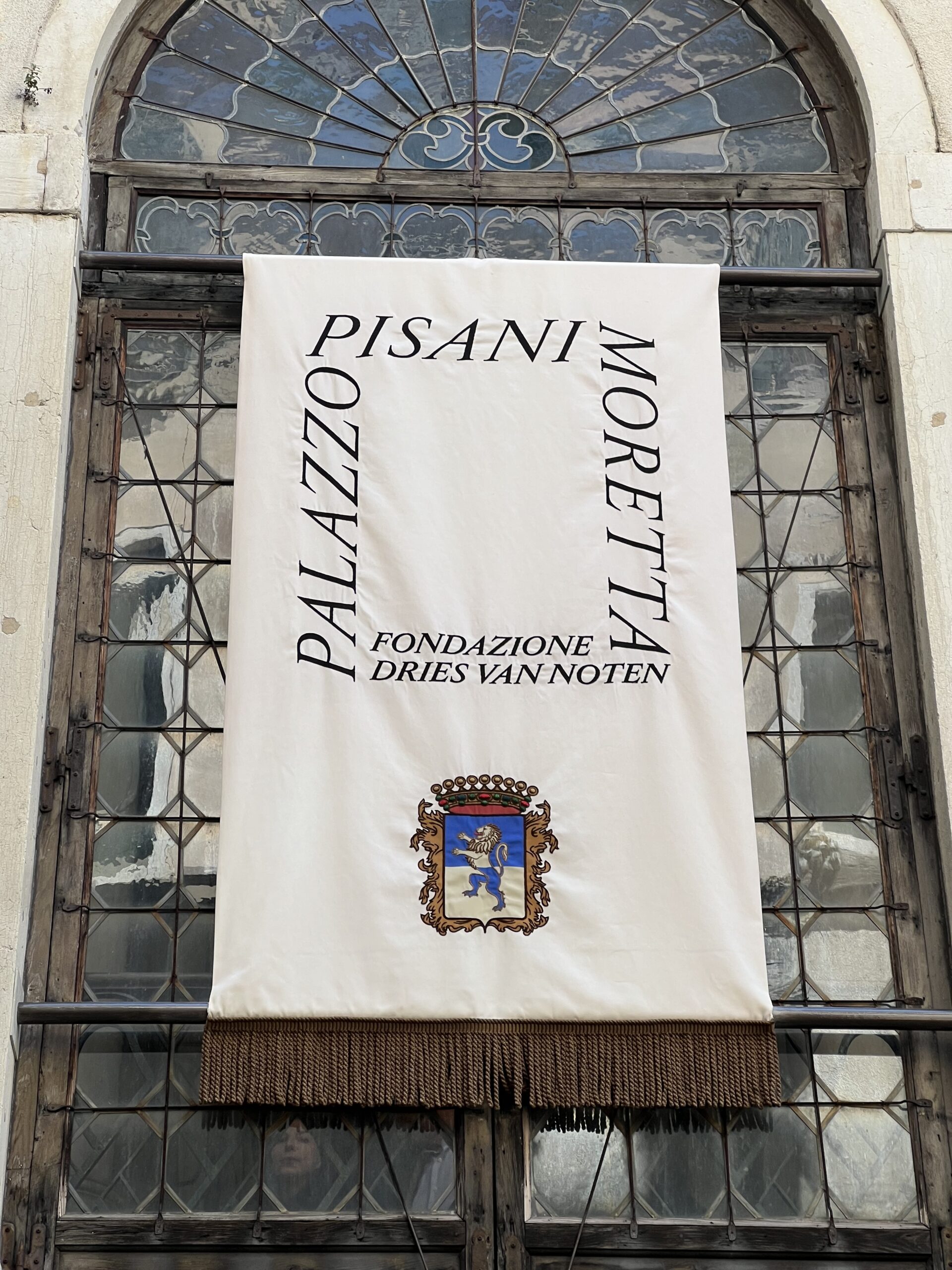
So, this thought on the vitality of beauty, especially now, brought me to the opening at Fondazione Dries Van Noten at Palazzo Pisani Moretta in Venice, which has been founded by the eponymous designer and Patrick Vangheluwe. The title of the exhibition, The Only True Protest Is Beauty, resonated with me so much that I knew I couldn’t miss it by any means.
What is so special about this exhibition? What does Dries Van Noten evoke in you?
Riccardo Rinaldi: I was drawn to Venezia, a unique place whose intrinsic beauty pours out on to its visitors and residents. Between the bridges, the narrow canals, and the hidden squares stands the palace that houses the Dries Van Noten Foundation. As its founder mentioned in an interview with BOF: “I think fashion has to be relevant to survive because otherwise it just becomes a product. For me, fashion is too noble to reduce it only to product and profit,” and I couldn’t agree more. Fashion can’t just be fabric to cover a body or a markup influenced by inflation. It has to be something more. It must be special. And there is no more special place in the world than a city full of art and architecture that floats on water.
But does the fashion system still have something to say? Are there brands whose values and work isn’t overshadowed by the impossible pace of the market? And if fashion is both art and business, what comes first between the two? One thing is certain, however: creativity must be protected, since without it, all this could not exist.
Arina: And what can be a safer place for creativity if not a historical palace in Venice, in the hands of a multifaceted creative, fashion designer in the past, Dries Van Noten, and his co-curator and co-scenographer, Geert Bruloot?
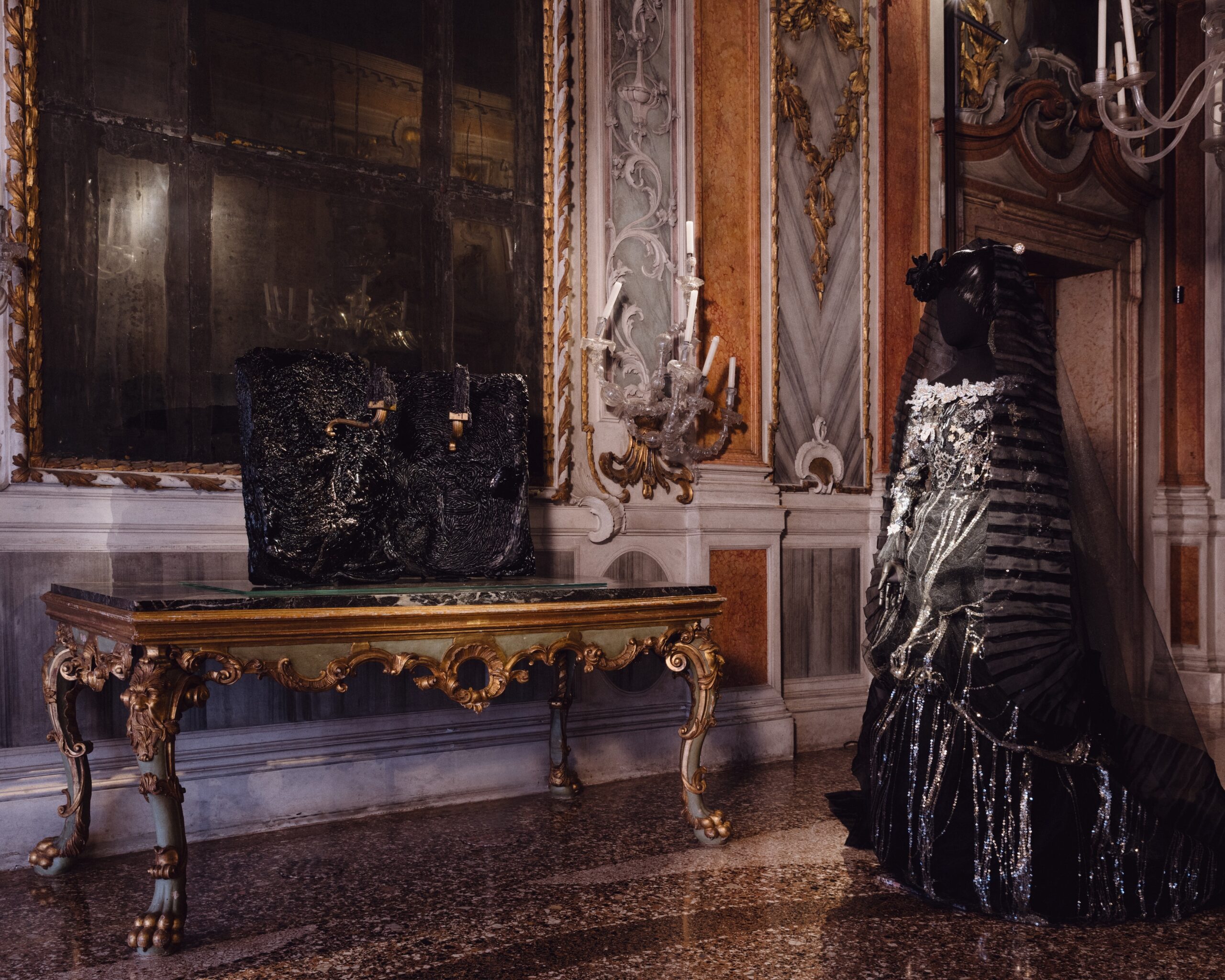
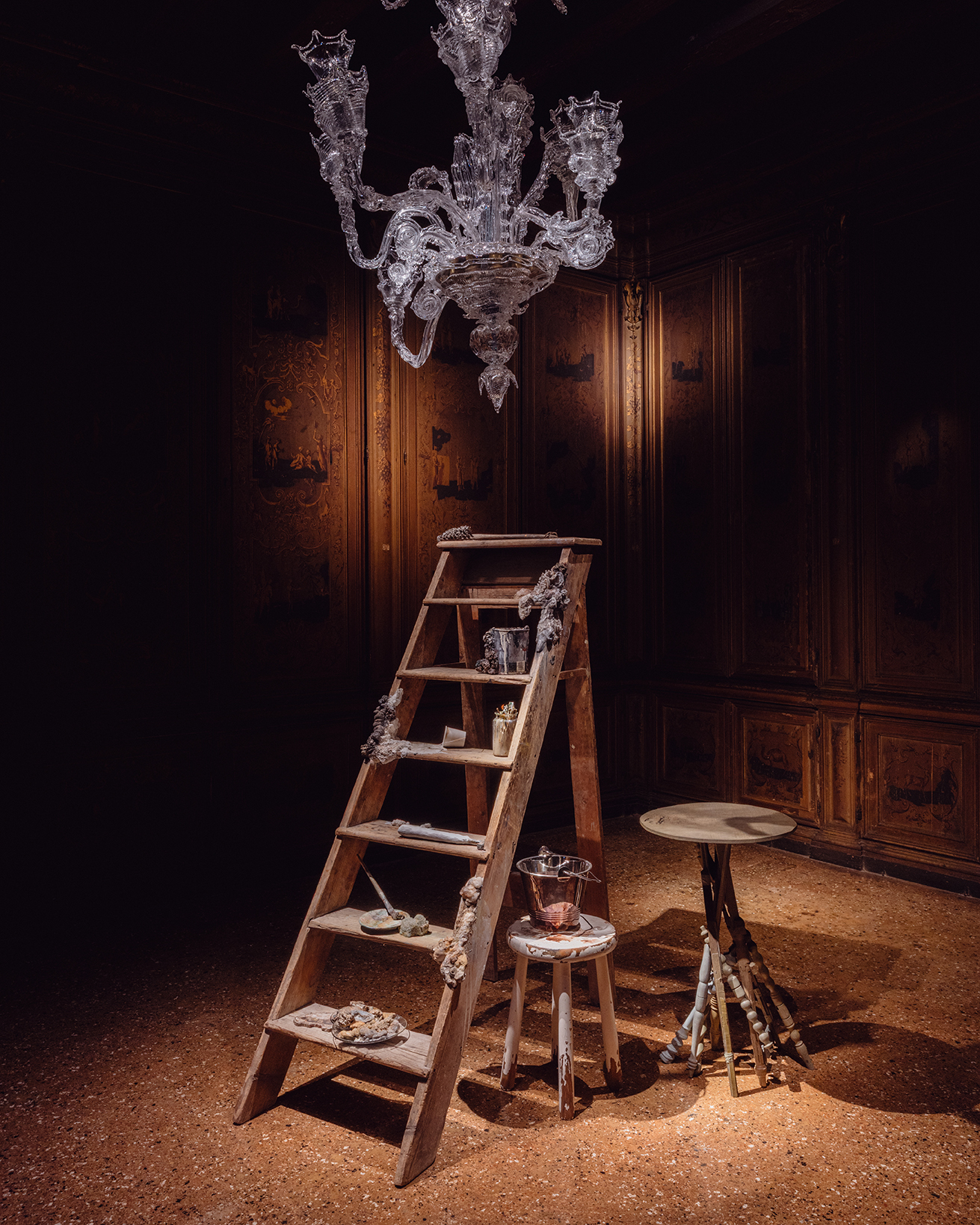
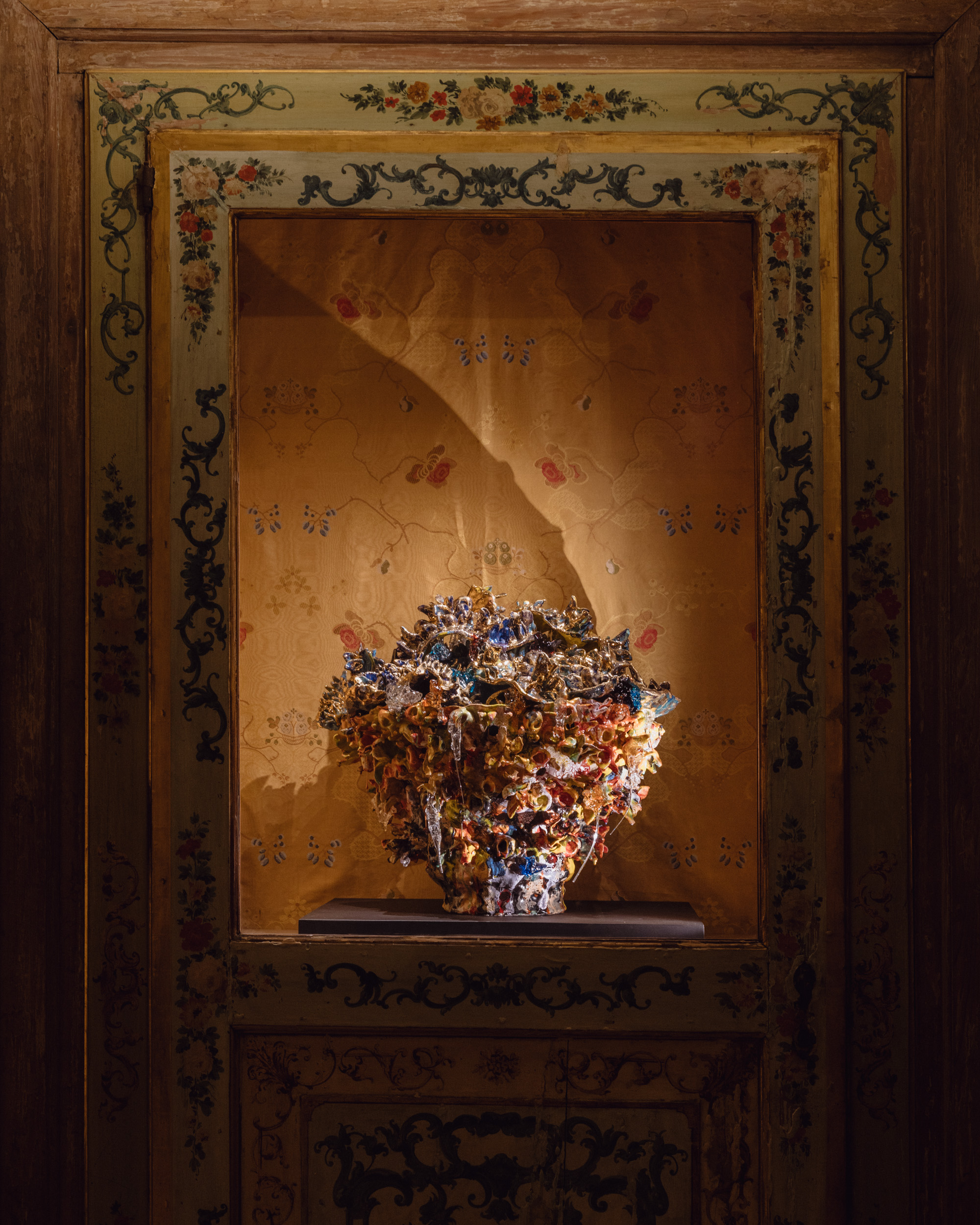
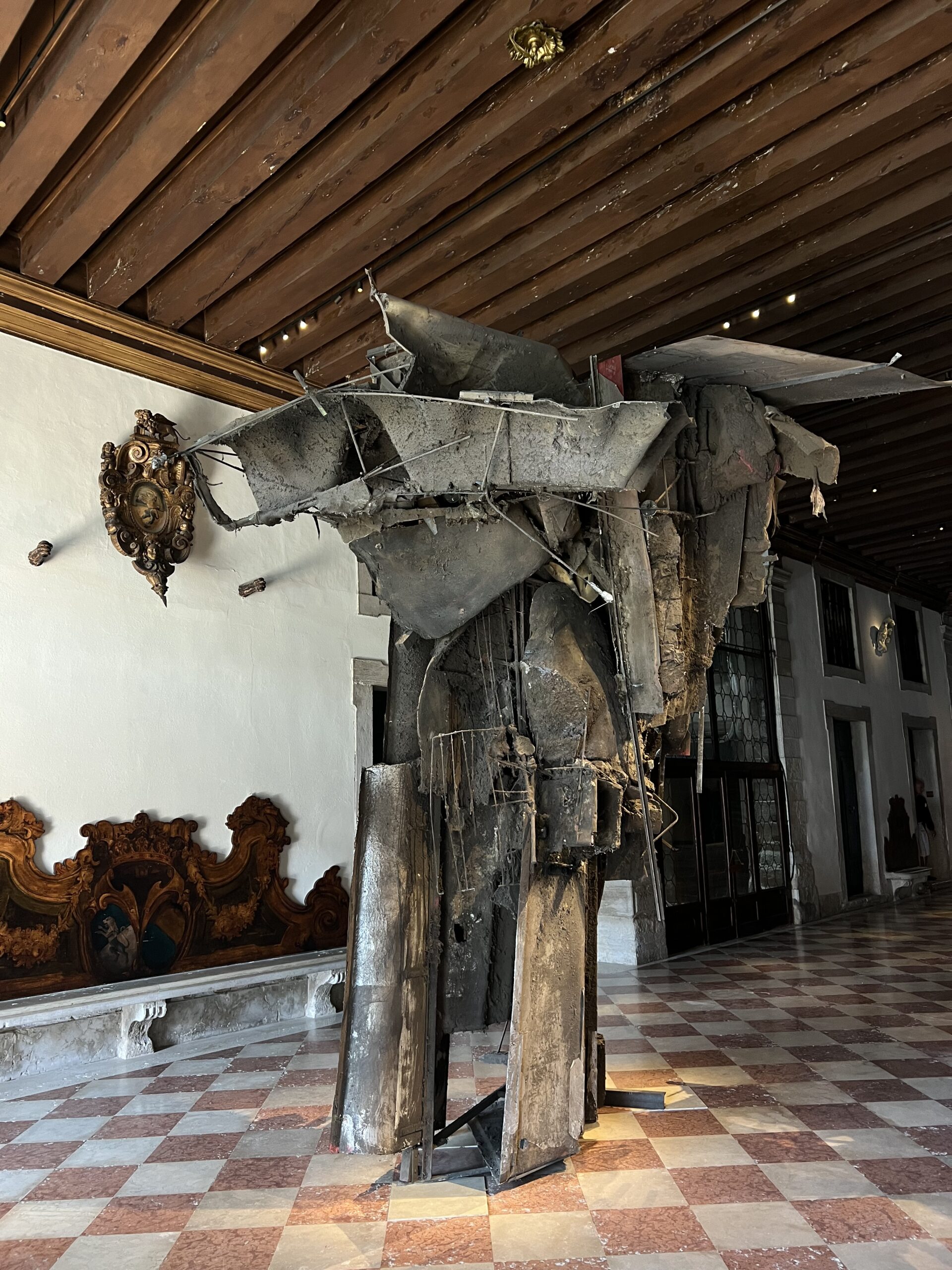
When I got there, I was struck by the symbiosis of the palace and the careful curation of the exhibition. New voices of modernity were in dialogue with echoes of the past. The first artwork that I stumbled upon was by Peter Buggenhout, named The Blind Leading the Blind. The piece is a huge mass of messy metal; colossal, imposing, aggressive, the exact opposite of what one may consider beautiful.
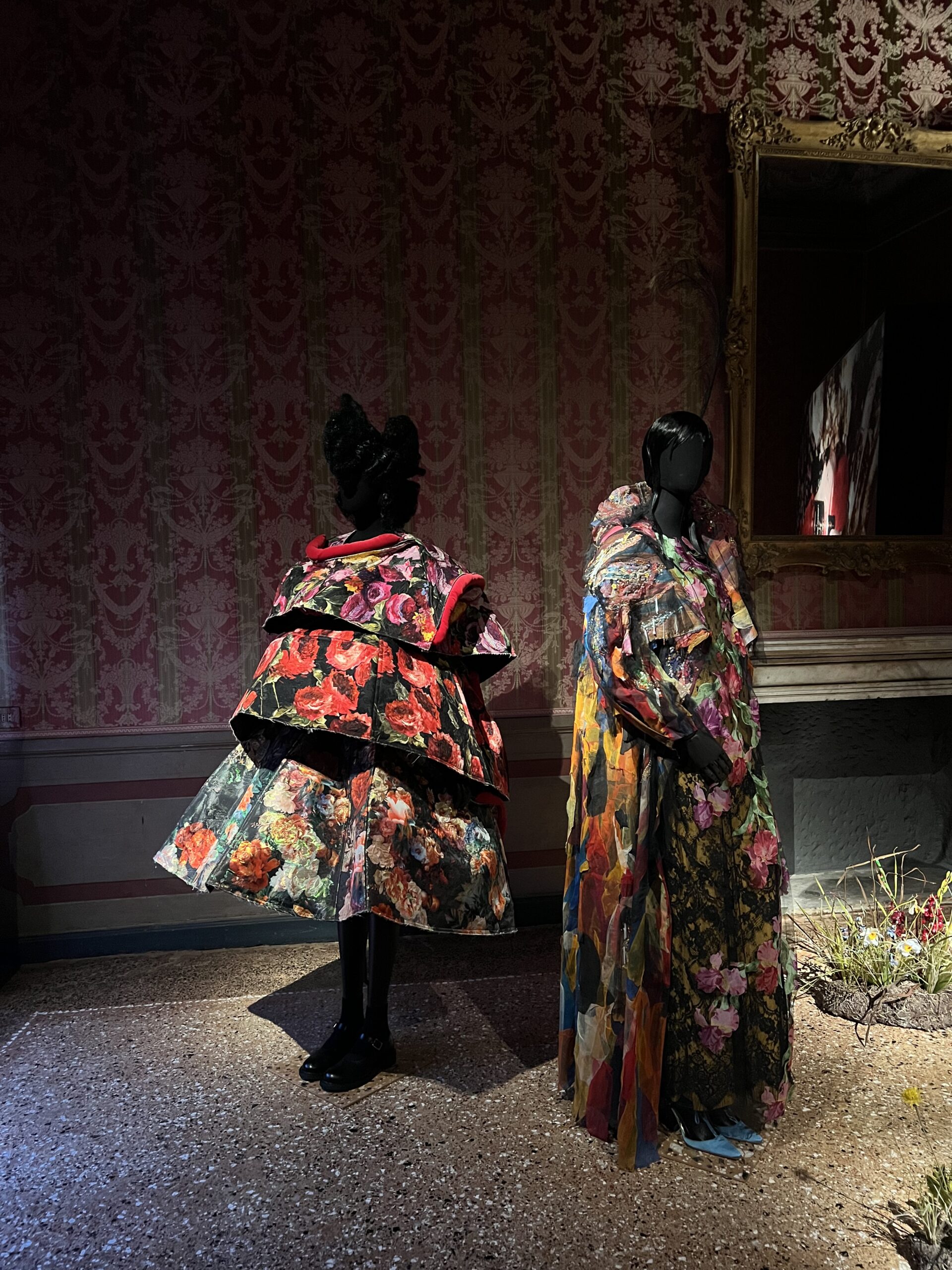
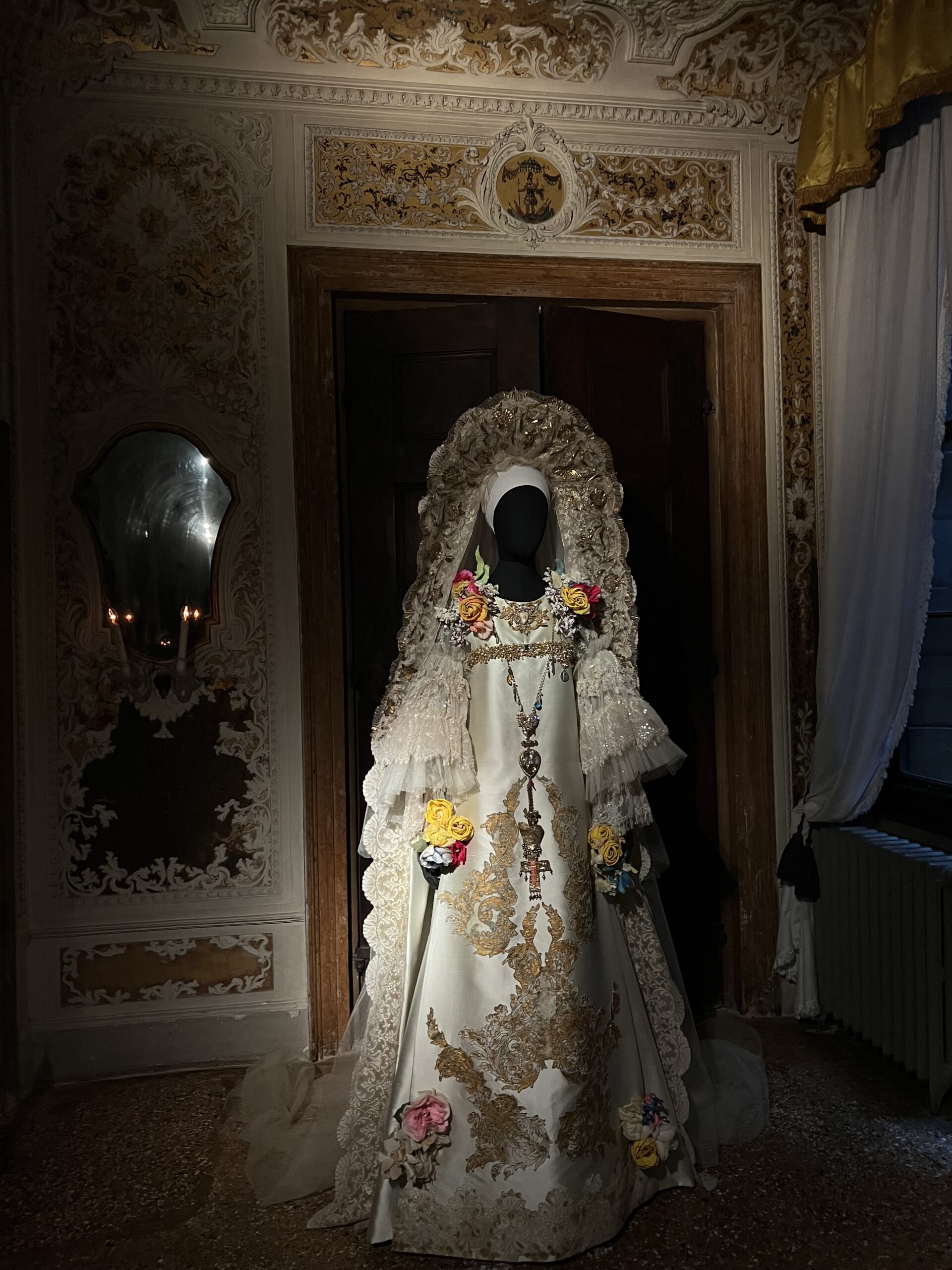
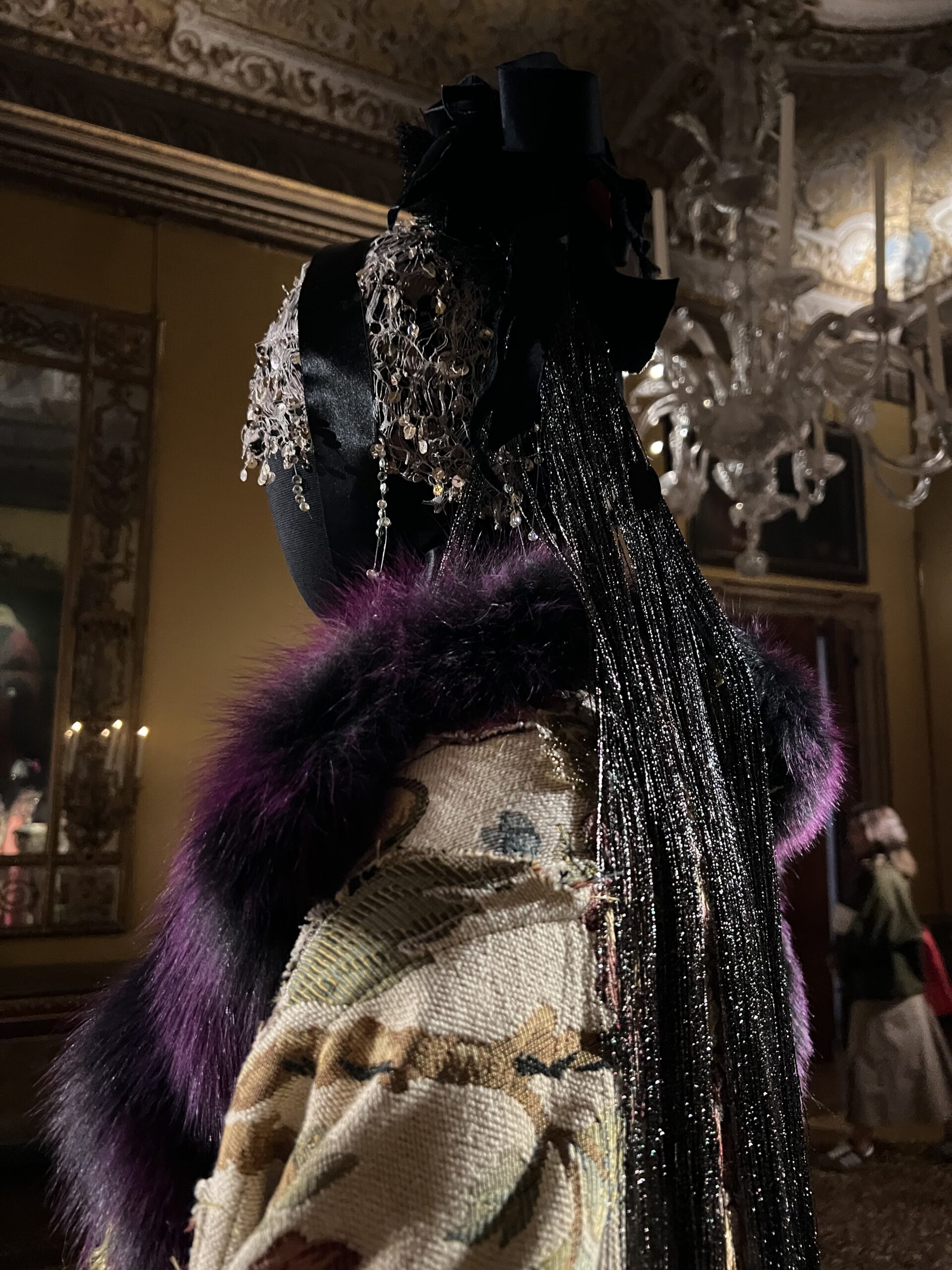
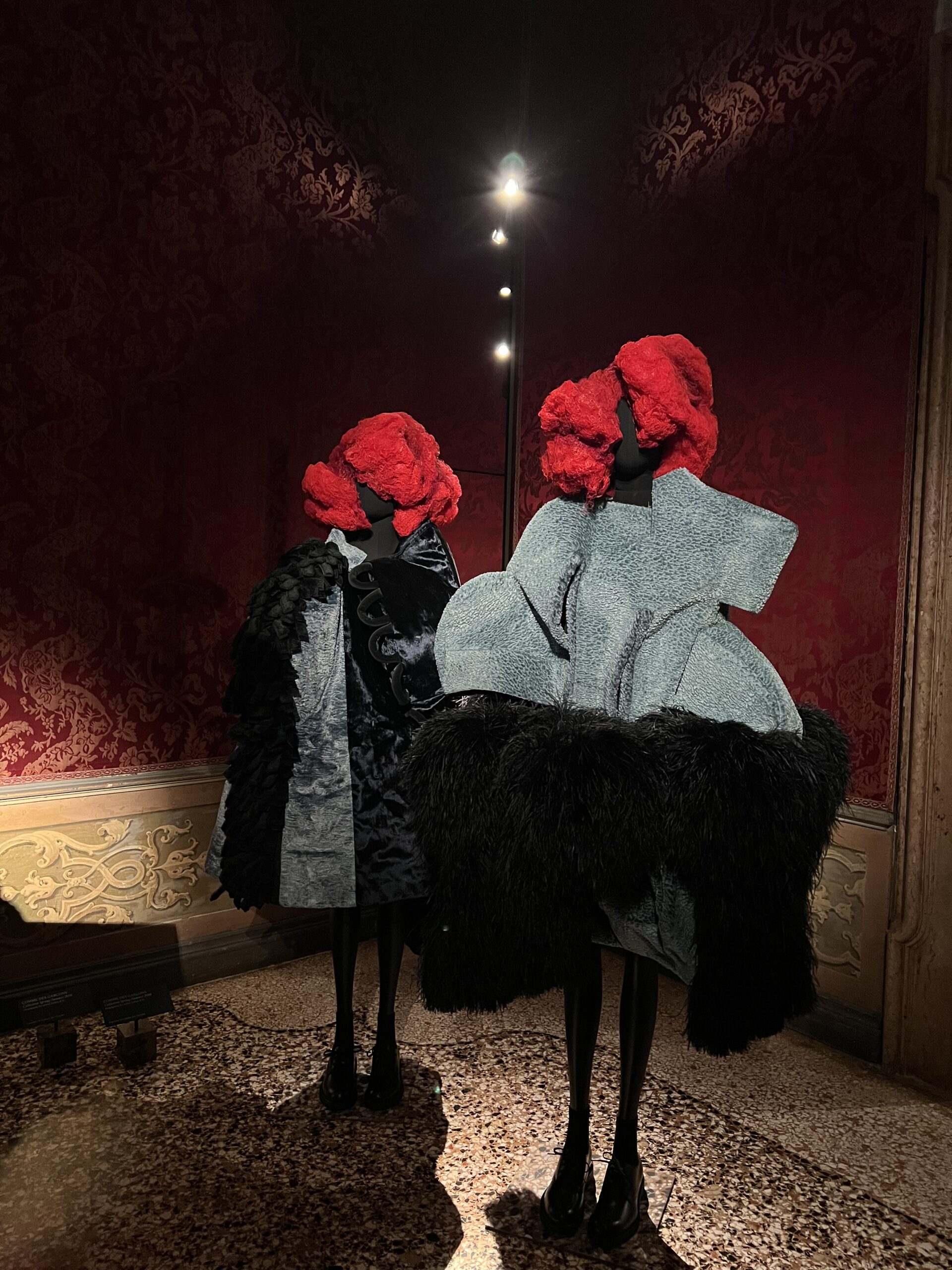
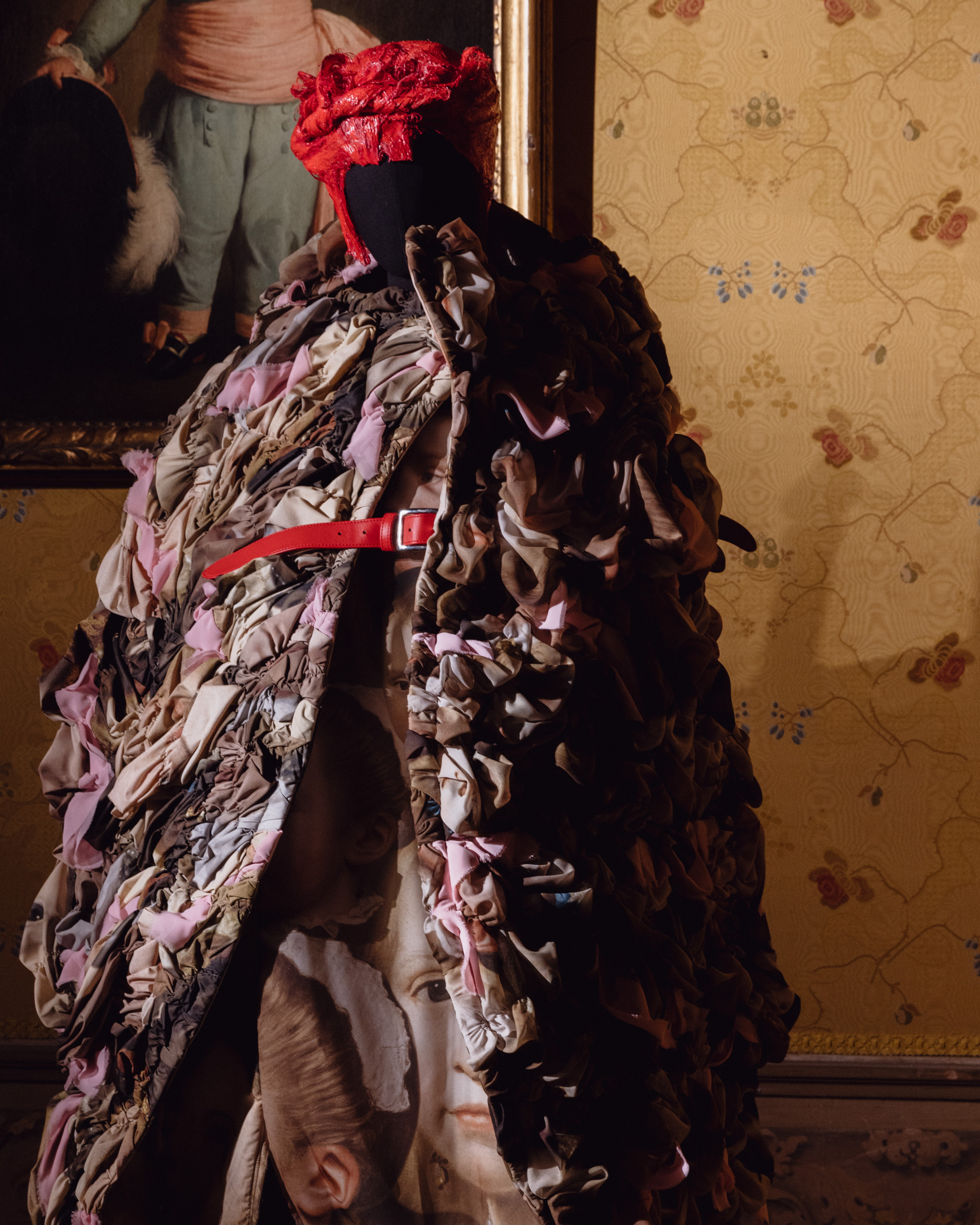
Its title, The Only True Protest Is Beauty, inevitably led to having Comme des Garçons garments there. Pieces that were supposed to be wearable in theory were more a statement rather than a garment. This made me think of the boundaries and restraints of fabric when it comes to a manifesto and how it is actually not a problem at all. Together with very conceptual fashion, there were pieces from Christian Lacroix, a real couturier who vanished because of struggling with making his work sellable…
Riccardo: Which makes me wonder: do we still need Haute Couture? In a society that consumes everything in a matter of moments, that needs constant stimulation and prefers ephemeral tendencies over quality and durability. Why do some brands decide to invest time and resources in handcrafted, custom-made clothing by specialized artisans in Parisian ateliers, characterized by high-quality materials and impractical designs, requiring hours and hours of work? Haute couture is the closest meeting point between fashion and art, where the fashion business is sidelined to celebrate beauty. Beauty that not only tells the DNA of a brand but expresses its full creative potential, without limits related to the commercial aspect. The kind of slow beauty that shines through the walls and frescoes of Palazzo Pisani Moretta.
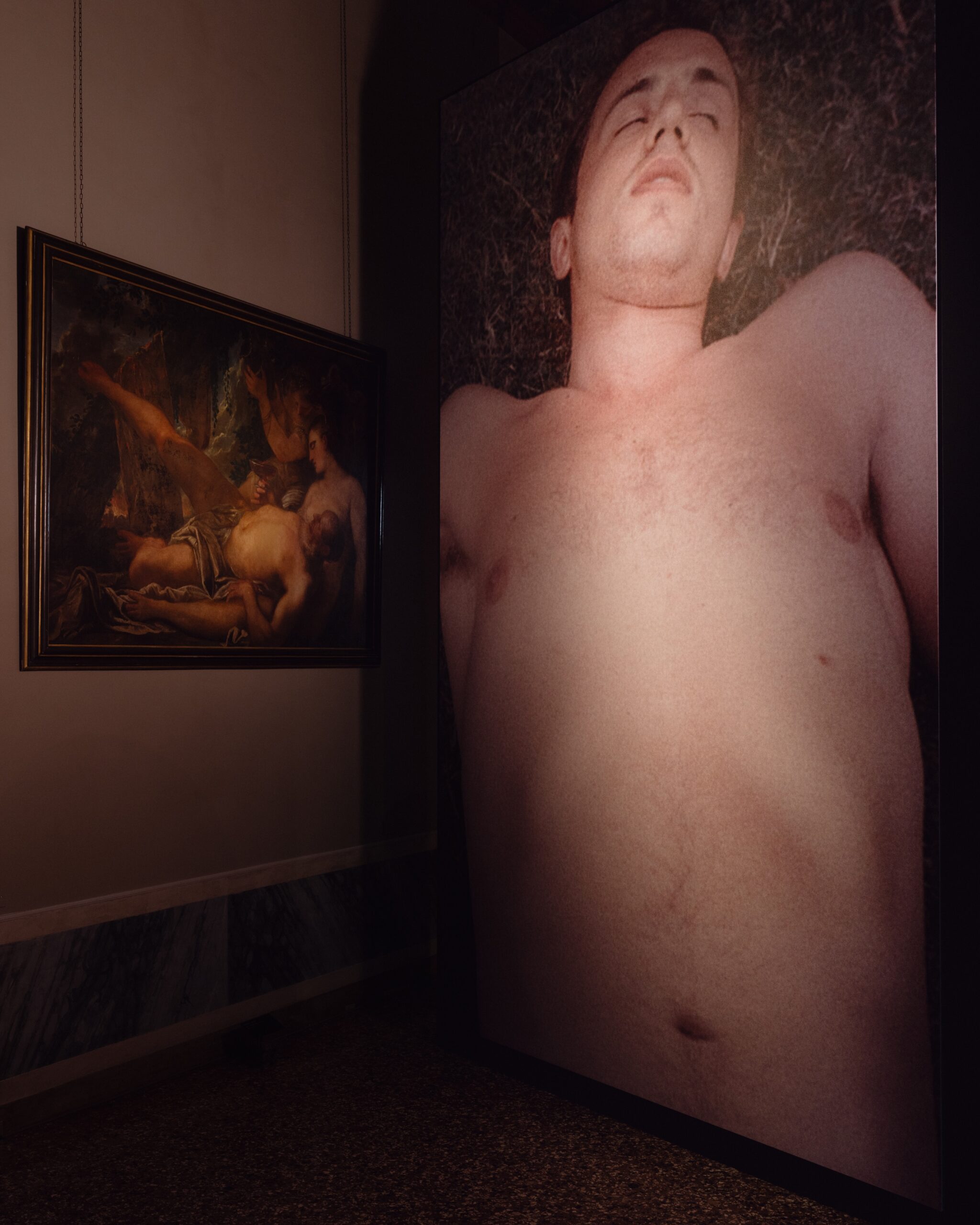
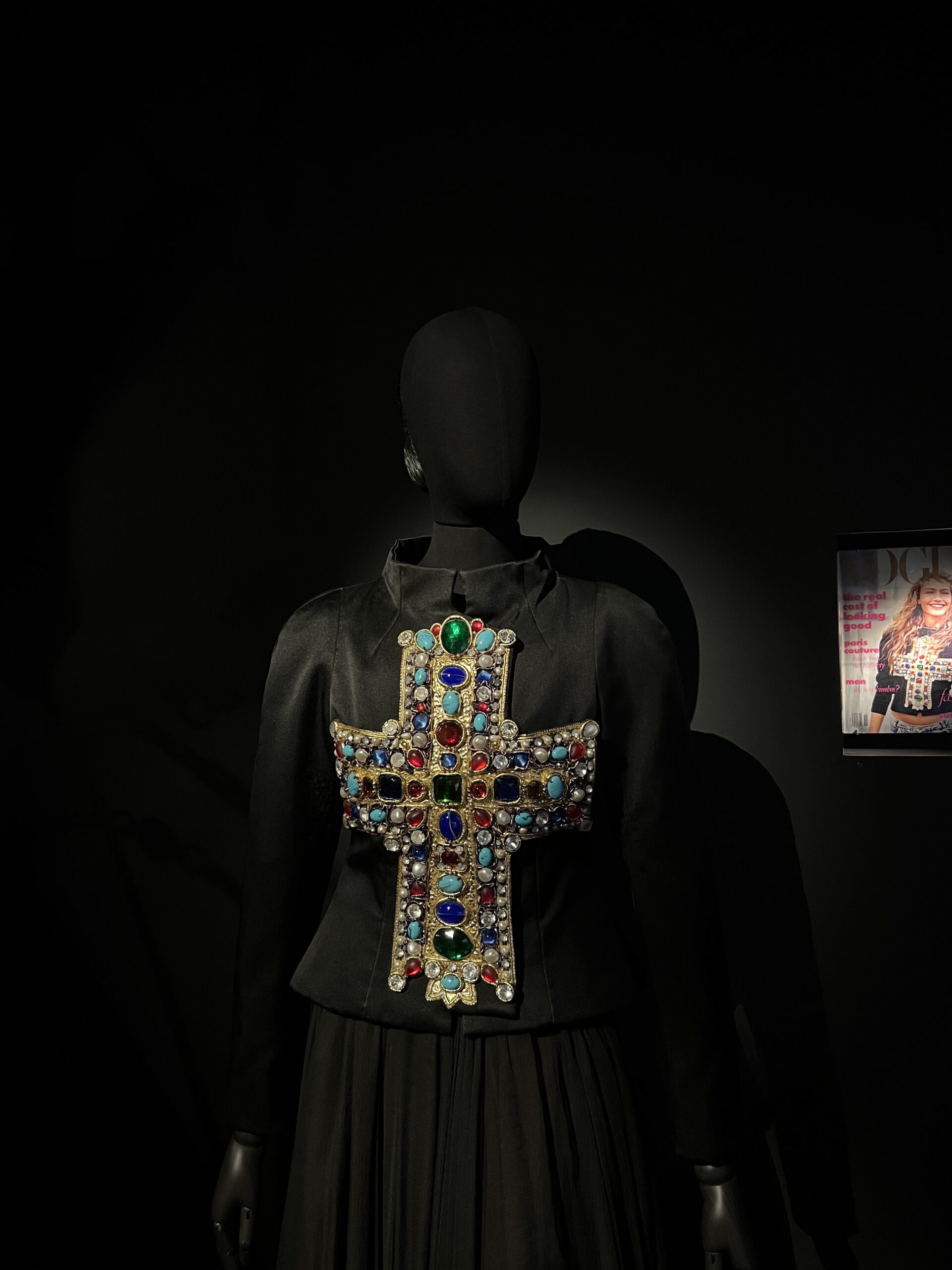
Worthy of note, among the artificially intelligent artworks of Joseph Arzoumanov, the photographic portraits of Steven Shearer, and the clothes of Comme des Garçons, is undoubtedly Christian Lacroix’s cross outfit, part of the Haute Couture Autumn/Winter 1988 collection, present on Anna Wintour’s first cover as editor-in-chief of Vogue. In the November 1988 issue, photographed by Peter Lindbergh and styled by Carlyne Cerf de Dudzeele, the precious jacket was paired with Guess stonewashed jeans.
The feeling you get when you look at that photo, displayed in the first room on the second floor of the exhibition, is that Haute Couture has been thrown into the street and liberated. It’s been given freedom. Quite a utopian concept in these times. But perhaps that is precisely the goal of this exhibition: to teach freedom through different codes, codes of beauty, as a message of protest.
Arina: Liberated… this is how I felt wandering around the palace, as if my inner antagonism between feeling and intellect has finally reconciled.
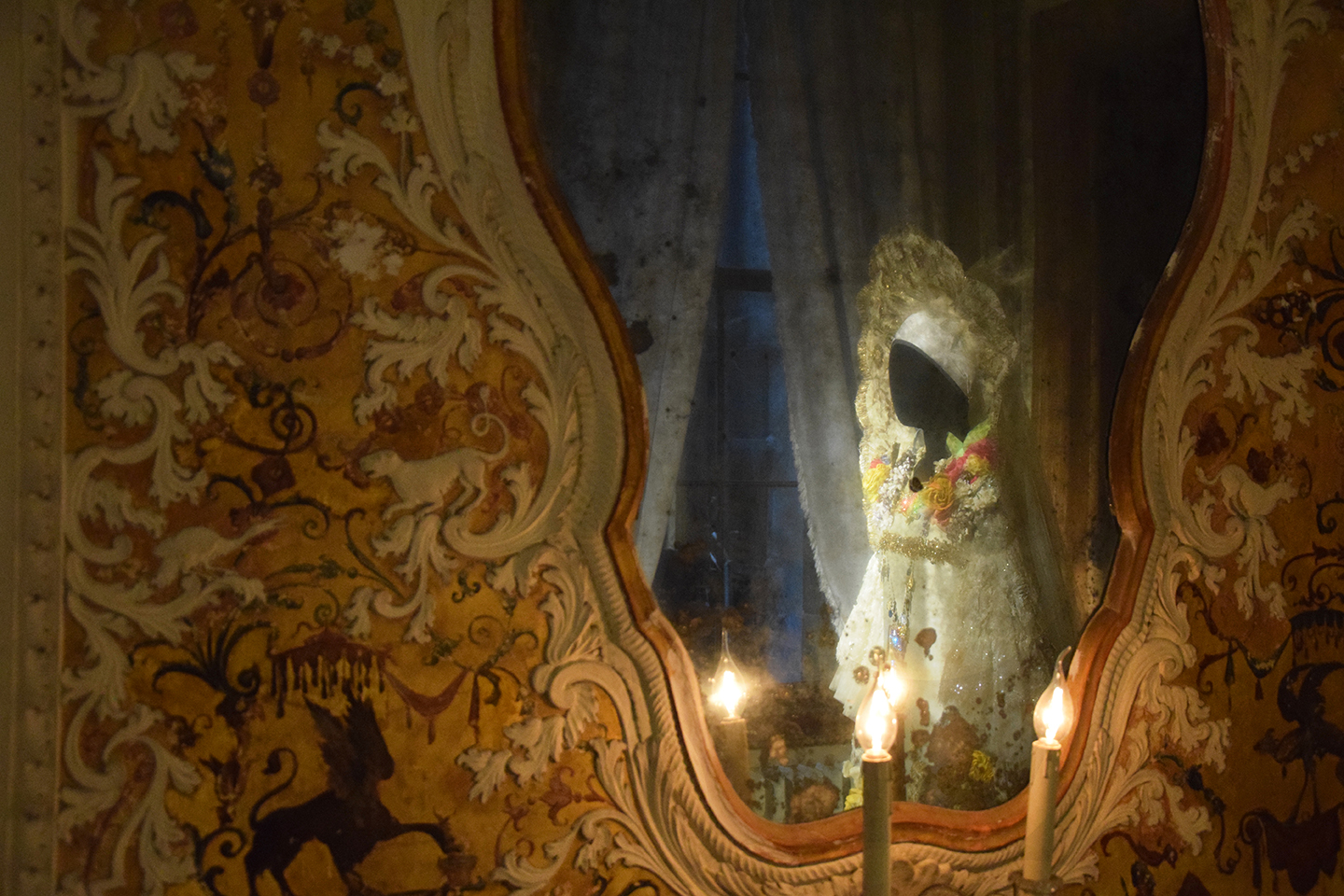
The Christian Lacroix dresses that left the biggest impression on me were made so intricately, using different techniques of hand embroidery on top of the most precious textiles. To me, it is a true protest against… time, really. Interestingly enough, Dries Van Noten himself was there, giving an explanation of some art pieces and talking to visitors. Standing with him in the same room, hearing his opinion on the limits of art made me think of how beauty has no limitations, nor should it. But most importantly, how craving it in our lives is the most human thing we can do. Striving for beauty is the purest protest against ugliness and injustice that we, as a society, are facing.
Riccardo: I asked myself what “beautiful” means to me. And is what I wear beautiful? Actually, I realized I don’t always like to wear conventionally good-looking clothes, like the pair of my beloved Vivienne Westwood corset trousers, which merge femininity and masculinity so elegantly.
That is “beautiful” to me. It’s a personal feeling. Trying to fit into impossible standards and base our taste on other people’s expectations is the ugliest thing we can do to ourselves. That’s what we should learn from art: not everyone should understand us, because we are not meant to be wholely understood.
I like to think that my craving for beauty is something intimate, it aligns with who I am more than how I want others to perceive me. And that is the only true protest to me.
CREDITS
Written by
Cover image
- Comme des Garçons, Collection Spring/Summer 2025. Headpiece by Julien d’Ys. Courtesy of Comme des Garçons. Christian Lacroix Haute Couture Fall/Winter 2004. Wig by Fabio Petri. Courtesy of Christian Lacroix, STL group. Kate MccGwire STIFLE, 2008. Mixed media with white dove feathers in antique glass dome with black wood base. Private collector. Photo: Matteo de Mayda.