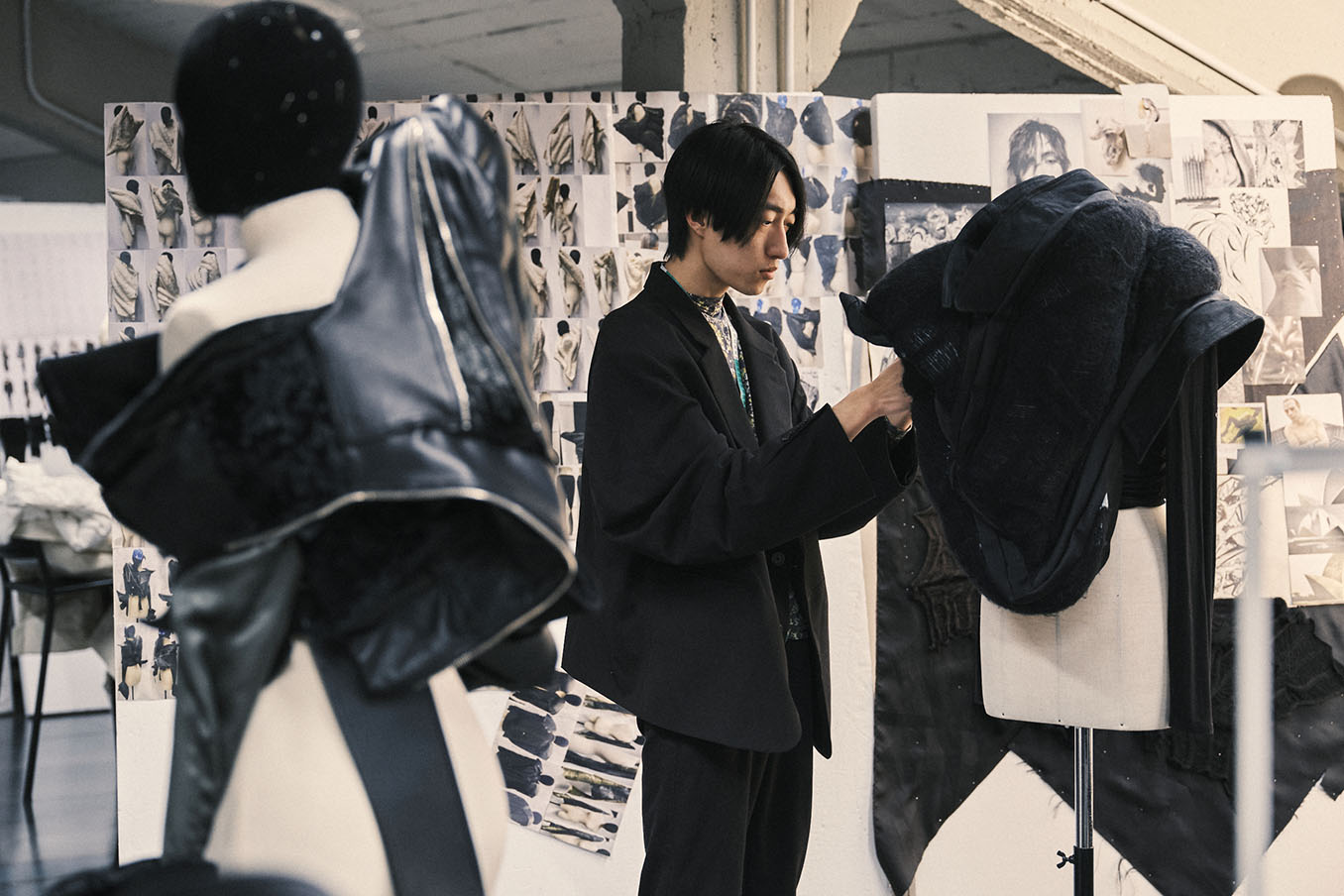
Fashion Design alumna and young designer Marianna Guerini is facing life after fashion school: with a design collaboration for Charli XCX and a new position at Valentino in Rome, things aren’t going badly, but what is it really like post graduation for a fashion design student? What are the challenges and struggles that the ex-fashion student faces? How do the new generation of designers view the industry today? Phoebe Owston, editor of the Journal, speaks with Marianna to find out.
Congratulations on graduating, how has life been since graduation and what are you doing now?
I would say life after fashion school is very different, and not necessarily for worse as some might think. I found that working actually gives you more free time, and more balance. At fashion school, in the fashion design course at least, work really absorbs you 100%, 24/7, because it’s completely yours. It’s not necessarily like that once you work in a brand, and that’s freeing, in a way. Right now I’m working at Valentino in Rome as a knitwear and jersey womenswear design intern, after having worked for Marco Rambaldi in Bologna, and I’m really happy!
What challenges have you faced since graduation?
The biggest challenge is definitely finding an internship, and, on top of that, navigating the feelings that come with uncertainty, seeing what your ex-classmates get up to, comparing yourself; all the things that I think everyone experiences once they graduate. For me, moving back to my hometown at first was quite jarring, but working for Marco ended up being amazing and I learnt and improved so much. And now I’m onto a new chapter, so you also have to be adaptable and ready to move quickly, which is never easy but very exciting and rewarding.
We’ve seen your looks for Charli XCX, what does a collaboration with a celebrity like her entail? How does such a collaboration come about?
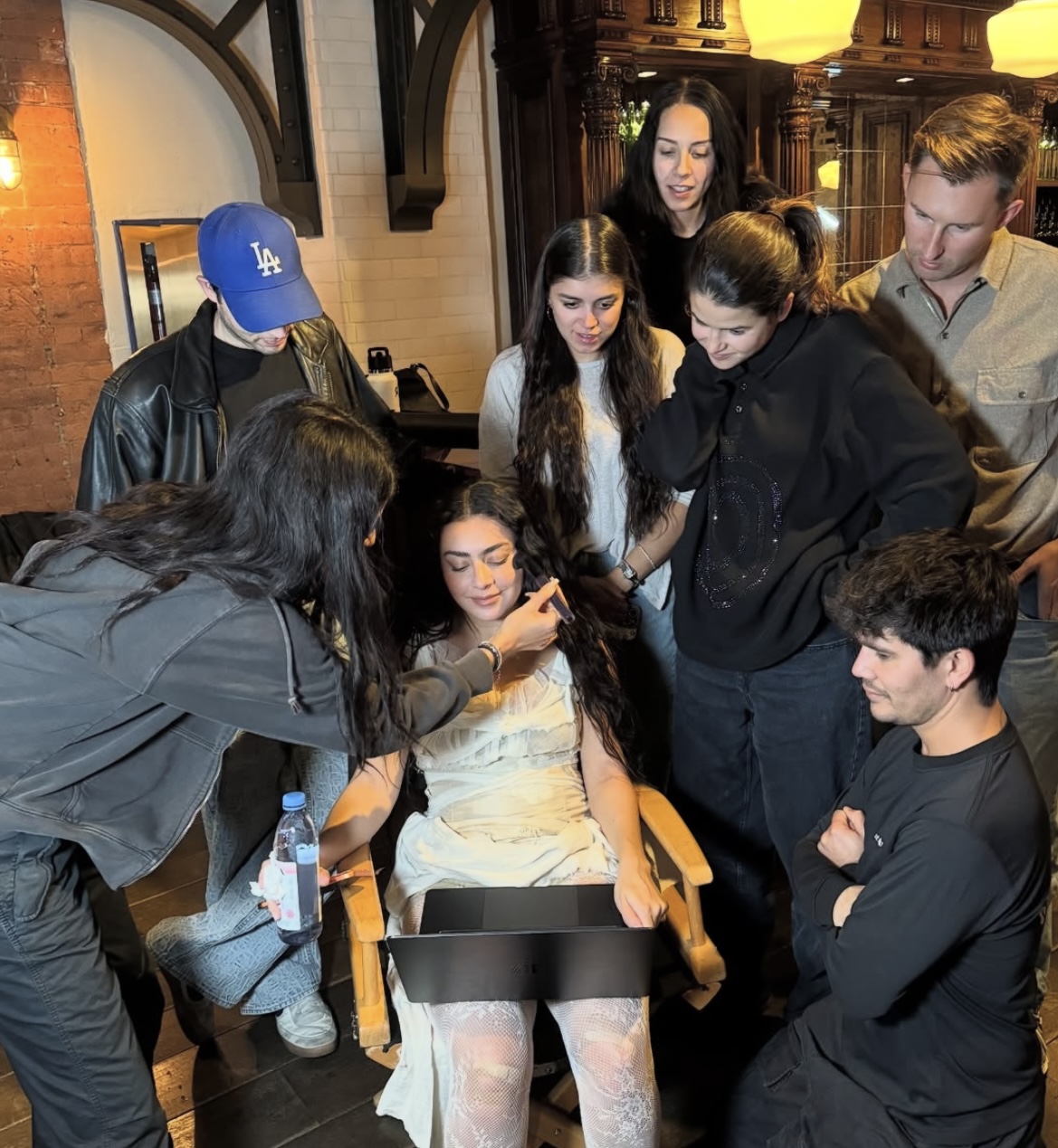
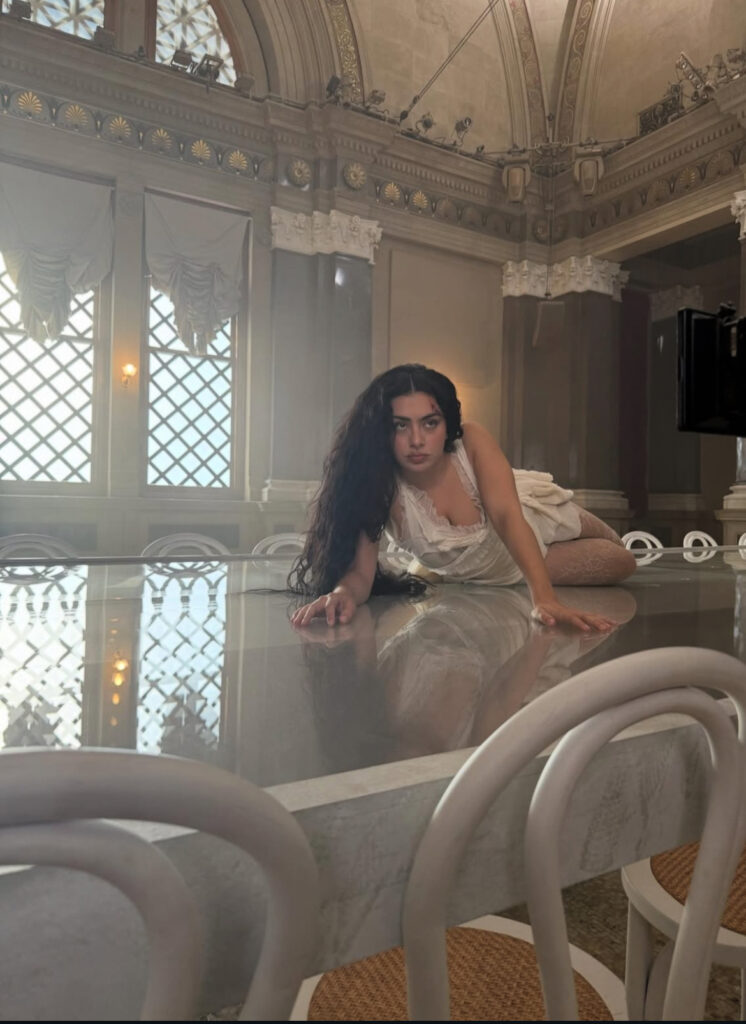
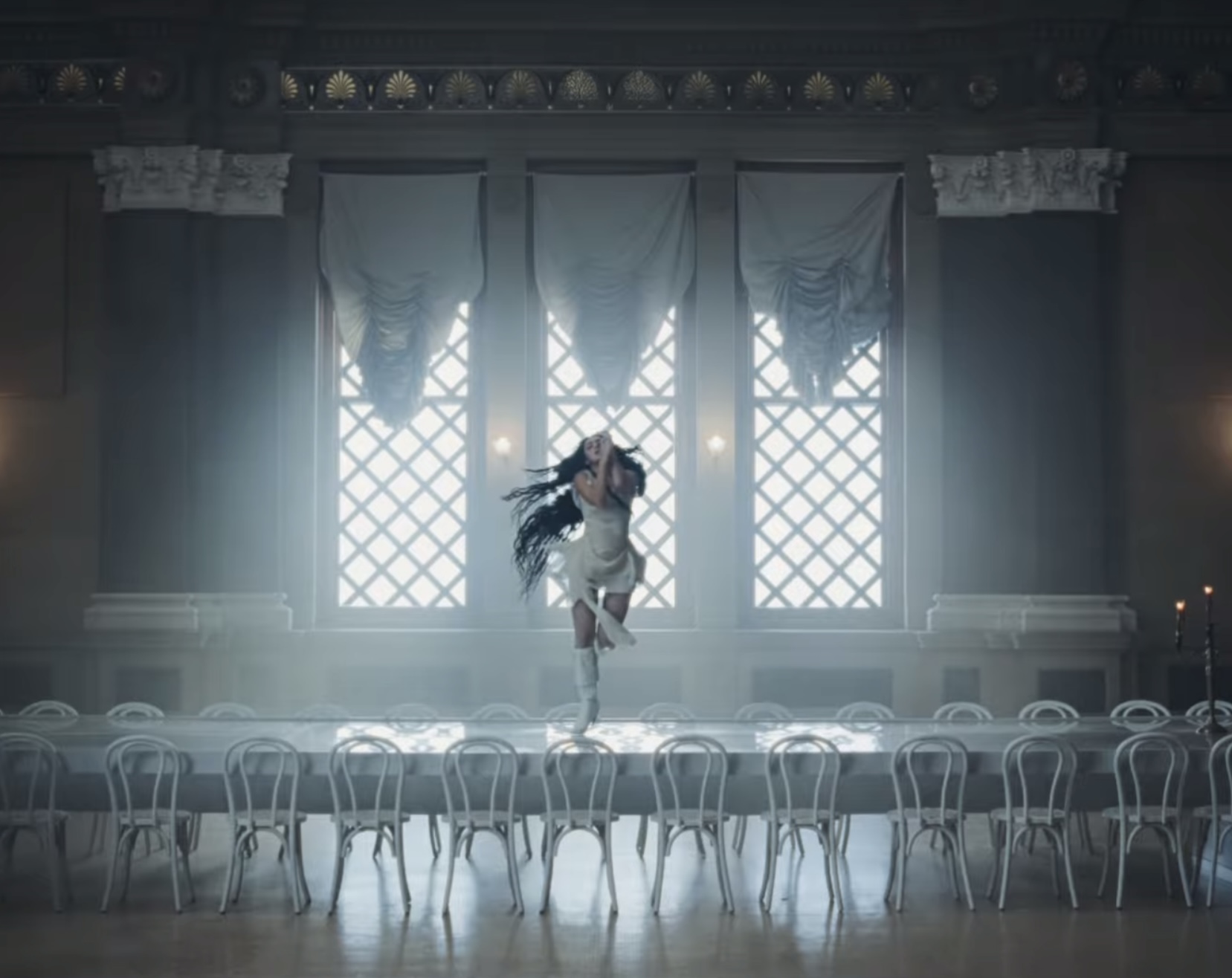
It happened through instagram, actually! Charli’s stylist Chris Horan, and Sanam Celine Mehrian, his assistant, and I, followed each other and after a while she reached out for me to send a few looks over for her summer tour. I didn’t know she was going to wear it until I saw the first videos that were posted about the event. Then, after a few months, I was contacted again regarding the two custom looks for the Chains of Love video, which I had only four days to make, from sketch to finished product! It was crazy, thankfully I had finished my first internship by then and had time to work on it. It was such an honor and a huge dream come true, I’m a big fan of hers.
Can you walk me through one piece for Charli, from concept to final fitting?
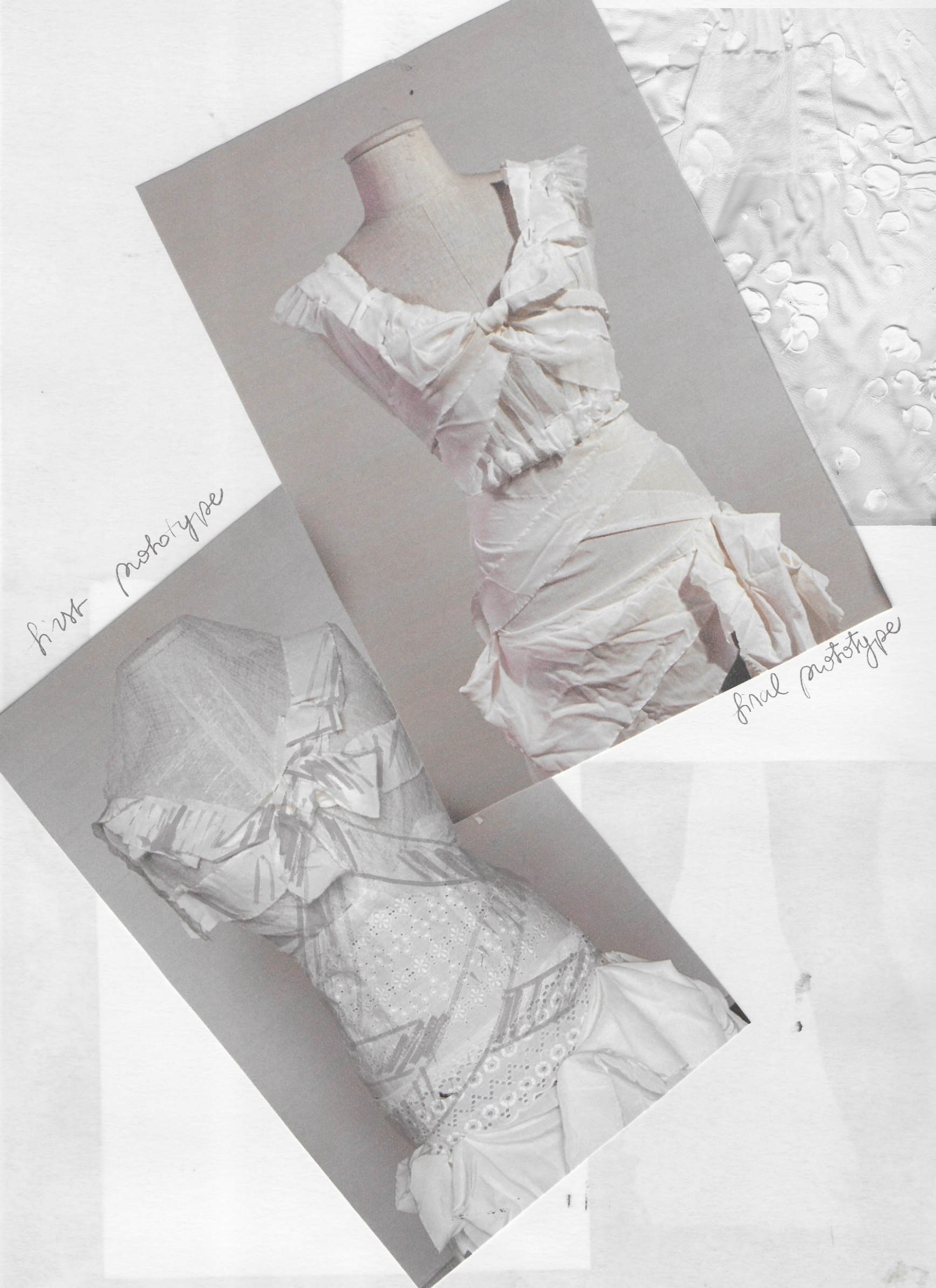
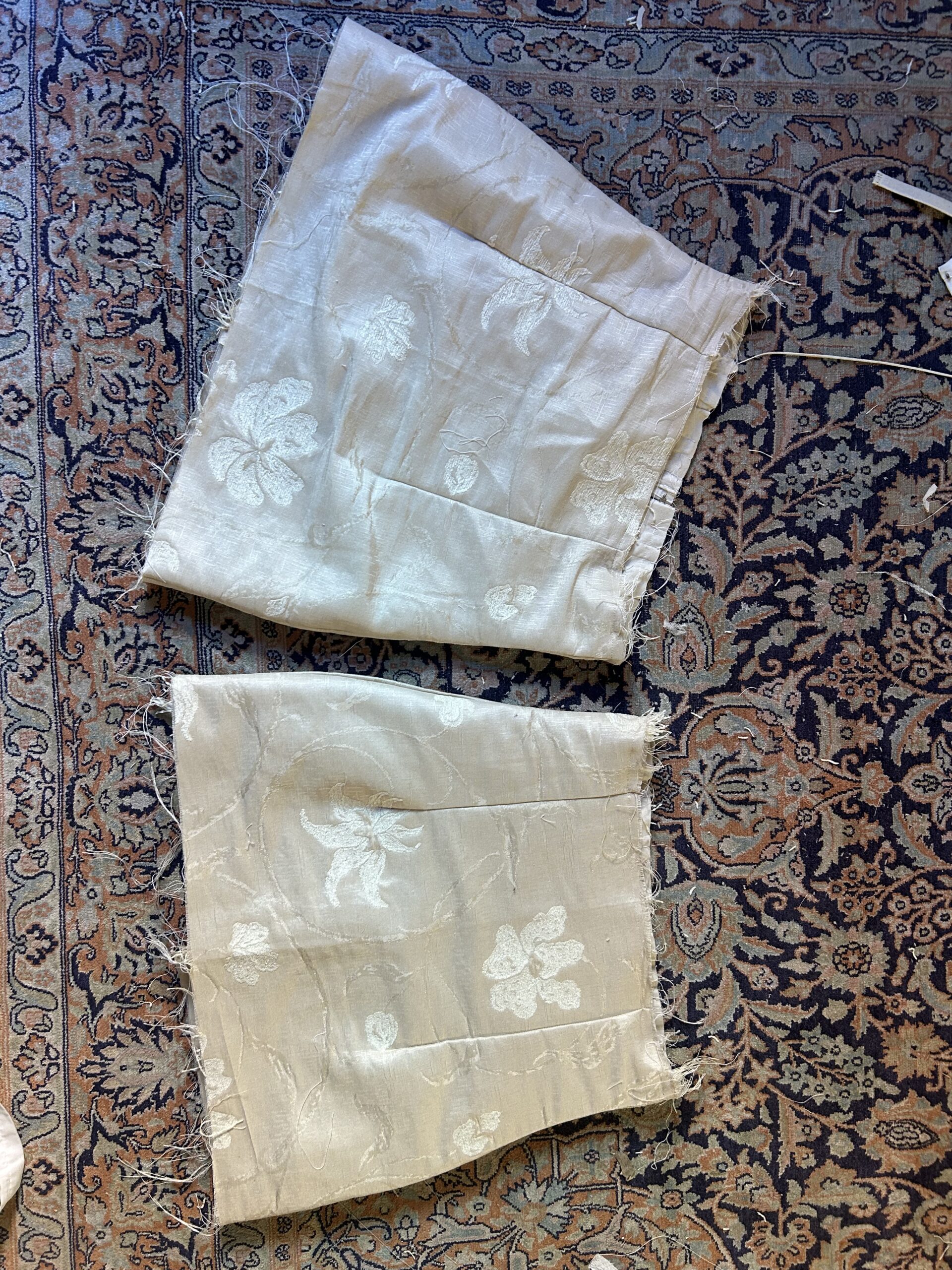
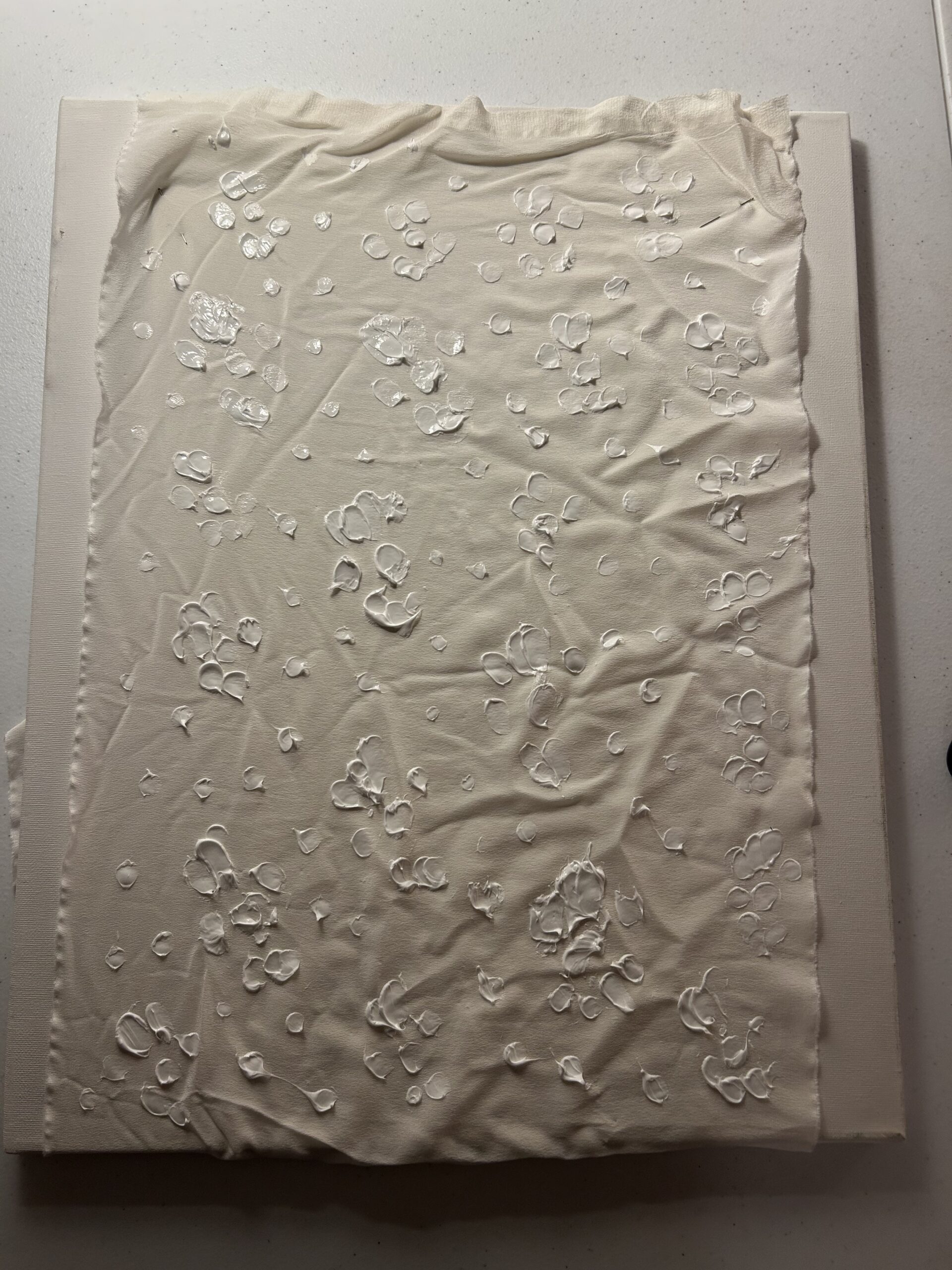
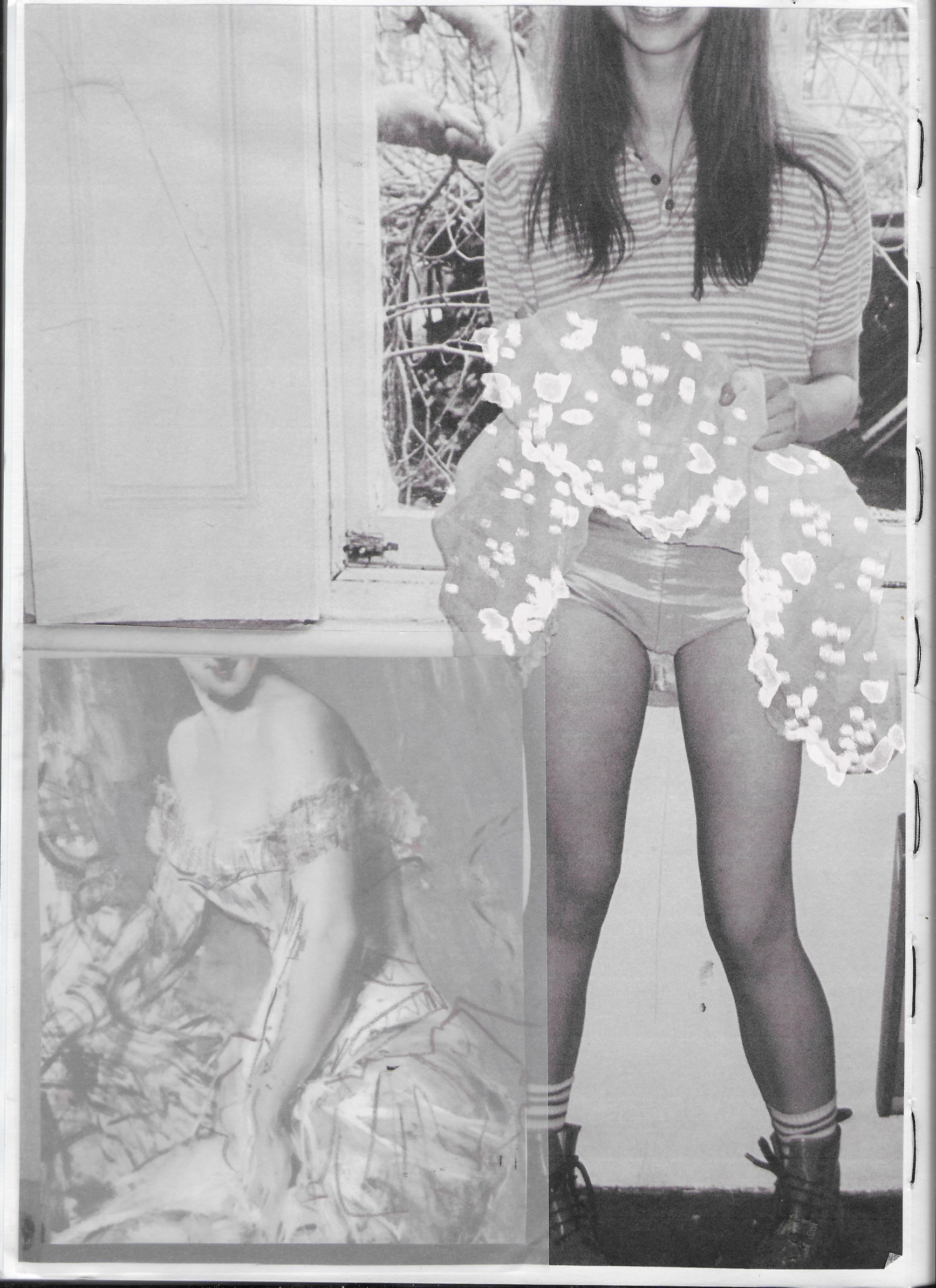
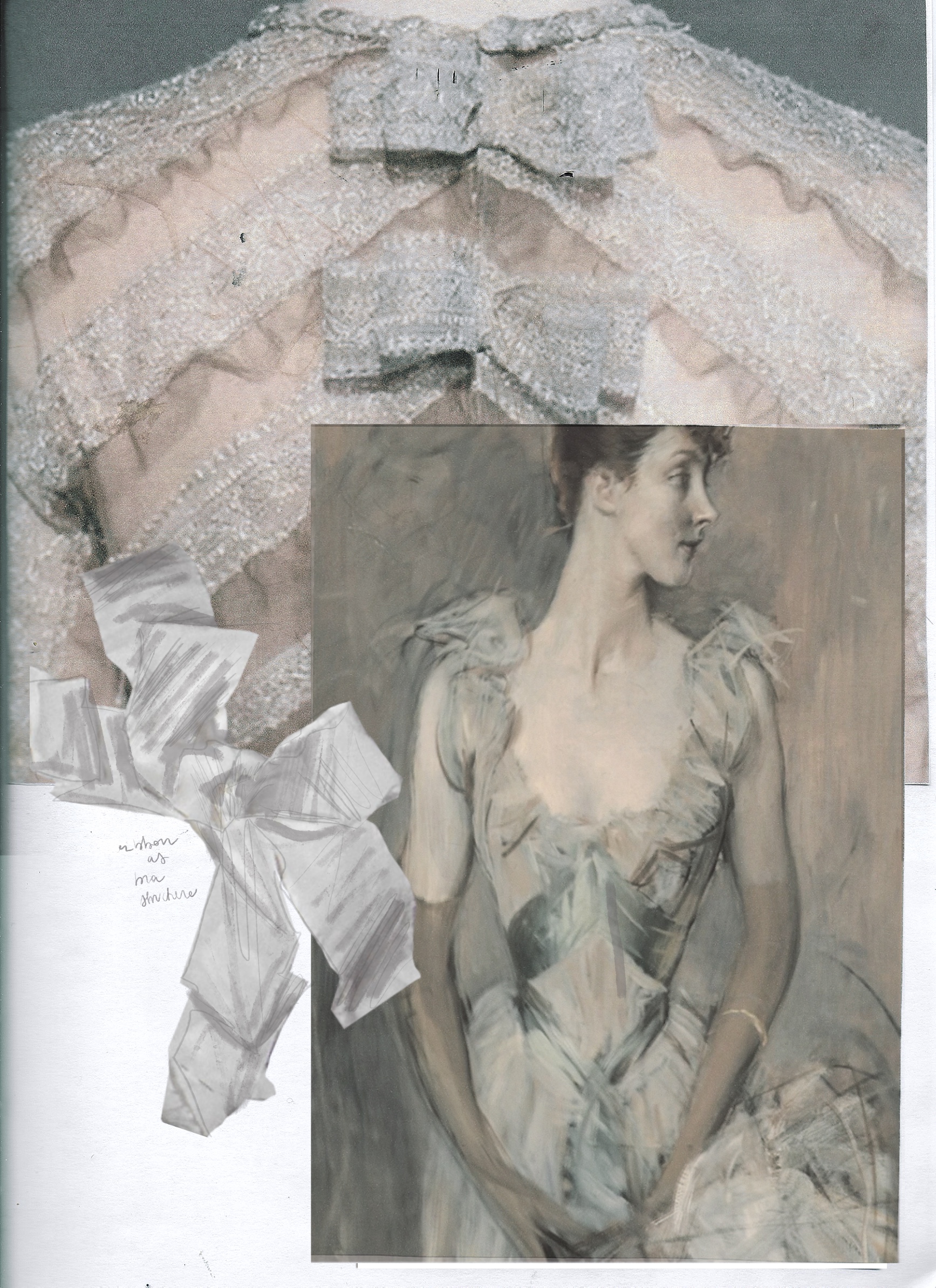
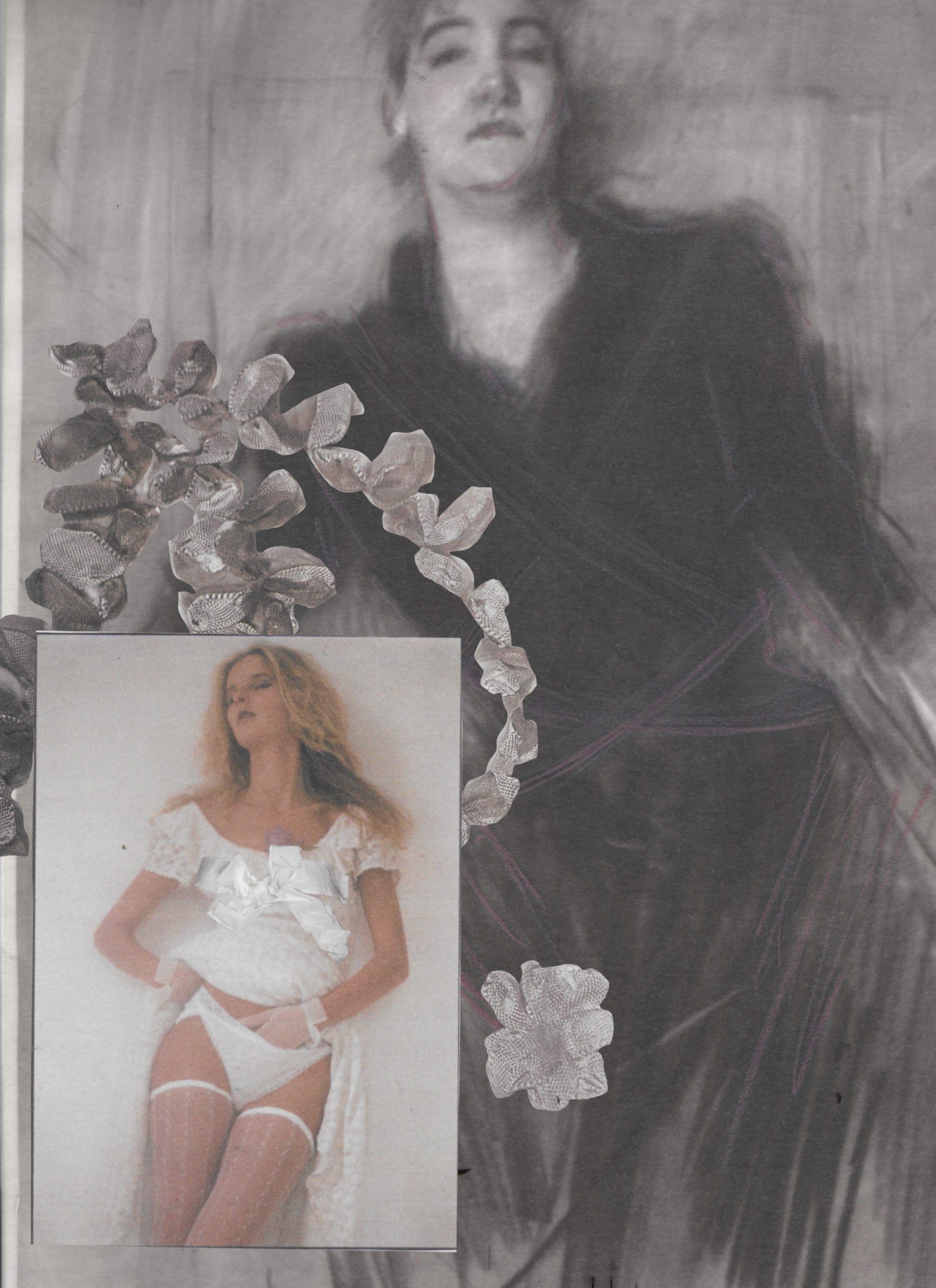
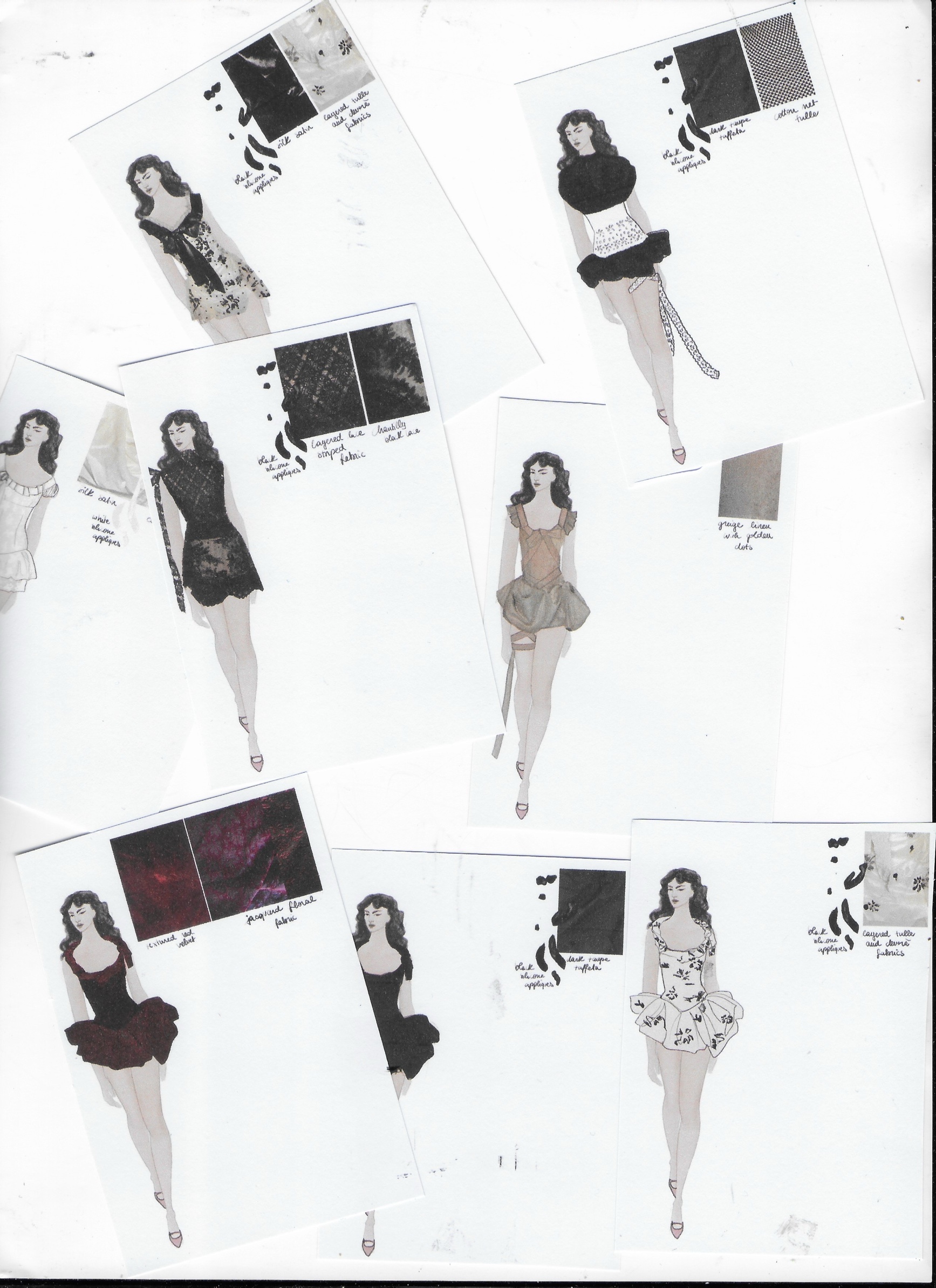
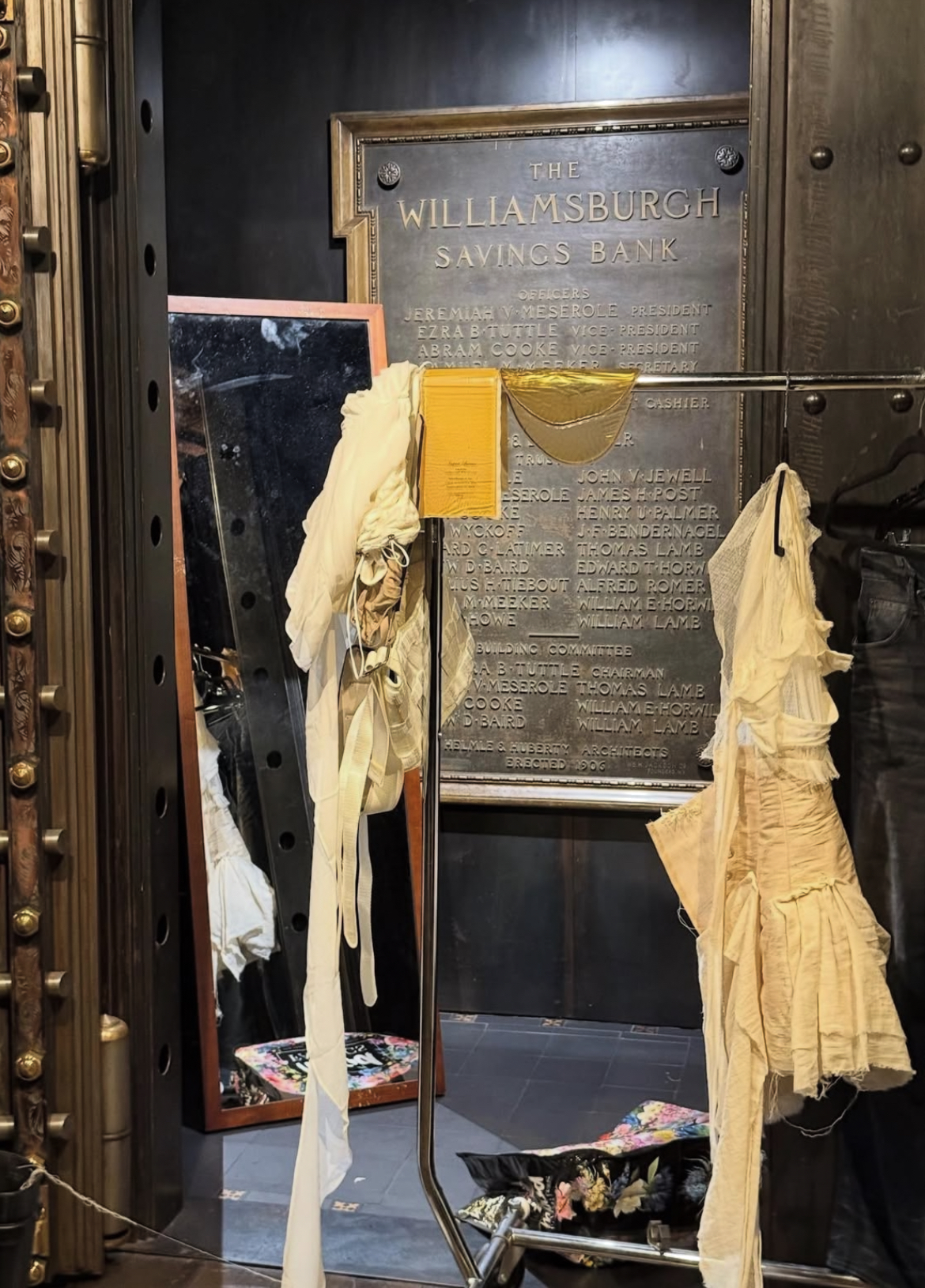
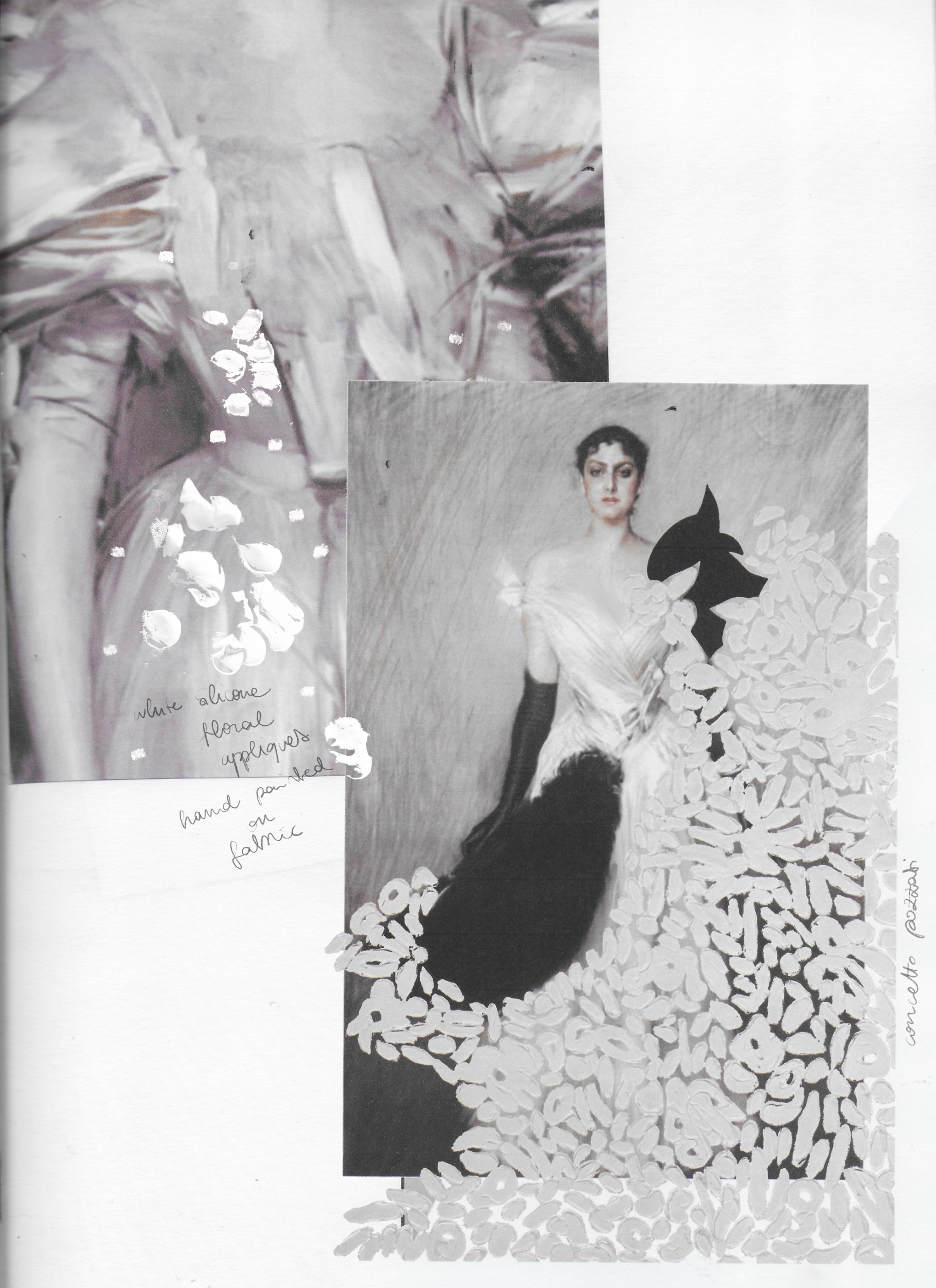
For the Chains of Love look, I had quite a lot of freedom, the only indications I received were that it had to be a short, light colored dress. So I started researching the period the book was set in, and looked into the art and fashion of those times. There’s this incredible 19th Century Italian artist, Giovanni Boldini, who painted portraits of Italian and French noblewomen, dedicating great detail to what they were wearing. I drew from there, combining details of different paintings, and then manipulating fabrics in a rougher way, as if this distinct aristocratic lady got lost in the woods. I used a combination of different fabrics, a rich tapestry floral jacquard fabric, delicate tulle and rough cotton gauze, and added white silicone details, to add a personal touch.
What role does nature have in your work?
I am always spontaneously drawn to it, somehow. I think it might come from spending my childhood quite immersed in it. I always find great inspiration in natural patterns, textures, colors, even when I’m not looking for it. It fascinates me. Sometimes I get in my head and think it’s too present in my work, redundant, even, and I try to distance myself from it, but I feel like it always comes back in its own ways. The fact I love Valenciennes and sangallo lace so much, which almost always come in floral or natural motifs, is proof of this.
How do you choose the textures, colors and shapes of your work?
It’s always according to the research and mood board of the project I’m working on, the story I want to tell: everything is a part of that and helps to create the look and the creative world it exists in. Color always has a symbolic meaning to me, so I’ve always worked with evocative shades like red, pink, black and white. They always stand for something in the storytelling of the collections.
For your private creations, how is your work structured? Where are you based and who do you work with?
My work process and even how my mind works means it’s really hard for me to look for help and delegate to others, so far I have worked by myself. I have been based in Bologna until very recently, and that’s still where I have my personal “atelier” where I work on my projects. Some of the contacts I have come from fashion school; I have reached out to many different suppliers over those four years and luckily they’re still happy to help me and work with me. The main one is Pizval which provides amazingly beautiful lace and tulle fabrics. Then I have made new connections in Bologna, which is full of creatives and artisans, if you know where to look.
How has the reception to your work been so far?
I have been receiving so many sweet messages and comments about my work after dressing Charli, in a way that I hadn’t experienced before. The best comment for me came from a girl who was at the concert in Oslo, where she wore a dress of mine, and she said that it was beautiful to see in movement, and looked perfect on her. It made my week.
How has your design language evolved from Polimoda to now?
At first I felt a bit lost having to work on my collections alone, after having spent years following a schedule and receiving feedback. But having so many people give opinions on your designs every week can be confusing, and make you forget to listen to your own voice. After graduating, it’s like I slowly came back to myself, and had to learn to trust my intentions. I try to keep in mind the good advice I received during the years by my teachers, and let go of the advice I felt was weighing on me. I found that it comes with some second guessing, but also with more spontaneity, and I think it’s a good thing. I’ve been enjoying it, it’s very freeing.
How do you see the industry today?
Having had experience both in a small, independent brand like Marco Rambaldi and a very established house like Valentino, I can say the crisis is real, everywhere. I can only hope it will be taken as an opportunity to let go of outdated practices and ways of working and producing clothes, and renew things with the environment and all the workers in mind.
What is your prediction for the future of the fashion industry? How can fashion students and new graduate designers contribute or navigate it?
I think our generation will go through a huge change in the industry, which I hope will be for the better. AI will definitely be a part of it, but I think before that even comes into play, huge luxury conglomerates will face issues with much more analog problems concerning balances, supply chains, their ways of working. Perhaps the only thing useful for us and for whoever we will work for is to learn and keep up to date as much as we can.
Do you have any advice for current fashion students?
Be confident, but stay humble. Be curious, open to learn, and “steal” from everywhere you look. And focus on yourself, be true to who you are. Even just a year and a half after graduating, I can say that, truly, everyone’s path is different, and it’s so hard not to compare or look at what others are doing. It’s a dynamic that is quite engrained in how things work in school, and sometimes teachers even encourage it unintentionally, but it can get in the way of enjoying what you get to do and work on step by step.